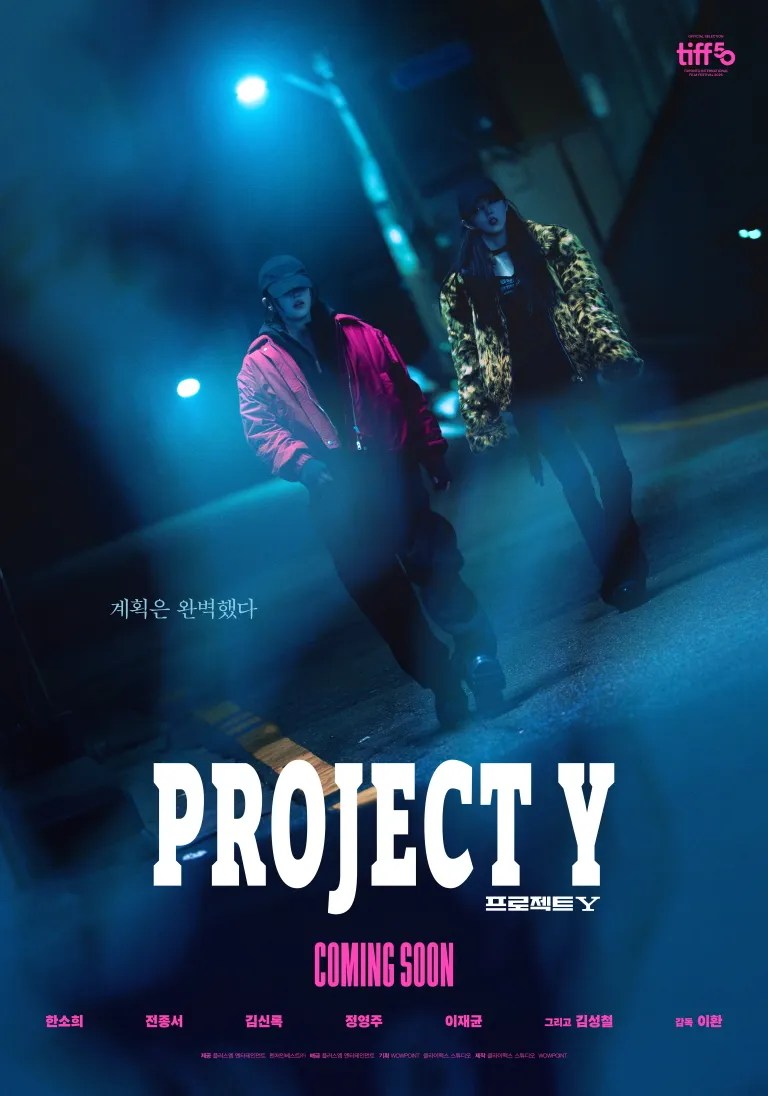
Project Y (프로젝트 Y, Lee Hwan, 2025)

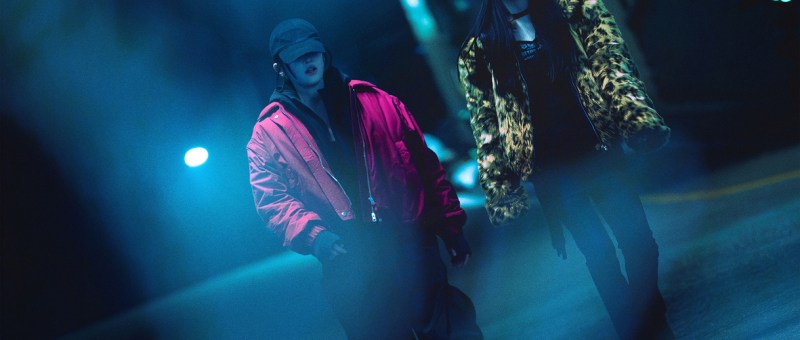
The opening sequence of Lee Hwan’s Project Y (프로젝트 Y) seems to echo the iconic intro of Millennium Mambo as two women look back over their shoulders as they traverse a seemingly endless tunnel. Later we realise that the tunnel is their passage out of the underworld of the red light district towards escape and liberation, not only from patriarchal control and their impossible lives, but from a generational legacy of abuse and entrapment.

Indeed, Ga-young (Kim Shin-rok) the adoptive mother of Mi-sun (Han So-hee) and birth mother of Do-kyung (Jeon Jong-seo), is fond of asking who is saving who when we’re all the same, and insisting that your life is yours to save. It’s a message the girls have taken to heart, yet they remain devoted to each other in a relationship that also appears to be romantic or perhaps has already transcended romance in the depth of their connection. Mi-sun has been working as a karaoke bar hostess for a number of years while Do-kyung works as her driver and occasional courier for various shady types. They plan to leave the red light district now Mi-sun has saved enough money to buy a florist’s from its retiring owner along with a downpayment on a apartment, but it turns out half the girls in the red light district have been scammed by a dodgy estate agent at the behest of local kingpin Blackjack (Kim Sung-cheol).

It seems that Blackjack may have done this deliberately in a nefarious plot to increase the girls’ debts and prevent them from leaving. Blackjack’s callousness is signalled early on when he tells the girls’ manager to get rid of a drooping plant if she can’t manage it and space the others out to disguise the gap. But on the flip side, Blackjack has a young and very silly wife who has got into host clubs and has been spending all his money on a young man who is openly exploiting her. Though the men are ostensibly in the same position as the women, they still have a greater power in preying on female loneliness while the women, by contrast, may be indulging in this behaviour precisely because it gives them an illusion of control they ordinarily don’t have a patriarchal society. Blackjack’s wife throws expensive gifts at her favourite host in an attempt to persuade him to enter a deeper relationship while blabbing her husband’s secrets. The host doesn’t seem to have realised it might be a bad idea to be messing around with Blackjack’s wife, while stealing his secret stash is going to annoy him even more and Blackjack’s not the sort of man you want to be annoyed with you.

Blackjack watches a video of a dog drowning in a tarpit while he works out, and this particular tarpit acts as a kind of vortex drawing all the greed in the red-light district towards it. Hearing about the plot to rob Blackjack, the girls decide to rob him first and blame it on a local hoodlum. But after retrieving a bag with the exact amount they lost, discover a stash of gold bars. It’s taking them too that damages the integrity of their quest and sets them on a course towards a direct confrontation with Blackjack as they try their hardest to escape the red light district for good.

The implication seems to be that if they take the money, they’ll never really be free because it stemmed from the source of their exploitation. This might in a way be what Ga-young is trying to teach the girls in her otherwise hard to read behaviour, sacrificing herself to save them from their poor decision to cross Blackjack while trying to catapult them free of the red-light district though she knows she herself can never leave. Slick and stylish, Lee’s noir stays just on the right side of realism despite its recurrent grimness and larger than life characters such as the Blackjack’s icy female enforcer Bull and captures both girls’ desire for a “normal life” of working in the day and sleeping at night, along with the cheerful solidarity of the hostesses as they band together to take revenge on Blackjack and finally free themselves from this world of constant betrayal and exploitation.


Project Y screened as part of this year’s LEAFF.

International trailer (English subtitles)
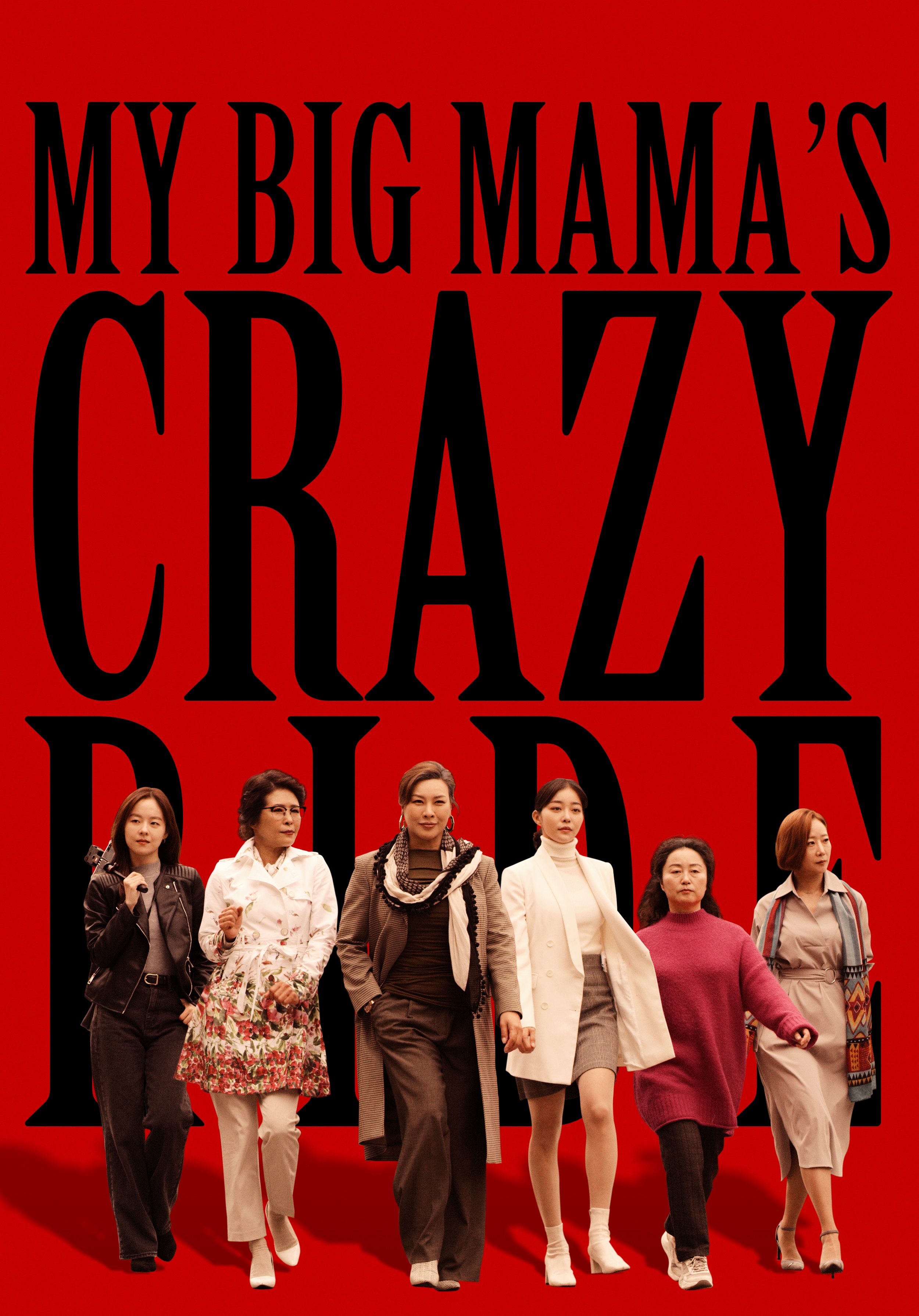
My Big Mama’s Crazy Ride (큰엄마의 미친봉고, Paek Seung-hwan, 2021)

A veteran matriarch suddenly decides she’s had enough in Paek Seung-hwan’s indie comedy, My Big Mama’s Crazy Ride (큰엄마의 미친봉고, Keuneommaui michinbonggo). Taking aim not only at the deeply ingrained and hopelessly outdated patriarchal social codes of contemporary society, Paek also asks a series of questions about the concept of family with the wives and daughters-in-law repeatedly finding themselves described as “outsiders” yet expected to sacrifice their hopes and aspirations in dedicating themselves entirely to the “family” which more often than not treats them as unremunerated housekeepers. 

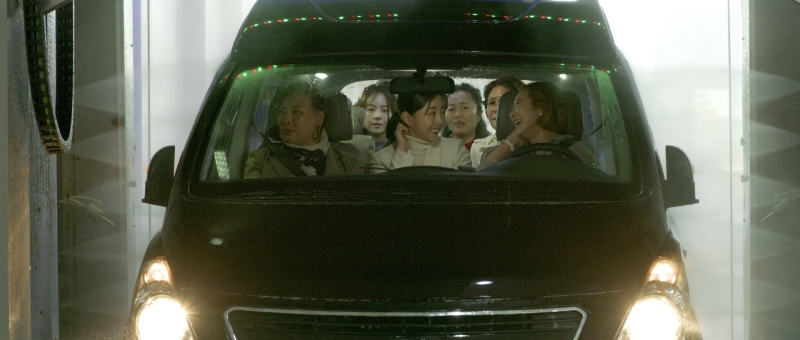
It’s easy enough to see why “Big Mama” Yeong-hui (Jung Young-joo) is fed up as her husband Han-il (Yu Seong-ju) barks orders from upstairs while she tries to sort out the food for the ancestral rites knowing the men are up there lounging around drinking just expecting everything to be done for them without needing to lift a finger to help. This year she’s choosing chaos, rounding up all of the other women in the family including Eun-seo (Kim Ga-eun) her nephew’s fiancée meeting the family for the first time and packing them into her minivan leaving the men to fend for themselves.  

This is a problem for them for several reasons the biggest being that it soon becomes clear they have no idea how to do anything for themselves, drill sergeant Han-il ordering his brother and sons to finish all the food prep within the hour while they search for YouTube videos to teach them basic cooking. They can barely even figure out how to make themselves some instant noodles while they wait, becoming progressively drunker to avoid facing the reality of their situation or accept that perhaps their treatment of their wives has been unfair or that they’ve taken all of their labour for granted. Old-fashioned authoritarian Han-il even approves of Yeong-hui’s flight in the beginning in the belief that she’s taken the other women out to teach them some discipline despite her having brought up the subject of divorce because of his own treatment of her. He doesn’t see his behaviour as essentially abusive because of the patriarchal social codes in which he operates believing this is simply the way that husbands are supposed to boss their wives. His brother and sons are little different though subordinate to him as head of the family, oldest song Hwang-sang (Song Dong-hwan) eventually kicking back but only after realising his mother may really leave profoundly shaking his foundations even as a grown man with a son of his own. 

Then again, aside from a potential divorce Yeong-hui is otherwise described as an “outsider” having married into the family most particularly when it comes to light that Han-il has sold some ancestral land and intended to keep the money for himself rather than share it amongst the other family members. When he sends the proceeds to Yeong-hui in a last ditch effort to get her to come home, it causes division on both sides with his brother Han-san (Yoo Byung-hoon) in particular objecting to the money leaving the family as Yeong-hui is technically a Lee and not a Yu while the women also think she should share the money with them rather than keep it for herself little knowing she was already planning to do so. Having serious doubts about marrying into this crazy family, Eun-seo, who is in any case Christian, isn’t sure why she was attending their ancestral rites anyway but if none of these women are actually “family” why is it they’re the ones expected to prepare the rites for the Yu ancestors? Yeong-hui sees the money in part as compensation for the unpaid labour she’s performed over the last 40 years while being shouted at and ordered around by her overbearing authoritarian husband. 

Thanks to YouTuber niece Hyo-jeong (Ha Jung-min) and sleazy tabloid journalist nephew Jae-sang (Cho Dal-hwan) the women’s flight ends up going viral and even making the evening news where they find mass support from other women in similar situations along with unexpected male solidarity though a big thumbs up from a series of male policemen seems a little unlikely given the threat they present to the entrenched social order in rebelling against the same kind of patriarchal male authority the police force itself represents. In any case, it becomes clear that Yeong-hui has simply chosen to celebrate her own ancestral rights in paying tribute to another woman whose name she only belatedly found out, the other women also revealing that they don’t even quite know each other’s given names because they’re so used to addressing each other only as daughter/sister-in-law or else as X’s mum to the extent that they’ve been robbed of an individual identity. Nevertheless through their transgressive road trip the women rediscover a sense of female solidarity while the men are forced to reckon with the way they treat their wives realising that if they want to keep their family together they’ll have to move with the times. 


My Big Mama’s Crazy Ride streamed as part of the 14th season of Asian Pop-Up Cinema.

Original trailer (English subtitles)