Janur Ireng (Janur Ireng: Sewu Dino the Prequel, Kimo Stamboel, 2025)

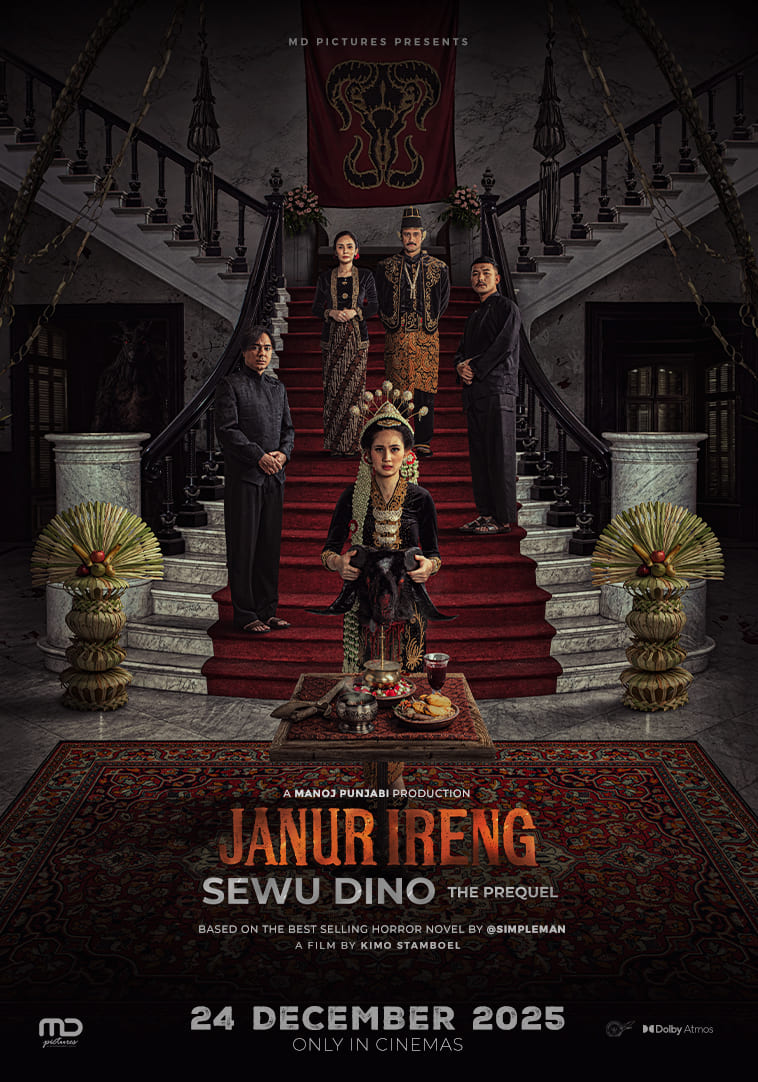
If something seems to good to be true, it probably is. Sabdo (Marthino Lio) and his sister Intan (Nyimas Ratu Rafa) might be too young to know any better, but even they have their doubts when a mysterious man shows up after their house has burnt down claiming to be an estranged uncle. Their late father never mentioned having a brother or any family at all and did not ask for him when he was dying. As the siblings will discover, there’s a reason for that and they may not want this particular familial legacy no matter the trappings it comes with. 

A prequel to his previous film A Thousand Days (Sewu Dino), Kimo Stamboel’s Janur Ireng is partly a metaphor for the exploitative practices of the super rich who use their wealth to manipulate or abuse those with lesser means. Having grown up without much money and fallen into poverty after their father died to the extent that Intan had had to leave education, being suddenly adopted by their wealthy uncle plunges the pair into a new world they are not altogether equipped to understand even without all the weird black magic rituals and sense of unease pervading the country mansion. Intan complains that the house has creepy vibes, and there is something gothic about it aside from feeling lost amid its vastness. Intan dislikes sleeping alone because her new room is simply far too big, even it didn’t turn out to come with some unexpected residents. It’s wandering around the house that she discovers something shocking, unsure if it’s something she wasn’t supposed to see or if she was guided there by a mysterious force.

Sabdo, meanwhile, is taken on as his uncle’s heir and protege. He discovers that Arjo (Tora Sudiro) is trying to regain land lost to the family including a banana plantation he days will be his to run, though Arjo seems pretty wealthy already. He is, though, on frosty terms the “7 Families” who run things in the local area and appears to want to reassert his status. With little in the way of explanation, he gets Sabdo to repeatedly sacrifice goats and do other strange things “to protect the family”, which Sabdo goes along with because he doesn’t quite know how to refuse and is confused by this strange new life. But on the other hand, Sabdo is a stranger here. He’s only told that he’s a member of the family and has no other connection with it or proof that it’s true. His loyalty really is to Intan, and it may be that he stays and does these increasingly weird rituals because Arjo promised Intan what he couldn’t give her in sending her to school and allowing her to fulfil her dream of going to university and getting a good job. A friend had needled her a little bit about ending up like another girl who married young, laying bare the patriarchal nature of the society in which Intan is imprisoned even before finding herself more literally locked up in her uncle’s house. 

Even if Sabdo thinks he finds allies in this world, they too may be using him for their own ends and wielding the power of family against him. Arjo claims their success is down to the patronage of a demonic entity that keeps them safe from other supernatural creatures which what has made their family so wealthy and powerful, but there are reasons their father decided to leave this place even If it meant giving up on the privilege he was born with. There is definitely “a lot wrong with this house” as Sabdo says, though he only makes up his mind to leave it when he realises the threat it poses to Intan. She, however, has already been corrupted by the house as its ghosts and malevolent entities begin to get to her. Kimo Stamboel ups the ante with a series of increasingly bizarre sequences of severed eye balls and torn out hearts, culminating in another kind of ritual disrupted by a once in a generation act of black magic that sees party guests literally tearing their own heads off and continuing to dance. That does not, however, seem to be the end of it for Sabdo whose dark family legacy continues to overshadow his life in ironic ways as he does his best to escape the house his uncle built.


Trailer (English subtitles)

May the Devil Take You (Sebelum Iblis Menjemput, Timo Tjahjanto, 2018)

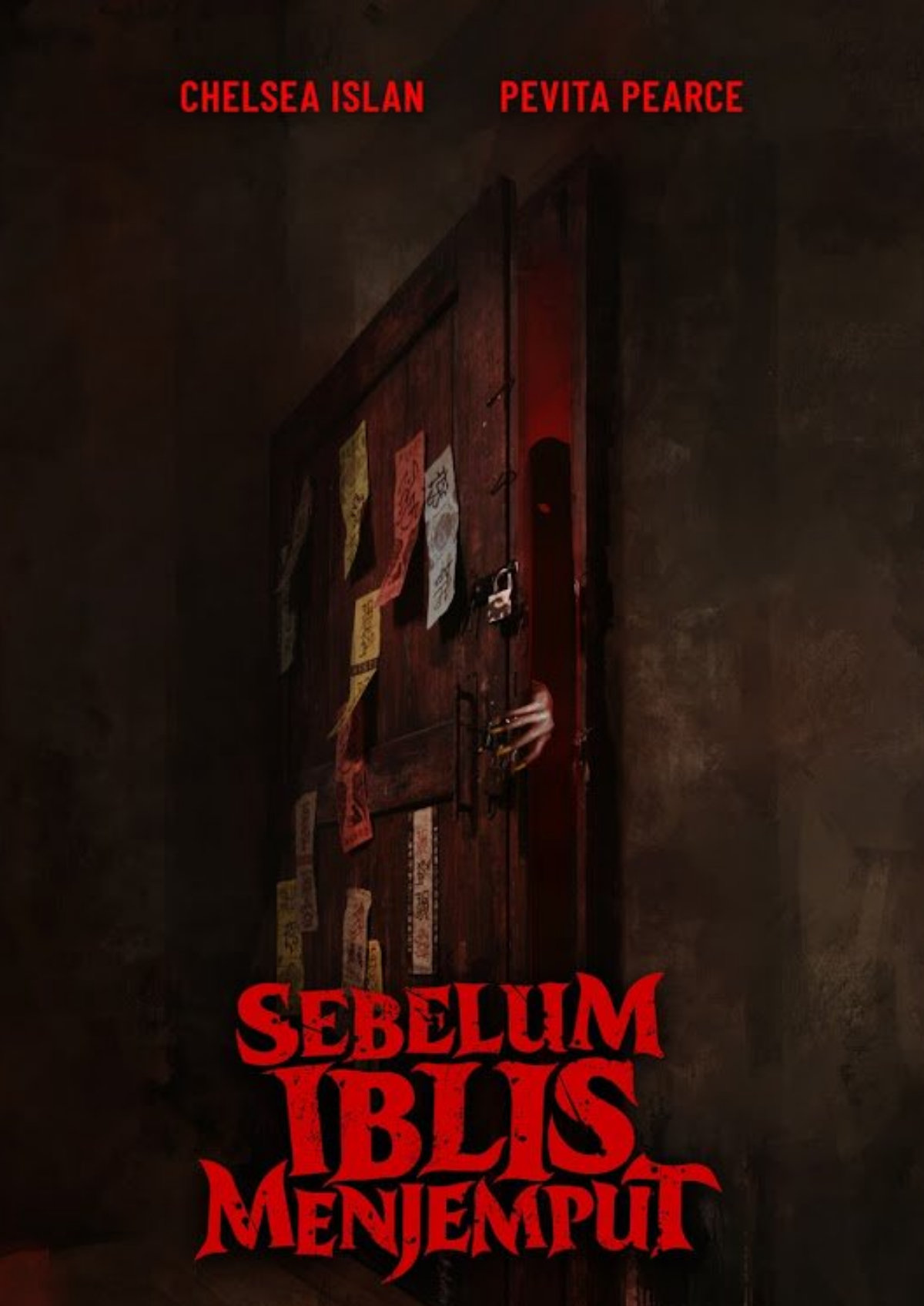
may the devil take you posterTop travel tip – if you encounter a door which is plastered with Buddhist sutras, it’s generally a very bad idea to open it. In this case, just not opening the door is a valid and very sensible option. Sadly, it’s one the protagonists of Timo Tjahjanto’s May the Devil Take You (Sebelum Iblis Menjemput) decided not to take. Following Joko Anwar’s Satan’s Slaves, May the Devil Take You also has a few hard questions to ask about the nature of “family” and how strong those bonds really are when the supernatural presses on already exposed nerves.

The film opens with formerly successful property entrepreneur Lesmana (Ray Sahetapy) entering some kind of agreement with a demonic shamaness whom he later kills and hides in the basement of his remote country villa. An undisclosed amount of time later, Lesmana is struck down with a mystery illness which forces his fractured family back together. Alfie (Chelsea Islan), Lesman’s estranged daughter from his first marriage, is called back to the bedside along with her step-siblings Ruben (Samo Rafael) and Maya (Pevita Pearce), famous actress step-mother Laksmi (Karina Suwandhi), and half-sister Nara (Hadijah Shahab). Forced politeness eventually gives way to resentment, especially when Laksmi begins to ponder selling the villa which is technically in Alfie’s name even if still thought of as a “family” property. When everybody unexpectedly turns up at the same time in search of things of value, they have very little idea of what it is that awaits them there.

Once again the threat is a bad inheritance in which the children are forced to pay for the crimes of their “father” who has let greed get the better of him and allied with dark supernatural forces in order to make himself fabulously wealthy. Lesmana’s sensational success is less due to his business acumen than to selling his soul, well not actually “his” but those belonging to his loved ones, to the Devil. His business empire apparently in tatters, Lesmana has both a problem and a solution, but the Devil is always wanting more and there may lines Lesmana won’t cross even when he is apparently willing to sacrifice the lives his wife and children just to be accounted a “success”.

There may be horrors lurking in the cellar of every home, but in this one they are quite literal and very, very angry. Family, as a concept, is the weapon the Devil chooses to wield, poking into all the dark and uncomfortable corners that basic civility usually leads most to avoid. Alfie, angry and carrying the trauma of her mother’s death, is resentful of her father’s new family and most particularly of her imperious step-mother whom even Maya later describes as “not a good person”. Yet for all that she can’t quite bring herself to “hate” her step-siblings, especially the kindly Ruben who seems to have embraced his role as a natural peacemaker. Their bonds will be tested by insidious evil which presses hard on their insecurities of their awkward family set-up in which no-one quite feels accepted, or wanted, or loved by almost anyone else.

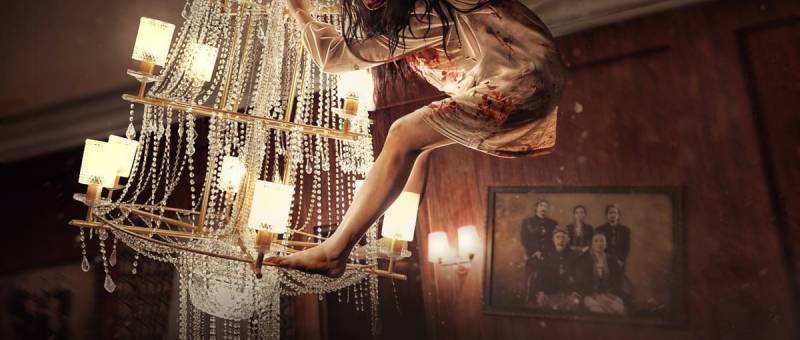
Then again, family itself becomes a source of salvation when the buried past is unearthed and then reburied having been properly dealt with. Rather than a comment of Lesmana’s rejection of traditional religion and misuse of black magic, May the Devil Take You is an exploration in the desperation of a greedy man whose desire for infinite instant gratification is matched only by the Devil himself. Lesmana was willing to sell his family for gold only to change his mind and lose them anyway. The supernatural horror is all too real, but rooted in the sins of the father and in the broken familial connections which continue trap each of the protagonists in the stereotypically creepy remote rural mansion complete with creaking floorboards and leaky ceilings. Tjahjanto’s awkward tone, over-reliant on genre norms to degree of parody but distinctly serious, makes for a strangely uneven experience but there is certainly enough hellish imagery to fuel the nightmares of many a susceptible viewer.


Screened at the 2018 BFI London Film Festival.

Original trailer (no subtitles)