Sin and Evil (罪と悪, Yuki Saito, 2024)

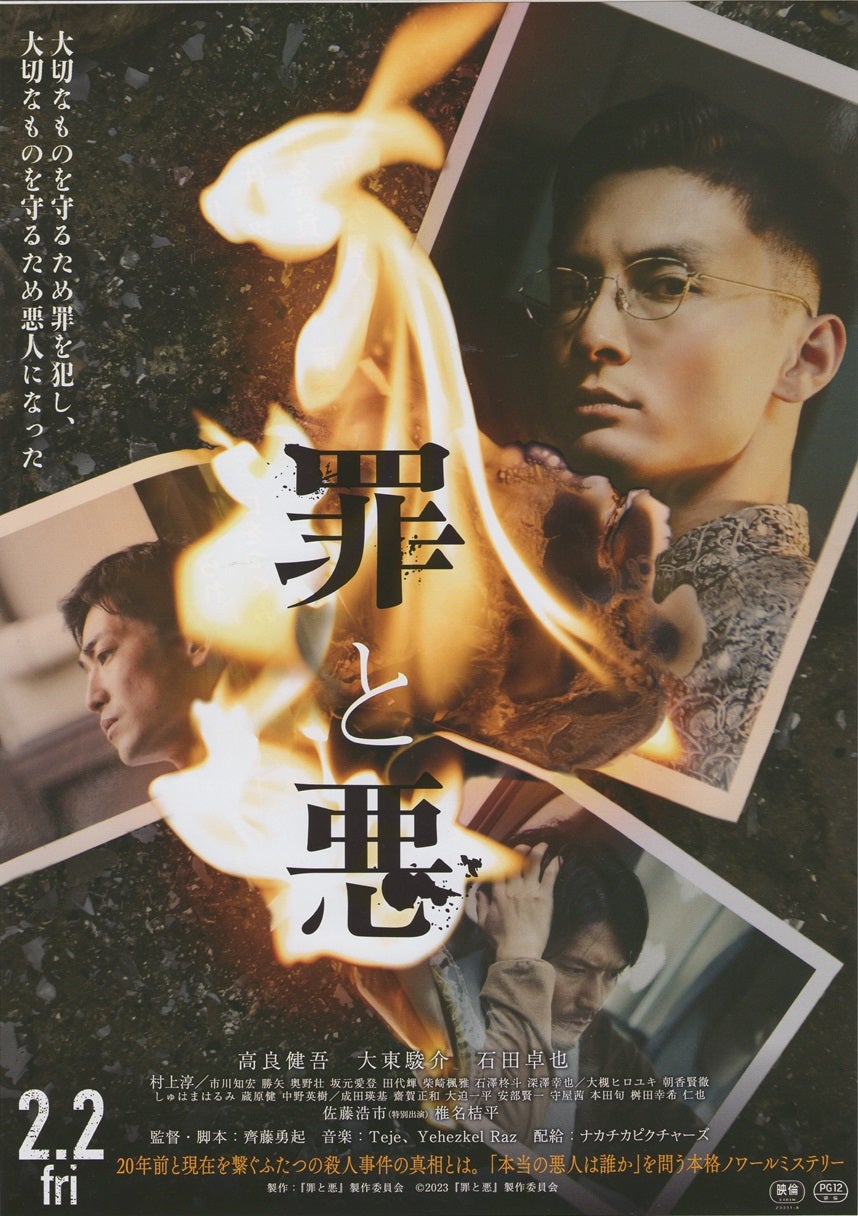
A man not quite a yakuza and perhaps even what might be termed an ethical gangster tells one of his underlings that it isn’t a sin unless you believe it it is, which might in a sense be true in same way as Socrates says that no one does wrong willingly. Yet the heroes of Sin and Evil (罪と悪, Tsumi to Aku), Yuki Saito’s small-town crime drama, are marked by their guilt while trying to come to terms with traumatic events of 20 years earlier and their mutual decision to cover them up.

Echoing similarly themed films such as Stand By Me, Saito opens with idyllic scenes of the boys riding their bikes with the only hint of darkness offered by a disturbing conversation about an elderly man who is rumoured to be abusing children. However, it seems that Haru is living in a difficult domestic situation following the death of his sister with an abusive father and apparently neglectful mother. His best friend, Akira, is the son of a local policeman while the boys are also friends with a pair of twins, Saku and Naoya, whose family operate a tomato farm. Rounding up the group is Masaki who also seems to be living in difficult circumstances though his backstory is never fully fleshed out as he’s eventually found dead in a local river. Saku jumps to the conclusion that the old man must have abused Masaki, who was known to be friendly with him, and then killed him to keep him quiet. He drags Haru and Akira to the old man’s shack where he attacks and eventually kills him with a shovel. Haru decides to take the blame and torches the place, telling the other two boys to flee the scene.

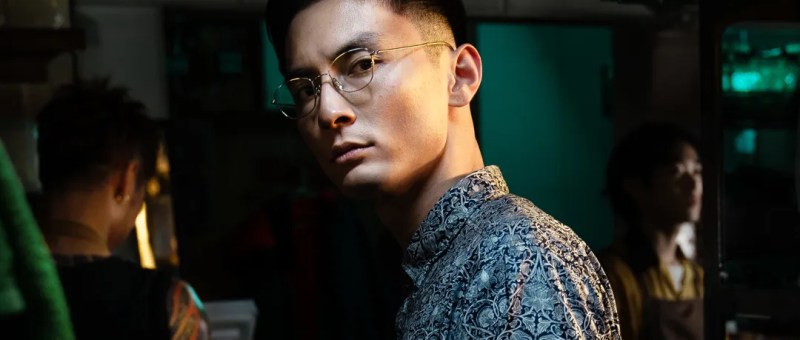
20 years later, it’s clear that each of them are still marked by what happened that day though Haru (Kengo Kora) appears to have built a good life for himself after serving time in juvenile detention even if the construction company he runs is friendly with local yakuza and gets its contracts through small-town corruption. He also operates a cafe where he employs delinquent boys while secretly using them as thieves but also in a more genuine sense looking after them and concerned for their welfare. His machinations are seen to be key in keeping order, working in tandem with police Inspector Sato (Kippei Shiina) who explains to a more idealistic Akira (Shunsuke Daito) how things are done around here which is essentially keeping ordinary people safe by managing crime rather than punishing or preventing it. The balance is only disrupted by some of Haru’s boys who stupidly steal far too much money from the local yakuza. Haru attempts to protect the young man concerned, but his body soon ends up in the river in exactly the same place as Masaki raising a series of questions about the nature of the earlier crime. 

What the film is trying to do is paint the world in shades of grey while looking for the parts where it’s darkest. It seems it’s not in doubt that the old man abused local children, though Haru and Akira now doubt he killed Masaki raising further questions about their killing of him. As the yakuza underling had said, it’s not a sin unless you think it is and Haru feels that he deserved to die for what he did to other kids so doesn’t feel any remorse for his actions even if he didn’t kill Masaki. But for Akira, the trauma lingers in other ways and he’s disturbed on learning his father may have been involved in covering up their crime and at least complicit in police corruption essentially teaching Sato how things are done in small-town policing. The conclusion Haru comes to is that they are all victims of the town itself, unable to break free of its provincial mores and petty prejudices.

Those would largely be a lingering homophobia and deep shame stemming from suffering sexual abuse as a child. As usual with these kinds of mysteries, the solution lies in the desire to prevent the truth being exposed though in this case the resolution is not entirely convincing when using one killing to cover up another couldn’t help but expose the truth anyway even when attempting to pin it on someone else who can no longer defend themselves. It also sidesteps the themes of small-town corruption and the dark heart of suburbia even as Haru points out that someone should have stepped in to support both himself and Masaki when they could see their families were struggling rather than just closing their curtains and pretending not to notice. The disruption of the friendship, which ought to be the heart of the drama, therefore lacks poignancy muddied by the various overlapping plot lines from the present day yakuza drama to the lost paradise that Haru longs to reclaim despite the otherwise apparently happy life he seems to be living now. Sin, the film seems to say, is in the eye of the beholder along with justice and retribution, and evil maybe just the same or merely invisible to those who choose not to see it.


Sin and Evil screened as part of this year’s Camera Japan.


International trailer (English subtitles)
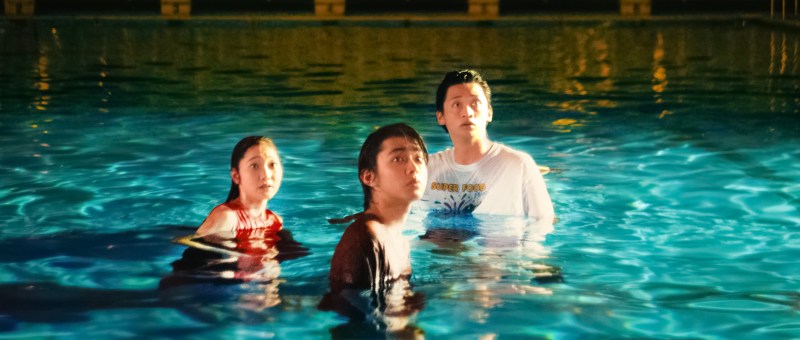
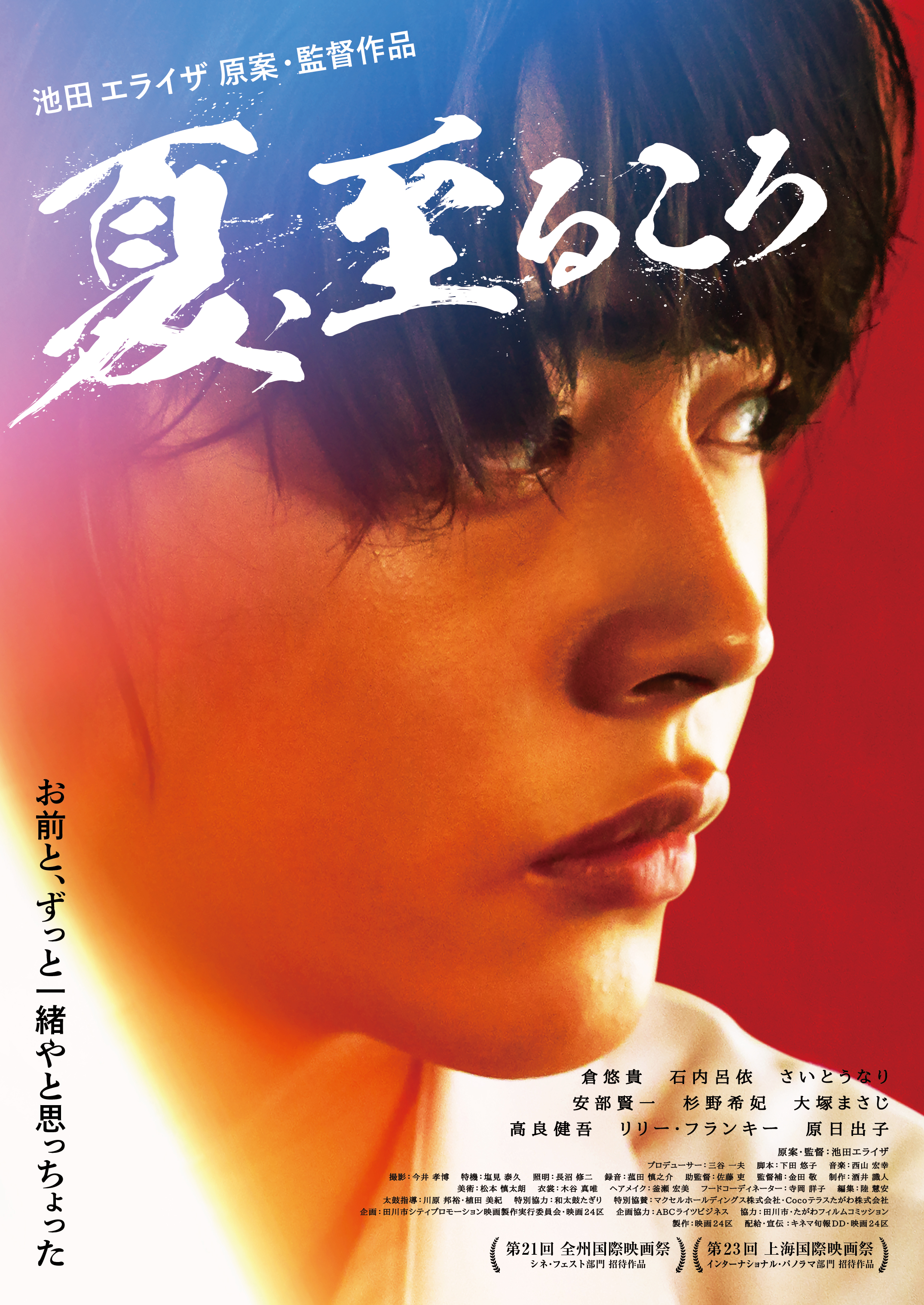
Town Without Sea (夏、至るころ, Elaiza Ikeda, 2020)

“Happiness is something you don’t notice even if it’s right next to you” the hero of actress Elaiza Ikeda’s directorial debut Town Without Sea (夏、至るころ, Natsu, Itaru Koro) is told by a strangely perceptive small child. The nature of happiness is something that seems to be bothering him while he contends with adolescent anxiety little knowing what to do with the further course of his life while fearful in the knowledge that his relationship with his childhood best friend must necessarily change. 

Approaching the final year of high school, taiko-enthusiast Sho (Yuki Kura) has no dreams or aspirations and has been avoiding thinking about what to do after graduation. Pressed by his teacher, all he can offer is that he’d like to become “air”, which is in its own way slightly alarming though it hints at his sense of emptiness and despair. His childhood best friend, Taiga (Roi Ishiuchi), meanwhile has a clearly defined, extremely sensible life plan which is why he’s abruptly giving up taiko so he can attend cram school and get into uni with the aim of becoming a civil servant. As we discover, Sho has been something of a follower making most of his existing decisions based on whatever Taiga was going to do, but he can’t merely follow him this time and will have to come to some sort of decision about his individual future. 

“I can’t walk alone. I don’t know what to do” he confesses to a surprisingly sympathetic teacher (Kengo Kora), while as it transpires Taiga is having similar thoughts. The two boys are much more co-dependent that they assumed, but that very co-dependency begins to drive them apart when coupled with their adolescent anxiety. Taiga fears that he is simply too “boring”, giving up taiko because his carefully honed technique cannot measure up to Sho’s anarchic power. According to him he took up taiko after spotting Sho playing at a festival thinking he looked so “free and cool”, yet Sho equally thinks he’s not as a good a drummer and cannot match Taiga’s meticulous training. Taiga is shifting away from their friendship because he secretly feels inferior and wants to leave before being around Sho makes him feels miserable, a logic Sho is not fully equipped to understand. 

“Why does everybody quit?” he asks in exasperation, meeting a strange young woman who like them wants to pull away from something before she ends up hating both it and herself. Likened by Taiga to the kind of manic pixie dream girl who frequently turns up during the last summer of high school in manga, Miyako (Nari Saito) does not quite come between the two boys in the expected way but does bring out their contradictory qualities before abruptly disappearing from the narrative, ahead of the pair in suddenly deciding that she’ll figure something out on her own. Having decided all he wants is a future of ordinary happiness, Taiga can’t help resenting his friend feeling that whatever decision he makes, getting a job or going to uni, he’ll wind up happy whereas he presumably will not with his unexciting yet sensible life as a civil servant. 

There is an undeniably homoerotic quality to the boys’ friendship, their brief falling out almost like a lovers’ tiff in its melancholy intensity. Sho necessarily fears the loss of his friend, perhaps instinctively knowing he’s chosen a path he likely cannot follow and feeling rejected because of it. He obsessively meditates on the meaning of “happiness” unable to settle on a means of achieving it while unsure of what exactly it means. He asks his friends and family but discovers that happiness means different things to different people, may change over time or not quite be what you first thought it was, or be as simple as a sunny day in your hometown. He does however begin to accept that even if separated, his relationship with Taiga will not necessarily change they will still be “together” if more in spirit than body. Recalling something Taiga had said about the sea which he has never seen, he makes his choice defiant in its independence. Hailing from Fukuoka herself, Elaiza Ikeda’s remarkably assured directorial debut crafts a warm, empathetic coming-of-age tale centring on the intense friendship between two men but discovering a sense of wonder and contentment in the everyday as its conflicted hero finds a sense of rootedness in the strength of his relationships that grants him the freedom to roam. 


Town Without Sea streamed as part of this year’s Japan Cuts.

Original trailer (English subtitles)

Under Your Bed (アンダー・ユア・ベッド, Mari Asato, 2019)

Under Your Bed poster 1Japanese cinema has something of a preoccupation with invisible men, but there’s rarely been as empathetic an exploration of benign alienation as Mari Asato’s Under Your Bed (アンダー・ユア・ベッド). Asato’s lonely stalker is a creep and a voyeur, but his problem is his innate passivity born of defeatism in which he has, despite his tendency to fantasise, already accepted that he lives in a kind of other world unable to touch his fellow humans from whom he remains painfully separated as if by a sheet of invisible glass.

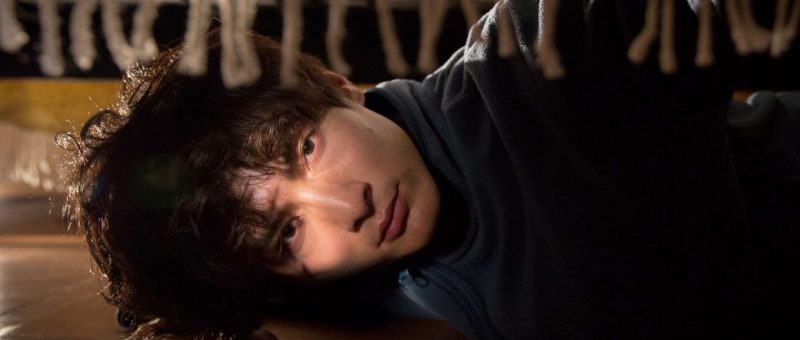
Tropical fish enthusiast Mitsui (Kengo Kora) is one of those people who tend to be forgotten. He doesn’t feature in his high school graduation photo, and nobody, not even his parents, has ever noticed. Harbouring intense feelings of worthlessness linking back to a childhood memory of abandonment after almost dying when his father left him sitting in a hot car, Mitsui has no friends or much of a life to speak of and regards himself as a kind of non-person invisible to others. Longing to be seen, he treasures the precious memory of the only time he has ever heard someone else call his name which occurred 11 years previously when he was a university student.

Mitsui deeply believes that this memory is the only thing that gives his life meaning. Hiring a private eye to track down the woman in question, Chihiro (Kanako Nishikawa), he quits his job and opens a tropical fish store in the town where she lives, apparently now married with a baby. What he discovers, however, is that this Chihiro is quite different from the one of 11 years previously. Hoping to figure out why he begins watching her intensely, swiping a key to the house after she drops into the fish shop by chance and he offers to set her up with a tank full of colourful guppies. What Mitsui eventually discovers is that Chihiro is also living a somewhat invisible life as a victim of domestic violence unable to escape the tyrannical control of her respectable salaryman husband.

Facing a dilemma, Mitsui doesn’t so much want to rescue Chihiro as preserve his peculiar level of access to her even if seeing her subjected to such degrading and inhuman treatment quite obviously disturbs him. Mitsui can’t swoop in and save her because he’d blow his cover and lose the fragile connection to her life he’s convinced himself he has. Never daring to hope he could get her attention through an act of white knight salvation, he nevertheless fantasises about a different version of himself – one that is capable of providing comfort and protection rather than simply sitting and watching while others suffer.

Ironically enough, however, his passive presence seems to make a difference. Shifting to a brief voice over from Chihiro, we discover that the flowers Mitsui has been sending with a card wishing her happiness are the only thing that’s been keeping her going. What some might regard as a cause for concern has given Chihiro strength in proving that there’s someone else out there who cares about her. Yet this change or at least potential restoration also endangers Mitsui’s plan as Chihiro’s growing conviction that she can protect herself, spurred on by the invisible support of the flower sender and others, threatens to dissolve the fragile fantasy world he’s constructed.

Mitsui is forced to wonder if his obsession is equal parts delusion, that perhaps the very events which define his life are part fabrications. His intense conviction that he is a forgettable person is borne out when he realises that Chihiro not only does not recognise him, but apparently does not even remember anything that passed between them 11 years previously. To her, he is probably just a random guy she had coffee with one time, whereas to him she is the woman who changed his life by showing him what true happiness could feel like simply by saying his name. Spotting another invisible person like himself reminds Mitsui what he looks like from the outside and of the potential dangers of those like him when he finds out that the man later went out and stabbed his boss’ wife because she gave everyone except him a holiday souvenir. Yet there is a strange kind of positivity in Matsui’s gentle acceptance of his invisibility. Resenting nothing, it’s not revenge he wants but recognition and though he may eventually figure out that what he really desired was something more, all he needs is the possibility that Chihiro may one day say his name again.

An invisible man, Mitsui longs to “seen” but lives a bug-like existence, hiding in the places no one thinks to look. Proudly telling us that the guppies in his shop are the 34th generation of the guppies his mother once gave him, Mitsui reveals that he flushes the subpar males, with whom he inevitably groups himself, away in order to preserve the beauty of the whole rather than allow it to descend on a path towards mediocrity. Like his beloved fish, Mitsui remains trapped within an invisible tank unable to reach beyond the glass, resigned to looking but not touching. Nevertheless, his presence is eventually felt, unseen but recognised and finally rewarded with a single long-awaited word.


Under Your Bed was screened as part of the 2019 London East Asia Film Festival.

Original trailer (no subtitles)