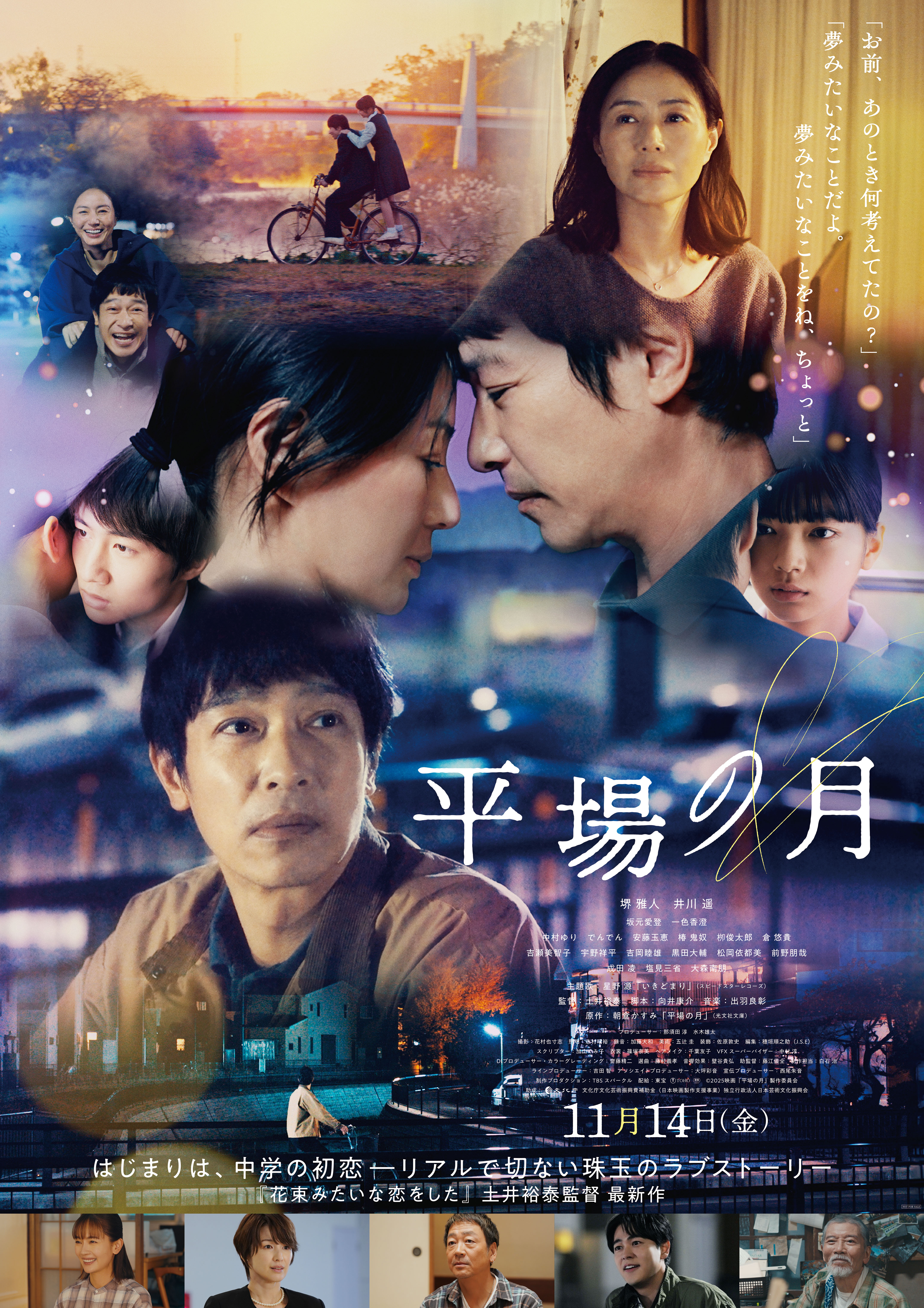
A Moon in the Ordinary (平場の月, Nobuhiro Doi, 2025)

Back in the early 2000s, Nobuhiro Doi was a leading figure of the short-lived “jun-ai” or “pure love” boom with films such as Be With You, and Tears for You, as well as TV dramas like Beautiful Life and Orange Days. Adapted from the novel by Kasumi Asakura, A Moon in the Ordinary (平場の月, Hiraba no Tsuki) is a kind middle-aged take on the same material in which former classmates reunite 35 years later but discover that they aren’t really any better equipped to understand what love is than they were as teenagers.

The pair even bond over hearing Hiroko Yakushimaru’s Main Theme, the title song of the movie of the same name, in which the singer laments that they still don’t understand love even after living 20 years. Kensho (Masato Sakai) and Yoko (Haruka Igawa) have lived more than 20 years since they last saw each other and are each carrying their own particular baggage of failed or compromised romances. Each having returned to their hometown where they’ve reconnected with their former classmates, there is something of a return to childhood in their relationship even while tempered by the compromises of age. As one of Kensho’s former classmates says, he’s reached the age where doing new things is a bother and now the conversation turns on people’s health issues or those of their parents. 

Kansho moved back after his divorce to care for his mother but she now lives in a care home and has advanced dementia. Every time he reminds her who he is, she replies that “Kensho is dead,” but he just humours her. Yoko, meanwhile, has moved back after an ill-advised affair with a younger man left her broke. Widowed young, she harbours a degree of guilt over the circumstances that led to her marriage while also perhaps a little embarrassed to be working in the hospital cafe having graduated from a good university and holding a well-paying job in the city. Despite her initial reluctance, she bonds with Kensho over their shared sense of middle-aged despair as he awaited the results of some potentially concerning medical tests.

Health issues are, however, only a part of the problem. Yoko is also carrying childhood trauma and a low sense of self-worth that once made her determine to live life alone, which is a difficult habit to break. Following her experiences, she lives in a spartan flat she says she keeps tidy to make life easier for whoever has to deal with it after she’s gone and also makes sure to sleep on the bed so the mess will be contained if it’s a while before anyone finds her if she passes away. Even before encountering her own life issues, she seems to be living in a kind of limbo state until reconnecting with Kensho. The “impossible dream” she describes might be as simple as getting to grow old with the person you love, though it’s something she doesn’t really think she’s entitled to or deserving of.

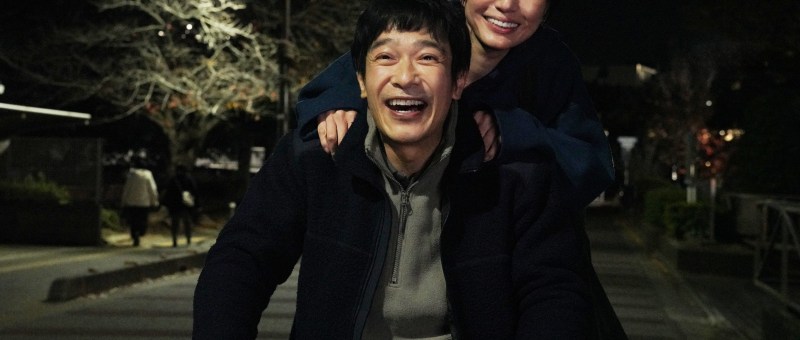
As Kensho says, they’ve both been plenty hurt already, what if they just end up hurting each other more? His older co-worker advises him that getting hurt is just part of it and he’d gladly go through it all again, but romance is as hard at 50 as it was at 15. Some things have changed and others haven’t. It’s a little ironic, in some ways, that the film ends with a Chinese-style disclaimer reminding audience members that it’s illegal for two people to be riding the same bike given that the film’s main theme is the unchanging innocence of romantic connection. After meeting Kensho, Yuko starts to plant flowers in her makeshift garden rather than purely practical herbs as if she were welcoming joy back into her life, but she still feels herself to be a burden and has a tendency to pull away rather than expose herself emotionally while Kensho’s decision to allow her to do that seems foolish in the extreme. In the end, perhaps there is only loneliness and absence. In a flashback to their teenage years, Kensho says that he didn’t want to become a regular grown-up which he inevitably has, now filled with middle-aged regrets while Yoko never quite managed to move past herself and accept the possibility of love as another than an impossible dream.


screens as part of this year’s Nippon Connection.

Trailer (English subtitles)
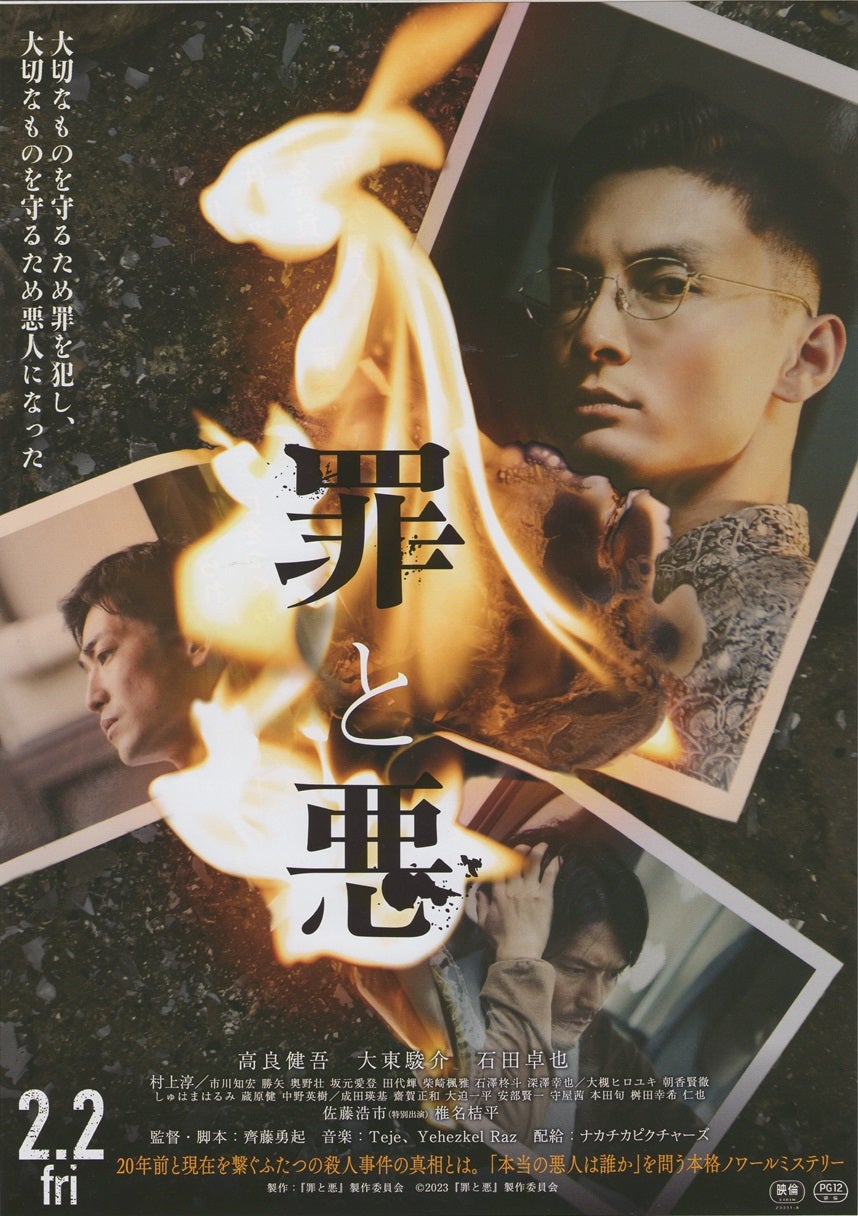
Sin and Evil (罪と悪, Yuki Saito, 2024)

A man not quite a yakuza and perhaps even what might be termed an ethical gangster tells one of his underlings that it isn’t a sin unless you believe it it is, which might in a sense be true in same way as Socrates says that no one does wrong willingly. Yet the heroes of Sin and Evil (罪と悪, Tsumi to Aku), Yuki Saito’s small-town crime drama, are marked by their guilt while trying to come to terms with traumatic events of 20 years earlier and their mutual decision to cover them up.

Echoing similarly themed films such as Stand By Me, Saito opens with idyllic scenes of the boys riding their bikes with the only hint of darkness offered by a disturbing conversation about an elderly man who is rumoured to be abusing children. However, it seems that Haru is living in a difficult domestic situation following the death of his sister with an abusive father and apparently neglectful mother. His best friend, Akira, is the son of a local policeman while the boys are also friends with a pair of twins, Saku and Naoya, whose family operate a tomato farm. Rounding up the group is Masaki who also seems to be living in difficult circumstances though his backstory is never fully fleshed out as he’s eventually found dead in a local river. Saku jumps to the conclusion that the old man must have abused Masaki, who was known to be friendly with him, and then killed him to keep him quiet. He drags Haru and Akira to the old man’s shack where he attacks and eventually kills him with a shovel. Haru decides to take the blame and torches the place, telling the other two boys to flee the scene.

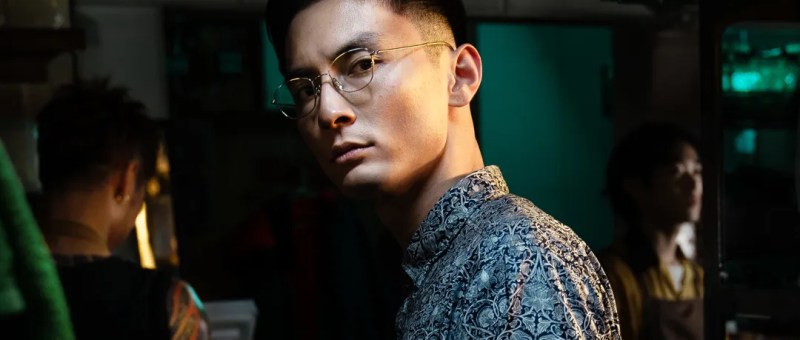
20 years later, it’s clear that each of them are still marked by what happened that day though Haru (Kengo Kora) appears to have built a good life for himself after serving time in juvenile detention even if the construction company he runs is friendly with local yakuza and gets its contracts through small-town corruption. He also operates a cafe where he employs delinquent boys while secretly using them as thieves but also in a more genuine sense looking after them and concerned for their welfare. His machinations are seen to be key in keeping order, working in tandem with police Inspector Sato (Kippei Shiina) who explains to a more idealistic Akira (Shunsuke Daito) how things are done around here which is essentially keeping ordinary people safe by managing crime rather than punishing or preventing it. The balance is only disrupted by some of Haru’s boys who stupidly steal far too much money from the local yakuza. Haru attempts to protect the young man concerned, but his body soon ends up in the river in exactly the same place as Masaki raising a series of questions about the nature of the earlier crime. 

What the film is trying to do is paint the world in shades of grey while looking for the parts where it’s darkest. It seems it’s not in doubt that the old man abused local children, though Haru and Akira now doubt he killed Masaki raising further questions about their killing of him. As the yakuza underling had said, it’s not a sin unless you think it is and Haru feels that he deserved to die for what he did to other kids so doesn’t feel any remorse for his actions even if he didn’t kill Masaki. But for Akira, the trauma lingers in other ways and he’s disturbed on learning his father may have been involved in covering up their crime and at least complicit in police corruption essentially teaching Sato how things are done in small-town policing. The conclusion Haru comes to is that they are all victims of the town itself, unable to break free of its provincial mores and petty prejudices.

Those would largely be a lingering homophobia and deep shame stemming from suffering sexual abuse as a child. As usual with these kinds of mysteries, the solution lies in the desire to prevent the truth being exposed though in this case the resolution is not entirely convincing when using one killing to cover up another couldn’t help but expose the truth anyway even when attempting to pin it on someone else who can no longer defend themselves. It also sidesteps the themes of small-town corruption and the dark heart of suburbia even as Haru points out that someone should have stepped in to support both himself and Masaki when they could see their families were struggling rather than just closing their curtains and pretending not to notice. The disruption of the friendship, which ought to be the heart of the drama, therefore lacks poignancy muddied by the various overlapping plot lines from the present day yakuza drama to the lost paradise that Haru longs to reclaim despite the otherwise apparently happy life he seems to be living now. Sin, the film seems to say, is in the eye of the beholder along with justice and retribution, and evil maybe just the same or merely invisible to those who choose not to see it.


Sin and Evil screened as part of this year’s Camera Japan.


International trailer (English subtitles)