SPY x FAMILY CODE: White (劇場版 SPY×FAMILY CODE: White, Takashi Katagiri, 2023)

The irony at the centre of the Folger family is that they cannot communicate effectively because they’re each afraid of blowing their cover. Adapted from the manga by Tatsuya Endo, Spy x Family was the smash hit anime of 2022 and now makes its way to the big screen with an epic adventure which threatens the foundations of a “fake” family which has become increasingly real to the extent that it may have come to eclipse the reason it was created.

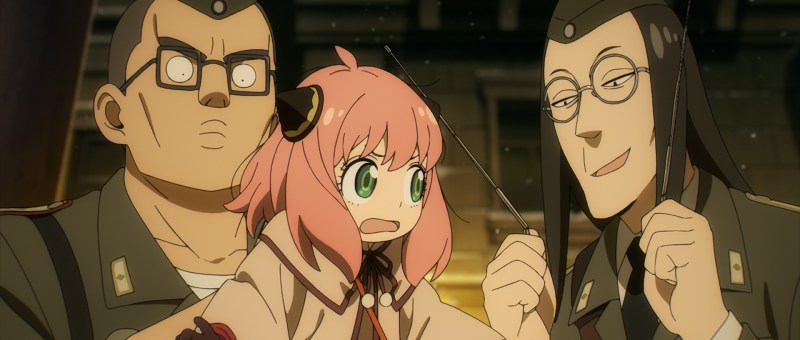
Newcomers to the franchise need not fear as the film is broadly standalone and gives a brief explanation of its setup in not dissimilar fashion to the voiceover intro of the TV anime. Codenamed “Twilight”, spy Loid Folger (Takuya Eguchi) has adopted a little girl, Anya (Atsumi Tanezaki), and married a local woman, Yor (Saori Hayami), in order to infiltrate an elite boarding school with the aim of targeting a reclusive politician through forging a connection with his younger son, Damian. What Loid doesn’t realise is that he’s completely in the dark about his new family. Anya is the only one who knows the whole truth as she is a telepath, while Yor is a secret assassin who agreed to fake marriage as cover to avoid detection by the authorities. Even the family dog, Bond, is a canine clairvoyant who was the product of an experimental program to breed super intelligent dogs. 

The mission is compromised by the fact that Anya is less than academically gifted and unlikely to gain all eight stars needed to join the elite group of students that would get her close to Damian and Loid close to his father. Having made so little progress, Loid’s handler reveals Operation Strix may be taken away from him and given to a political crony which would necessarily mean he’d have to give up the new family life to which he’s gradually become accustomed. But the family is also threatened by Yor’s insecurity and conflicted feelings for Loid, well aware their arrangement is “fake” but still anxious that Loid is having an affair and worried he’ll divorce her for not being good enough at the domestic life she too has come to value. Anya, meanwhile, obviously wants to keep to her new family together while helping her parents with various missions but can’t say anything for fear of exposing herself as a telepath and Bond as a clairvoyant. 

Echoing the extended cruise arc from the anime, the film follows the Forgers on a mini break to nearby Frigis in search of a regional dessert they hope will help Anya win another star only to end up swept into local politics. The long-form format of the feature surpasses that of the TV series in shedding its bitty, episodic structure for something more substantial though that may of course detract from its charms for those taken by the isolated vignettes of the show. Even so, the film doesn’t stint on quickly humour gaining the ability to deepen its ongoing gags culminating in a fantasy sequence animated like a kids drawing in which Anya meets the God of Poop and is rewarded for excellent service. 

Though what’s really about is once again the Forger family who must finally turn the wheel together in order to avoid certain death. Though fighting parallel battles, unable to simply explain what they’re doing and ask for help, the gang eventually end up in the same place united in their missions and also as a family having faced off various threats and reaffirmed their bonds which have by this point become very much real. Loid continues to struggle with the mechanics of his mission, frequently unable to read Yor’s insecurity and unwittingly fuelling it, and exclaiming that he doesn’t understand children nor have much clue how to manage Anya’s often madcap behaviour. The irony is that if he succeeds, the family will have to disband and he’ll lose this new sense of domesticity that’s becoming used to, but if he fails his nation may go to war and thousands of people will die. But until then his biggest problem is figuring out how Anya can win a baking contest and survive yet another impromptu family holiday without becoming embroiled in an international conspiracy. 


SPY x FAMILY CODE: White is in UK cinemas now courtesy of All the Anime.

UK trailer (English subtitles)

Images: © 2023 SPY x FAMILY The Movie Project © Tatsuya Endo/Shueisha
THE FIRST SLAM DUNK (Takehiko Inoue, 2022)

Takehiko Inoue’s basketball-themed manga Slam Dunk is a ‘90s landmark that also spawned a hugely popular TV anime adaptation. A few attempts had been made over the years to produce a feature-length film, but Inoue had turned them all down until, that is, the production team were able to come up a unique look that matched the author’s vision and truly made it seem as if the characters were “alive”. Finally impressed, Inoue then agreed to script and direct the anime himself even going so far as to retouch scenes in both 3DCG and 2D to ensure they fulfilled his high expectations. 

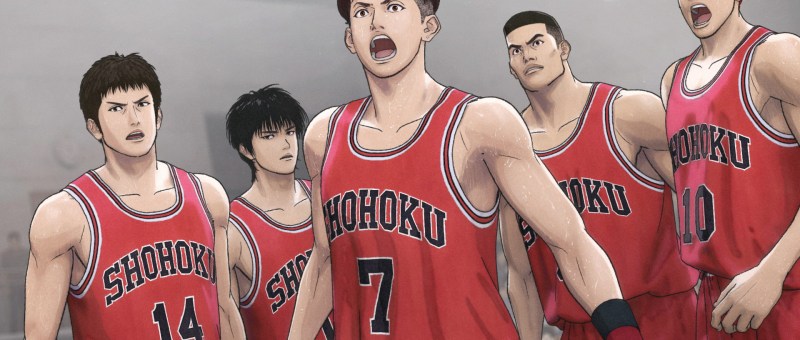
Titled The First Slam Dunk, the film takes place entirely over a single game but switches its focus from the protagonist of the manga, red-haired former delinquent Sakuragi (Subaru Kimura), to “Speedster” Ryota Miyagi who makes up for his short stature with nimble manoeuvres. Inoue cuts between the championship match with rivals Sanno and the players’ private lives as they battle their demons and insecurities on the court and off. 

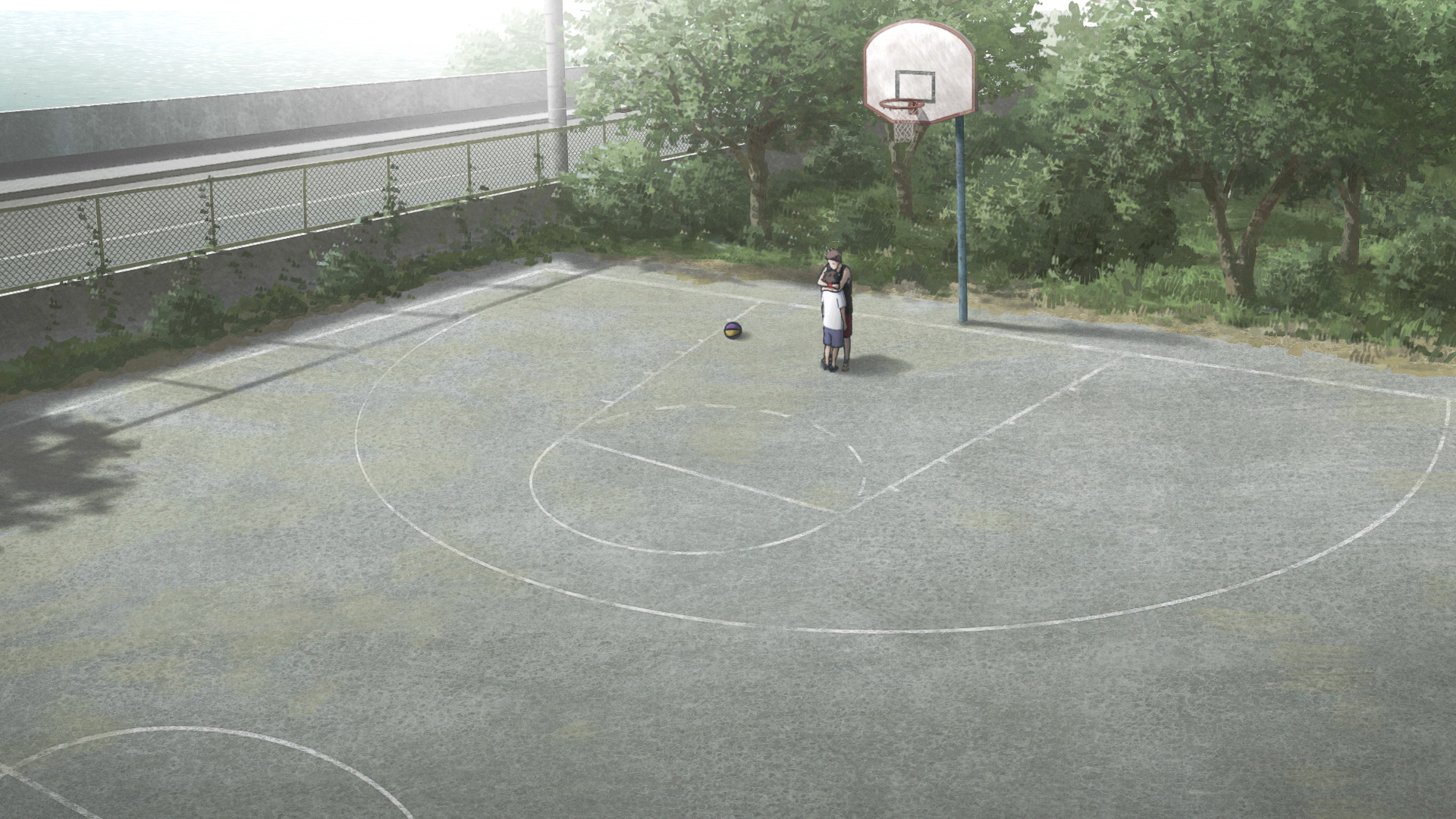
Originally from Okinawa, Ryota lost his father and brother in quick succession. Sota had been something of a mentor figure, getting him into basketball and encouraging him to keep playing even if others said there was no point because he was simply too small. When Sota chose to cut their practice short to go fishing with some friends, Ryota was of course upset and angry saying a few things he came to regret when Sota was lost at sea and never came back. “Cocky” as someone later describes him, Ryota uses bravado to mask his insecurity and struggles to redefine his relationships with his grief-stricken mother and younger sister while also competing with the shadow of his absent brother whose number he continues to wear even after moving to the mainland and joining a new high school team, Shohoku. 

As he later says, basketball was a means of dealing with his grief though it was difficult for his mother to support him because its associations with Sota. Showcasing the stories not otherwise told in the manga, Inoue taps into an adolescent sense of existential crisis and individual anxiety as filtered through the basketball game in which, as their quietly supportive middle-aged coach tells them, it’s only over when you decide to give up. Meanwhile, the guys from Sanno are experiencing something similar and most particularly Ryota’s opposing number, Kawata, even if the team is also given an edge of uncanny invincibility in the sometimes suspicious aura of their coach. 

Only by facing their individual anxieties can the guys begin to play a full role on the team, each of them as the coach says bringing their own unique talents and learning to play to each other’s strengths. In the end it comes down to willpower and self belief, continuing to play even when victory seems impossible and pressing for the final slam dunk even as the seconds tick down to zero. Inoue captures a real sense of tension in the game scenes, the dynamism of the 3DCG and the use of motion capture paying off along with some innovative creative decisions that really allow the game to come “alive” in the way Inoue seems to have envisioned with victory hardly assured as the guys go all out utilising not only their physicality but strategy and psychology in trying to claw their way back from 20 points behind with time fast running out. 

Very different stylistically from the average anime sports movie and particularly one following a previous TV adaptation, Inoue displays a truly remarkable sense of cinematic composition while he largely steers away from the kind of high school cliches common to the genre concentrating instead on strong characterisation and an otherwise poignant story of learning to live with grief as Ryota begins to become his own man while honouring his brother’s legacy. Often dazzling in its dexterity, Inoue’s directorial debut excels both on the court and off finding the small moments of doubt and confusion among each of its heroes and witnessing them achieve a psychological slam dunk that allows them to keep moving forward despite their fears and anxieties in refusing to give up even when it might seem hopeless. 


THE FIRST SLAM DUNK screens July 26 as the opening night gala of this year’s JAPAN CUTS and opens in cinemas in the US & Canada July 28 courtesy of GKIDS.