By 1980 Toru Murakawa was an in-demand director thanks largely to his extremely successful collaborations with late ‘70s icon Yusaku Matsuda. Fresh off the back of the Game series, Toei Central Film hired him to do for their aspiring star Hiroshi Tachi what he’d done for Matsuda with grimy noir Target (薔薇の標的, Bara no Hyoteki). Interestingly enough Target shares its Japanese title with the 1972 drama The Target of Roses, a truly bizarre thriller in which a hitman stumbles on an international nazi conspiracy that was penned by the same screenwriters but is otherwise entirely unconnected with the earlier film and shares no common plot elements whatsoever.
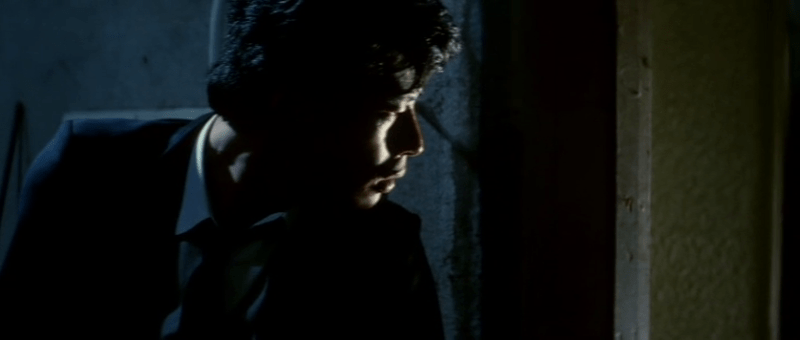
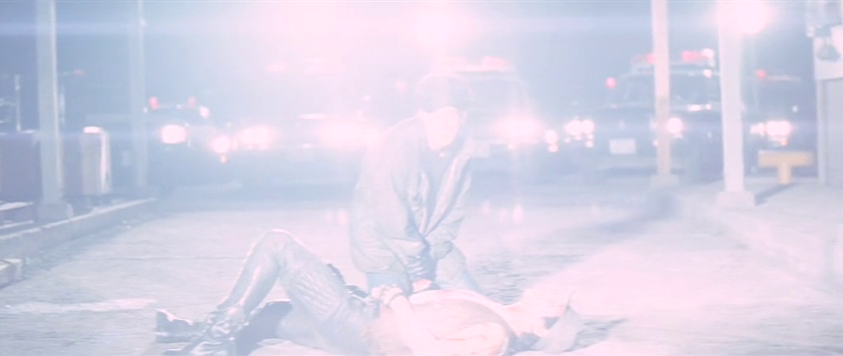
Set firmly within the contemporary era, the action takes place in Yokohama and is essentially a tale of proto-heroic bloodshed as the hero, Hiroshi (Hiroshi Tachi), seeks vengeance for the death of his best friend, Akira, during a drug deal which is ambushed by a third party who make off with both the drugs and the money killing Akira in the process. Hiroshi goes to prison for four years and then sets about getting some payback on his release by chasing down the Idogaki gang through gunman Yagi who he believes was directly responsible for Akira’s death.
The plot is perhaps straight out of the Nikkatsu playbook, a little less honour than you’d find in the usual Toei picture though also cynical and nihilistic in keeping with the late ‘70s taste for generalised paranoia. Hiroshi is soon targeted by the Idogaki gang, but is saved by an old prison buddy, Kadota (Ryohei Uchida), who is a little older than he is and to an extent has a noble reason for his life of crime in that he has a son who became disabled after contracting polio and wants to get enough money together to make sure he’ll be alright when he can no longer look after him. Kadota then adds a third a man, Nakao, a former narcotics cop who jokes that he was kicked off the force for rape but according to Kadota was forced out for noble reasons after his attempt to help a friend backfired. The three men team up to turn the tables on Idogaki by ambushing his own drug deal with, in a throwback to ‘60s Sinophobia, gangsters from Shanghai.
Meanwhile Hiroshi is caught between the life he had before and the contemporary reality in reuniting with his former girlfriend Kyoko (Yutaka Nakajima) who has evidently become the mistress of a wealthy man and is presumably the mysterious benefactor who paid all his legal fees. After a meet cute at a florist he also strikes up a tentative relationship with a wealthy young woman, the daughter of a CEO who plans to move to Mexico. Despite the rising prosperity of Japan in the early ‘80s, pretty much everyone has their sights set on going abroad, Kadota planning to head to Canada after making sure his son is well provided for. Yet Hiroshi is trapped in the Japan of the past, obsessed with vengeance for his friend while torn by his relationship with Kyoko who similarly wants to exit her comfortable yet compromised life to return to a more innocent time at Hiroshi’s side while unbeknownst to him the mistress of high ranking Idogaki boss Hamada.
What becomes clear is that there is no prospect of escape from contemporary Japan, not even perhaps in death, Hiroshi left alive but dead inside at the film’s conclusion having committed a kind of spiritual suicide born of the dark side of what remained of his honour in seeking vengeance for the death of his friend who had seemingly only participated in the drug deal at Hiroshi’s command in an effort to improve the fortunes of their gang. Once again produced by Toei’s subsidiary Toei Central Film, Target has lower production values than the films Murakawa was making with Matsuda (who has a small yet memorable cameo as a rockstar whose life has been ruined by drugs) with non-synchronised dialogue and a grimy aesthetic which only adds to its sense of fatalistic nihilism otherwise enlivened by Murakawa’s artful composition and atmosphere of moral ruin in which there is no more humanity nor justice.
 Windows on Worlds