A Swordsman in the Twilight (황혼의 검객, Jeong Chang-hwa, 1967)

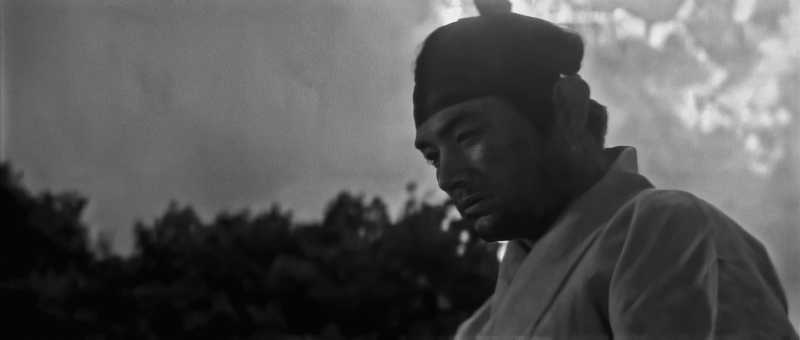
Jeong Chang-hwa is better known for the films he made with Shaw Brothers in Hong Kong, including the iconic King Boxer which helped to kick start the Kung Fu craze of the 1970s, than for earlier films he made in his native Korea. Nevertheless, while he was there he also instrumental in creating a new genre of Korean swordplay films with A Wandering Swordsman And 108 Bars of Gold and 1967’s A Swordsman In The Twilight (황혼의 검객, Hwanghonui Geomgaek).

Drawing inspiration from both Japanese samurai movies and King Hu’s wuxia dramas, the film is set in 1691 and like many Korean historical dramas revolves around intrigue in the court. Our hero is however not a high ranking courtier but as he describes himself a struggling vassal who was lucky to get his job as a lowly palace guard because he has no real connections nor does he come from a prominent family and his skills and long years of study mean almost nothing in this society ruled by status. The more things change, the more they stay the same. In any case, he was not unhappy with his life, got on well with his father-in-law, a poor scholar, and had a loving wife and daughter, who like him, valued human decency over ambition. 

But it’s that gets them into trouble when the venomous Lady Jang stages a palace coup to usurp the position of rightful queen, Min. Queen Min is depicted as a shining example of traditional femininity and idealised womanhood. Though the situation she finds herself in is unfair, she bears it with good grace and refuses the small comforts others offer her saying only that she is a sinner and it’s only right she suffers this way for displeasing the king. Hyang-nyeo (Yoon Jeong-hee), wife of swordsman Tae-won (Namkoong Won), was once her servant and shares her birthday so feels an especial connection to her. Pitying Queen Min seeing her forced to walk barefoot through the mud she offers her shoes and for this crime is hounded by the Jang faction on account of her supposed treason.

Having taken the local governor and his clerk, who are also against the Jang faction but don’t know how to oppose it, hostage, Tae-won narrates his long sad story and reasons for his desire for revenge against corrupt courtier Oh Gi-ryong (Heo Jang-kang) who, it seems, is also motivated by resentment and sexual jealousy after having once proposed to Hyang-nyeo but been instantly rejected by her father who did not wish to marry his daughter off to a thug. As such, he comes to embody the evils of the feudal order in his casual cruelty and pettiness. When we’re first introduced to Tae-won he saves a young woman who was about to be dragged off by Gi-ryong’s henchmen presumably as a consort for their immediate boss, Gi-ryong’s right-hand man, but is warned by the other villagers that he should leave town quickly else the Jang gang will be after him. That is however, exactly what Tae-won wants. He fights a series of duels with Gi-ryong, the first of which ends with Gi-ryong simply running away when Tae-won breaks his sword and in their final confrontation he resorts to the cowardly use of firearms not to mention an entire squad of minions pitched solely against a wounded Tae-won and the unarmed governor.

What it comes down to is a last stand by men who know the right path and are now willing to defend it rather than turn a blind eye to injustice. Tae-won’s own brother (Park Am) had thrown his lot in with Gi-ryong in the hope of personal advancement, willingly aligning himself with the winning side and complicit in its dubious morality. This of course puts him in a difficult position, though he implies he will be prepared to sacrifice Tae-won and his family if necessary even if he also tries to find a better solution such as suggesting Tae-won kill Queen Min to prove his loyalty to the Jang faction. In an odd way, it speaks to the contemporary era as a treatise on how to live under an authoritarian regime not to mention the creeping heartlessness of an increasingly capitalistic society. 

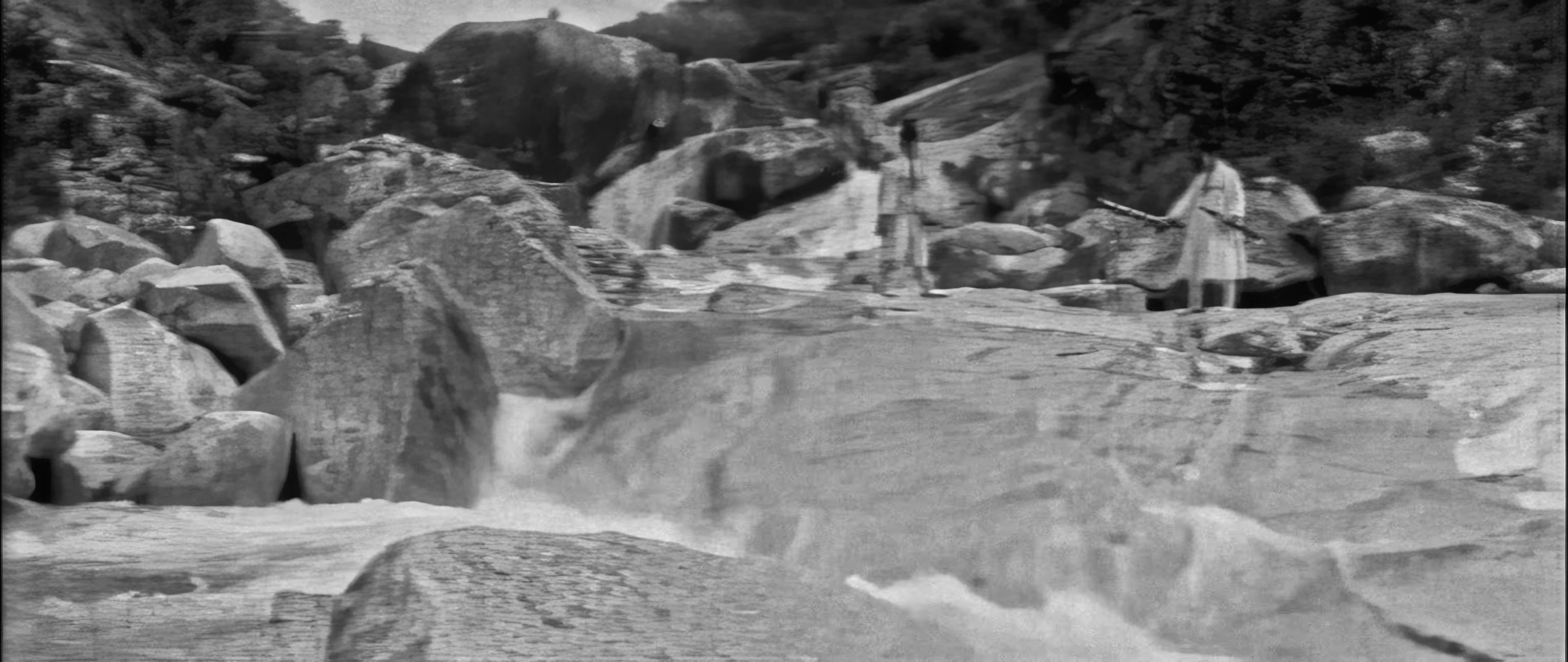
This sense personal rebellion may owe more to the jianghu sensibility found in the wuxia movies of King Hu than to the righteous nobility of the samurai film even if the ending strongly echoes chanbara epics in which the hero is displaced from his community and condemned to wander as a perpetual outlaw in a society which does not live up to his ideals. While staging beautifully framed action sequences such as fight at a rocky brook, Jeong undoubtedly draws inspiration from Hu in the use of trampolines and majestic jumps that have an almost supernatural quality. The sword fights are largely bloodless until the final confrontation but also violent and visceral. Gi-ryong’s henchman plays with a minion he feels has betrayed him by lightly scratching his throat before going in for the kill and such cruelty seems to be a hallmark of the Jang faction. But despite the seeming positivity of the ending in which a kind of solidarity has been discovered between Tae-won and the governor, the film ends on an ambivalent note with the fate of the nation still unknown as Lady Jang stoops to shamanic black magic to hold sway and darkness, the lingering shadows of authoritarianism, still hang over the swordsman even if he is in a way free as s rootless wanderer no longer quite bound by feudal constraint. 


A Swordsman in the Twilight screened as part of Echoes in Time: Korean Films of the Golden Age and New Cinema.
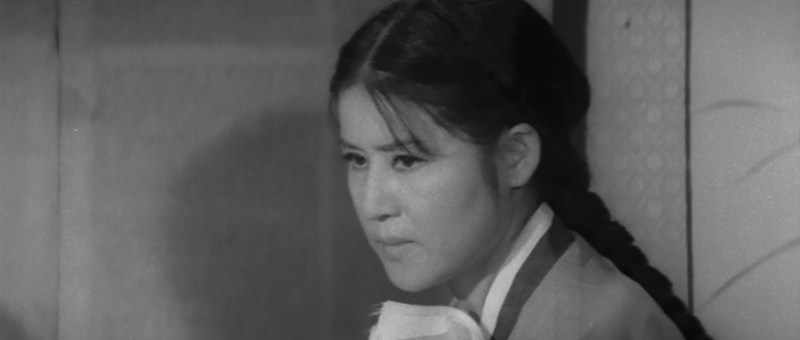
Daughter-in-Law (민며느리, Choi Eun-hee, 1965)

Domestic power struggle meets oppressive patriarchal social codes and entrenched class prejudice in Choi Eun-hee’s lighthearted marital drama, Daughter-in-Law (민며느리, Minmyeoneuli, AKA The Girl Raised as a Future Daughter-In-Law). One of the biggest stars of Korean cinema’s golden age, Choi was only the third woman to direct a feature film and the first to direct herself as the leading lady, adapting a popular radio serial in which a pure hearted young girl finds herself suffering while patiently fulfilling the role of a dutiful daughter-in-law to a tyrannical middle-aged woman. Though the film may eventually reinforce traditional gender roles and the patriarchal norms of the conventional marriage it also subtly undercuts them in its final bid for female solidarity as well as in the surprisingly frank depiction of the sexually active relationship between the middle-aged in-laws. 

Perhaps surprisingly, the film opens with a montage sequence of a young woman doing laborious household tasks while the title song muses on the difficulties of married life. For young Jeomsun (Choi Eun-hee), the problems are compounded as we discover she was in effect sold into marriage because of her once wealthy family’s poverty and as her intended husband is still only a child is treated as an unpaid housekeeper by her harridan of a mother-in-law, Mrs Kim (Hwang Jung-seun). “Serve your parents and respect your husband, that’s this country’s way” Mrs Kim reminds her, continually dissatisfied with everything but mostly that she isn’t getting enough respect or attention as the head of the household (in the domestic sense at least). 

As thoughtlessly cruel as she often appears to be, Mrs Kim’s behaviour can perhaps be seen as merely an attempt to leverage the only power she will ever have as the matriarch in her own house, a power made all the greater by the fact her son is still a child and her future daughter-in-law only afforded a liminal space within the family hierarchy. She continually reminds her husband (Kim Hie-gab) and Jeomsun that she too had a mother-in-law who treated her badly, often making her work through the night, and so her treatment of Jeomsun is a way of paying down the system, a facet of the “custom passed down through the generations”. Having been badly treated herself, she relishes her new sense of power and treats her daughter-in-law badly as misdirected payback for her own youthful suffering. 

Jeomsun herself has internalised a sense of the system’s righteousness, fully believing that she must do her “duty” as a good daughter-in-law even when her own mother points out that her in-laws are hardly doing their duty when they wilfully mistreat her. Added to notions of patriarchal subjugation is a further class dimension that leaves Jeomsun at their mercy because she has become impoverished, her mother having consented to her marriage only reluctantly in an attempt to avoid having to sell the family house. Jeomsun had been in love with a local man, Sugil (Park No-sik), but felt their union was impossible while her father was alive because he was of a lower social class and continues to believe it improper even after his death with only her mother lamenting that she wishes she had found a way that her daughter could have had a happier life marrying a man she loved. For his part, Sugil attempts to buck the system by continuing to pursue her, hoping to “buy” her back off the Kims after raising money while the marriage remains unconsummated and therefore unofficial. 

Choi’s age, then in her late 30s though presumably playing the part of a young woman in her late teens or early 20s, further adds to the incongruous inappropriateness of her position in the household as the future wife of a boy who is still quite clearly a child. Yet the young master, Bokman, appears to dote on her, often taking her side against his mother but in the end unable to defend her, too afraid of Mrs Kim to tell the truth and risk having to take responsibility for his actions preferring to let Jeomsun pay for them instead. In an interesting role reversal, it’s Mr Kim who is the perpetual peacemaker, a kind and patient man who quite clearly loves his firecracker wife despite her harsh demeanour. The slightly comedic depiction of their cheerfully active sex life as a middle-aged couple is perhaps at odds with the often prudish times, but also softens Mrs Kim’s otherwise difficult character until such time as she’s tricked into a moment of self-realisation in the recognition that her resentment of Jeomsun is really a reflection of her maternal jealousy and therefore entirely unfair. 

It’s this momentary epiphany that brokers an opportunity for a new female solidarity not only between Jeomsun and her mother-in-law but also with her own mother who must then find the magnanimity to forgive Mrs Kim for treating her daughter so badly in the first place. What began as a tale of patriarchal cruelties, a young woman sold as a wife to a spoilt child at the expense of her own romantic fulfilment, ends with a wilful reversal of the “custom passed down through the generations” as Mrs Kim agrees to cede some of her power in treating her daughter-in-law as more of an equal while making space to welcome her mother, another mother-in-law, into her home. “We all have to live according to our duties” Jeomsun had sadly explained to her former love, yet what she discovers is that duty is a two way street and lies perhaps more in mutual compassion than in slavish devotion to outdated tradition. 


Daughter-in-Law is currently available to stream in the UK as part of the Korean Cultural Centre UK’s Korean Film Nights: Filming Against the Odds where it will be followed by Choi Eun-hee’s second film as a director A Princess’ One Sided Love on 27th May. Other films streaming in the season include Park Nam-ok’s The Widow (streaming throughout), Li Mi-rye’s My Daughter Rescued From The Swamp and Lee Seo-gun’s Rub Love (both 10th June).

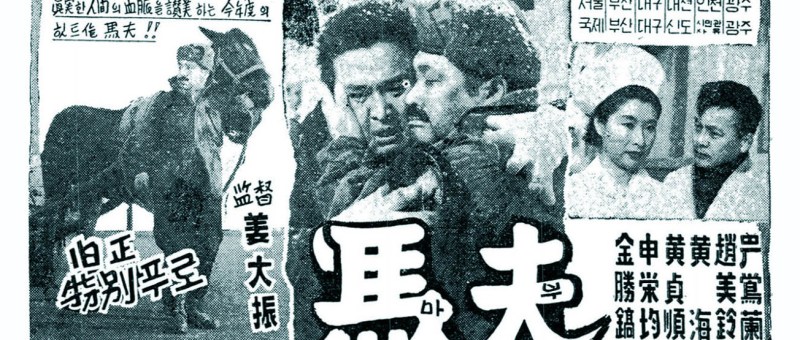
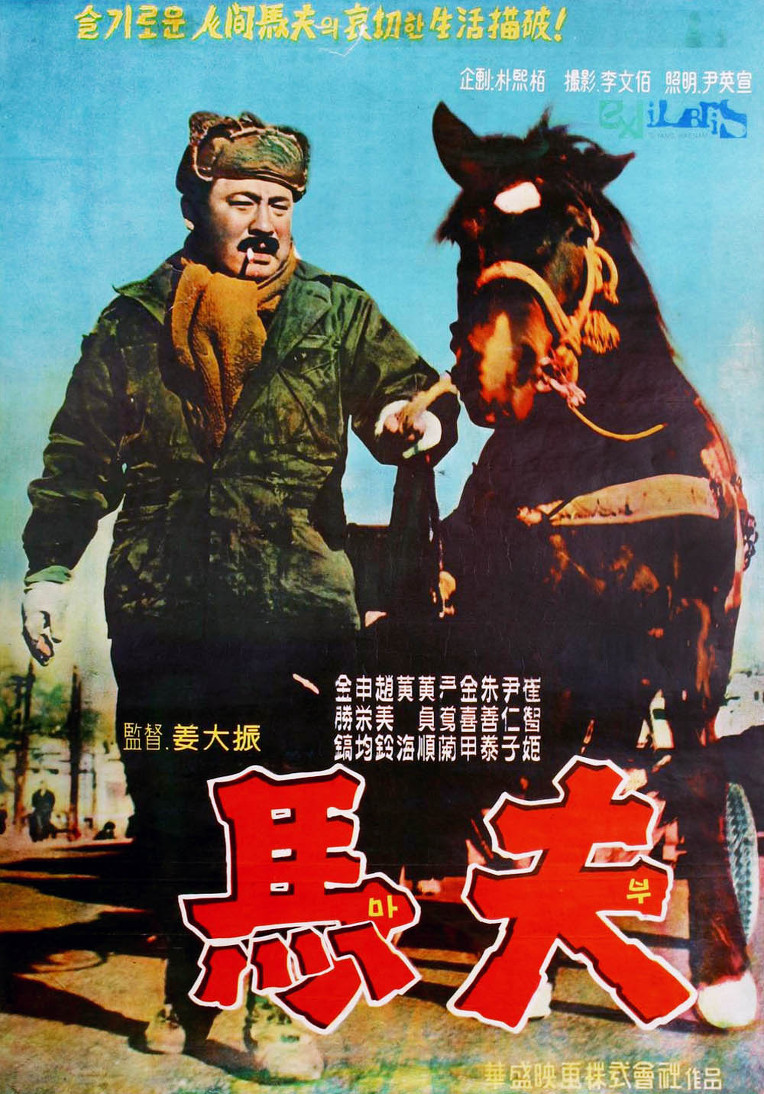
A Coachman (馬夫 / 마부, Kang Dae-jin, 1961)

A coachman poster 1The Korea of 1961 was one of societal flux, mired in post-war poverty but striving towards a brighter economic future. The rising tides of affluence had given birth to a new middle-class with the old feudal attitudes while others were largely left behind on the shores of prosperity. Kang Dae-jin’s A Coachman (馬夫 /마부, Mabu), the first Korean film to win a major international award with the Silver Bear Extraordinary Jury Prize at the 1961 Berlin Film Festival, finds itself at just this juncture as an old man pulling a horse and cart is forced to face up the automobile age while worrying what is to become of his family in the perilous modern society.

Ageing patriarch Chun-sam (Kim Seung-ho) has been guiding a horse and cart since his father died in Manchuria when he was 14. Technically speaking, he is not the owner of his horse, Dragon, but operates it on behalf of the owner, the mistress of an upper middle-class salaryman. As business is slow, she is always threatening to sell the horses which would leave Chun-sam and the other coachmen without a means to support themselves. Meanwhile, Chun-sam’s four children whom he raised alone after his wife passed away at a young age are each looking for different ways out of their impoverished existence. Chun-sam married off his eldest daughter Ok-nyeo (Jo Mi-ryeong) who is deaf and mute to a man he saved during the Korean War but he is abusive and treats her like a servant while openly inviting his mistress into their home. Oldest son Su-eop (Shin Young-kyun) is currently studying to retake the bar exam for the third time, middle daughter Ok-hee (Um Aing-ran) has begun dating a shady salaryman, and youngest boy Soo-up has become a high school delinquent.

Kang opens with an exciting sequence following Soo-up who has attempted to steal a bicycle as he tries to escape from its owner chasing him. Returning home covered in mud, slowing to a walk and putting his student’s cap back on to avoid suspicion, he makes his way from the modern houses of the new city back through traditional Korean homes towards his rather makeshift family abode which they share with the horse stabled in a side room. Chun-sam is obviously not a wealthy man, but the family bear their struggles with fortitude, perhaps to some extent avoiding each other but rarely arguing directly. Even the news that Ok-hee has once again quit her latest job, working in a cafe, in record time is greeted with exasperated acceptance rather than anger or resentment.

Ok-hee quit the cafe to fall in with her ultramodern friend Mi-ja (Choi Ji Hee) who has arranged a double date with a pair of sleazy executives, telling them that Ok-hee is a university graduate and daughter of a wealthy CEO. Intensely ashamed of her working class background as a mere coachman’s daughter, Ok-hee tries to catapult herself into the middle classes by weaponising her sex appeal, too proud to take the long way round through honest work. She rejects the attentions of family friend Chung-soo (Hwang Hae) who is good and kind because he is only a driver, taking little notice of his earnest warning that nothing good ever comes of hanging around with shady types like her boyfriend. He keeps trying to persuade her to take a job in a nearby factory, but she still thinks she’s above that kind of life and is convinced she can get the executive to marry her.

Chang-soo’s interest is of course romantic, but the advice he gives her is honest and altruistic. Unlike his unsavoury money lender father, Chang-soo is a salt of the earth type, but good men are hard to find and trying to escape poverty through marriage is a road fraught with danger as Ok-nyeo discovers. Chun-sam thought he’d done the right thing in marrying her off, believing a match would be hard to come by because of her disability and worrying she’d be left alone with no-one to look after her, but she is forced to endure mistreatment and humiliation at the hands of her husband. Ok-nyeo repeatedly returns to her family home, only able to show them the bruises to explain what’s happening, but Chun-sam always sends her back unable to break with the old patriarchal rules which insist that once married she must forever remain this man’s wife.

Chun-sam faces a similar dilemma of his own when he strikes up a tentative relationship with the kindly maid at his boss’ mansion who often heats up rice wine for him and goes out of her way to give him little treats. The odious moneylender is also after Suwon (Hwang Jung-seun) who is considered “old” to be unmarried at 37, but she favours Chun-sam because, as she says, she has always known him to be a “good man”. The “courtship”, if you could call it that, is innocent in the extreme with Suwon largely taking the lead while Chun-sam lags bashfully behind, childishly excited but also embarrassed because he cannot afford a wife and would be ashamed to ask her to share his life of poverty.

Looked down on by everyone, Chun-sam is forced to go cap in hand to his employer where he is made to “know his place” and reminded he is “just a coachman” with no right to talk back. When Hwang, the boss’ lover, injures Chun-sam through reckless driving, Su-eop becomes fed up with persistent feudalism and intends to have a polite word but is quickly shut down, reminded that he is nothing more than coachman’s son and told that his dreams of becoming a lawyer are not only unrealistic but an offence to the social order.

Su-eop alone takes the conventional route out of poverty in pursuing education and a steady government job, but is repeatedly told that he’s getting above himself and should be content with becoming a coachman like his dad, despite the fact that being a coachman is already close to an obsolete profession given the increasing affordability of the motorcar. He alternates between guilt and despair, wondering if he’s being irresponsible in pinning all his hopes on the bar exam and worrying that he’s not doing enough to support the family.

Yet Chun-sam, forced to consider his own obsolescence, is keen for him to succeed, not only because the family needs him to make a success of himself but because he wants his son to have a better kind of life than he had taking full advantage of the possibilities of the new society. Though their lives are hard, Chun-sam and his family remain kind and honest (even Ok-hee and Suo-up eventually conclude that hard work is the way after all), bonding with others of the same mindset like the maid Suwon who eventually quits her job in protest, and Chang-soo who rejects his father’s underhanded venality for simple human decency. United by friendly solidarity, the family is repaired and resolves to live on as a tiny unit of cheerful resistance against the feudalistic greed and selfishness of the modern society.


A Coachman was screened as part of the 2019 London Korean Film Festival.