Ghost Train (괴기열차, Tak Se-woong, 2024)

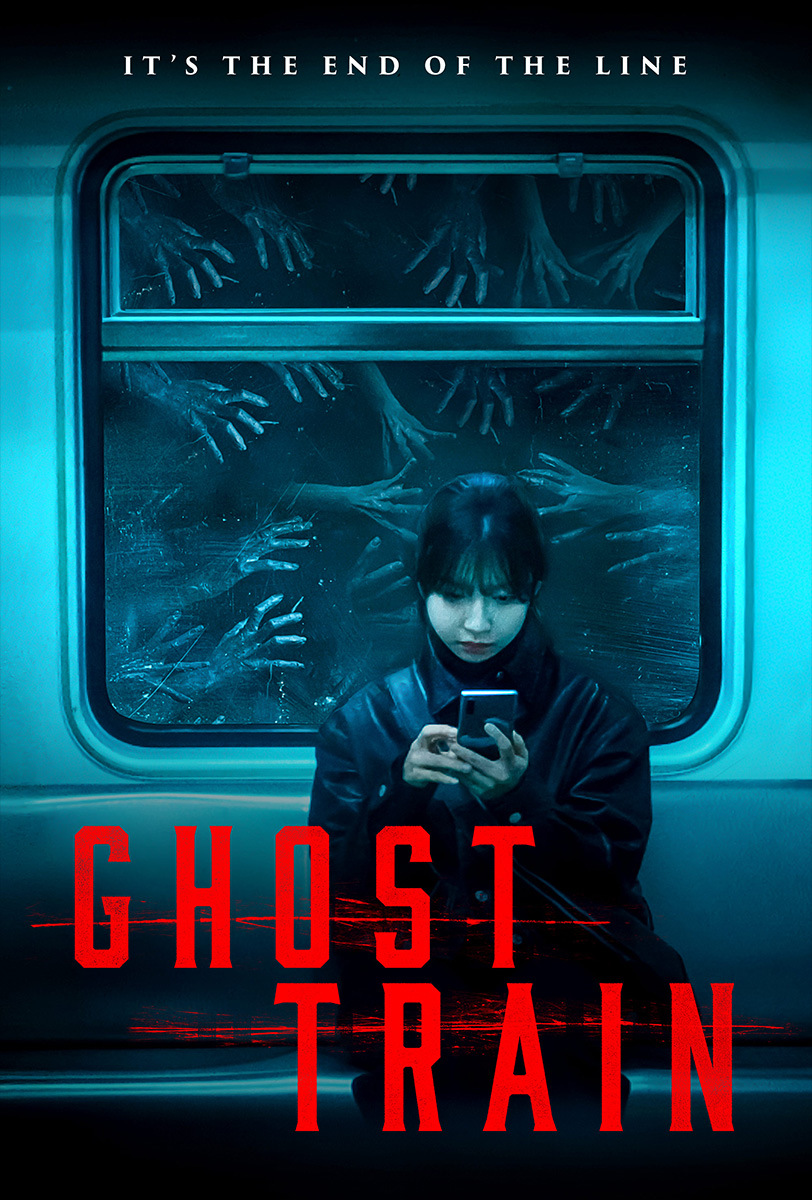
Why are there so many stories about haunted stations? Perhaps it’s their liminal status that gives them an eerie quality. By definition, you’re not supposed to stay here. To that extent, they’re a kind of purgatorial space between one destination or another. We leave so quickly it’s like a part of us is left behind, hovering, and never able to find the exit. In any case, Gwanglim seems to have its fair share of ghost stories as investigated by “horror queen” Da-kyung (Joo Hyun-young) in an attempt to boost the fortunes of her failing YouTube channel.

She herself admits that her problem is she’s run out of content, which is why she’s badgering the stationmaster (Jeon Bae-soo) for information on this supposedly haunted spot. The funny thing is that the stationmaster seems to know a lot more than you’d expect about these cases, including their full backstories, which have nothing to do with the station or his job. You’d think that would give Da-kyung pause for thought, but she’s already drunk on the promise of a scoop and has ironically convinced the stationmaster to talk with the gift of alcohol. As she continues to listen to his stories and the ratings of her channel improve, she takes on an increasingly vampiric appearance while the stationmaster seems to become ever sicker. Nevertheless, Da-kyung only becomes thirstier for gruesome tales even as the stationmaster tries to warn her off by asking what the real reason behind her animosity to rival beauty influencer Lina (Jung Han-bit) might be.

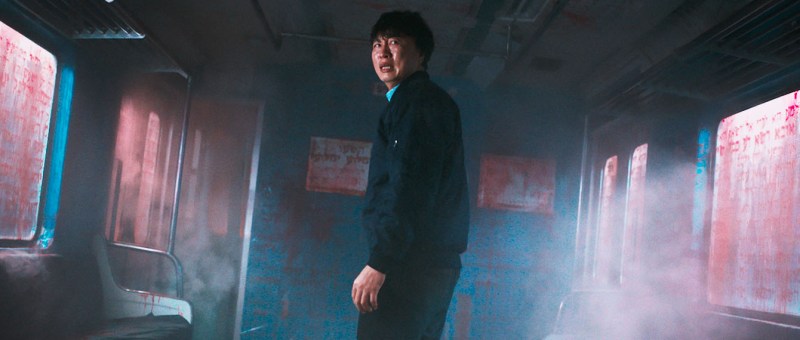
In this, her story parallels that of a young girl on the train who is insecure in her appearance and contemplating plastic surgery only to be haunted by a woman in bandages seemingly jealous of the beauty the young girl doesn’t know she already has. Da-kyung has a crush on her boss, Woo-jin (Choi Bo-min), but thinks he prefers Lina and not just because her channel pulls in millions of viewers. Lina is a classic mean girl who endlessly puts Da-kyung down as a means of asserting her own superiority while Da-kyung secretly looks down on her for her vacuity. As her channel improves and she grows in confidence, Da-kyung sheds her dowdy outfits for something a little more stylish but is still consumed by resentment towards Woo-jin in her, it seems possibly mistaken, belief that he prefers Lina because she aligns more closely with socially defined ideas of typical femininity in her tendency to behave like a silly girl who can’t do anything for herself except look pretty around men. 

It is, as the stationmaster says, foolish to chase after what you think you’re missing and end up losing what you already had instead of learning to happy just with that. The other stories too are about overreaching greed, such as that of a homeless man who discovers a magic vending machine that disappears people and allows him to pick up their clothes and wallets to enrich himself though he never escapes the station despite his increasing desire to disappear random people until the point he realises he has consumed himself. Da-kyung is urged to delete her videos by someone who encountered something dangerous at the station, explaining that it’s built on the former site of a chapel that belonged to a cult where a mass suicide took place, further suggesting that the location itself is greedy for the souls of those who were, in a way, trying to turn away from this hyper-capitalistic vision of the world only to fall victim to it.

The stationmaster too dislikes those who profit from the misery or misfortune of others, which is what he assumes Da-kyung to be doing in her voracious appetite for ghost stories. In the very first tale, a young woman repeatedly bangs her head into a glass door, but no one attempts to help her. Everyone just moves to another carriage or generally away from her. These stories are only interesting for their gore and strangeness, no one really cares about the victims or learning from the past, which is to say we’re stuck in the station reliving the same trauma and unable to progress to a better a place. Da-kyung is stuck here most of all, and in her way, also hungry for souls lured in by lurid tales of untold horrors.


Ghost Train is released on Digital in the US on February 17 courtesy of Well Go USA.

Trailer (English subtitles)
XX+XY (Lee Soh-Yoon, 2022)

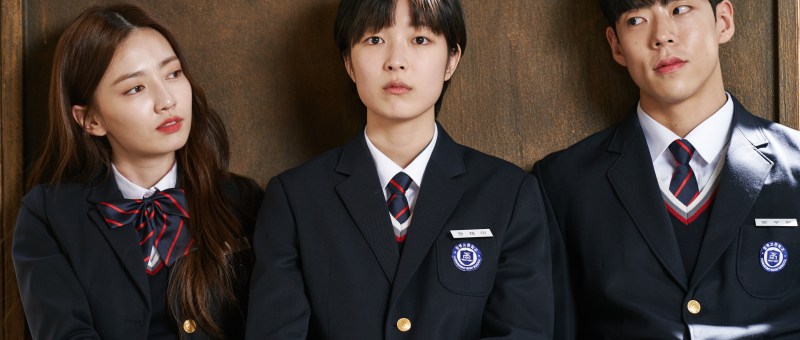
According to the voiceover narration that opens Lee Soh-yoon’s lighthearted teen drama XX+XY, we live in an age of choices yet sometimes choice can itself be a burden. At least that’s how Jay comes to see it having been born intersex but encouraged to think that at some point they’re going to have to choose whether to live as a man or a woman as if those are the only options or the choice to continuing living just as they are is not available to them. 

In essence many of their problems could be solved by reducing social dependence on the gender binary. Having been mainly home schooled, Jay has decided to attend a regular high school in part to help them figure out who they are through interacting with other teenagers who, they discover, are also struggling with many of the same questions in trying to decide who they’ll be. Yet for Jay, there’s also the issue of social stigma surrounding the reality of their life as an intersex person which is little understood by the world around them. When their identity is exposed by a malicious person, Jay’s teacher sighs and asks “Why didn’t you hide it better?”, prompting their response that their identity is not something shameful that needs to be concealed while suggesting that the school is on one level at least failing in their duty of care in refusing to protect them from the fallout of being outed which is in part their fault in stemming from the indiscretion of a teacher. 

The idea that they have something to hide is also particularly hurtful to Jay because of their unusual family circumstances given that they were adopted by a couple in a happy marriage of convenience between a closeted gay man and a woman otherwise uninterested in marriage. Their father’s partner now also lives with them and is very much a part of the family as can be seen in cheerful family photo they have hanging on their living room wall. Jay’s father tells them that he wants them to live in a world where they can love freely without fear of judgement or of feeling forced into the kind of arrangement he and their mother have made, their happy partnership not withstanding. On the other hand, it’s also he who first raises the potentially problematic idea that Jay should decide their binary gender based on their sexual orientation only to be firmly slapped down by their mother. 

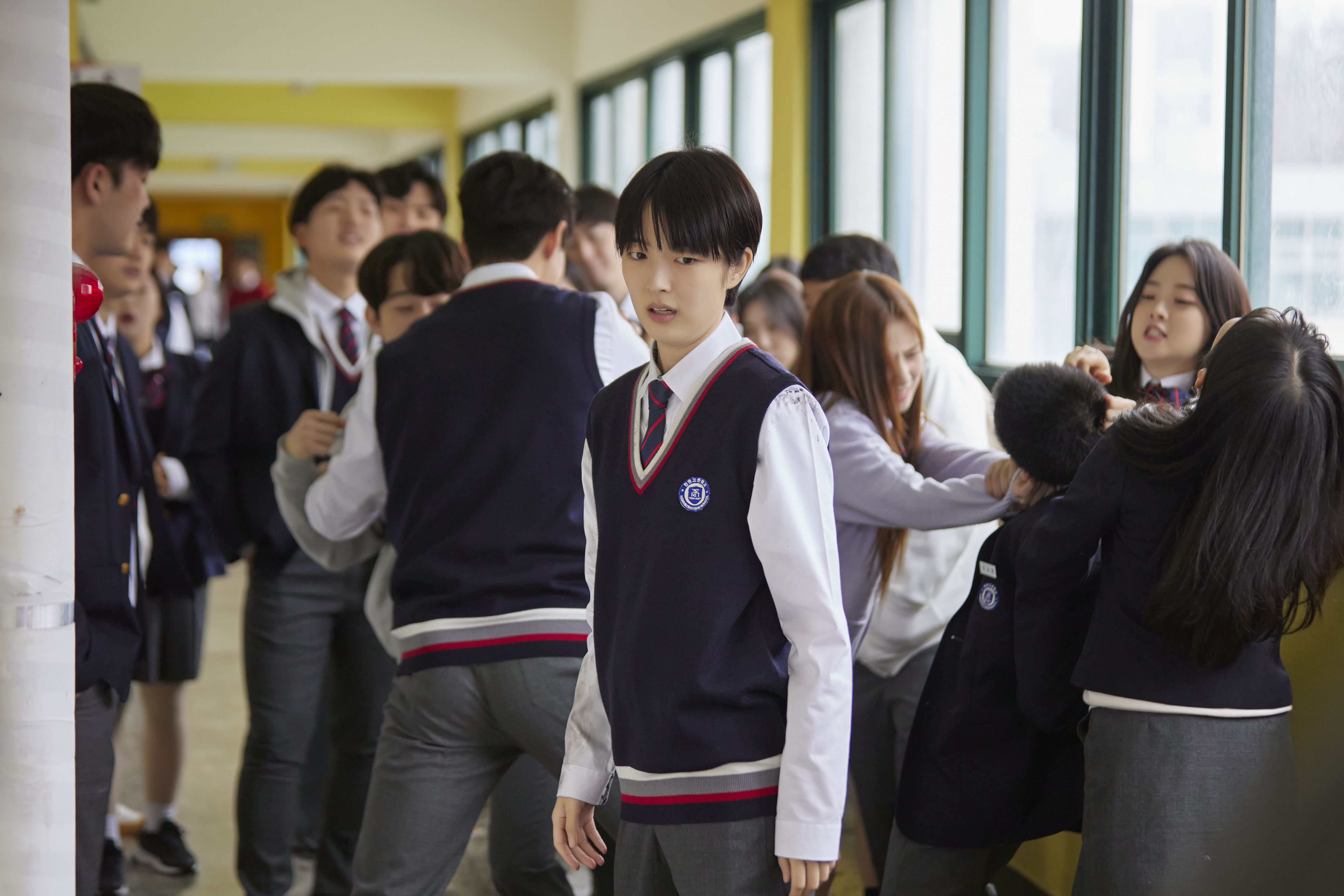
This is partly the thesis of the film, that Jay is figuring themselves out based on their feelings towards two potential suitors in childhood best friend Sera who’s always known that Jay is intersex and the smitten Wooram who fell for Jay thinking they were a girl and then confused by their more masculine presentation on arrival at school. As Sera later points out, Jay never directly states they are a boy but everyone assumes them to be one because they are wearing a boy’s school uniform and have short hair. It is the school that force Jay to make a concrete choice because of its persistent gender segregation which extends from uniforms, single sex bathrooms, and classroom cliques to different activities for boys and girls in PE. Jay has to make a choice because they have to pick a bathroom, only using the men’s means there’s no bins to dispose of sanitary pads forcing Jay to carry them around until they can find a place to discreetly dispose of them. The boys in Jay’s class are jealous of their popularity with girls, while immaturely gossiping about another boy they regard as effeminate and possibly gay because he is “small” and hangs out with the girls a lot. 

Meanwhile, the conservative attitudes towards sex and romance held by the school and society at large are also in themselves counterproductive. Teens try to buy condoms to be responsible but are turned away because they don’t have ID or a note from their parents and are even shouted at by a nosy old lady at the checkout all of which has them wondering if they should just go ahead without protection rather than giving up on the idea. When Jay’s intersex identity is revealed online, the teachers are more concerned about the concurrent rumour that they and Sera have slept together rather than the breaching of Jay’s privacy, only interested in what the other parents might say or that Jay’s identity on its own may negatively affect their reputation aside from the developing sex scandal. 

In any case supported by their new friends, Jay gains the confidence to believe that they, and everyone else, are good enough as they are and that there isn’t any point in worrying about the people who won’t accept them as they are now. The film may still imply that there’s a binary choice to be made and that whoever Jay decides to pursue romantically has a large impact on it, but nevertheless affirms Jay’s identity as it is and makes clear that it’s they who have a free right to define themselves independently of any social mores or commonly held beliefs. Warmhearted and generous of spirit, Lee’s teen drama finds that largely the kids alright treating each other with kindness and respect when given the opportunity to do so and only waiting for the adult world to catch up. 


XX+XY screened as part of this year’s BFI Flare.

International trailer (English subtitles)