The Whole Family Works (はたらく一家, Mikio Naruse, 1939)

A young man becomes fed up with the constraints placed on his life and asks for the opportunity to improve his circumstances, but knows that to do so will leave his family at a disadvantage, at least in the short term. Is his request selfish, or are his parents selfish for exploiting the labour of their children and thereby impeding their progress in the world? As in many of Naruse’s films, the great enemy is poverty, but as the wise teacher Mr Washio says, the solution would be easy if Ishimura had a drinking problem or Kiichi were lazy but the situation is too complicated for such a simple adjudication.

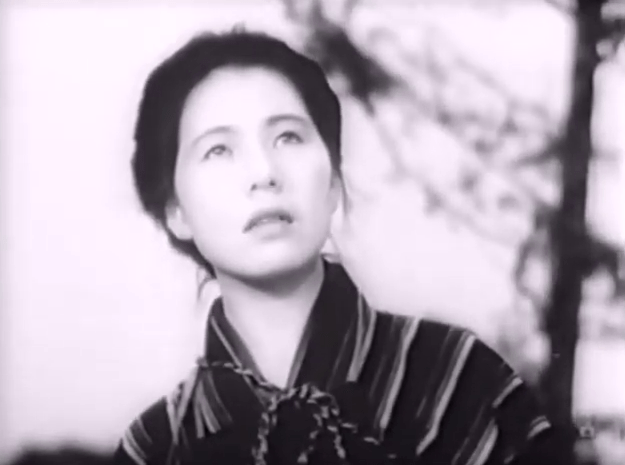
Ishimura (Musei Tokugawa) has a job, but his wages are low and he has nine children to support along with elderly parents who are also still working. Fourth son Eisaku (Takeshi Hirata) tells his mother (Noriko Honma) that he doesn’t want to go to the factory and would like to carry on to middle school with his friends, but she tells him he’s being selfish and childish and that all his brothers began working after primary school. Perhaps because the burden disproportionally falls on her, it’s the mother who is most acutely obsessed with money and the most controlling of her children. Ishimura is more of a soft touch and genuinely sorry that he can’t really agree to oldest son Kiichi’s (Akira Ubukata) request to take five years off to study because the family can’t survive without his wages.

But Kiichi’s problem is that he’s trapped in a dead-end job. There’s no possibility of advancement and his wages won’t ever change. He could work there 50 years and never be able to support a family of his own. His idea is that he wants to become an electrician which he believes will be a steady occupation that will pay enough to allow him to take care of his parents when they’re old and also get married. He thinks if he doesn’t do something now, he’ll be trapped in this life forever and never escape his parents’ yoke. Nevertheless, he worries about whether his desire is “filial” or not and feels a tremendous amount of guilt and frustration that sends him to drink.

Ishimura also knows that if he agrees to Kiichi’s request, he’ll have to say yes to the others too. All the boys have dreams of their own with young Noboru (Seikichi Minami) even hoping to become a lawyer, while Genji (Kaoru Ito) and his younger brother Kokichi (Seiichiro Bando) are intent on joining the armed forces which is perhaps a nod to the rising militarism of the age. Scenes of imagined warfare leave a less aspirational vision of the military, though there hints of it throughout the boys’ lives through magazines and children’s literature such as the book Mr Washio gives to Eisaku. The household becomes a kind of microcosm of a totalitarian regime that controls the boys’ lives and futures, causing them to form a conspiratorial faction talking over their mutual dissatisfaction in the coffeehouse opposite run by Genji’s old school friend Mitsuko (Sumie Tsubaki) who has a crush on Kiichi. Eisaku has been patiently saving his allowance, but his mother finds out and so he blows the whole lot taking his brothers out for dinner rather than allow her to “borrow” any more of his money to which she feels herself entitled.

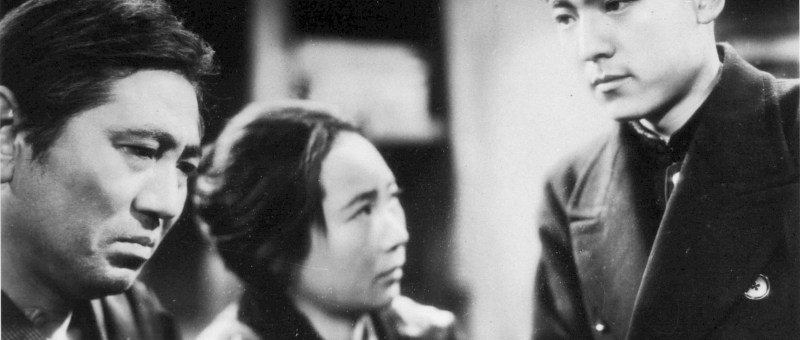
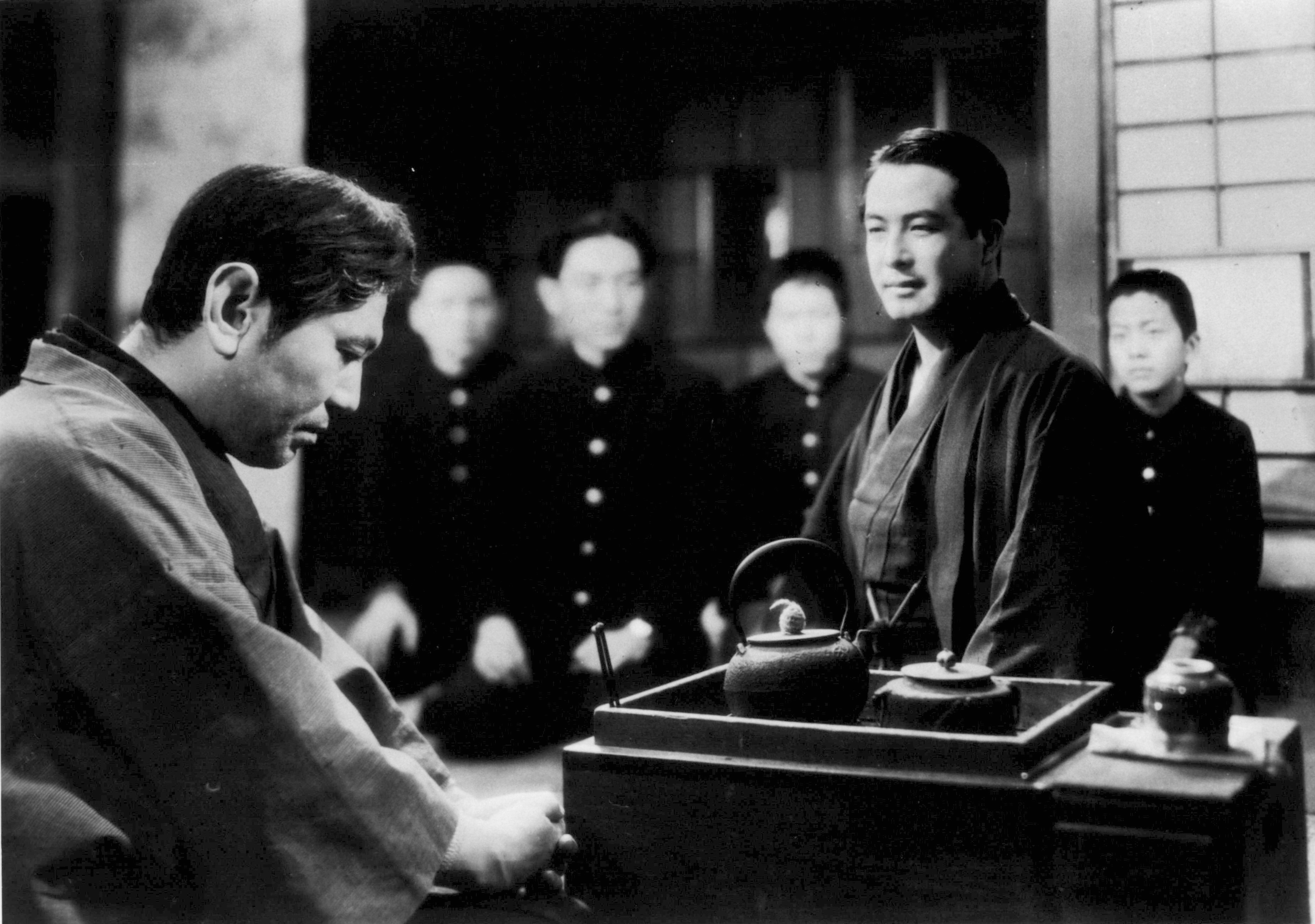
It’s the entitlement that’s the point. The parents expect the children to work without giving them any choice and thereby deny them the opportunity of working towards their own futures. Kiichi sees the big picture and wants to improve his circumstances, but does so because he wants to work for his family. He doesn’t intend to abandon them and chase his own success, he just wants to be able to provide for himself and at least have enough to eat. Mr Washio says he won’t tell him what to do, but also that there’s no rush, which seems like an intrusion from the censor’s board to reinforce the importance of filial piety over individualistic desire but also doesn’t deny that Kiichi has a point and as a grown man a right to freedom and independence. Nevertheless, there’s a subversive tension in the confrontation scene as the family sits in silence as the clock ticks away on the wall and the rain beats down outside. The brothers roll around in exuberance upstairs, while their defeated parents can only look up in resignation to their broken authority as the children’s revolution begins to take hold.


The Whole Family Works screened at Metrograph as part of Mikio Naruse: The World Betrays Us – Part II.
Nightingale (鶯, Shiro Toyoda, 1938)

Set in a quiet northern town, Shiro Toyoda’s Nightingale (鶯, Uguisu) finds the nation still struggling to emerge from the feudal past into the modern era. The film opens with a scene in the local train station, yet we’re also told that it is literally cut off from prosperity because the express train does not stop there and so it is relegated to the status of provincial backwater. Physically trying to flag the train down, the Mayor has been trying to get the town placed on the fast track but has had no luck so far.

The ticket man, who’d been more or less ignoring him, suggests they can’t put the station on the express line because the population of the town is decreasing presumably as young people migrate to the cities in search of work. One of the people waiting there is a man with two sons who tries to get the younger to pretend he’s younger than he is so he won’t have to pay for his ticket, though the ticket man refuses to give him a discount leaving the man with only the option to leave one of the boys behind while the family can no longer survive in the town. He explains that he’s been financially crippled by the medical fees to care for his now late wife and is clearly at his wits end trying to find a way to support his children.

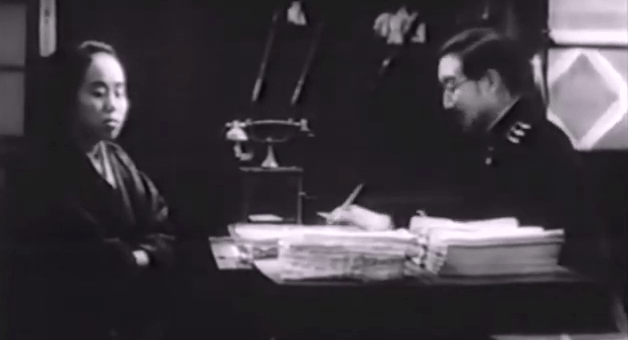
The costs of medical treatment seem to be a direct driver of poverty and crime. Shifting to the local police station, we’re introduced to a man who’s become a serial chicken thief having begun stealing neighbour’s birds to pay for doctors to treat his sickly wife only she eventually left him for another man because he was always away conducting poultry heists so she thought he’d abandoned her due to her illness. His problem is compounded by the fact he had not formally registered their marriage intending to wait until the first child was born leaving him without a leg to stand on.

An official doctor later jokingly complains that he’s losing custom because no one in the area can afford modern medical care so they’re turning to dubious snake oil-style miracle cures proffered by a “fake priest” the police are about to arrest for fraud. Meanwhile, they’ve also arrested a middle-aged woman (Haruko Sugimura) who assists with births for violating the medical practice law. Branded a midwife she is really more of a wise woman who is well respected in the local community as someone who had had many children herself and also offers advice about folk remedies for various illnesses. She never claims to be a doctor and does not regard it as a job, merely as helping people even if she perhaps also enjoys the sense of being needed and important, and is unable to understand how that could ever be a crime. Unlike the priest, she takes no payment and uses her own resources though people sometimes give her small compensatory gifts such as parcels of rice as a thank you. When a woman goes into labour and the “official” midwife is not available, the policeman is unwilling to let her in but hearing the woman’s distress she runs to help her kicking all the policemen out of this very personal female space.

Her confusion bears out that within the general society as people struggle to adjust to a more ordered modernity and the encroachment of urbanity which is what the police themselves represent. Then again, they are presented as being more compassionate certainly than the staff of the railway and seemingly have a duty of pastoral care for the local area which is separate from their role in enforcing the law. A secondary drama that began at the train station involves a young woman who is being sold into sexual slavery by her father against her will. She is eventually rescued by an earnest school teacher who says the sale isn’t valid because she also signed a contract to become a teacher, convincing her father to change his mind with the help of the police who remonstrate with him that it’s wrong to sell your child even if the practice had been somewhat normalised which plays into a propagandistic element about the importance of moving on from “backward” rural practices still mired in the feudal era. The police also have access to a fund which can be used to get the broker out of the way in an effort to stamp out this morally indefensible situation in which parents sell their children into indentured servitude for reasons of poverty. 

They also agree to help an old lady who’s arrived in search of a child she fostered a decade previously who was taken back by her birth mother and sold to a circus. Like the chicken thief, the old woman was caught out by the modern convention of paperwork. She had been led to believe the adoption had been processed and the child placed on her own family register, but was illiterate and therefore easily deceived. The old woman also becomes a victim of the dodgy priest and the disease currently spreading because of his problematic cure-alls which people have turned to out of desperation in their poverty.

But despite the police’s apparent altruism, the arrival of a young woman selling a captive nightingale reveals the irony that she’s come there because it’s the only place anyone has any money. Unfortunately it turns out that capturing a nightingale has also been ruled illegal, even if one of the policeman was interested in buying it if only it could sing, so she’s come to the wrong place and if she doesn’t release it she’ll end up with a fine. The nightingale’s song is later replaced by that of a flute player who had been arrested for being drunk and disorderly having spent some money he was given towards the funeral of his baby on drink. 

The police are in some ways a disruptive influence, trying to bring a new urban order to this rural place which has its own laws and customs often at odds with those of the city. Their efforts tie in to a persistent message of modernising for the good of the nation which was particularly current in the late 1930s though the film is equally sympathetic towards the plight of the rural poor who are not after all being given very much support as the youngsters move to the city leaving the old behind, trapped on the slow line cut off from the benefits of modernity while otherwise expected to simply adapt to new visions of civility in a society still trying to emerge from the feudal past.