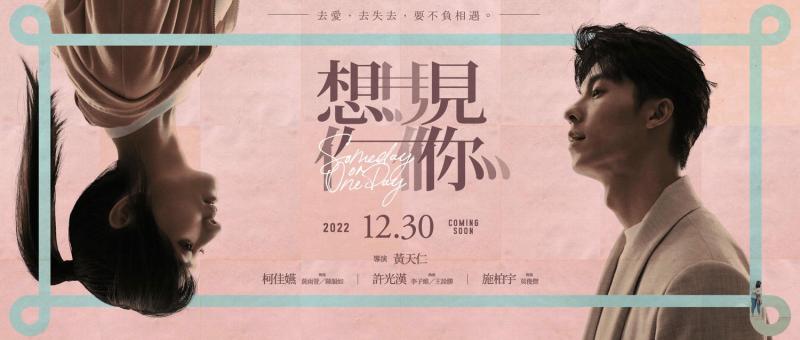
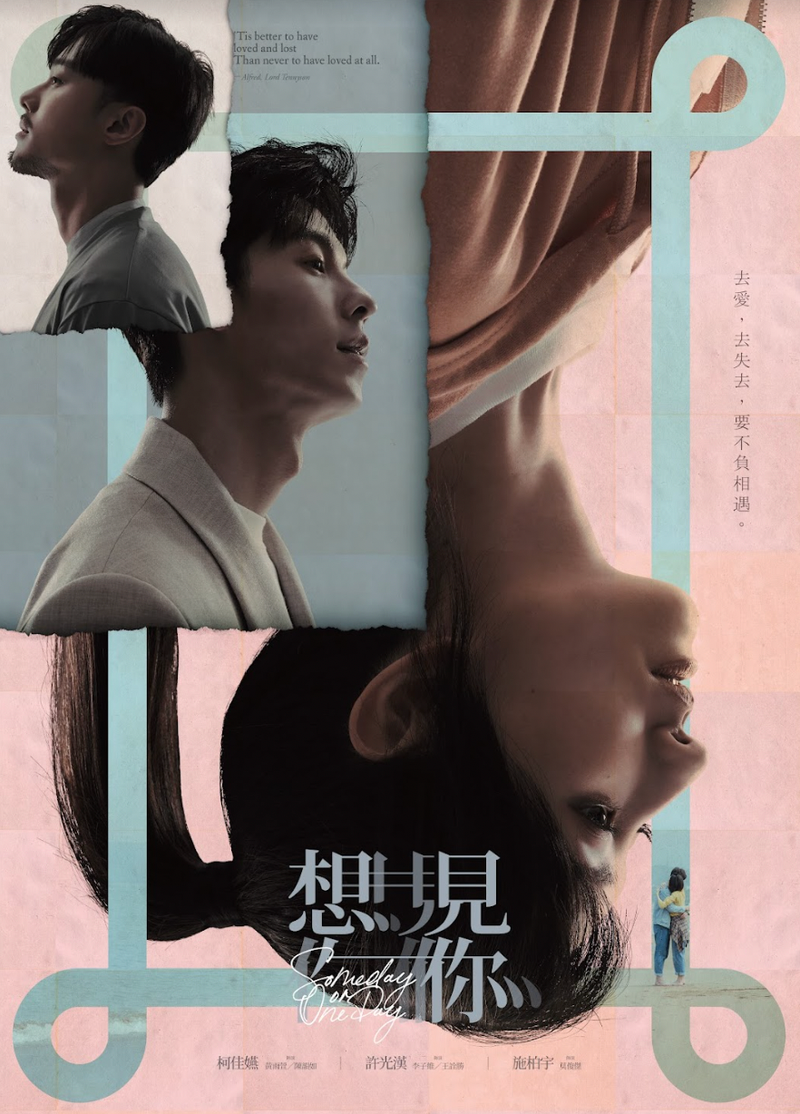
Someday or One Day (想見你, Huang Tien-jen, 2022)

A young woman finds herself quite literally in someone else’s shoes while trying to reclaim lost love in Tien Jen Huang’s sci-fi-inflected drama, Someday or One Day (想見你, Xiǎng Jiàn Nǐ). Inspired by the hugely popular television drama of the same name and starring the same cast, this big-screen edition drops the 20-year time slip device for a comparatively compressed tale largely taking place between 2014 and 2017 while the romantically troubled heroes effectively span a kind of multiverse of heartbreak, each looking for the good timeline where both they and their love can survive together. 

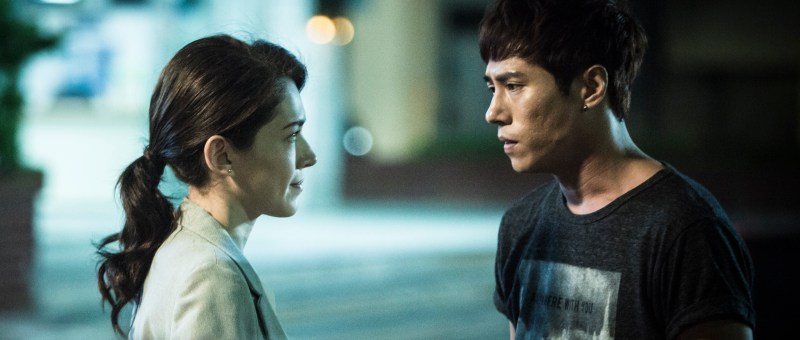
It has to be said, however, that the meet cute between destined lovers Yu-hsuan (Ko Chia-yen) and Zi-wei (Greg Hsu) is not without its problematic elements given that Yu-Hsuan is still in high school when the tale begins while Zi-wei is in his mid-20s, not to mention he’s largely interested in her because she looks exactly like old high school friend Yun-ru (Also Ko Chia-yen). Their meeting was brokered by a shared dream featuring the song Last Dance by Wu Bai which was released in 1996 which might explain why Yu-Hsuan didn’t know it prior to hearing it in the dream world where she lived with a man she didn’t know but turns out to be Zi-wei. The pair hit it off and eventually move in together. They are blissfully happy until Zi-wei is killed protecting Yu-Hsuan when they both randomly fall from a building which is still under construction. 

What they were doing there in the first place isn’t really explained, but it doesn’t become the nexus of Yu-hsuan’s trauma as she struggles to move on with her life continuing to communicate with Zi-wei through text message and imagined conversation even after moving to Shanghai for work. After being sent a walkman and cassette tape of The Last Dance, she wakes up in the body of Yun-ru the day before the accident and realises she can save Zi-wei if only she can convince him, and herself, that the danger is real. 

Moving the action to 2014 does rather undermine the nostalgic power of the song along with that of the walkman itself as a kind symbol of a late ‘90s youth only hinted at in brief flashes of Zi-wei’s high school days that were most likely better fleshed out in the TV series. Then again the theme of nostalgia is itself destructive given that the opening lines remark on how “silly” it is to try to hold on to “something that is vanishing” which is what each of the lovers is trying to do in the time slip drama by attempting to prevent the accident at the building site (though it doesn’t seem to occur to any of them that they could just not go there). 

As the rather trite closing quotation suggests it’s better to have lost and lost than not loved at all, each of the lovers realising that they cannot in fact change the past however much they might wish to and should try to do their best to enjoy the time they’ve been given with those they love for no one knows how long that will be. Nevertheless, there’s no denying that all the body swapping, multiverse shenanigans become incredibly convoluted, especially towards he film’s conclusion, making it largely impossible to keep track of who is who at the current time and what their relations to each other are. Viewers of the TV drama will be better placed to decipher whom some late introductions actually are given that their presence goes largely unexplained save for vague references to their names. 

Then again, we can’t be sure if the heroine eventually wakes up from a dream or is unable to do so becoming trapped in a fantasy of lost love defined by dream logic and wilful nostalgia rather than the anxieties of her nightmare in which she feared that though Zi-wei held her tight he would one day disappear. Undoubtedly confusing, the film nevertheless manages to deliver its time slipping messages of the importance of holding every moment close and then treasuring the memories of lost love rather than continuing to pine for something that can never be regained.


Trailer (English subtitles)
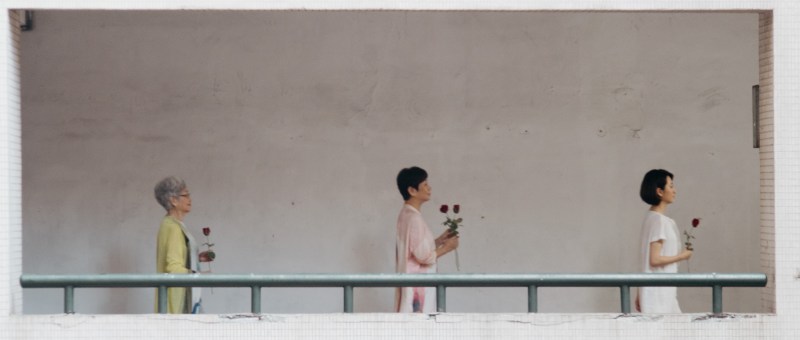
Reclaim (一家之主, CJ Wang, 2022)

An ordinary middle-aged woman begins to wonder what it’s all been for when dealing with her insensitive, authoritarian husband, distant children, and the sacrifices she continually made to make others happy in CJ Wang’s touching family drama, Reclaim (一家之主, yījiāzhīzhǔ). The Chinese title, master of the house, is in its way ironic in the various ways in which Lan-xin (Nina Paw Hee-ching) is expected to shoulder all of the domestic responsibility with none of the control, though she is indeed attempting to reclaim something of herself as a woman and an individual as distinct from being someone’s, wife, mother, friend, or teacher. 

Lan-xin wanted to study art in Paris, but she got married young and started family and ever since then has led a conventional life doing what she thought to be right thing. Now, however, with her husband David (Kou Hsi-Shun) recently retired and both her children grown up she’s wondering a little what it’s all been for especially as David is a chauvinistic throwback who belittles her work as an art teacher while harping on about ways to make money patiently waiting for his collection of antique teapots to rise in value. Now that her mother’s dementia has intensified and she keeps escaping from her nursing home, Lan-xin wants to bring her to live with them but David is both dismissive and disinterested talking about it in the same way one would to a child who wants to get a dog asking if they really have the space and making it clear that looking after her will be Lan-xin’s responsibility. 

While David holds on to a substantial cheque with the intention of investing it in a series of harebrained schemes from luxury tombs to VR cafes, Lan-xin’s desire is essentially to try and repair her fracturing family by buying a larger apartment where they could all live together. David complains that no one tells him anything, but that’s largely because he’s continually dismissive of their dreams and aspirations blowing a hole in his daughter’s new project designing eco-friendly homes that prioritise individual comfort by telling her that she should just extend the living area into the balcony to trick people into thinking they’re getting more for their money. Jia-ning (Ko Chia-yen) in particular is feeling lost in her life unsure of what role it is she’s supposed to be playing while clearly disillusioned with the nature of the relationship between her parents in which her mother is expected to sacrifice her desires in service of her father’s. It’s clear that neither of the children want the kind of futures their parents envisaged for them, their professor son also preparing to return from the US to live a simple life in the Taiwanese countryside. 

Both of the children, however, take their mother for granted and often treat her poorly. The son orders her to book his plane tickets for him and abruptly hangs up after asking her to clean his room and make his favourite food, while Jia-ning also snaps at her expecting her to handle domestic tasks and locate missing items. Lan-xin forms a quasi-maternal relationship with a former student who has returned from America (Mason Lee) and now works in finance but is faced with the implosion of all her hopes firstly in her daughter’s more immediate needs to claim independence in her working life while avoiding the same compromises she was forced to make, and then by the illusionary nature of her home owning dream buying one home for fragmenting family rather than enduring her dissatisfying living arrangements while investing in separate homes for each of her children. 

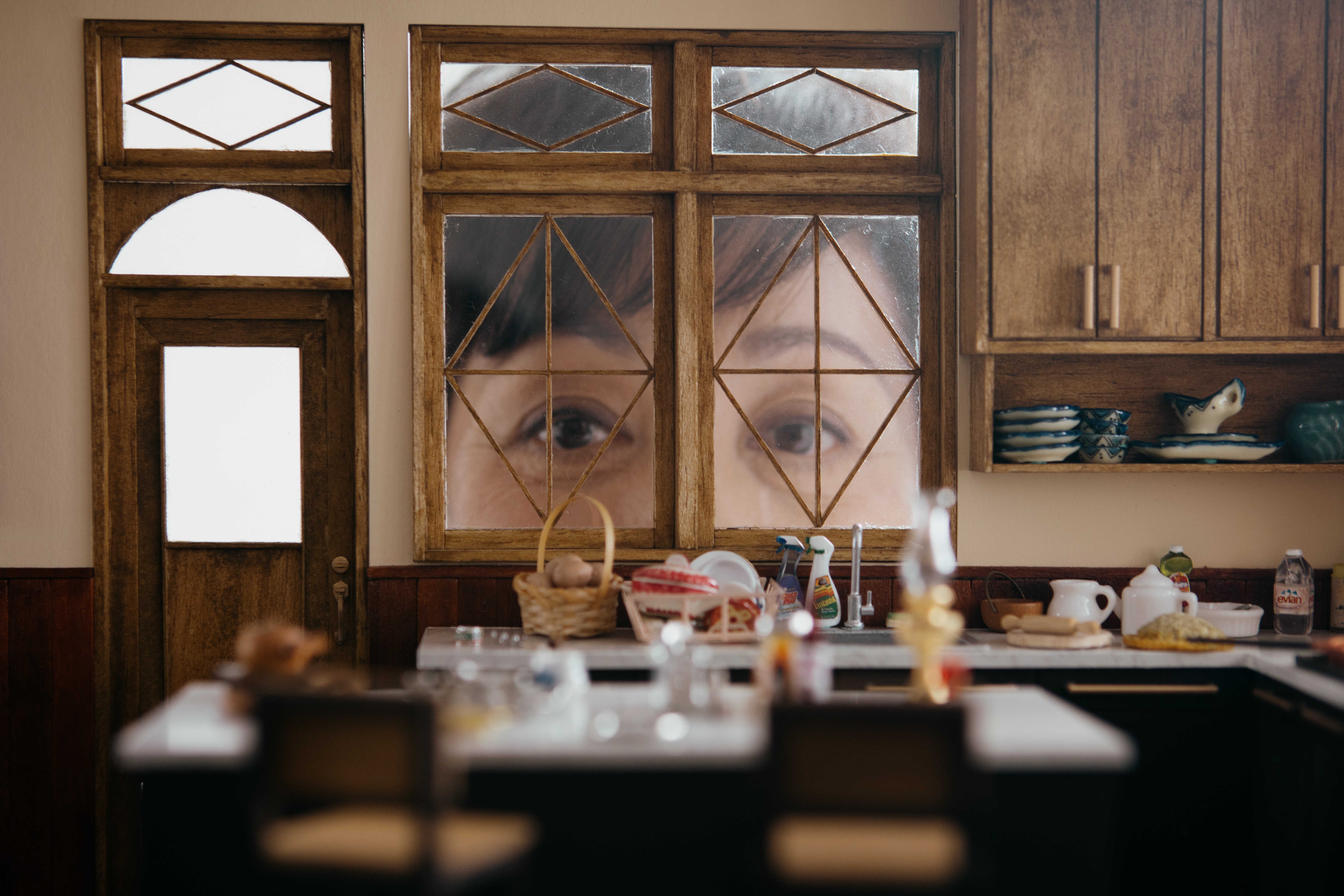
There may be a degree of personal myth making in her meditating on the lost opportunity of a Parisian education as implied in an imaginary conversation with her mother, though as her miniature-making hobby implies perhaps she played the role she wanted to play but lost sight of herself somewhere along the way. A voyage into her own memory reunites her with her essential self and allows her to reclaim her name no longer willing to be subservient to her husband’s desires but prioritising her own. As in her dream, all her sacrifices will eventually be repaid while Jia-ning too comes to a better understanding of her mother and grandmother along with her own place in a changing society. Lan-xin is finally a master of herself no longer afraid to take up space in her own home and in full control of her own aspirations and desires. 


Reclaim screened as part of this year’s New York Asian Film Festival. It is also available to stream in many territories via Netflix.

Netflix trailer (English subtitles)

Images: ©2022 Rong Gwan Productions ALL RIGHTS RESERVED

Who Killed Cock Robin (目擊者, Cheng Wei-Hao, 2017)

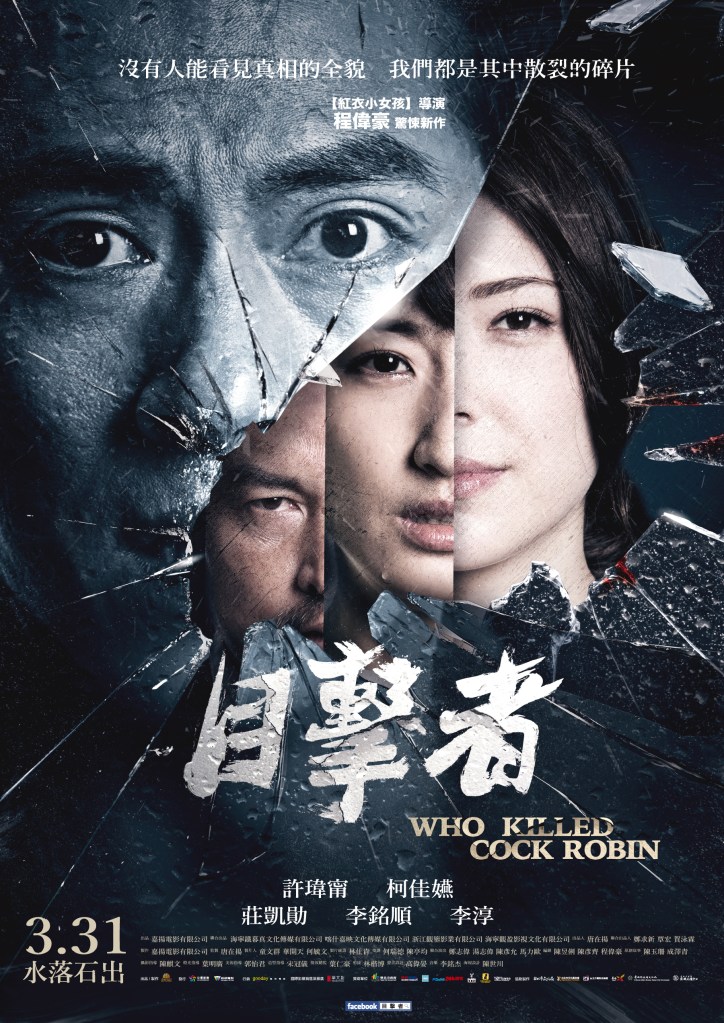
“Everything in this world has already been decided, no one is free” according to a jaded, psychopathic killer in Tag Along director’s Cheng Wei-Hao fatalistic neo-noir, Who Killed Cock Robin (目擊者, Mùjīzhě) . As the English title implies, each has their part to play when it comes to the orchestration of death, but the peculiar confluence of circumstances sees the central “witness” corrupted by his decision to alter his position, becoming part of the story in a way a journalist never should.

At 30-ish, Chi (Kaiser Chuang Kai-hsun) is a jaded paparazzo tuning in to the police scanners for the latest scoop on potentially scandalous crime. He thinks he’s hit the jackpot in pulling off the road and discovering a local politician in a car wreck with a beautiful young woman he later realises is a top glamour model, but his insistence on pushing the story without proper background checks comes back to haunt him when the politician comes out with documents proving he married the model in secret some months earlier and signals his intention to sue. All of a sudden, Chi’s bright future is slipping away from him. His mentor retires, and he’s abruptly made redundant, effectively fired for the problematic politician scoop. It’s at that point he starts looking back at photos he took of another car crash nine years earlier when he was still a rookie and realises his boss may have deleted some behind his back. 

As his mentor, Chiu (Christopher Lee Meng Soon), eventually tells him, Chi isn’t the sort of man who’d fight for justice for someone he didn’t even know. He’s in this for petty revenge in hoping to expose some kind of scandal involving the boss who got him fired. He’s also, however, meditating on the earnest young man he once was and the jaded hack he’s since become. As an intern he wanted to do hard journalism and make a difference, but after falling in with Chiu he became corrupted by urbanity, seduced by the fancy suits, celebrity contacts, and stylish parties. He does his business by forming “relationships” with useful people such as law enforcement officers though homosocial bonding, i.e. drinking and women. 

Chiu also, perhaps ironically, thanks his wife for helping him make the “relationships” which have enabled his successful life. These complex networks of interwoven corruption are what keeps the city running, but they’re also a web that can be unravelled to reveal the dirty secrets at its centre. Chi seems to know that fate is coming for him. “Things that happened to you come round in circles” he drunkenly laments on learning not only that the used car he was duped into buyng is an illegally remodelled vehicle but also that the chassis belongs to the one from the accident he witnessed all those years ago. Car accidents plague him, as if implying his life is one long car crash bracing for the impact. 

Yet, as Chiu cautions him, he only has a part of the truth. He is lied to and misled, left to reply on the reporter’s instinct he has long since allowed to become rusty. His investigation places others in danger, not least a young woman who was beginning to think she’d escaped the accident’s wake and built a nice life for herself free of past transgression. But Chi still has to make a choice, try to expose this world of infinite corruption for what it is while accepting his own complicity within it, or decide to unsee what he worked so hard to uncover and go back to being the hack reporter dependent on that same web of corruption whose entanglement he was so keen to escape. 

“I just want to know the truth” Chi claims, as a good reporter should, but his subjects ask him “what’s the point?”, “everyone wants to know the truth, but once you know then what?”.  It’s a good question, and one perhaps that Chi doesn’t know the answer to, reducing his dilemma to a sheepish grin and a cynical joke. “I prefer to remember happier things”, he admits. An infinitely compromised figure, Chi finds himself on dark and fatalistic path towards discovering, at least, his own truth. “I believe in myself” he later tells an equally corrupted colleague but something tells us we perhaps should not. 


Who Killed Cock Robin streams online for free in the US as part of Asian Pop-Up Cinema’s Mini-Focus: Taiwan Cinema Online on June 11.

International trailer (English subtitles)

The Bold, the Corrupt, and the Beautiful (血觀音, Yang Ya-che, 2017)

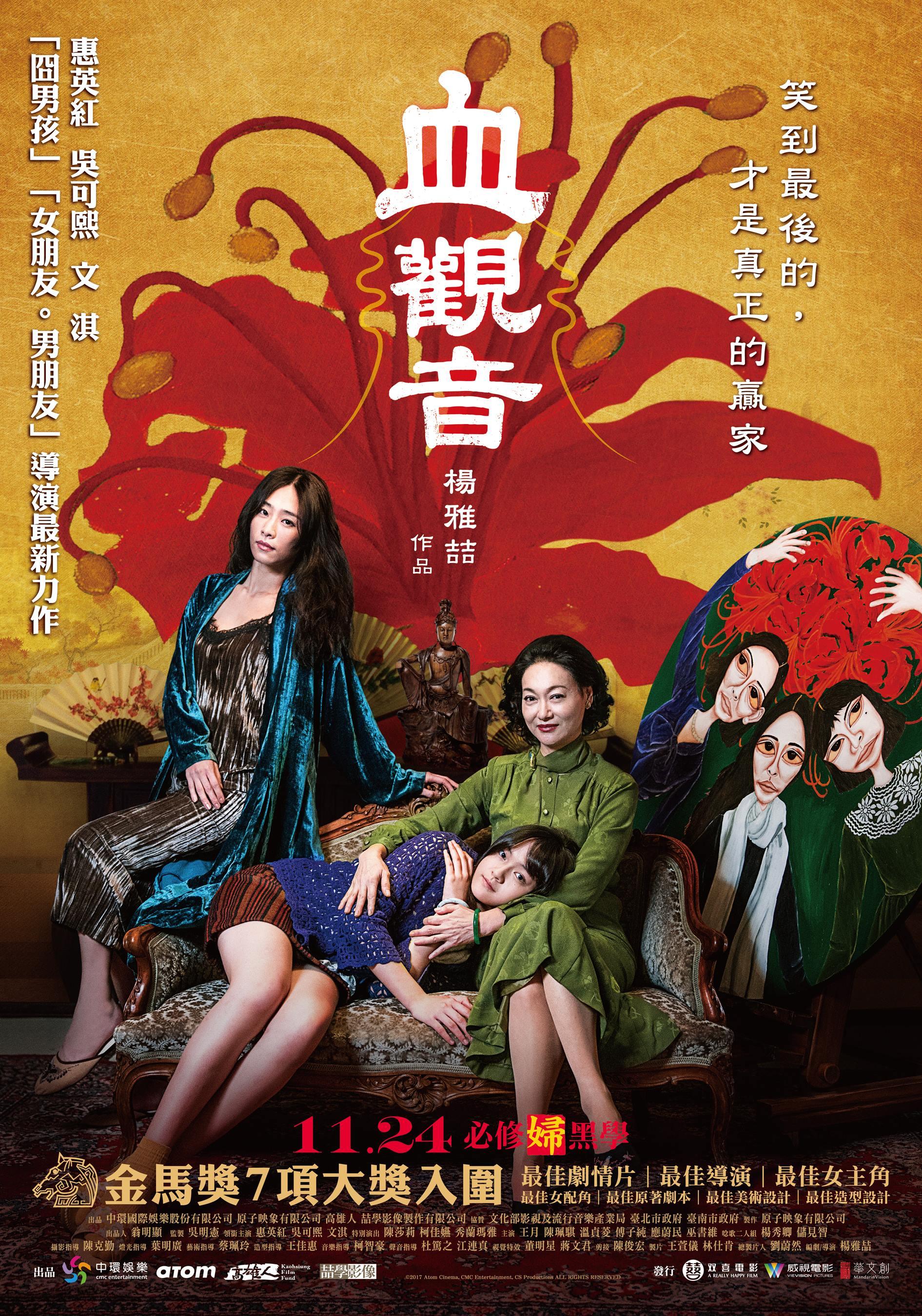
The Bold the corrupt and the beautiful posterAre you playing the game or is the game playing you? The Bold, the Corrupt, and the Beautiful (血觀音, Xuè Guānyīn) is, as its name suggests, somewhere between trashy soap opera and spaghetti western as its entirely amoral matriarch prepares to sacrifice everything in order to get ahead. The family becomes a metaphor for the state – corrupt, prejudicial, hypocritical, and often heartless in its ruthlessness but like a family a state perhaps reaps what it sows and the lessons Madame Tang has taught her daughters may come back to haunt her.

In the Taiwan of the 1980s – the dying days of the old regime but firmly within the pre-democratic past, Madame Tang (Kara Hui) is the widow of a general and, on the surface of things, an antiques dealer. Her real worth however lies in making herself the society face of genial corruption as the conveyor of the ancient treasures that often stand in for monetary bribes in the complex system of reciprocal politics. Designed to manoeuvre herself and her family into a position of power and perhaps safety, Madame Tang’s machinations amount to a mess of intrigue, manipulating the social interactions of her “friends” in order to convince them to destroy each other and clear a path for her ascendance. Part of her grand plan has involved extensive use of her daughter, Ning Ning (Wu Ke-xi) – now approaching middle-age and thoroughly sick of being her mother’s prize pony, while Chen-Chen (Vicky Chen), still a teenager, has usurped her place as the latest cute little thing to be trotted out and fussed over.

Everything starts to go wrong when a powerful neighbouring family, the Lins, is murdered in a suspicious looking home invasion leaving the daughter, Pien-Pien (Wen Chen-ling), who was the closest thing Chen-Chen had to a real human friend, in a coma. Pien-Pien had been carrying on with Marco (Wu Shuwei) the stable boy which obviously had not gone down well with her parents though she had backed out of a plan to elope with him. The police’s theory is that Marco had come back to the family home and taken his revenge, but there is an awful lot more going here than just a jealous proletarian boyfriend hitting back at the bourgeoisie.

Piling layer upon layer Yang’s script is dense and sometimes impenetrable to those not well versed in Taiwanese history and culture. Madame Tang seems to have something of an interesting hidden backstory, swapping easily between standard Taiwanese Mandarin, Cantonese, and Japanese which she, and Chen-Chen, use to get close to Mrs. Lin whose grasp of Taiwanese remains poor despite having lived on the island for many years and being heavily involved in politics. The house the family inhabits is also distinctly Japanese in layout, a colonial era home now inhabited by post-war migrants from other areas of China. The Lins look down on their stable boy not only because of the obvious class difference, or because of their daughter’s relative youth and tarnished reputation, but because he is from a persecuted minority of native peoples.

Marco does however become a kind of key. Chen-Chen, curious and privy to more knowledge than a child of her age ought to have thanks to her mother’s scheming, has developed a fondness for the strapping stable boy and mildly resents being made fun of by the oddly amused Pien-Pien. The rot sets in as Chen-Chen is sent to fetch Ning-Ning only to find her engaging in some kind of orgy in a forest, over which Chen-Chen lingers a little to long only to catch Ning-Ning’s eye and find herself suddenly caught out while her “sister” apparently finds extra spice in her discomfort. Ning-Ning, after years of emotional abuse at the hands of her mother, has begun to rebel by embarrassing her, losing herself in drink, drugs, and promiscuous sex with unsuitable men while Madame Tang still harps on about possible dynastic marriages if now to a distinctly third class tier of potential husbands.

Yang adds a post-modern dimension to the story by framing it as a cautionary tale recounted by a pair of traditional musicians in the manner of Gezi Opera which begins closer to the now before flashing back to show us how we got here. Even if the political metaphors do not hit home without some kind of primer in Taiwanese history, the familial allegory is obvious enough – corruption breeds corruption and the hollow family will eventually swallow its young. The closing coda, presented via intertitles, reminds us that the scariest prospect is not imminent punishment, but a loveless future. The Tangs’ tragedy is not that there was no love between them, but that in their cynicism and insecurity they destroy themselves through a selfish need for control and possession. Madame Tang’s lessons have indeed been learned too well, and in this she damns herself as well as her daughters, condemning all to a loveless future fuelled by greed and fear from which it is impossible to escape.


The Bold, the Corrupt, and the Beautiful was screened as part of the New York Asian Film Festival 2018.

Original trailer (traditional Chinese subtitles only)

Interview with director Yang Ya-che from the 2017 Busan Film Festival (English subtitles)