Silent Tokyo (サイレント・トーキョー, Takafumi Hatano, 2020)

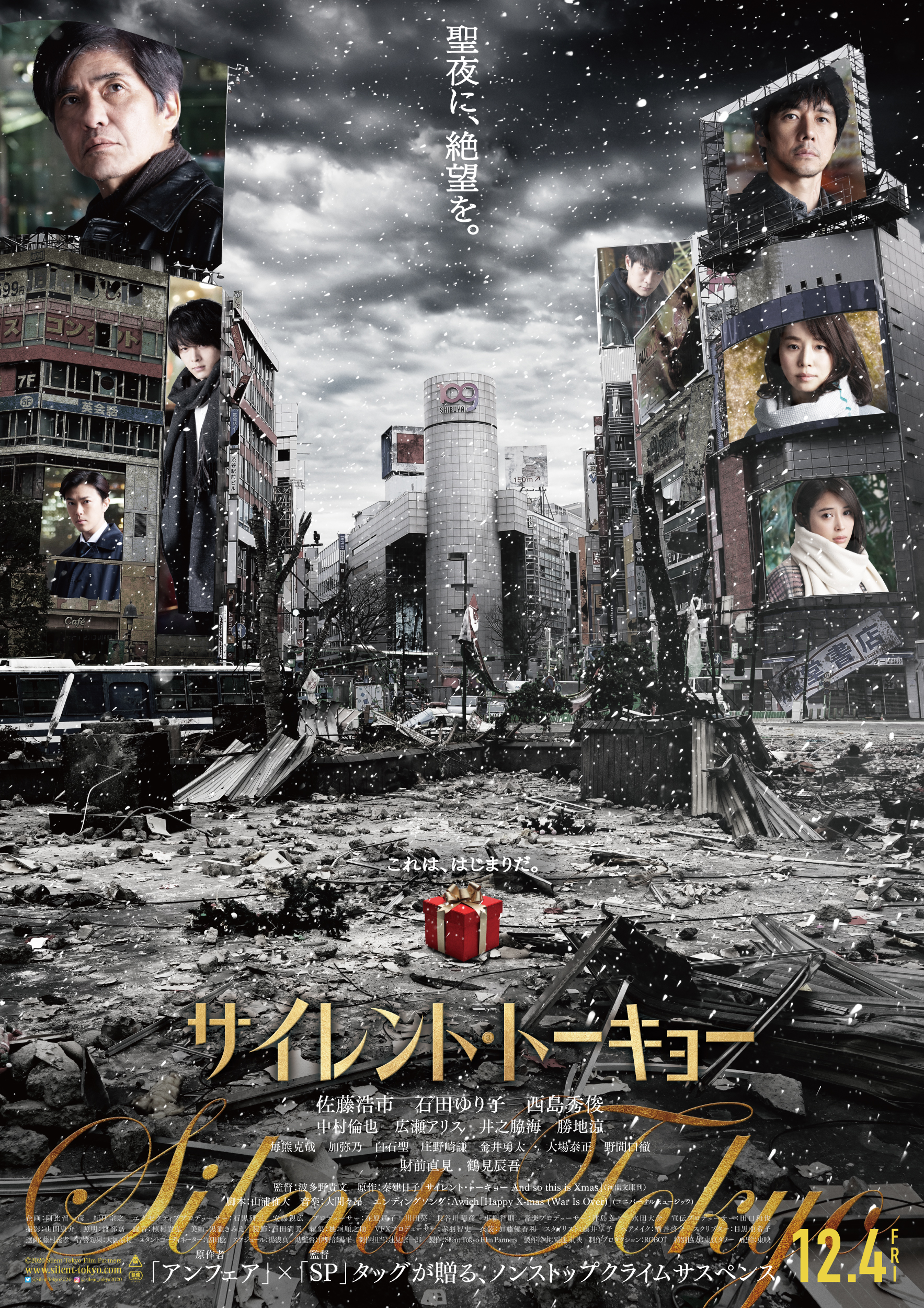
Traditionally speaking, Christmas is a time of joy and hope, peace to all men. It is then a particular cruelty to plan a terrorist event at the very time people have been conditioned to feel safe, even if in Japan Christmas is less about familial love than the romantic. Christmas Eve will be far from a silent night in Takafumi Hatano’s holiday thriller Silent Tokyo (サイレント・トーキョー) adapted from the novel by Takehiko Hata, the sound of explosions disrupting the peaceful atmosphere as a mysterious bomber threatens to blow up Tokyo Tower if they are not granted a personal audience with the prime minister on live TV. 

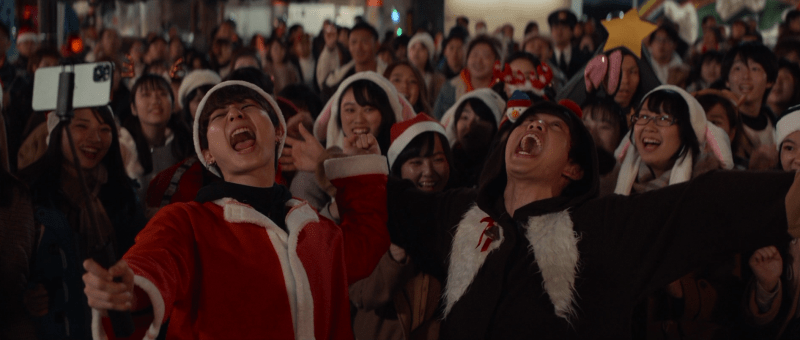
Thankfully Japan does not have an extensive history of terrorist action at least of this nature, that’s one reason why a when a pair of TV journalists report a tip off they’ve received about a bomb in a shopping centre the police take little notice. The shopping centre bomb is real but of low power leaving only a single person with light injuries after most shoppers are evacuated following a smaller warning explosion in a bin near the Christmas display. It’s enough for the police to take notice, especially as grizzled veteran Seta (Hidetoshi Nishijima) becomes convinced it’s likely a dry run for something more serious, but still no one really believes a bomb could go off in the middle of Tokyo even when a message from the bomber threatening to blow up the Christmas tree in Shibuya if they are not granted an audience with the prime minister is played on large screens around the city. For whatever reason, the police choose not to evacuate the area which is quickly filled by the morbidly curious along with holiday revellers in Santa suits live-streaming the event via social media as if it were the countdown on New Year’s Eve. When the bomb doesn’t go off, they content themselves with a rousing chorus of “congratulations” as if it were all some kind of Christmas prank only to be hit by the delayed explosion a few minutes later in an elaborately staged scene of urban carnage. 

Hatano shifts suspicion between a number of suspects before finally bringing it all together while continually hinting at the bomber’s, and the film’s, true message. Early on we see a mass protest against the prime minister who appears on a large screen insisting that Japan abandon its pacifist constitution and become militarised nation capable of going to war should the necessity arise. The irony is, of course, that the PM evidently chooses not to mount much of a defence against this immediate internal threat, never mind the external, while the bomber’s message turns out to be that war is morally wrong and not something a civilised nation should be pursuing. The bombs are intended as a wakeup call to the prime minister and the “apathetic” citizens of Japan who elected him, urging them that if they truly understood the nature of war they would want no part of it. That the message is delivered through violence which includes loss of life and serious injury is another irony and one likely to prove counterproductive especially considering the bullishness of the PM who repeatedly appears on TV screens insisting that the government does not negotiate with terrorists while simultaneously playing the strongman and not appearing to do very much else. 

In any case, the film briefly touches on other kinds of secondary violence such as the affects of post-traumatic stress in soldiers returning from peacekeeping missions overseas, police dealing with major incidents, victims of crime, and that of a young man having witnessed his father violently abusing his mother. But in keeping with the Christmas theme, the motive turns out to be romantic in addition to political delivered with a kind of misplaced love and desire for vengeance which goes someway to explaining the various target locations which are all obvious stop offs on a stereotypical Tokyo day trip culminating with the iconic Tokyo Tower. The irony of this anti-violence bombing campaign is fully brought home by the assertions of the police that they are technically at war with the bomber, who perhaps hopes that being directly subjected to the reality of military violence will help bolster support for the pacifist constitution while their hope of being able to change the prime minister’s nationalistic mindset through chatting with him on TV seems rather naive. In any case, the messages of peace to all men are perfectly suited to the festive season even if they come in slightly counterintuitive packaging. 


Original trailer (English subtitles available from CC button)

My Teacher (先生!、、、好きになってもいいですか?, Takahiro Miki, 2017)

My Teacher posterJapanese cinema is having a mini moment of shojo crisis in its awkward obsession with student/teacher romance. While similarly themed age-gap “romances” such as After the Rain might have been better able to navigate the difficult seas of misplaced adolescent affection, Narratage and latterly My Teacher (先生!、、、好きになってもいいですか?, Sensei! …Suki ni Natte mo ii Desuka?), seem to have gone in a less palatable direction in accidentally implying that our squeamishness with these obviously inappropriate attachments might not be justified. The latest from romantic melodrama veteran Takahiro Miki, My Teacher is a perfect exemplification of the inherent problems with shojo romance and, in this case somewhat ironically, its inability to process the implications of a necessarily romantically naive perspective.

Our heroine, Hibiki Shimada (Suzu Hirose), is a shy, awkward teenager with a hopeless crush on her handsome, if somewhat aloof, history teacher, Mr. Ito (Toma Ikuta). Unlike her classmates, Hibiki has been slow to a romantic awakening and confused by her friends’ various and rapidly changing crushes. Nevertheless, like her best friend Chigusa (Aoi Morikawa), Hibiki has begun to develop feelings for a teacher – Ito whose gruff exterior hides a considerate heart. Mistaking his general kindness for an extension of personal affection, Hibiki has fallen in love and even whilst knowing that there is something not quite acceptable about her feelings decides to pursue her inappropriate crush in the manner only a naive schoolgirl can.

Ito, as expected, turns down Hibiki’s confession with weary resignation. A kind man who seems to limit his interactions with other humans in order to avoid becoming over involved, he is aware of the delicacy of the situation but also of its dangers as regards his own standing as an educator and responsible adult. He wants to protect his student, emotionally and physically, but is at a loss as to how to handle his dilemma without causing her further distress. Consequently, he fails to definitively shut down a tricky set of circumstances in good time, allowing to Hibiki to bamboozle him into an awkward bargain in which she asks him if her crush will be “OK” if she manages to score over 90% on the upcoming test. Surprised, Ito laughs and reminds her of her woeful results in the previous midterms. Understanding that she’s been turned down, Hibiki nevertheless regards Ito’s awkward laughter as a flicker of possibility and continues on in hope.

Had My Teacher continued in the same vein, with Mr. Ito valiantly attempting to guide Hibiki towards a healthier romantic consciousness while remaining mindful of the tenderness of her feelings and the delicacy of the situation as a whole, it might have entered more interesting and less problematic thematic territory. Unfortunately, it remains firmly rooted in shojo romance in which the heroine’s innocent desires must be recognised and so Mr. Ito’s nobility eventually crumbles as he begins to fall for the “earnest”, “awkward” schoolgirl and forgets his “position as a teacher”, finally giving in to “temptation” even if he then agrees that the responsibility for his transgression must rest entirely with him. Ito attempts to remove himself from the situation in recognition of the harm he may be causing, but the film won’t let him because it needs a resolution that is “romantic” rather than “realistic”.

“Realism” rears its head when the inappropriate relationship between the pair is eventually uncovered and Ito hauled before a staff committee to explain himself but the school’s understandable decision that he must be summarily fired for gross misconduct is undercut by its presentation as an act of unavoidable tragedy that fails to make a distinction between “genuine feeling” and “abuse of position”, conveniently forgetting that in these kinds of cases that is not a distinction that it is useful to make. Chigusa, trying to encourage her friend in her great romance, affirms that there is no one in the world it is not OK to love, which might have some truth in it seeing as love itself is rarely wrong, but there are instances where acting on that love would be and a teacher/student relationship is definitely one of them especially where the student is still a minor.

Indeed, the kids resent the fact that everyone treats them as children but they are, as a similarly exasperated teacher tries to explain to them, not yet adults as exemplified by their consistently self-centred perspectives which prevent them from realising the difficult position in which their decision to air their inappropriate feelings places those whom they claim to love. This dawning realisation is heralded as the pathway to adulthood in finally coming to an acceptance of the individual’s place within a community bound by ethical rules and the responsibility one has towards the feelings of others most particularly when they conflict with one’s own. It is however undercut by the irresponsible decision to push the innocent romance to its “natural” conclusion even if it has the decency to wait until after graduation until it does so. Ethically questionable as it is, Miki’s obvious talents are not in question and his beautifully composed emotionally moving aesthetics are out in force but only serve to emphasise the uncomfortably naive sensibilities of the source material.


International trailer (English subtitles)