The Killer (더 킬러: 죽어도 되는 아이, Choi Jae-hoon, 2022) [Fantasia 2022]

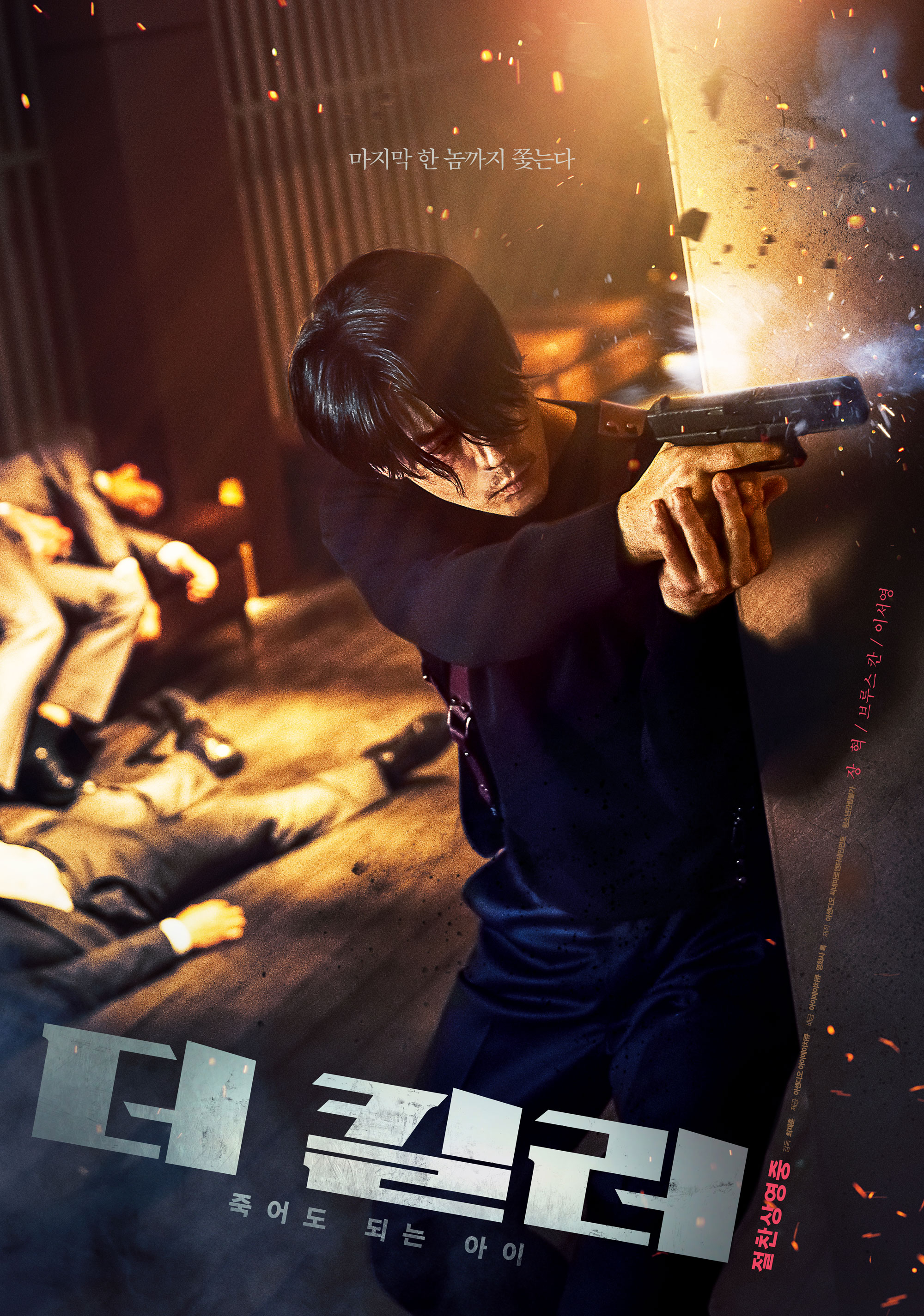
A retired hitman gets back in the game when he’s charged with babysitting a naive teen who almost immediately ends up getting kidnapped by human traffickers in Choi Jae-hoon’s retro action fest, The Killer (더 킬러: 죽어도 되는 아이, The Killer: Jookeodo Dweneun Ai). The Korean title of the film is appended by that of the novel from which it is adapted, The Girl Who Deserves to Die by Bang Jin-ho, and hints at the secondary drama which underpins the main narrative in which the kind of masculinity the cynical hitman projects is redefined to accommodate a nascent paternity, 

When questioned by the 17-year-old Yoon-ji (Lee Seo-young), Ui-gang (Jang Hyuk) tells her that he has no children because he didn’t want them. Even so he appears to be in touch with some of the children of his wife’s friends whom he mostly calls by generic names such as “Punk Ass 1”, and his rejection of paternity appears to be born of a desire for a simple life spent in comfort with his wife without additional responsibilities. When his wife asks him to take care of her friend’s daughter so the two of them can jet off to Jeju island for two weeks, he’s understandably reluctant especially as a girl of 17 hardly needs a babysitter but at the end of the day he generally does as his wife tells him. 

Consequently, he allows Yoon-ji a high degree of (illusionary) freedom while placing a tracker on her so he can at least keep tabs on where she is. Perhaps because her mother is away and has left her with a random middle-aged man she doesn’t know, Yoon-ji takes advantage of the situation and makes a few bad choices which result in her falling into the trap of a gang of people traffickers. Ui-gang wants to get her back mostly because his wife will be upset with him if he doesn’t but also begins to develop a fatherly bond with Yoon-ji while morally outraged by the societal corruption he uncovers through searching for her. 

In a genre archetype, sensitive killer Ui-gang has the moral high ground in that he has a code to live by along with a sense of justice that is revulsed by the casual cruelty of those who would trade human beings like cattle. He discovers that Yoon-ji’s kidnapping was not an accident but that someone actively chose her and wants to know who and why stopping not just at rescuing her but trying to take down the whole corrupt mechanism while discovering that its roots extend even further than he had expected. His final resolution that no child deserves to die restores his humanity as evidenced by his acceptance of a paternal responsibility and the creation of a new family unit with his wife and Yoon-ji. 

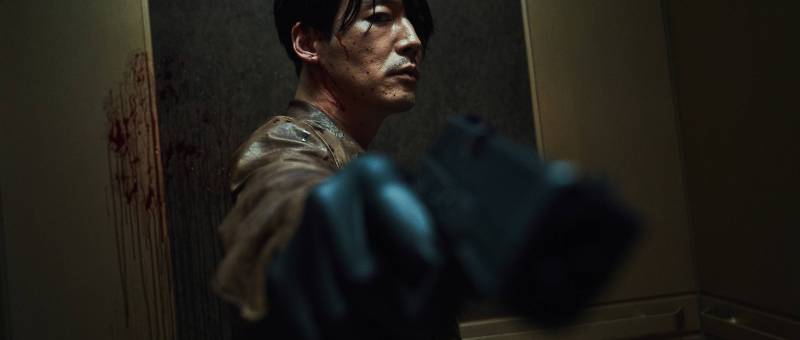
Even so his path to rescuing her is structured in the same way as a video game, Choi’s composition sometimes referencing that of a first person shooter as Ui-gang emerges from lifts and cooly takes out a gangster who then crashes violently into the background. He fights his way towards resolution hacking and slashing at hordes of oncoming foot soldiers while armed with nothing other than a pair of chair legs or else cooly executing them with a single shot. An arms dealer friend literally references The Man from Nowhere which the film at times also echoes both narratively and visually in its tightly controlled and well choreographed action sequences. This sense of unassailability is in itself a reflection of Ui-gang’s moral goodness while the bumbling quality of the crooks and the ease with which he dispatches them equally reflects their immorality. 

A retro action fest, The Killer makes the most of a modest budget while taking aim at a contemporary society that leaves young people so unprotected that traffickers can even claim to be “helping” them given that there are few other ways for runaway teens to earn a living on the streets. Then again it may be a little problematic that the solution presented lies in a restoration of the patriarchal ideal in Ui-gang’s resumption of his paternity in pledging to protect Yi-joon until she comes of age. Nevertheless, anchored by another strong performance from veteran actor turned rising action star Jang Hyuk, Choi’s stripped back action thriller is a visceral journey into the dark heart of the contemporary society.


The Killer screened as part of this year’s Fantasia International Film Festival.

International trailer (English subtitles)

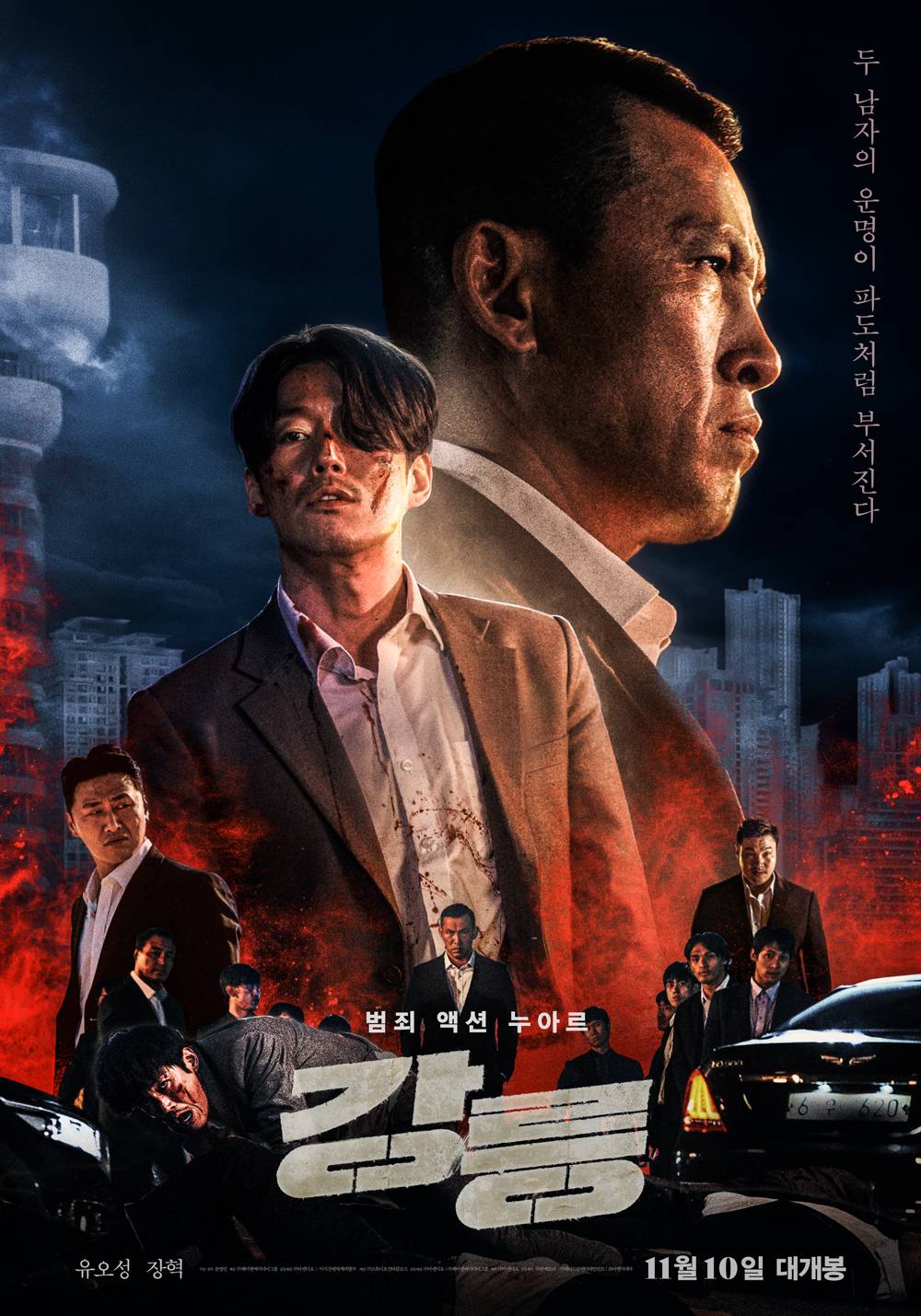
Tomb of the River (강릉, Yoon Young-bin, 2021)

“Why did you turn this place into hell?” a reformed gangster asks his defeated enemy only to be told that nobody made the world this way, it is just is. In any case, Yoon Young-bin’s purgatorial gangster epic Tomb of the River (강릉, Gangneung) finds itself in a world of conflicting moral values in which organised crime has become increasingly legitimised conducted by men in sharp suits sitting in elegant surroundings but no less thuggish, violent, and immoral than it ever was. 

The two opposing forces are hippyish middle-aged enforcer Gil-suk (Yu Oh-seong) whose boss has adopted an anti-violence philosophy, and the psychotic Min-suk (Jang Hyuk) whom we first meet as the only survivor of a smuggling boat massacre hiding in the hold eating the dead bodies of his comrades whom he may or may not have killed himself. The battle ground is a new casino resort in the previously peaceful rural backwater of Gangneung shortly to host the upcoming 2018 Winter Olympics. Gil-suk’s ageing boss decides to hand him the reins of the business but he objects out of old-fashioned gangster etiquette because the complex is technically located in an area handled by his colleague Chung-sub (Lee Hyun-kyun) who is currently in the boss’ bad books after a group of young people were found passed out having taken drugs in one of the karaoke rooms he manages. 

Gil-suk is perhaps a representative of disingenuous contemporary corporatised gangsters who still operate like thugs but do so with a veneer of elegance, his now elderly boss having achieved a state of zen in giving him small pieces of wisdom such as “don’t fight. If you fight you suffer whether you win or lose”. Gil-suk later echoes him when he tells his friend to leave Min-suk alone and that rather than fighting they should share a meal with him sometime instead acknowledging that his gang members’ lives seem to have been hard. But his compassion is as it turns out, misplaced, Min-suk is not the sort of man who can be befriended or softened with kindness for he is the personification of humanity’s baser instincts in unbridled selfishness and destructive desire. 

“I did it to survive” his underlings often justify themselves, believing they have no other option than to behave the way they do while Min-suk exploits the venality and misfortune of others as a kind of get out of jail free card promising to wipe their debts if they take the fall for his crimes. Sooner or later everyone betrays everyone else for reasons of greed or self-preservation, even Gil-suk eventually pulled towards the dark side while his policeman friend (Park Sung-geun) attempts to save him from himself. “What other choice did I have?”, he asks, but to conform to the dubious morality of the world around him. He criticises the police for a lack of action, but watches and does nothing as Min-suk carves up his entire squad of foot soldiers while patiently making his way towards him. 

The irony is that Gil-suk had been the good gangster, never wanting more than he needed and always happy to share. He is confused by the betrayal of his closest friends because he cannot understand their motivation. He had always thought of the resort as “ours” never considering that it could be “mine” while his friend tells him he should take it all because if he doesn’t someone else will. To prove his point Gil-suk tries to broker a peaceful solution by offering to share control with Min-suk in a process of appeasement, suggesting he take the club while he keeps the casino and they split the profits between them before eventually deciding to surrender it entirely in order to curry favour with an even shadier corporate gangster whose polite interest in the resort he’d previously rebuffed. 

Taking on spiritual dimensions in its gloomy backgrounds, battles fought under the light of a full moon, and the snow falling over the living and the dead in the melancholy final sequence Yoon’s hellish tale seems to take place in a gangster purgatory in which as Gil-suk finally announces romance really is dead, in its place only internecine violence and the intense desire to survive by any means possible mortal anxiety provoking only preemptive greed and cruelty. As Min-suk suggests “only death will end things” but everyone here is in a sense already dead only trapped in the eternal limbo of the gangster mentality. 


Tomb of the River streamed/screened as part of this year’s Udine Far East Film Festival.

International trailer (English subtitles)