#Alive (#살아있다, Cho Il-hyung, 2020)

Is solidarity really the answer to alienation? The latest in a short line of zombie-related crisis movies, Cho Il-hyung’s oddly prescient #Alive (#살아있다, #Saraitda) presses directly into what it means to live in a time of isolation as its already introverted hero discovers the existential dread of true aloneness, orphaned by his society and quite literally surrounded by cannibalistic threat only to rediscover the desire for life in the company of others vowing to survive not out of obligation but individual will. 

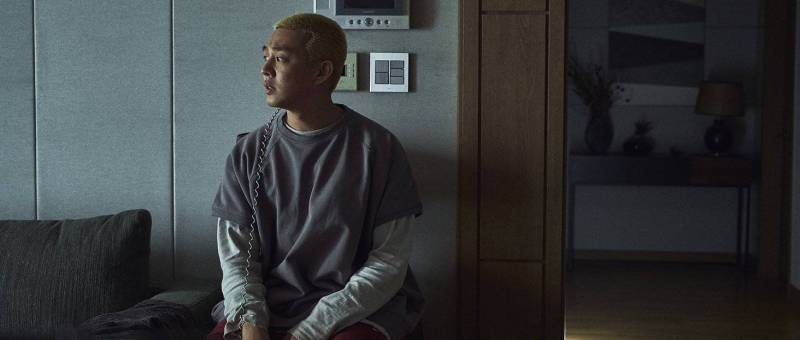
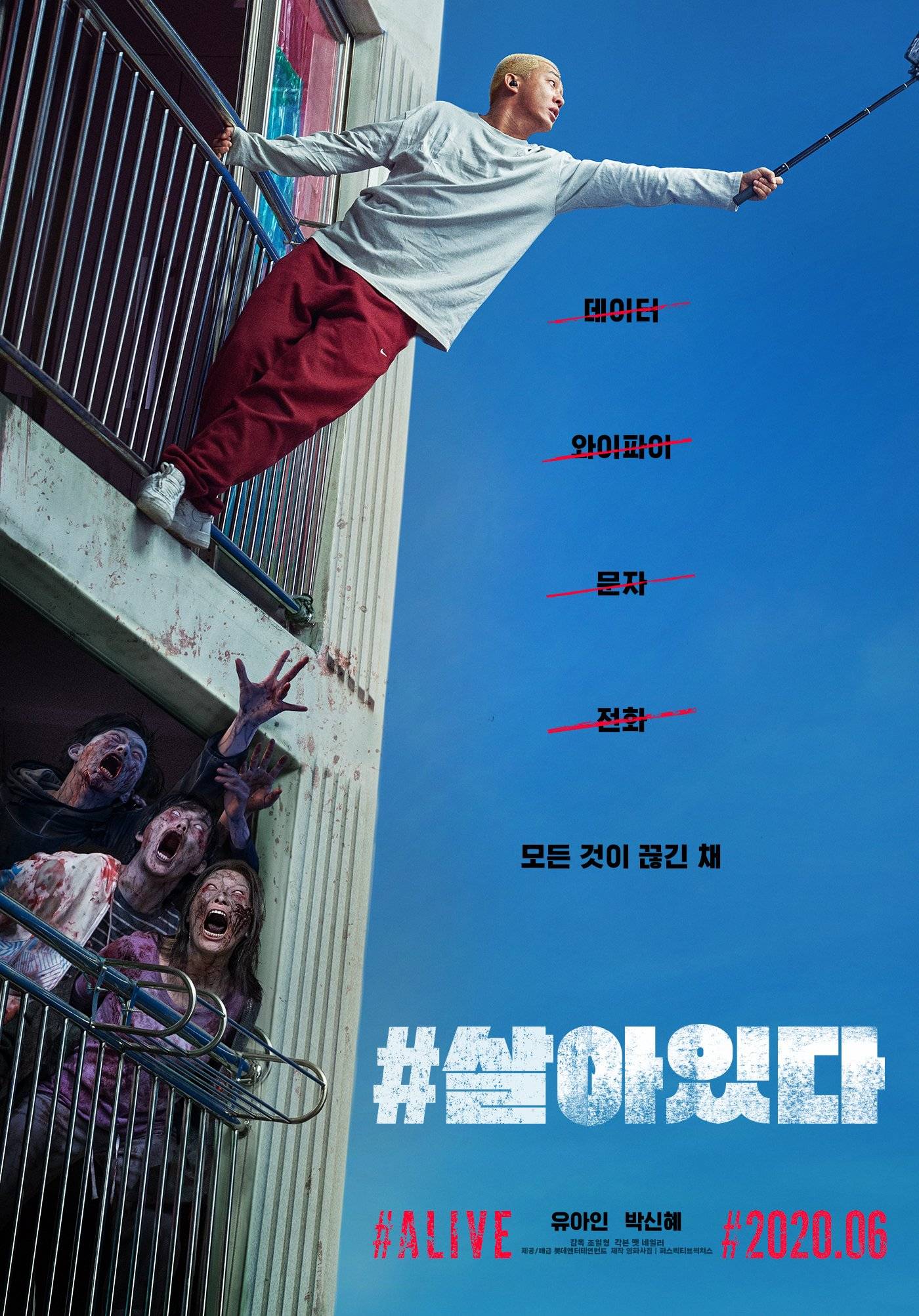
A young man in his 20s, Jun-u (Yoo Ah-in) lives at home with his parents and seems to be a virtual shut-in not quite supporting himself as a pro-gamer/vlogger. He ought to be in his element when he turns on his television one day to discover that a violent riot has apparently erupted all over the city, apparently spreading like a virus which causes aggressive behaviour and cannibalistic frenzy. Unfortunately, Jun-u’s parents left early that morning and didn’t have time to prepare food, leaving him money to go out for groceries but obviously it’s too late for that now and it looks like they won’t be coming home. Jun-u is entirely alone, and all the more so when his usual lines of communication are cut. 

Like the thematically similar EXIT, with which #Alive shares its faith in mountaineering, #Alive concerns itself less with the zombie threat than with youthful alienation and a sense of hopeless despair. Jun-u ought to be in his element, but finds himself ill-equipped for surviving the apocalypse given that he lacks basic adult life skills and those he does possess are now ironically unhelpful. Resourceful as he is, he remembers a smartphone app that would help him communicate via FM radio and all he’d need would be a standard earphone jack only all his earphones are wireless. Making the most of his unstable connection he uploads a single photo of himself holding his address written on the side of a cardboard box with the hashtag #I_MUST_SURVIVE to his Instagram in the hope that someone will see him but becomes increasingly despondent as his food and resources dwindle and he receives a disturbing voicemail which suggests his family may not have escaped the disaster. 

Hitting rock bottom he considers taking his own life but is saved by a literal light in the darkness, a laser shone from an opposing apartment signalling another presence he had previously missed. Believing he was alone in the world, Jun-u lost the will to live and faced with the prospect of waiting to starve to death or venturing out among the zombie hoards chose the only agency available to him in deciding the time and manner of his death. Realising he is not alone restores his desire for life, yet Yu-bin (Park Shin-hye), though much more well prepared, is also dealing with her own trauma in the face of crisis in the memory of a climbing fall that leaves her additionally anxious and fearful of physical risk. Where Jun-u flounders, lamenting as so many of us has in recent years, that no one seems to know what’s going on, the news continually flashing the same info screen while telling viewers only to stay home, Yu-bin has constructed a mini fort complete with a series of booby traps perhaps content in her independence having resolved to live and glad to have discovered she is not entirely alone. 

In contrast to disaster movie tropes, the pair instantly bond in their shared bounce back from despair, developing unconventional means of communication while Yu-bin willingly shares her food stash which in turn gives Jun-u the courage to venture outside for supplies. Eventually reuniting they do their best to withstand the zombie hoards, standing in as they are for the various anxieties which otherwise surround and oppress them, only to find themselves betrayed, worried that perhaps they have after all been abandoned and that no one is there looking out for them. Their salvation lies in their connection, the derided social media proving a lifeline that both affirms their existence and restores a sense of community that returns their safety, airlifting them from the locus of despair finally #Alive and returned to the world secure in the knowledge that they are not alone.


Netflix trailer (English subtitles)
Secret Zoo (해치지않아, Son Jae-gon, 2020)

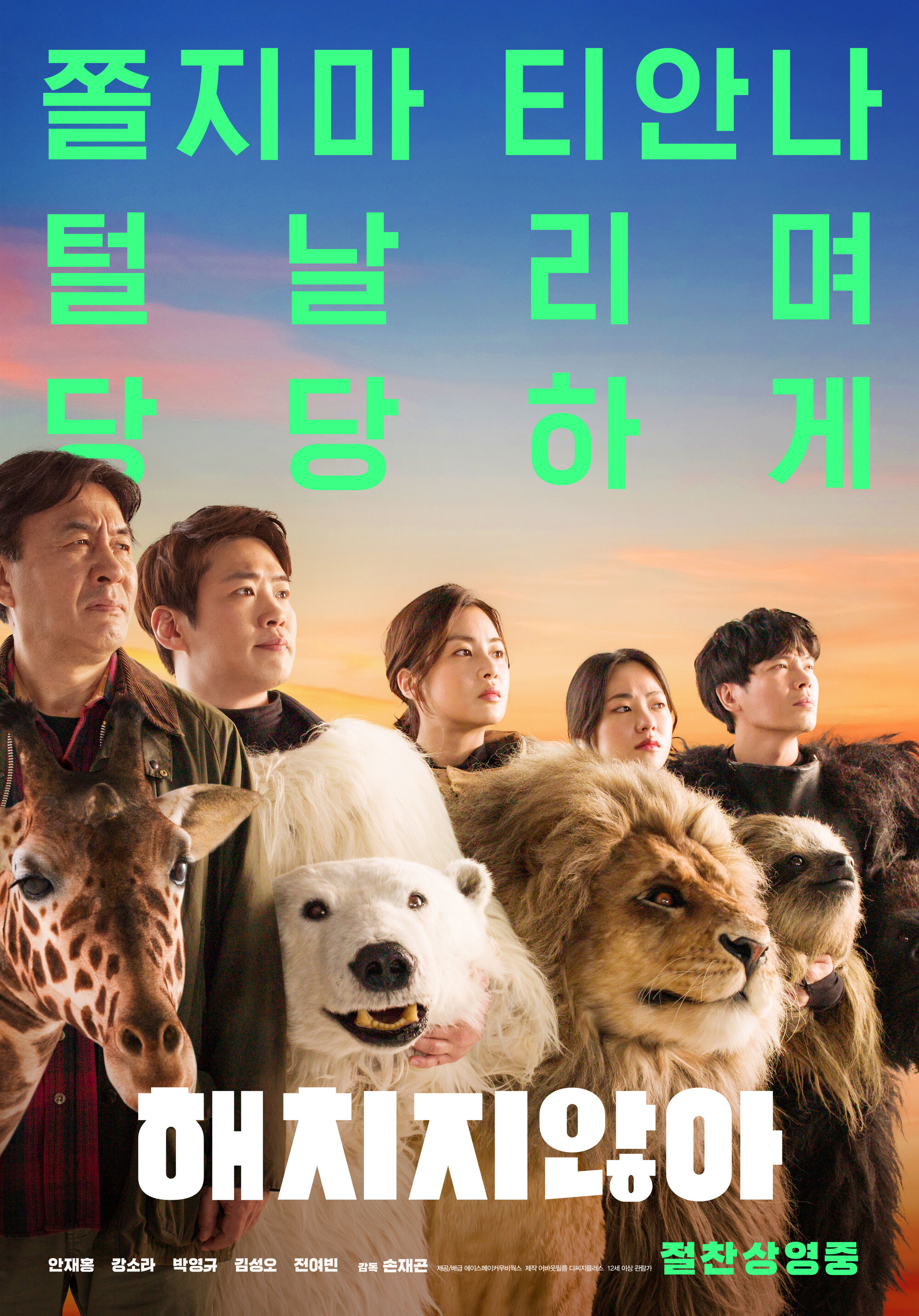
A corporate stooge begins to reassess his life choices in Son Jae-gon’s capitalist satire, Secret Zoo (해치지않아, Haechijianha). As someone belatedly points out, no matter how nice you make the enclosure, you can’t get away from the fact you’re in jail and aspiring lawyer Tae-soo (Ahn Jae-hong) might have to admit that he’s no more free than the animals he’s sent to oversee (or not, as we’ll find out) when he’s randomly sent to take over a failed wildlife park at the behest of his shady boss. 

Currently a temp working out his probation at top three legal firm JH Law, Tae-soo is desperate to be taken on as a full-time employee but as he explains to his sister who wants to sue some thugs bullying her son, that largely means he’s basically just an errand boy taking care of the unreasonable demands of their incarcerated clients who are in the main chaebol sons accused of fraud and embezzlement. JH Law is under siege from protestors angry at their role in perpetuating chaebol influence and siding with large conglomerates to frustrate workers’ rights and enable exploitative working practices. Yet it’s not squeamishness that he’s wound up working for such an awful company that has Tae-soo too embarrassed to attend the reunion for the “third rate” uni he graduated from, but shame that he is only a temp not a full-time employee. That’s part of the reason he instantly accepts a strange offer from his boss to head up Dongsan Park with the promise that he’ll be taken on as a regular employee in Mergers and Acquisitions if he can turn it around in three months. 

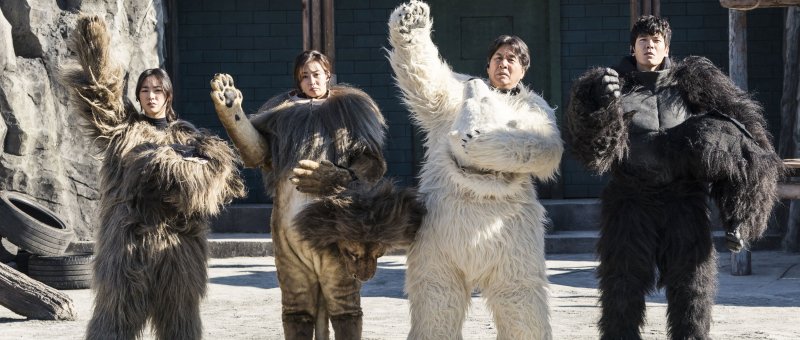
When he arrives, however, Tae-soo gets something of a shock. Most of the park’s most valuable animals have already been seized by its creditors, and international safeguards regarding the trafficking of live animals ensure that he cannot simply buy more within the three month time limit. After being surprised by a stuffed tiger while drunk after the welcome party and catching sight of some photos from a mascot day Tae-soo has a bright idea. They’ll simply have hyperrealistic costumes made and sit in the enclosures themselves keeping far enough away that the customers hopefully won’t know the difference. After all, when someone tells you’re visiting a zoo it probably doesn’t occur to you to question whether the animals are “real”.

Secret Zoo, or more accurately a zoo with a secret, is on one level a mild satire on public perception and fake news. You hear the word zoo and have a set of expectations. Unless something happens to convince you otherwise, your brain naturally smoothes over any minor issues you might have because it would be ridiculous for someone to “fake” a zoo. Despite the evidence of his eyes, the only thing the corporate stooge sent to inspect finds suspicious is the animals’ “funny” names which all end in the same syllable. The zoo becomes an unexpected viral phenomenon when Tae-soo, wearing the polar bear suit, is snapped drinking Coca-Cola just like the advert but even then no one questions the idea that he’s not a real polar bear, or that it’s perhaps not ethical for a polar bear to be drinking Coca-Cola in the first place or for guests to be throwing objects into the enclosures and especially not with the intention of harming the animals. 

Only conflicted doctor So-won (Kang So-ra) questions the zoo ideology, pointing out that however nice they make the enclosures it’s still a prison for animals that they are in essence exploiting. Secret Zoo is at pains to make a direct comparison between Tae-soo caught in the corporate cage of modern-day capitalism and the animals he’s impersonating as prisoners of the world in which they live. Tae-soo’s shady boss is, as might be expected, essentially corrupt. As Tae-soo begins to figure out, if this job were important he wouldn’t be doing it, he’s been sent because he’s desperate and expendable while his boss snidely remarks that it’s not a job to be done by someone “brought up soft” hinting at the class snobbery that further oppresses him as a “weed” coming up from a “third class” university. 

So desperate to achieve conventional success by becoming a member of the elitist club, Tae-soo doesn’t really question what it takes to get there until bonding with the employees and becoming invested in the idea of saving the zoo only to discover that his shady boss never really meant to “save” it anyway. Yet the only solution on offer is it seems merely a nicer cage which in power rests firmly with the same corrupt chaebols only now persuaded that it’s in their interest to be more socially responsible as a means of improving their personal brand which of course merely enables them to continue their exploitative business practices even if implying that Tae-soo too has a modicum of power in the ability to manipulate them. Black Nose, the polar bear driven mad by confinement, cannot be returned to the wild but regains his “freedom” in a polar bear sanctuary in frosty Canada, Dr. So-won too freeing herself of her problematic need to protect him by keeping him close. Tae-soo getting a dose of his own medicine in being observed by a young couple who press him for a selfie as the director of that “fake zoo” seems to have gained a little more awareness of what it’s like to live in the enclosure of an inherently corrupt social system akin to corporate feudalism but like Black Nose has perhaps at least improved the quality of his captivity. 


International trailer (English subtitles)