The Last Woman on Earth (지구 최후의 여자, Yeum Moon-kyoung & Lee Jong-min, 2024)

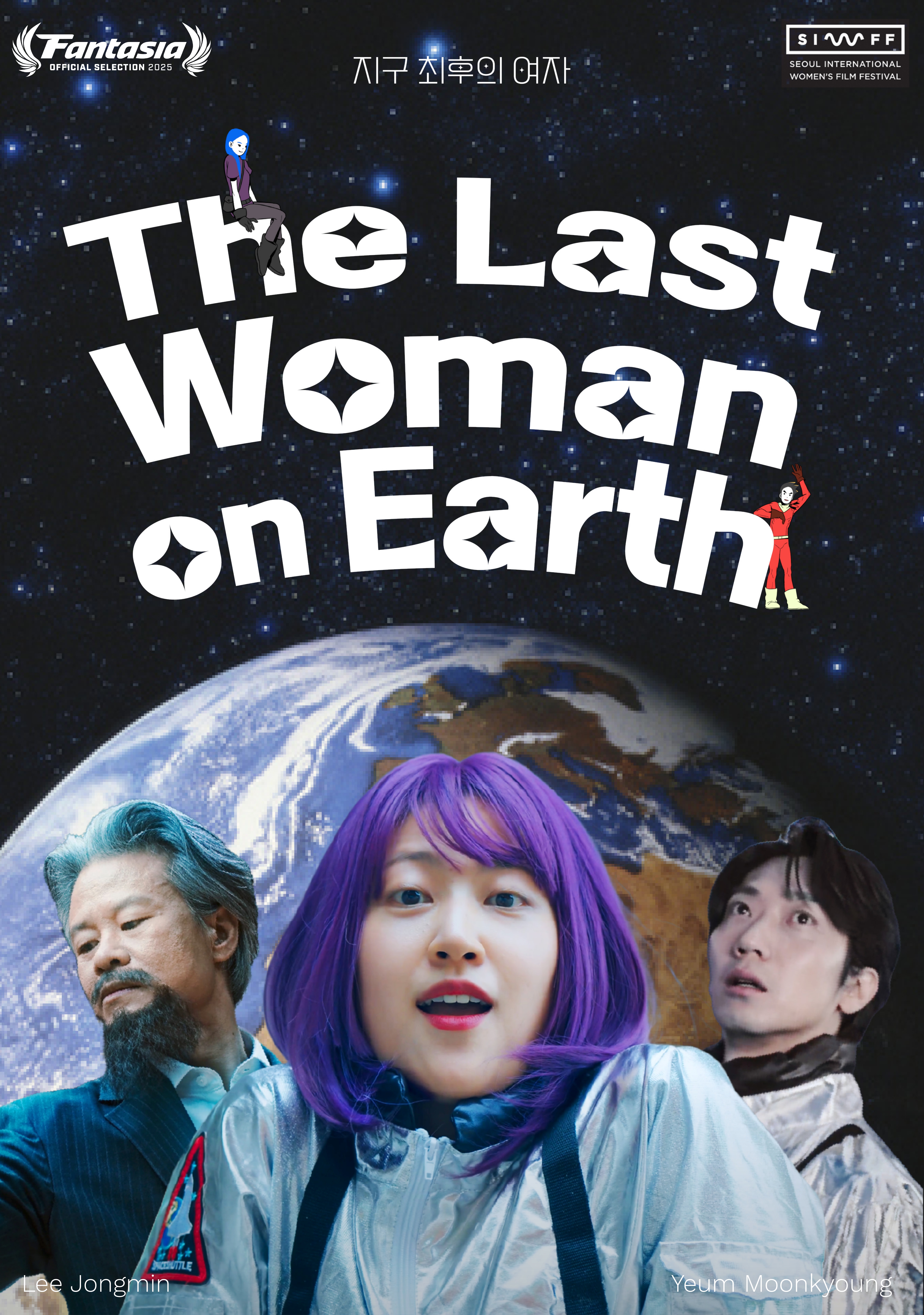
Wronged by an internationally famous film director, a pair of aspiring filmmakers set their sights on cinematic revenge in Yeum Moon-kyoung and Lee Jong-min’s meta comedy, Last Woman on Earth (지구 최후의 여자, Jigu Choehuui Yeoja). Even so, they find themselves mired in a world of sexism and artistic jealousy ruled over by powerful elites content to feed on their aspiration, chew them up and spit them out only to, on the one hand, insist that exploiting them made them sad, and then on the other barely remember them at all and claim they did nothing wrong.

Hana and Cheol each have painful histories with a Hong Sang-soo like festival darling that have frustrated both their lives and artistic careers. They meet in a film class where they workshop their movies that are also attempts to overcome their trauma. Hana’s is a high-concept sci-fi drama shot like a silent film and peppered with intertitles in which the only woman left on earth after a virus wiped out all the others is imprisoned by men who harvest her eggs and attempt to clone her. Cheol’s is Hollywood gangster noir set in Chicago in 1989 in which he kills an annoying old man who was holding him back. Cheol annoys Hana by pointing out the theme of her film was “misandry”, as if there were something wrong with that, while she points out his film is obviously about his resentment towards a father figure. Even so, Cheol thinks the reason no one likes his script its that it’s too manly, and he could use some female input to help him score points on the grant application, which is how they end up working together.

Their various traumas highlight the problems in the mainstream film industry, even if Cheol’s problem is, in another meta touch, with indie filmmakers who make indie films to show to indie people at indie festivals. After being talked into a nude scene a more famous actress had refused to do, Hana became the talk of the town while her scenes from the movie ended up porn sites. She became a sex symbol, but was shamed out of show business. The only jobs she got offered were erotic movies and all she could do in the end was abandon her old identity. As she reveals in a lengthy musical number, she still wants to make films even though it’s painful and no one wants to seem to letter.

Like her, Cheol sought the approval of a master but feels betrayed by him. Tak stole his screenplay and used it to win awards in Europe without crediting him. Even since then, he’s been determined to become the Ant-Tak by doing what he couldn’t, making a hit popcorn movie that’s nothing more that an good time at the movies. But even Cheol can’t completely abandon the patriarchal mindset, first gender-flipping his revenge drama, then changing gears to make Hana the hero only to suddenly appear as a male character to swoop in and save her from the evil professor, Tak. 

Throughout the runtime, there’s the sense that the world is coming to an end, and of course it is because the world of this film lasts only until the closing credits. Still, they want to make the film anyway, even if there’s no tomorrow and no one will see it, because it’s what they have to do. They start out by making a documentary about Tak, hoping to destroy the Korean film industry by exposing what he’s really like. But Tak doesn’t really take them seriously. He points out he’s not Park Chan-wook or Bong Joon Ho, so no one’s going to watch their film anyway. Though he claims to feel bad about what happened to Hana after he used her for his film, he also says that it’s not his fault because that’s just how things were and everybody did it. Like Cheol, he’s now trying to make a “feminist” film to atone, laying bare the cynicism of these kinds of gestures intended only to whitewash the image of a tainted artist. But films after all “next world” and the way out. You can make one on your own, and it doesn’t really matter if no one sees it. Killing her past trauma, Hana transfers fully into the world of cinema, staying with Cheol to watch the world end as the camera continues rolling on waiting for the next world to enter the frame.


The Last Woman on Earth screens in Chicago March 27th as part of the 20th edition of Asian Pop-Up Cinema.

Trailer (English subtitles)

Anarchist from Colony (박열, Lee Joon-ik, 2017)

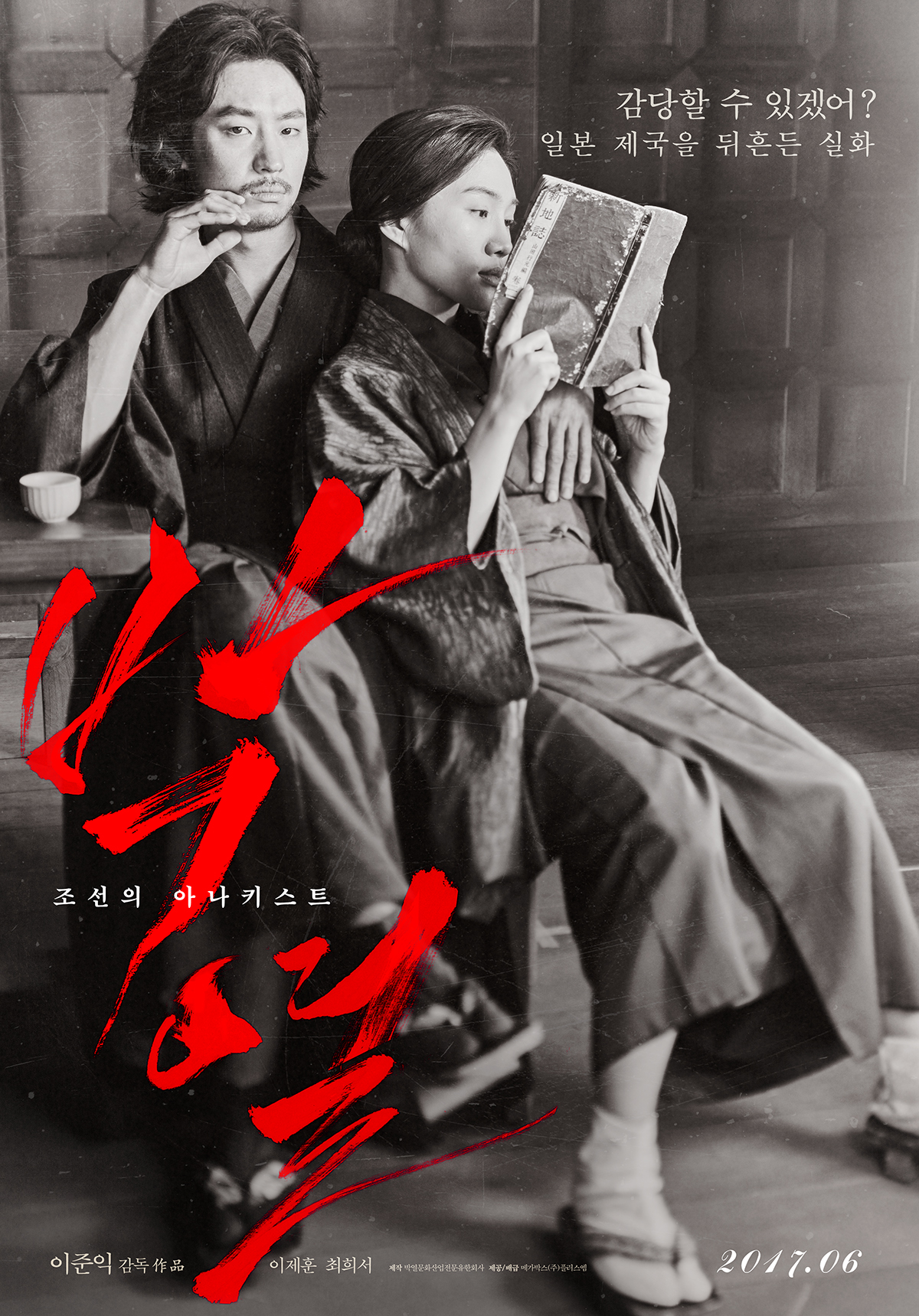
anarchist from colony posterLee Joon-ik follows his poetical mediation on the Korean independence movement, Dong-ju, with an equally philosophical, if not quite as rigorous, tale of rebellion and tragedy inspired by real life revolutionary anarchist, Park Yeol. Where Dong-ju was a tale of a world in in black and white, Anarchist from Colony (박열, Park Yeol) is one of glorious colour and the strange joy of pithily rejecting an oppressor’s authority. The oppressor’s authority is, however, infinite and no amount of anarchy will be enough to evade it even if there may be long term advantages in losing a battle in grand style.

Park Yeol (Lee Je-hoon) is a Korean left wing agitator living in Tokyo and earning a living as a rickshaw driver. He is also a hero to local Koreans and has gained a lot of fans (many of them female) thanks to his poetry including his latest entitled “Damn Dog” which laments his lowly status as an oppressed Korean man. One of his many fans, Fumiko Kaneko (Choi Hee-seo) – a Japanese woman who spent some time in Korea as a child, manages to work her way into his heart and becomes both a lover and an integral part of his revolutionary movement known as The Revolt.

In 1923, The Great Kanto Earthquake caused wide scale destruction and general chaos in the capital. Martial law was instituted, but a rumour soon spread that Korean insurrectionists were using the confusion to fuel their revolutionary ambitions, poisoning wells, committing arson, and plotting to assassinate the Emperor and his son. Of course, the rumours were baseless but led to a citywide pogrom in which around 6000 Koreans are thought to have been murdered both by ordinary people and by the army. Hoping to avoid the violence, Park decides he might be better off turning himself in to the police, but even police cells are not free of vigilante justice.

Unlike many recent films set during the colonial period, Anarchist from Colony is not particularly interested in demonising the Japanese. Generally speaking, the Japanese government are depicted as a collection of buffoons ill equipped to deal with the unexpected disaster of the earthquake and obsessed with rules, protocol, and Emperor worship. The major antagonist is a moustache twirling idiot and committed racist nursing a grudge against Koreans over a career setback to do with the suppression of the March 1, 1919  protest which kickstarted the Korean Independence Movement. The other officials mostly regard Mizuno (Kim In-woo) as an embarrassment, calling him out on his obvious racism and attempting to circumvent his machinations but more often than not failing to successfully outmanoeuvre him.

Having been partly responsible for the massacre in failing to stop the racist rantings of Mizuno and co, the government are eager to suppress all knowledge of it and distance themselves from anything that could make them look bad on the international stage. In this Mizuno makes a serious miscalculation when he decides to fit up the most popular Korean political activist he can get his hands on as a “traitor” and have him tried and executed as an example to the others. Park is wise to this scheme right away and decides to play along even if he knows it may eventually cost him his life. In fact, he almost hopes it will because not only will he lend weight to the cause of independence through his own martyrdom, but it will be much harder for the government to suppress news of the massacre with him on trial for his supposed terrorist activities which are being touted as its cause.

Yet the tale is framed not so much as suppressed revolution but ill fated love in the tragic romance of Park and Kaneko. The mini band of anarchists are a surprisingly cheerful bunch for hardline leftists, and Park and Kanenko’s intense bond is one of both political solidarity and true affection. Being anarchists through and through, they do not believe in marriage but agree to live together after signing a contract of cohabitation in which they mutually affirm their loyalty to each other and their cause. When Park is arrested, Kaneko turns herself in and follows him despite his pleas with her not to. The couple remain fiercely together to the end presenting a united front delighting in mocking their joint show trial even knowing they may soon be heading for the gallows.

This strange kind of lightness and dada-esque surrealism is an odd fit for the grim tale at hand. Lee mostly glosses over the wider implications of the massacre aside from minor references to longstanding prejudices such as Park’s beating by a customer who has short changed him and the vigilante gang’s repeated use of a particular phrase to flag up Korean accents. The overriding sense of flippancy undercuts the seriousness of Park’s plight and ultimately robs it of its power as his struggle is played for broad comedy rather than subtle satire. Perhaps overly ambitious, Lee’s reframing of of Park’s story as surrealist vaudeville romance never quite takes off, sacrificing passion for laughs but finding that they ring hollow surrounded by so much suppressed terror.


Screened at the London East Asia Film Festival 2017.

International trailer (English subtitles)