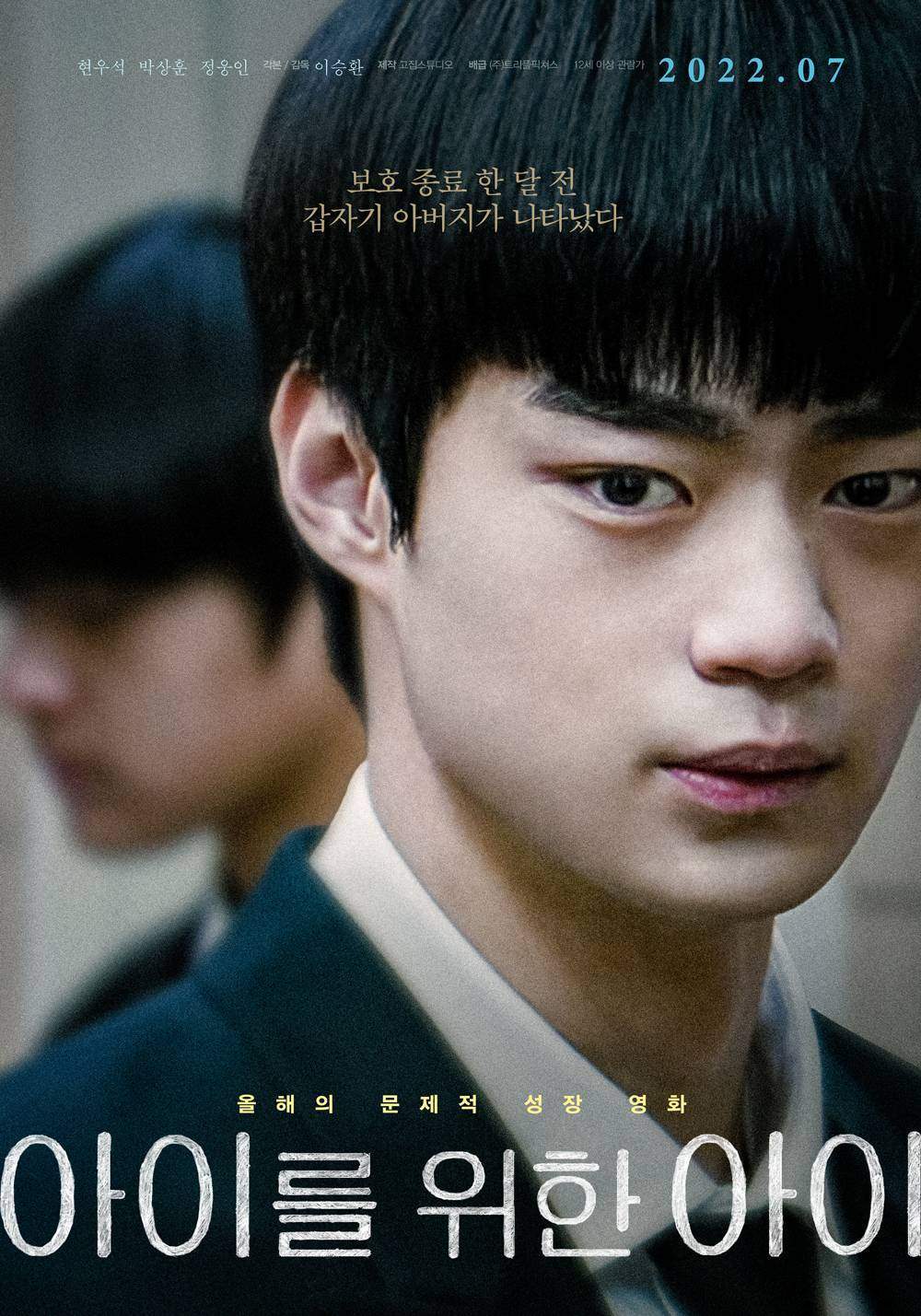
A Home from Home (아이를 위한 아이, Lee Seung-hwan, 2022)

Unexpectedly reunited with his estranged father, a young man is confronted with a series of choices on leaving the care system in Lee Seung-hwan’s darkly comic coming-of-age drama A Home from Home (아이를 위한 아이, Ayireul Wihan Ayi). The Korean title may mean something more like a child looking after a child, but the English also neatly encapsulates the hero’s dilemma on being ejected from the orphanage where he has lived for most of his life into a new “family” home with two strangers he hardly knows at all. 

Do-yun (Hyeon Woo-Seok) is about to come of age. In less than a month he will have to leave the orphanage where he lives and has nowhere else to go. Working as a takeaway delivery driver, he is acutely aware of the prejudice directed towards those who have no families with both his boss and unreasonable customers making jibes about how they expect no better from someone who “wasn’t raised properly”. Prejudice is one reason he longs to leave Korea for the promise of Australia, explaining that there he’ll simply be “Korean” rather than an “orphan” and will be able to build an independent life for himself. All his plans are scuppered, however, when a man turns up at the orphanage claiming to be his estranged father and offering to take him in. 

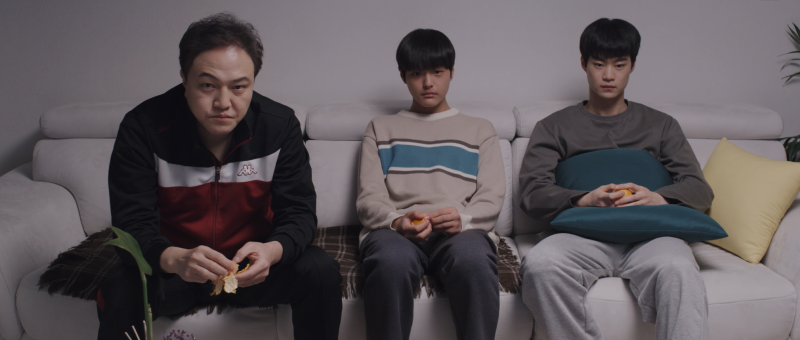
Understandably resentful, Do-yun is persuaded to accept the offer and discovers that he has a younger half-brother, Jae-min (Park Sang-Hoon). Seung-won (Jung Woong-In), his father, claims that he gave up Do-yun for Jae-min wanting to remarry after his first wife died but apparently unable to take his first son with him. That might be reason enough to resent Jae-min, but Do-yun doesn’t particularly only wanting to save enough money to get to Australia and leave the family behind. The problem is that Seung-won soon passes away leaving Do-yun with a still deeper sense of loss and resentment while wondering if Seung-won only returned to claim him because he needed someone to look after Jae-min in his absence. Only 20 years old, he ends up becoming Jae-min’s guardian and despite himself decides to put his Australian dreams on hold to look him. 

Becoming an accidental “father” so young does indeed force Do-yun to grow up quickly, learning to cook (well, divide a microwave dinner onto plates) and keep the apartment Seung-won left them tidy. Perhaps he’d have had to figure all that out for himself alone on leaving the orphanage and having to manage on his wages from the delivery job, but there is also a lingering resentment that he’s putting his life on hold for a “brother” he didn’t know until a few weeks previously wondering what sort of responsibility he really bears for him even as he begins to ease into a sense of familial comfort he had never known before. Even so, an unexpected revelation sees him questioning himself further and trying to figure out whether he really belongs with Jae-min at all or should cut his losses and go to Australia anyway. 

In an odd way, he comes to view his new familial relationship as “just another prison” while jealous of Jae-min’s opportunities and yearning for independent freedom. Meanwhile, he finds himself targeted once again by exploitative adults in the form of a gold-digging aunt and her obnoxious husband intent on getting their hands on Jae-min’s inheritance, and scammed out of money he’d saved for his new life abroad by another “brother” he’d grown up with in the orphanage. What he wants is to make a decision that’s his own rather than being railroaded by the circumstances of his life or manipulated by forces beyond his control but also begins to develop a genuine familial connection with Jae-min even while remaining mildly distrustful and trying to figure out where it is that he truly belongs. Exploring the effects of a societal prejudice against orphanhood as well as the practical and emotional difficulties faced by those who are abruptly ejected from the care system into an uncaring world, Lee’s strangely cheerful drama finds two young men searching for support but finally discovering they may have only themselves to rely on. 


A Home from Home streams in the US until March 31st as part of Asian Pop-Up Cinema Season 16.

International trailer (English subtitles)
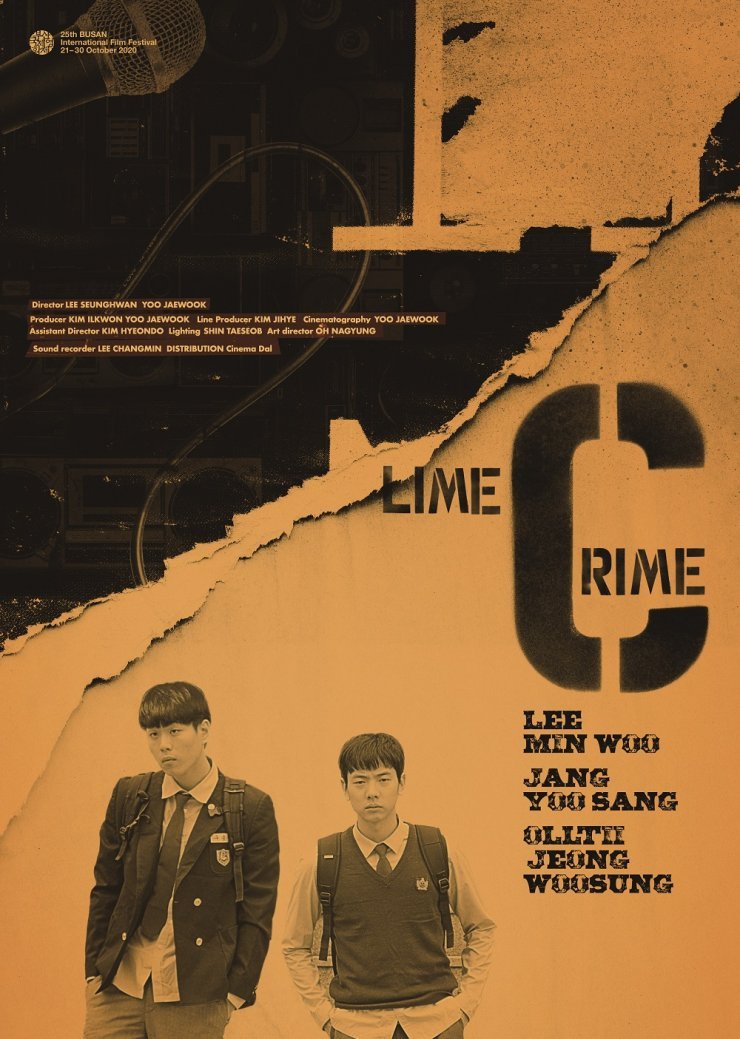
Limecrime (라임크라임, Lee Seung-hwan & Yoo Jae-wook, 2020)

Two teens from across the class divide form an awkward friendship through a shared love of hip hop but find their connection undermined by their differing circumstances and opportunities in Lee Seung-hwan and Yoo Jae-wook’s indie coming-of-age drama Limecrime (라임크라임). Loosely inspired by their own life experiences, Lee and Yoo once performed as a rap duo under the name Limecrime, the directors eventually find unexpected positivity in the boys’ life trajectory as they each reach a point of understanding and thereafter overcome their differences while pursuing their musical aspirations. 

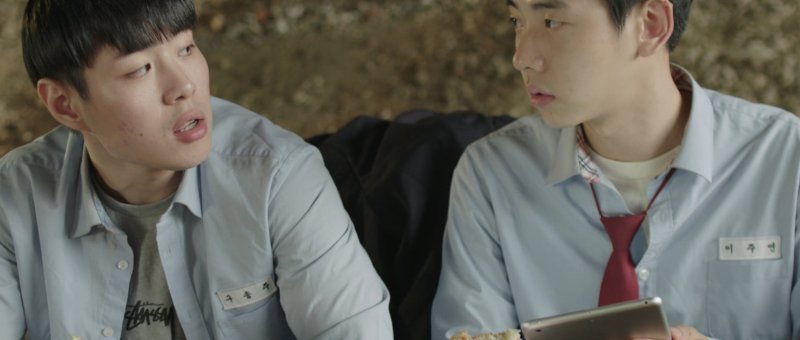
16-year-old Songju (Lee Min-woo) is a struggling middle school student with hip hop dreams currently working part-time in his father’s auto repair shop. He attracts the attention of the well-off, academically successful Jooyeon (Jang Yoo-sang) when performing a classic rap during a vocal evaluation underneath a sign stating that hip hop is forbidden. Being something of a hip hop geek, Jooyeon immediately makes contact lending a mystified Songju a retro discman and some of his favourite tracks before suggesting they team up as a hip hop duo and enter an online competition. 

The duo’s name, Limecrime, is taken from an accidental misreading of “rhyme crime” which eventually sticks and becomes in a way ironic. Nevertheless, it demonstrates an early divide between the boys, Jooyeon mocking Songju for his rookie mistake while insisting that the art of rhyme is central to rap, demanding precision while Songju prefers the anarchy of freeform improvisation. To begin with they bond over their shared love of music, but over time the differences between them become increasingly obvious with Songju often uncomfortable among Jooyeon’s wealthier friends. Though they are mocked by some of their classmates at an early performance, a graduating hip hop club from a local high school offers to befriend them, but their rappers are much more intellectual than either of the boys sitting down to discuss philosophy while Songju feels left behind having no real idea what’s going on. He gets up to fix a broken mic stand, only for Jooyeon to tell him off insisting the repairman will take care of it while rolling his eyes as if implying he thinks Songju has shown himself up in front of their new friends. 

Jooyeon is indeed the sort used to having everything done for him, regarding it as somehow inappropriate to fix something yourself. His parents do not appear to be physically present in his life, heard only via infrequent telephone calls, while leaving the housekeeper to watch over him though she later quits abruptly having reached her limit when Jooyeon and Songju thoughtlessly trash the kitchen and leave the mess for her to clean up. Cleaning up after himself is not something Jooyeon has ever been taught to do and given his family’s wealth he’s also got the idea that all problems can be solved with money. Wanting Songju to attend the high school with the best hip hop club he crassly offers to pay for cram school classes, little realising how his suggestion makes Songju feel or how he’s effectively using and manipulating him to achieve his own aims. Irritated by his practicality, he finally relegates Songju to the space recently vacated by the housekeeper after he kindly fixes up his bike for him. 

Songju meanwhile is both attracted and repelled by Jooyeon’s upperclass world while finding his existing friendships strained when his buddies fall in with a local petty gangster and are pulled towards small scale street crime ironically selling counterfeit fashion from hip hop brands. Given Songju’s example some of the other boys dare to dream of different futures, even the most delinquent revealing he’d like to become an actor, but each is later forced to face the crushing reality that no matter their ambition they do not have the same opportunities as boys like Jooyeon whose family can afford to pay for fancy schools and private tuition. 

Matters finally come to a head when Songju ends up in trouble with the law and Jooyeon gets his father to pull strings on his behalf only to abruptly abandon him when he expresses anxiety over his less well-connected friends. There is something quite ironic in Jooyeon’s love of hip hop, declaring that he wants to “change what’s absurd in this world” through the power of music but later having no answer when asked if he wouldn’t be better to become a politician or activist than an indie musician reliant on being able to generate a platform. After deciding to give up, Songju nevertheless comes into his own and finds his voice but at the same time refuses to leave Jooyeon behind even when discovering solo success. Though the leads may be a little past convincingly passing for 16 (Jang Yoo-sang is 30, Lee Min-woo is 28), Lee and Yoo nevertheless craft a refreshingly positive coming-of-age tale which allows the boys to salvage their friendship and their musical dreams even if perhaps only by sidestepping the issues which initially divided them. 


Limecrime screens 15th November as part of this year’s London Korean Film Festival.

Trailer (no subtitles)