After finding huge success with his debut film, Lee Jang-ho soon became disillusioned with the film industry and was in fact temporarily banned after being found in possession of marijuana. After the assassination of Park Chung-hee in 1979, Lee returned with a new focus on socially conscious filmmaking only to be blindsided by the advent of an entirely new age of oppression following the coup of general Chun Doo-hwan in 1980. In contrast to Park’s regime, Chun’s embarked on a deliberate bread and circuses policy pushing sports, sex, and screen in which social commentary was out and softcore very much in.
Lee had opened his nonsense film Declaration of an Idiot with a scene of himself committing suicide because no one cares about movies anymore, they only like sports which lends a note of irony to his incredibly strange and very of its time baseball film, Lee Jang-ho’s Baseball Team (이장호의 외인구단, Lee Chang-houi wingudan). Adapted from a popular sports manhwa, the film is ostensibly a much more commercial affair yet in its way is attempting to subtly attack the growing inequalities of the Chun era as its poor mountain boy hero, Hye-seong (Choi Jae-sung), squares off against posh boy rival Dong-tak (Maeng Sang-hoon) not only for sporting glory but the hand of his innocent first love Um-ji (Lee Bo-hee).
As Dong-tak joins a top-rated team and is interviewed on television, Hye-seong returns to the mountains to train and is trying to dodge the train fare while travelling with his father to discuss joining a team. He eventually strikes a blow against Dong-tak by striking him out during a perfect game, but ruins his shoulder in the process with his baseball dreams then behind him, which is a problem because he’s devoted his entire life to fulfilling the promise he made to Um-ji when they were children to become a great baseball player. Hye-song repeatedly promises to do anything he can to make Um-ji happy even if it means accepting her relationship with Dong-tak, but Dong-tak openly laughs at him for being a nobody though there is something worryingly intense in his suddenly throwing all his letters from Um-ji, which he had in his bag, on the table describing them as written by a “goddess” and his “sacred place.”
As for Um-ji herself, she seemingly has little control over her life as the daughter of an upperclass family. She began dating Dong-tak before reconnecting with Hye-seong in Seoul and originally sticks to her class-appropriate match before being tempted by her innocent childhood connection and realising Dong-tak is an arrogant arsehole who didn’t show up to her birthday dinner because he forgot and went on a date with another girl. Even so, her family continue to pressure her into marrying Dong-tak despite his manly decision to ignore her until he’s accomplished his mission of achieving 100 consecutive hits at which point he’ll propose. Hye-song ironically makes a similar decision, taking off for a training session on a remote island which ends up lasting a whole year during which his completely insane mentor Coach Byeon-ho (Ahn Sung-ki) denies him permission to write to her. When he returns, Um-ji has ended up married to Dong-tak and is in a depressive state wandering through life in a daze of guilt and disappointment that she betrayed both herself and Hye-seong because of social pressure to conform and is now stuck in this emotionally unsatisfying relationship. Hye-seong rejects her on the grounds that the spark has gone from her eyes and she’s no longer the Um-ji of his youth though also accepting some responsibility for that. At the end of the film, Hye-song loses his sight which allows him to reunite with a changed Um-ji who has separated from the now loser Dong-tak, no longer able to see the change in her remembering only the Um-ji he fell in love with.
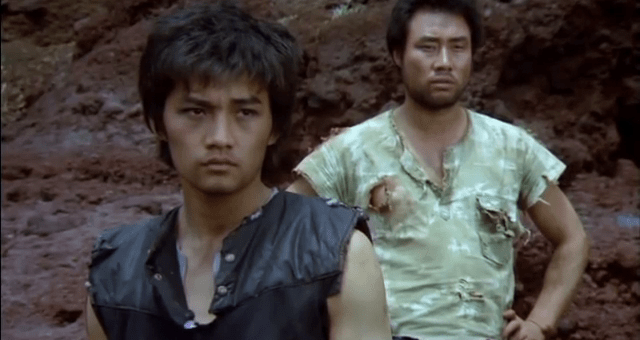
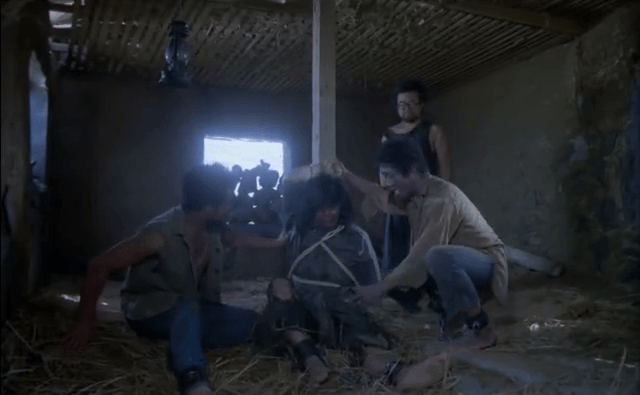
The men who were with him on the island where they underwent bizarre martial-arts style training regimes, were whipped and shackled, and almost killed their one-armed teammate have similar problems returning to situations that are less satisfying than they hoped. A wimpy pitcher despised by his son returns to find him unimpressed, while another discovers his wife had temporarily left him, and an incredibly short man, Kyeong-do, who’d been bothering a bank employee so much she switched branches to avoid him discovers she’s engaged to another man. Kyeong-do refuses to give up, arrogantly telling her that he’ll be replacing her groom on the big day while continuing to behave like a massive creep but actually successful in the end because of his sporting and financial success though it looks more like a case of her giving in than actually falling for him and sends some very mixed messages about a woman’s agency in this still conservative age.
The players brand themselves losers and outsiders, each of them in some way compromised and locked out of pro-baseball from Kyeong-do’s short stature to Hye-seong’s poverty though the decision to include a mixed race man which may have been intended as a progressive gesture seriously backfires by having a Korean actor perform in blackface while insensitively mimicking racial stereotypes. The coach, Byeong-ho is also an outsider by virtue of walking with a cane and purposefully creates a team of others like himself he can train with his cruel and bizarre methods to take on the Dong-taks of the world. Even so, others brand them “inhuman”, “beasts trained with whips”, and continue to resent their attempt to subvert the contemporary class order.
On the surface, however, Lee has simply made a baseball film about a group of outsiders who triumph over adversity. He fills it with the spirit of the times, throwing in several sequences accompanied by contemporary pop songs along with an atmosphere of ridiculous excess not to mention inconsequentiality as if he were actively mocking the current direction of Korean cinema despite the occasional moment of artistry such as the gothic scene in which Um-ji realises Hye-seong has returned but the pair are separated by a billowing white curtain. An oddity, but perhaps one that speaks of the oddity of its times.

 Windows on Worlds