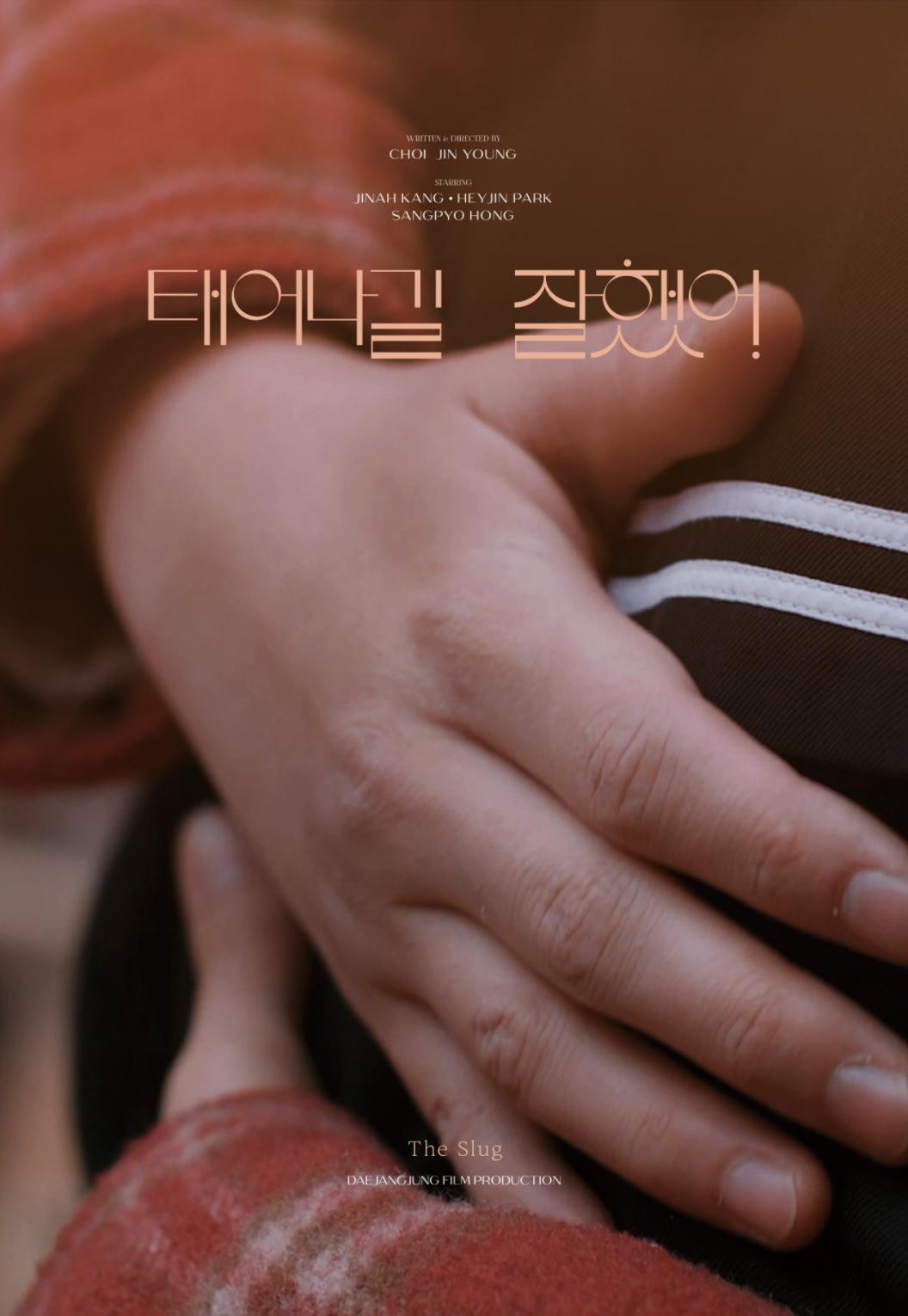
The Slug (태어나길 잘했어, Choi Jin-young, 2020)

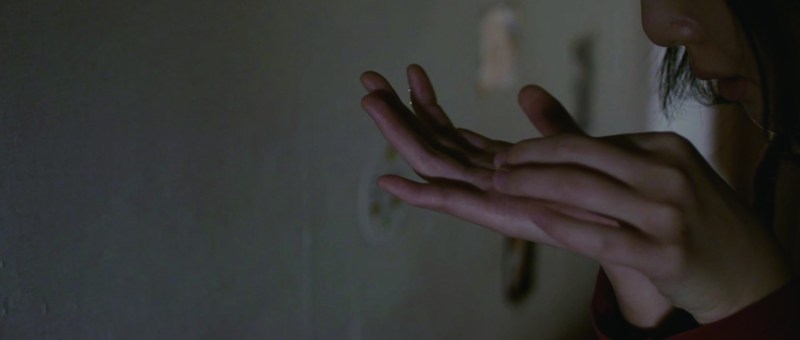
“My name is Park Chunhee. I’m a little…drenched.” “From the weight of life?” asks a fellow sufferer a little too excitedly. “In sweat” she flatly replies, though in her case less from existential anxiety than a persistent medical condition she finds so embarrassing it prevents her leading a fulfilling life. Although, it seems, that’s not the only reason that Park Chunhee has found herself arrested since the age of 15. A whimsical tale of growing self-acceptance, Choi Jin-young’s The Slug (태어나길 잘했어, Taeeonagil Jalhaesseo) reconnects its lonely, defeated soon-to-be middle aged heroine with her teenage counterpart to make both sense of and peace with the past in order to “find purpose and meaning somewhere in this world”.

We first meet Chunhee (Kang Jin-a / Park Hye-jin) in 1998, shortly after the Asian Financial Crisis, entering the home of her uncle (Ko Jo-yeong) and aunt (Kim Geum-sun) following the funeral of her parents. It seems although the family has agreed to take her in, little thought has been given to her place within the household. Her cousin Yura (Kim Yeon-woo) flat out refuses to share her room while her aunt is reluctant to allow her to use the room of her son Wonseok (Lim Ho-jun / Yoo Gyeong-san) who is away at university in case he should come back. Slightly exasperated, grandma (Byeon Joong-hee) agrees she can come in with her, but her uncle has another idea – the attic crawlspace, according her aunt freezing and rat infested and though he offers to fix it up it’s clear he won’t be doing it himself and doesn’t want to pay. Nevertheless, it’s where she ends up staying, hidden away and treated quite literally as a poor relation with no one but grandma showing her the slightest bit of affection. 

20 years later, Chunhee is still living in the house though apparently alone. Her attic room is more or less unchanged, pinups of a teenage Prince William still affixed to her windowsill along with a family photo. She finds strange companionship in an errant slug crawling on the wall, partly in the trail she leaves after herself because of her excessive sweating that caused her aunt to be forever berating her to mop the floor after she passed through in socks. These days she makes ends meet by pealing copious amounts of garlic for a local restaurant while saving up for an operation to cure her sweating. After being mysteriously struck by lightning, however, her life becomes even stranger as she’s haunted by the younger version of herself and plagued with flashbacks to her teenage trauma.

Besides the sweating, Chunhee’s problem seems to lie in the conviction that her life is worthless and it would have been better if she had died along with her parents but best if she were never born at all. After accidentally wandering into a weird support group under the name of “Time to Face Myself” she ends up bonding with a similarly dejected man who has developed a stammer after being beaten by his father and regrets that his life has been a series of missed opportunities as a consequence. Yet she still doubts that she has a right to love or happiness, convinced that people don’t like her and that she is a toxic person destined to make others unhappy. Only by reconnecting with the younger Chunhee and bonding with the kind yet awkward Juhwang (Hong Sang-pyo) does she begin to see that it was never her fault, she was not in the wrong, and has as much right to life as anyone else.

Originally changing the locks because it’s her house and she doesn’t want anyone else inside, Chunhee finally manages to escape her strange limbo land even as her feckless family members flounder, Wonseok apparently ruined by his failed revolution while her uncle died a failed poet and Yura apparently became an unsuccessful film director. “Life is cold” Chunhee is reminded by a new friend engineered by her innate kindness, realising that though she feared being alone alone is all she’s ever been. Nevertheless, her new connections have perhaps in a sense liberated her, given her courage to face herself and rediscover a sense of self worth that gives her the confidence to venture out into the world in search of answers walking towards a large heart comprised of several smaller ones as she embarks on an existential quest for meaning open to whatever it is that awaits her.


The Slug screened as part of the 2021 Osaka Asian Film Festival

Original trailer (no subtitles)

Scattered Night (흩어진 밤, Kim Sol & Lee Ji-hyoung, 2019)

Scattered night still 2Familial collapse has become a major theme in recent Korean indie cinema. Caught in a moment of societal flux, the family itself has come in for question with the young in particular looking for new models and new ways forward. Where Yoon Ga-eun’s The House of Us found an anxious little girl alternately trying to force her warring parents back together and forming a new family of her own as a maternal figure to two neglected sisters, Kim Sol & Lee Jihyoung’s Scattered Night (흩어진 밤, Heuteojin Bam) finds another little girl processing familial failures and pondering her own place in the world unanchored from parental security.

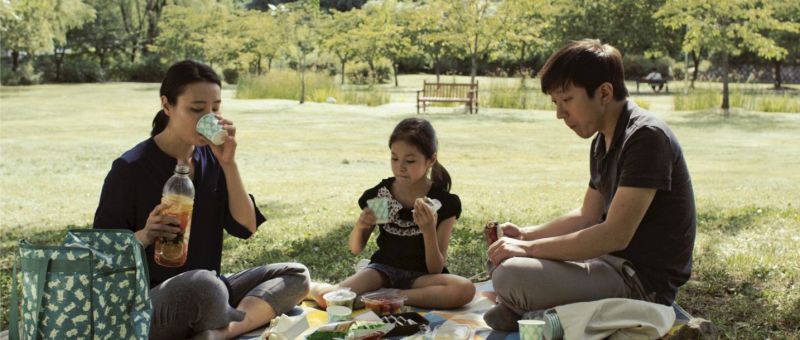
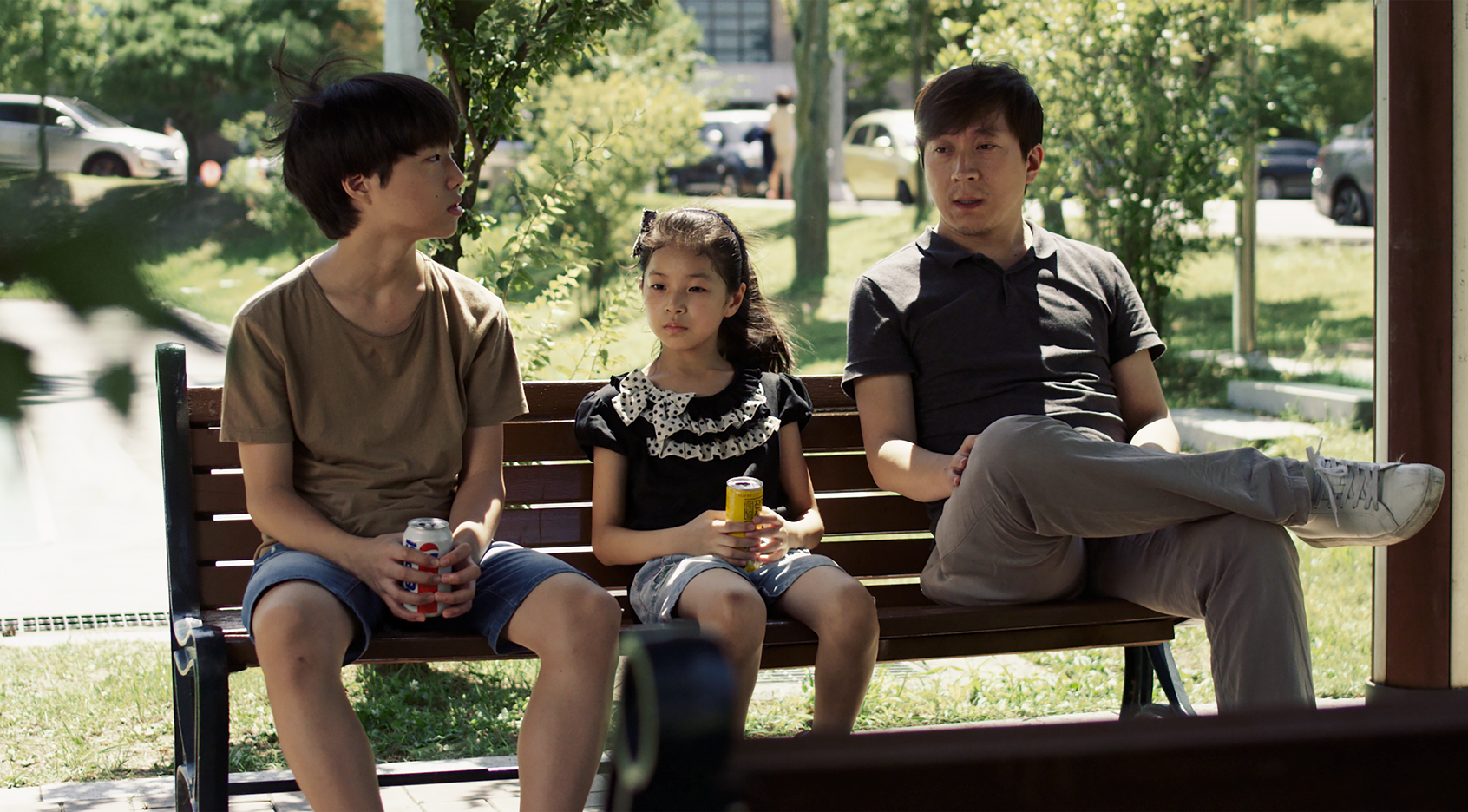
9-year-old Su-min (Moon Seung-a) hasn’t seen her dad in a month, so she’s put out that all he’s done while he’s been home is show some people round their apartment and complain it isn’t clean enough. Unlike her slightly more savvy brother Jin-ho (Choi Junwoo), Su-min hasn’t quite understood that her parents are splitting up and that’s why her dad doesn’t live with them anymore. Perhaps jumping the gun, the parents sit the kids down and try to explain that they’re not getting “divorced” and will still be a “family”, but that mum Yoon-hee (Kim Hyeyoung) and dad Seung-won (Lim Hojun) can’t live together anymore. Quite reasonably asking what’s going to happen to them, the kids get no real reply. Su-min quickly realises that she will definitely be separated from one of her parents, but begins to worry that she may also lose her brother if it ends up that mum and dad are taking one child each.

Already somewhat anxious, Su-min seems to feel disconnected from her mum who is at best undemonstrative, sometimes perhaps resentful of her role as a wife and mother and everything she has been asked to sacrifice in order to fulfil it. Declaring herself bored at home and throwing herself into her career as a teacher at a cram school, Yoon-hee has little time for her daughter but bonds with her son through their shared interest in studying. Too young to join in, Su-min too tries picking up some books to spend “quality time” with her mother only to be dismissed once again and left feeling as if she’s failed some sort of test.

While Su-min agonises over a hypothetical choice of which parent might suit her best, her brother Jin-ho isn’t sure he wants very much to do with the family at all, already thinking of applying to a prestigious grammar school chiefly because it has a dormitory. He skips out on a family picnic to “study” on his own at home, but pushed for an answer always chooses his mother with whom he seems to share a greater affinity. Jin-ho’s clear taking of a side further unsettles his sister who wonders if that means that she will essentially be left with no choice other than to go with her father. Working out all the potential combinations, Su-min asks her brother which he thinks is most likely and gets the response that they will probably both stay with their mother because she will definitely want to stay with them, but remains unconvinced that is really the case. Looking for reassurance, she tells her mum that she’s worried she’ll simply disappear once they sell the apartment, but her mother offers no reply.

Literally displaced in her home environment, Su-min witnesses two children around her own age sitting cheerfully at her family table as if they already owned the place. When she hears her mother tell an estate agent she’s looking for somewhere with two rooms (though preferably one big enough to be divided in two) it fuels her anxiety that she’s being rejected, that her mother only wants one of them and it isn’t her. Meanwhile, her father remains distant, largely refusing to discuss anything but conceding that Su-min ought to have a say in her future and promising to respect her decision.

The sorry truth seems to be that neither parent really wants the kids. Failing to process the end of their marriage, they begin to view the last 15 or so years as a huge mistaken life choice, an embarrassing failure of which the kids are the most obvious proof. They want to start again, but the kids are in the way. Jin-ho overhears his father say that it would have been better if they’d never had him, while his mum regrets that they ever got together in the first place. Despite teaching the children that it’s bad to lie, they make them keep up the pretence of happy families when horrible grandma comes to visit from the US to avoid the disgrace of admitting the marriage has failed.

Neatly mirroring Su-min’s anxiety, Yoon-hee tells grandma that it’s a shame she doesn’t live closer so they could see each other more often, but of course she doesn’t really mean it. Grandma talks up her own faults and professes regret that Yoon-hee couldn’t study abroad because she had to look after her siblings after her father died, but she does so largely as a way of running her daughter down. In any other situation the fact that grandma lives abroad, separated from her daughter by oceans, ought to give Su-min reassurance that familial bonds can overcome geography but the relationship is so obviously toxic as to provide no comfort at all.

Su-min wants agency over her future, to be acknowledged and have some kind of control, but asking her to make such an emotionally difficult decision is an awfully cruel burden to place on a child and one that she is ultimately unwilling to carry. Though the siblings are able to patch up a kind of solidarity, pledging to minimise the “awkwardness” that may arise between them if they are only to see each other once a week, it’s clear that an unscalable wall exists between the generations and the “family” cannot ever be repaired. Su-min and her brother will have to find their own way out of the dark, while their parents remain hopelessly lost looking for the path back to possibility.


Scattered Night was screened as part of the 2019 London Korean Film Festival.

Short clip (English subtitles)

Interview with the directors from Jeonju International Film Festival (English subtitles)

Back from the Beat (내가 사는 세상, Choi Changhwan, 2018)

Back from the Beat still 2Artists have a complicated relationship to the earning of money. Some might feel that it’s only right to be “starving”, that if you’ve managed to support yourself through your art or even a regular side job, you must be doing something wrong. All of which ignores the fact that starving is very unpleasant and continually worrying. How can you make your best art when you’re hungry and frightened of losing the roof over your head? The hero of Choi Changhwan’s Back from the Beat (내가 사는 세상, Naega Saneun Sesang) has learned not to sweat the small stuff but is forced to realise that he may have been somewhat complicit in his own lack of success even if the realisation brings him little more than additional misery.

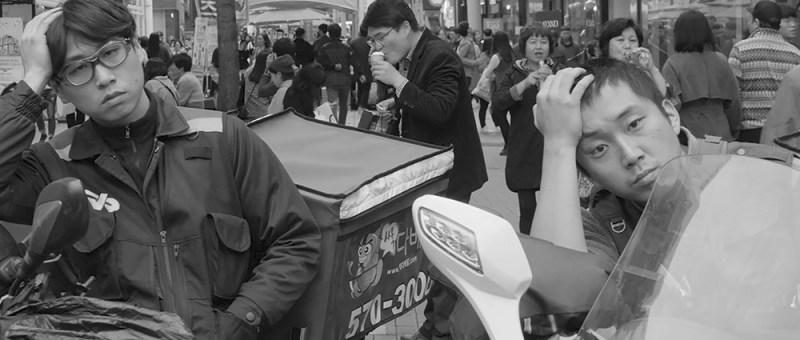
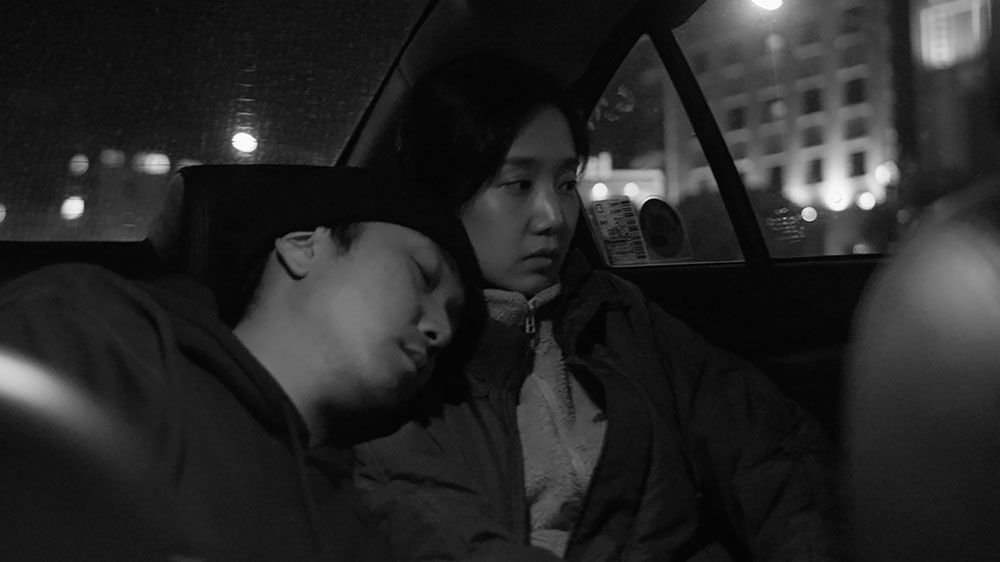
Minkyu (Kwak Minkyu) is a middle-aged man trying to make it as a DJ. He works as a delivery driver in the afternoons and as a barman in the evenings at a hipster music cafe where the owner occasionally lets him take the stage. Meanwhile, his girlfriend, See-eun (Kim See-eun), is an aspiring artist who currently works at an art school preparing high school students for exams.

The trouble begins when both Minkyu and See-eun begin to feel pressure from their respective bosses. Minkyu, a happy so lucky sort of guy, isn’t the type to pay much attention to his final salary so he’s confused when another driver tells him he thinks they’re being diddled because his records and the money he’s been getting don’t match. After a few calculations, Minkyu realises he’s out as much as $70 but isn’t quite sure what to do about it. He doesn’t want to think his boss is a bad guy and is sure it must be a mistake. He’d probably let it go to not rock the boat (much to his girlfriend’s consternation) but his friend wants to fight and Minkyu finds himself swept along with him. The boss says the difference is for “insurance” but when a driver gets injured he’s told there isn’t any – he’ll have to cover his own medical costs and is even liable for replacing the damaged equipment. Smelling a rat the guys visit a labour lawyer and ask their boss to sign a proper employment contract which turns out to be a big mistake. “Freelance” contractors aren’t employees, after all, and so the guys get sacked with no legal protections in place to help them.

Meanwhile, See-eun’s snooty boss Jiyoung (Yoo Jiyoung) has taken against Minkyu and repeatedly tells her to dump him. By any standards this is hugely inappropriate considering Jiyoung is speaking as a boss and not as a friend, poking her nose into See-eun’s private life which is none of her business. The school is continually shorthanded and lacking in students so Jiyoung gets See-eun to supplement artwork for exhibitions, often with short notice and for no additional pay, even sometimes rejecting the finished pieces and demanding they be redone. Matters come to a crunch when Jiyoung announces that she’s taking on new staff, but See-eun will be getting demoted with a significant salary cut because the new teacher has a degree from a university in Seoul which she feels is more “appropriate” for Se-eun’s current position.

Despite her criticism of Minkyu’s naivety, See-eun doesn’t fight back either. Or at least, she begins to fight back but an embarrassing incident eventually sends her the other way. See-eun also finds herself subject to the artist’s dilemma in that she’s continually pressured by the owner of Minkyu’s bar to draw their posters for which he generally “forgets” to pay her. Despite Minkyu’s loyalty towards him, Jihong (Park Jihong) is not well liked and seems to have a reputation for shady conduct and improper labour relations. See-eun wants Minkyu to get Jihong to sign a proper performance contract but he thinks it’s unnecessary because they’re “like brothers”.

Time again, the lines between friend, colleague, boss, and competitor are manipulated to get powerless dreaming youngsters like Minkyu and See-eun to play along in a system which constantly misuses them. In a land where any vague statements about improving working conditions can see you branded “commie” and dismissed, there is little hope out there for those just wanting to survive in order to facilitate their art or greater purpose. A melancholy portrait of the modern starving artist, Choi Changhwan’s feature debut finds little to be optimistic about in world of inescapable exploitations and impossible dreams.


Back from the Beat was screened as part of the 2018 London Korean Film Festival.