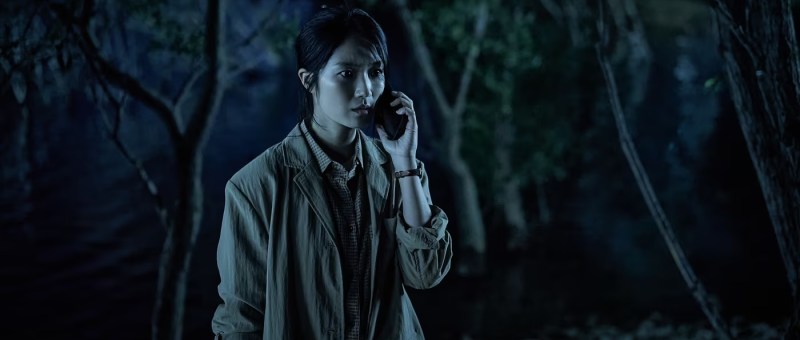
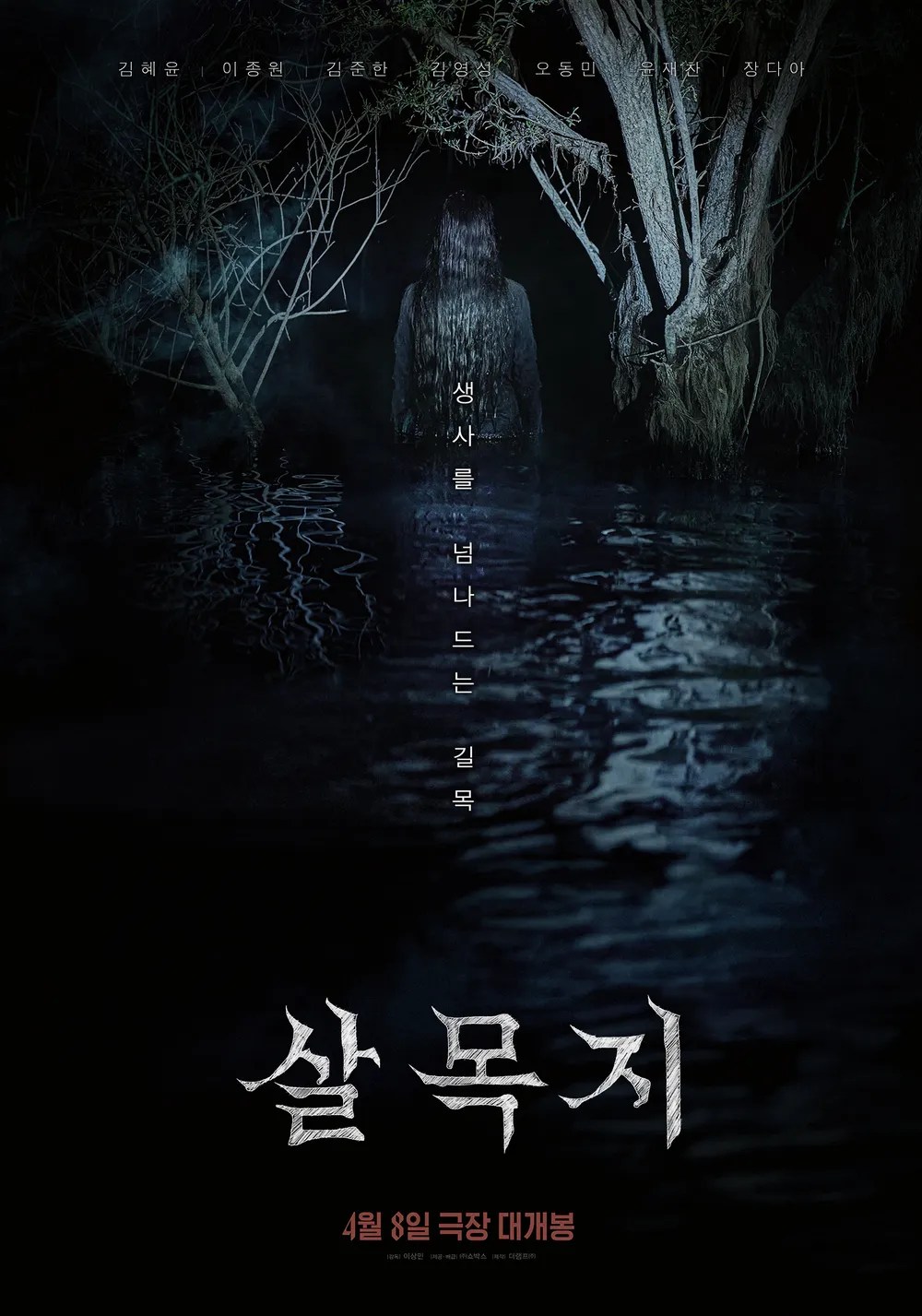
Is there something a little bit uncanny about a manmade lake? Despite the sign warning of deep water and potential loss of life, the area surrounding the Salmokji reservoir is otherwise idyllic, its ominous “dead tree lake” name not withstanding. You wouldn’t necessarily know that it was only created in 1982 for the purpose of storing water for agricultural use. Its modernity seems slightly incongruous with the presence of a ghost.
Perhaps this is why it has become a tourist hotspot following the surprising success of Lee Sang-min’s low-budget indie horror Salmokji: Whispering Water (살목지), having previously mentioned on late-night TV show Midnight Horror Story. The location’s sense of eeriness ironically seems to stems from its disconnection from the modern world. A physicist who claimed not to believe in the supernatural reported that she nearly drove into the reservoir after her car’s GPS malfunctioned and subsequently suffered misfortune after visiting the area. The inability to get a phone signal or connect to cloud networks etc may of course be due to the fact that is surrounded by mountains and rocky terrain rather than the presence of a malevolent spiritual entity who is actively blocking digital signals. Yet its also true that the natural silence of this tranquil environment can be disquieting to those used to the ambient noise of a city.
In any case, within the world of the film the lake is a popular fishing destination as demonstrated by the couple visiting it in the opening sequence who are on what seems to be quite an early date in their relationship. The woman’s aversion to the worms used bait is also reflective of a new squeamishness regarding the natural environment that is also echoed when producer Su-in drops a box bait brought by her cameramen who were planning on staying behind once their job is done. Su-in’s irritation stems from a different source. They’re supposed to be here to work, and in fact to fix an urgent problem, though no one is taking it seriously and the team are largely behaving as if they’re here on a day trip. Junior producer Seong-bin has brought an intern with him he is clearly pursuing romantically, while she secretly plans to moonlight by filming footage for her personal horror vlog.
They’ve come to Salmokji because a ghostly figure has been spotted in a photo they uploaded, though it does not appear to have been one that was taken by them. As such, they urgently need to replace with a photo that is not cursed, because they’ve been getting complaints from the locals. It’s not really explained why they can’t just stop with deleting the original photo, but for some reason Su-in’s boss insists the image must replaced immediately. He even insists they stay overnight when it turns out further equipment is required and won’t reach them until after dark. This perhaps bears out another lingering horror in contemporary urban life with the pressure of workplace heirarchy and exploitative employment environments. The cameramen immediately resent Su-in for telling them off for bringing the fishing gear and subsequently reject her authority by disobeying her commands and belittling the idea of their actually being a ghost even when strange things start happening.
Su-in is also exposed as having tried to palm this job off on a colleague after visiting the area herself previously and deciding it was too creepy. Some suggest this is all then her fault, that the lake did this to make her come back and now she’s dragged all of them into it. She meanwhile seems to have been dealing with a potential crush on her team manager, a widower who may have been attracted to the lake by the rumours of it being somewhere that the worlds of the living and the dead intersect. The lake then also becomes a metaphor for a more literal drowning in grief, as if her co-worker willing embraced oblivion by walking into it in order to be reunited with his wife if in death rather than in life. The creepy old lady living nearby tells them to place a stone on a cairn and make a wish, but in reality this seals their fate just as getting even a toe wet later will. The real horror is that once marked by whatever is in the lake, there is no real possibility of escape and even if you think you’ve made it out, in reality you may not have. Incorporating some elements of food footage horror, Lee piled on the sense of supernatural dread right until the ambiguous ending that suggests all this has happened before and will happen again.
Trailer (Simplified Chinese & English subtitles)
 Windows on Worlds