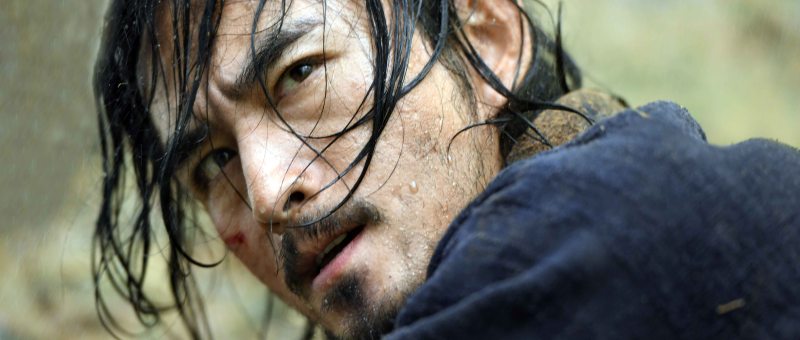
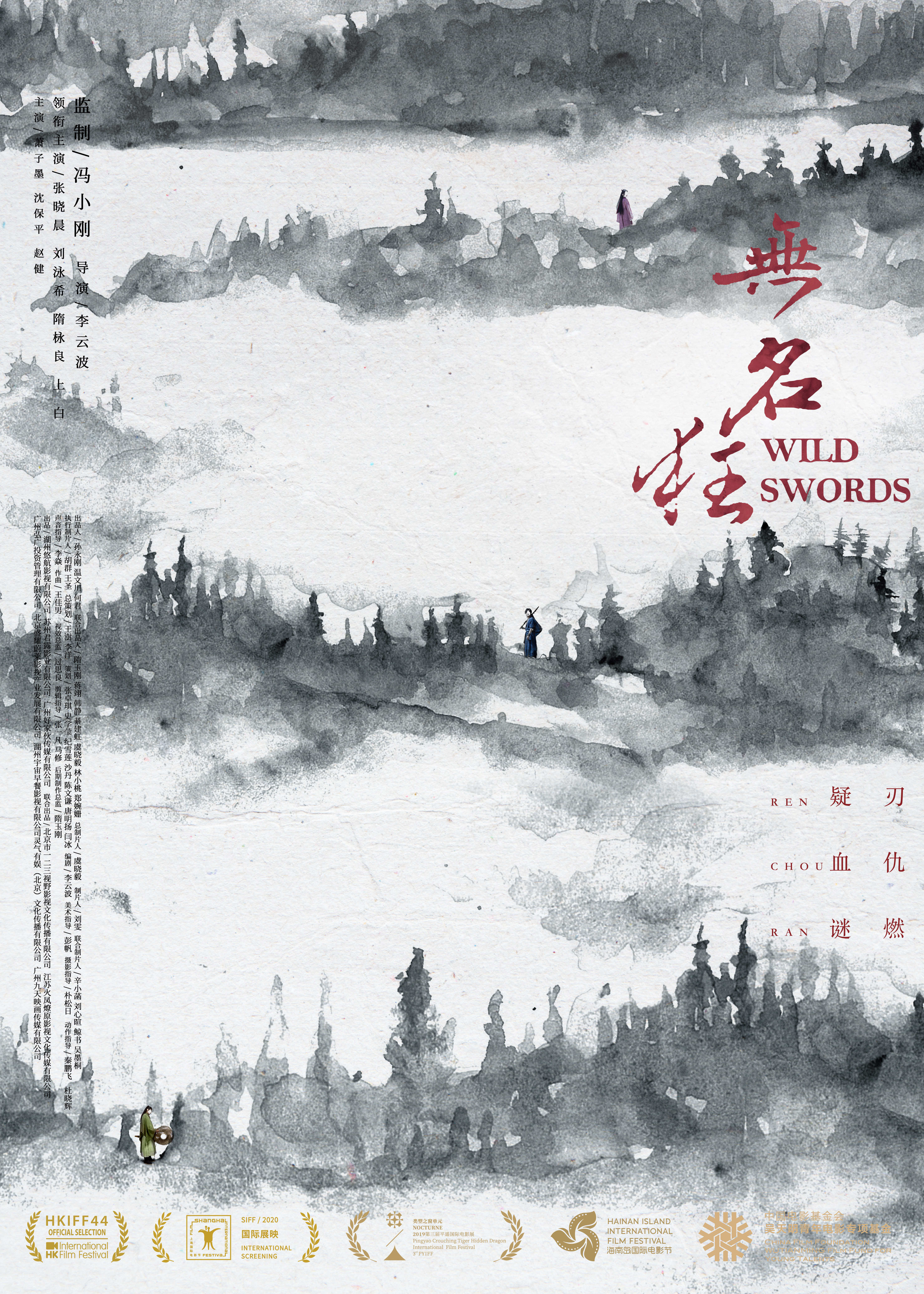
Wild Swords (无名狂, Li Yunbo, 2019)

Indie and wuxia might not be words that neatly fit together in the minds of many who perhaps associate the genre with lavish costumes and elaborate sets, but it is in essence one which values simplicity and innovation. Produced by Feng Xiaogang and financed through crowdfunding, Li Yunbo’s Wild Swords (无名狂, Wúmíng Kuáng) is a classic jianghu tale of warring sects, intrigue, and moral ambiguity that makes the most of its shoestring budget through striking cinematography and beautifully choreographed action sequences while spinning a complex tale of misdirected vengeance and fractured identity. 

Told largely through a series of Rashomon-esque conflicting flashbacks, the bulk of the action follows bandit Wang Yidao (Zhang Jian) who is made an offer he can’t refuse to escort a valuable prisoner, Kuo Chang-sheng (Zhang Xiao-chen), to an unnamed destination. Yidao didn’t want to take the job because he thinks it’s more trouble than it’s worth, and events will prove him right. The reason Chang-sheng is a wanted man is that he’s connected to the legendary Chang Wei-ren (Shang Bai) whom just about everyone wants to find, not least for his involvement in the death of the heir to the Tang-Men, the rival clan he holds responsible for the destruction by poison of his own Nameless sect. Eventually Yidao becomes aware that his mysterious client is Bai Xiaotian (Sui Yongliang), another former member of the Nameless who is looking for Wei-ren for purposes of revenge.

The Tang-Men are well known as master poisoners, a plot device frequently employed and eventually wreaking psychological havoc on the central three as Xiaotian reveals that the greatest Tang-Men technique allows the user to change their appearance leading him to believe that any one of them, including perhaps himself, could actually be Wei-ren in “disguise”. Meanwhile, he outlines his time among the Nameless, resentful of Wei-ren who rivalled him in swordsmanship and it seems love. Chang-sheng, however, has quite a different version of events apparently relayed to him by Wei-ren whom he now believes to be dead. Yidao knows not who if anyone to believe, but has little time to think about it after becoming swept up in the Tang-Men’s quest to chase down Wei-ren. 

Perhaps slightly subversive, Wei-ren’s version has him both becoming weary of the heartless philosophy of the Nameless while simultaneously painting them as the good guys who refused to lackey for an authoritarian government which ironically requested their assistance in getting rid of “evil factions”. Xiaotian sees his rival as a lazy goofball, his lack of application only fuelling Xiaotian’s resentment towards him, yet Wei-ren sees himself as a sensitive loner who looked to the sect for a family only to find merciless ruthlessness in which all are disposable aside from the chosen one. As he tells Xiaotian, when you climb to the summit of martial arts, all you see is the abyss waiting below and no matter how fast you think you are, there is always someone faster. The ones who die are the ones who hold back.  

Wringing genuine intrigue out of its complex, conspiracy-laden narrative, Wild Swords is careful to make space for the genre essential fight in a teahouse which also introduces us to the pretty boy villain of the Tang-Men, Wuque (Eric Hsiao), as he relentlessly stalks his prey in order to gain revenge for the murder of the Tang heir. Caught up in their identity drama, the three men begin to realise the futility and meaninglessness inherent in the world of jianghu in which there is only the “bitterness of life”. They are each one and the same, sole survivors of a vanquished clan carrying the weight of those they failed to protect. Beautifully lensed and set against the majestic natural scenery, Li Yunbo’s slightly revisionist take on the classic wuxia finds its conflicted heroes at war with themselves pursuing misdirected vengeance against those they blame for their loss while wilfully misunderstanding the cause of all their suffering as they pursue their jianghu destiny to its natural conclusion. 


Wild Swords streamed as part of this year’s San Diego Asian Film Festival.

Teaser trailer (dialogue free)
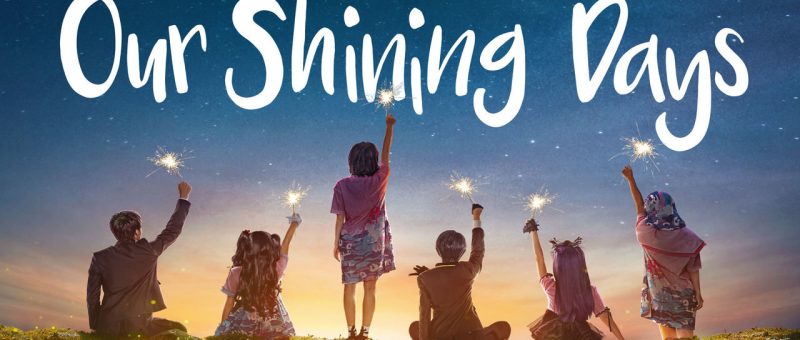
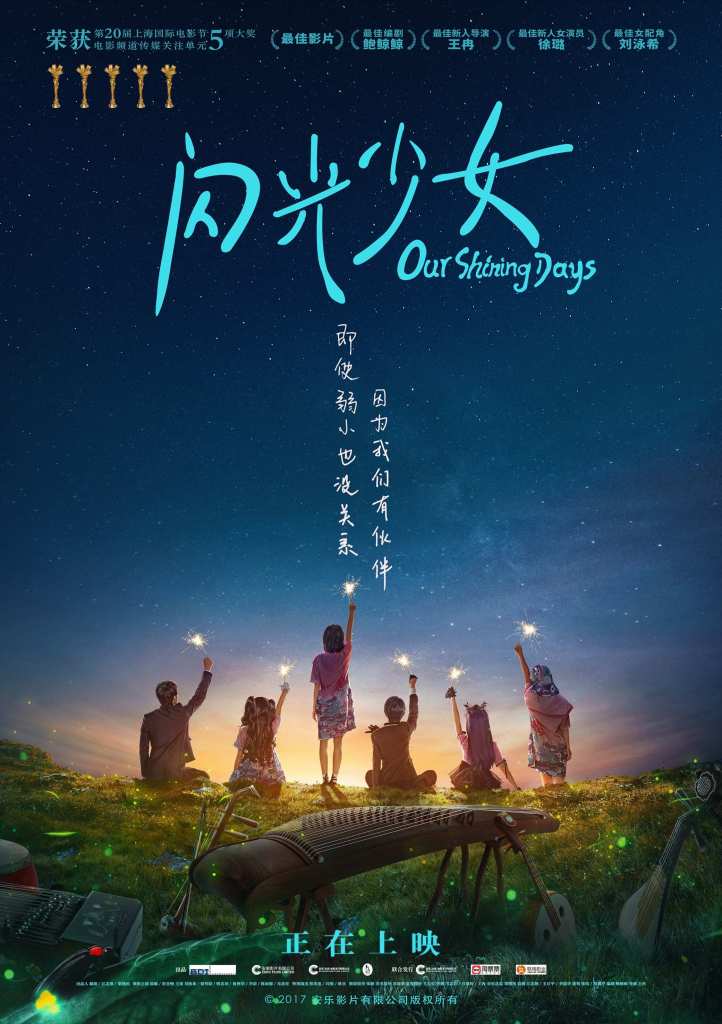
Our Shining Days (闪光少女, Wang Ran, 2017)

Doesn’t everyone deserve their time to shine? For the students at the music conservatoire at the centre of Our Shining Days (闪光少女, Shǎnguāng Shàonǚ), a glittering future may be difficult to imagine. Another in the recent series of Chinese youth comedies, Wang Ran’s debut may clearly be inspired by Japanese anime, but adds a noticeably patriotic beat in making its heroes devotees of traditional music facing off against the “pretentious” threat of European classical. 

The academy is strictly divided along class lines with the snooty classical kids pretty much ruling the roost. When an actual fight breaks out between factions, the conservative headmaster sides with the classical club and erects a series of prison-style gates to confine the folkists to their own corridors while also banning them from staying too late or eating in their rooms. Airy fairy nerd Chen Jing (Xu Lu) hadn’t previously cared about the folk vs classical drama, but is pulled into it when she falls for handsome pianist Wang Wen (Luo Mingjie). That’s why she naively volunteers to be a page turner for him at a big concert, not quite understanding she’s being made fun of. Determined to prove herself to him, she decides to form a traditional folk ensemble but finds it difficult to get recruits, ending up with a group of four otaku girls everyone else is scared of who only agree on the condition that she buys them all plastic model kits every week. 

A true underdog story, Our Shining Days makes heroes of its “losers” whose uncool tastes have seen them roundly rejected not only by their fellow students but also by their families. Chen Jing is a talented Yangqin player, but conflicted in her ambivalence towards traditional Chinese music. Internalising a sense of shame about her niche interest, she half convinces herself that she’s only learned yangqin because her parents made her and is not truly invested in the instrument, which is why she immediately assumes they’ll dissolve the band as soon as her mission of winning Wang’s heart is over. 

The otaku students, however, rediscover a love of the admittedly fantastical music, giving it a cool modern edge inspired by their love of anime and games. The otaku live in the “second dimension” and have already more or less othered themselves, but begin to actively enjoy being part of the band along with the communal pleasure of making music together. Meanwhile, the scruffy Chen Jing begins learning a little about life from the sacred otaku texts of her new friends, only to take their shojo manga-style advice a little too seriously in deciding to make a public confession to Wang which brutally backfires. Wang is planning to go abroad to study classical music, he’s not interested in lowly yangqin players. 

The class drama reaches a crescendo when the conservative headmaster announces that as of the following year the school will cease admitting students playing traditional instruments altogether. Spurred on by Chen Jing and the otaku girls, the oppressed folkists finally find the strength to resist, rising to prove there is a viable ensemble for folk instruments to counter the “sophisticated” classicists. The classicists adopt the motto “let my music be the soundtrack of war”,  but the folkists are all about team effort and peaceful co-existence. When the local inspector reminds the headmaster there is no conflict in music and expresses disapproval of the school’s prison-like environment, the folk ensemble, rather than trying to defeat the classicists, come up with a “better” solution in which they can work together so that folk music can still be heard as part of the big end of year concert. 

A cheerful coming of age tale which ends in the message that there’s a place for everyone and that those who are generous of spirit are the likeliest to prosper and be happy as they do, Our Shining Days also has its share of high school drama as the scruffy Chen Jing gradually progresses to towards a more mature elegance while her best friend Li (Peng Yuchang) gets the courage to confess his feelings in a much less ostentatious manner. Subtly patriotic in its suggestion that traditional folk music is “better” than the false sophistication of pretentious Western classical, the central messages are of love, acceptance, and authenticity, insisting there’s a place for everyone who comes with an equally egalitarian spirit. 


Currently available to stream in the UK (and possibly other territories) via Netflix

Singapore release trailer (English subtitles)