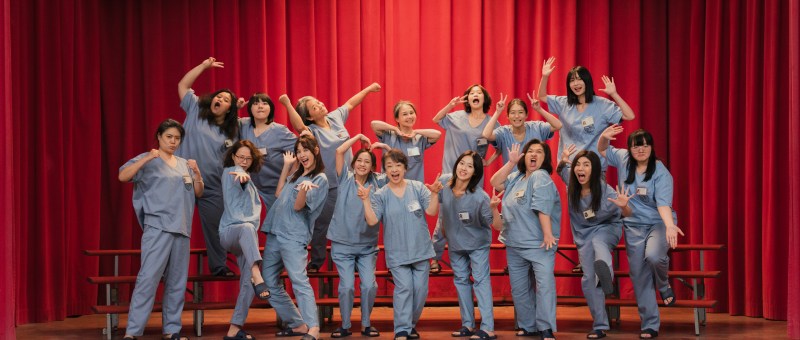
The healing power of music allows a collection of women to transcend their incarceration in Gavin Lin’s tear-jerking prison drama, Sunshine Women’s Choir (陽光女子合唱團). Inspired by Kang Dae-kyu’s 2010 Korean film Harmony, Lin shifts the focus to female solidarity while highlighting how each of these women has been victimised under a patriarchal society. Participating in the choir becomes the sunshine in their lives, giving them a sense of connection and purpose that reunites them with the people they once were before the traumatic events that brought them to prison.
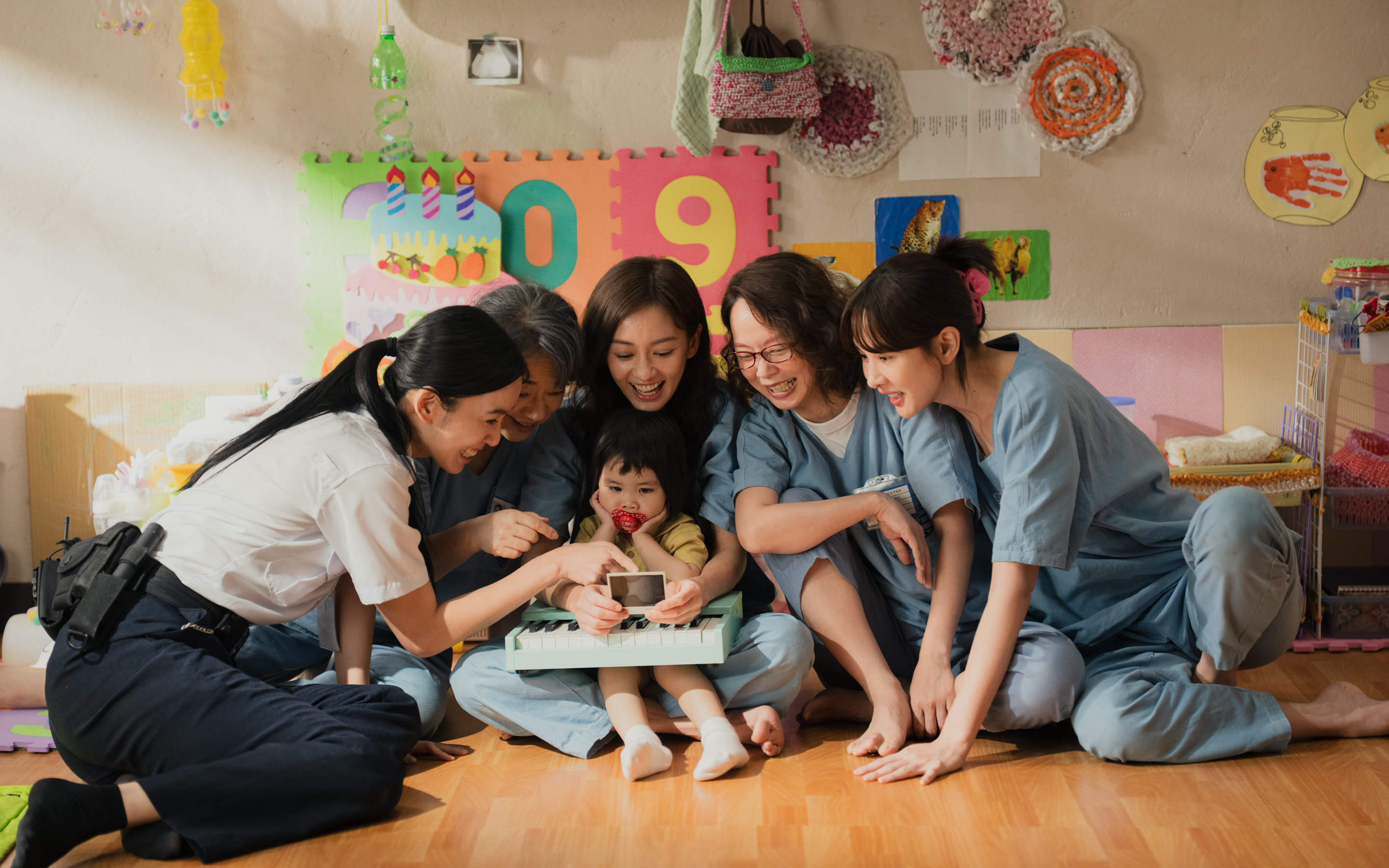
Hui-zhen (Ivy Chen Yi-han) gave birth to her baby Yu-shin after being convicted of murdering her abusive husband who had become violent and paranoid after being declared bankrupt during the 2008 financial crash. He did not want the baby, and began beating Hui-zhen in order to engineer a miscarriage. Hui-zhen, however, held out and was able to carry Yu-shin to term, which is what has earned her the admiration of prison guard You-wen who implies she was pressured into an abortion she didn’t want. Allowed to keep her daughter for the first three years, Hui-zhen is raising Yu-shin with the help of her doting cellmates who’ve become an extended family invested in Yu-shin’s future.
That might in some ways seem a little rosy, and prison life is presented as almost cosy as if Hui-zhen were engaging in a protracted series of sleepovers were it not for the occasional bouts of violence that, at one point, get her sent to solitary. Nevertheless, there is a sense that the women maybe better off in here, safe from male violence and interference and allowed a different kind of “freedom” even while imprisoned and subjected to the rigid routines of the jail. Even so, Chief Fang (Miao Ke-li), the head of the women’s prison, is not keen on Hui-zhen keeping Yu-shin whose presence requires adjustments to her carefully controlled order. She continually advises Hui-zhen to have her adopted early because this is no environment to raise a small child.
Hui-zhen is faced with a choice when she discovers that Yu-shin has an eye condition that could lead to visual impairment that can’t be properly treated in the prison. Resolving that she may have to give her daughter up, Hui-zhen suggests starting the choir on noticing that she likes music and wanting to give her something to remember after they’ve parted. Being in the choir also helps the other women make peace with their past traumas while giving them a sense of solidarity, not only that they were not alone in the suffering they experienced on the outside, but that they can encourage and support each other now no matter who they may have been before.
But this sense of solidarity also extends beyond the prison walls when it’s revelead that Yu-shin has been adopted by a same-sex couple. Yu-shin’s adoptive mother sympathises with Hui-zhen and accepts her place in Yu-shin’s life even while agreeing to Hui-zhen’s request never to tell her that her mother was a murderer. Similarly, Hui-zhen’s former cellmates watch over Yu-shin from the shadows after their releases, continuing their roles as secret aunties to ensure she grows up happy and healthy, never encountering the kind of suffering that led them to be incarerated.
Then again, the ironic nature of Hui-zhen’s fate suggests that she’s being punished a second time for the same crime which began at least as self-defence, and was ultimately committed to save the life of herself and her child even if it fits a legal definition of murder. The older woman she shares a cell with similarly pays for a crime she’s spent a lifetime atoning for that was motivated by her cheating husband’s rejection of their son who had learning difficulties. Just as Hui-zhen’s husband had blamed and beat her, Granny’s (Judy Ongg) husband becomes cruel due to the perceived wound to his masculinity and social standing as the father of a child he sees as imperfect, while their daughter is more or less forgotten about. That she is ultimately unable reconcile with her mother until it’s too late seems like another cruel irony. Nevertheless, the song the choir sings insists that they were never once forgotten, and this final affirmation of selfless maternal love is in the end, the force that heals all wounds allowing the women to move from the traumatic past and into new lives of sunshine and happiness.
Sunshine Women’s Choir opens in UK cinemas on 17th April courtesy of Central City Media.
Trailer (English subtitles)