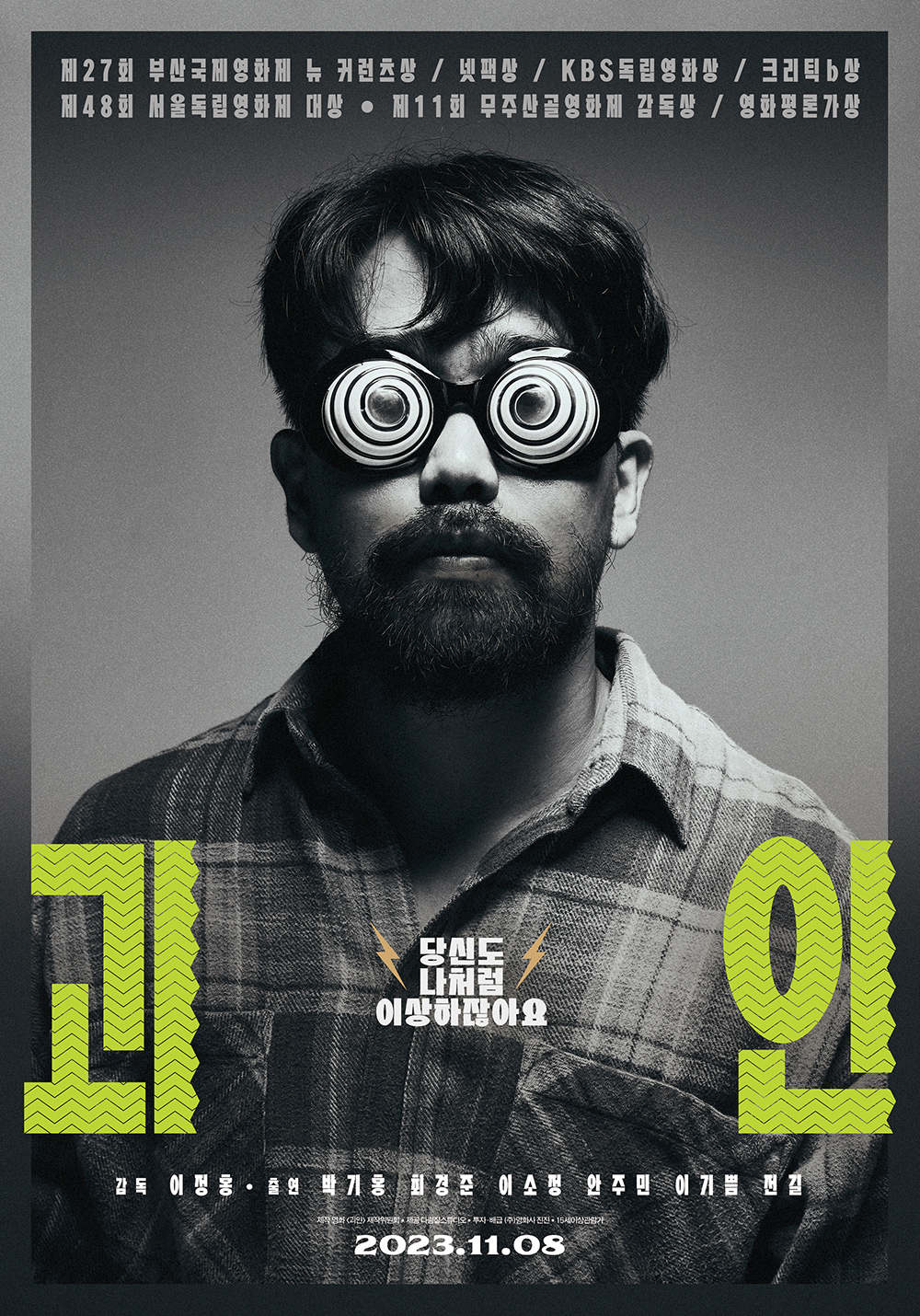
A Wild Roomer (괴인, Lee Jeong-hong, 2022)

“Separation and connection” is apparently the architectural theme of the well-appointed home where not completely qualified carpenter Gi-hong (Park Gil-hong) takes up residence in Lee Jeong-hong’s quirky drama, A Wild Roomer (괴인, Goein). It’s not quite clear if Gi-hong is the strange person of the Korean title or if it refers to the young woman he subsequently encounters, to all of us, or someone else entirely but what does seem to be true is that Gi-hong lives a kind of separated life from those around him.

Ironically enough, Gi-hong’s job is as a joiner though as a conversation with a friend he’s hoping to recruit for his moribund business makes clear he may not actually have finished his apprenticeship and has jumped the gun setting up on his own. The way he tells it, people these days don’t hire interior design firms for small jobs but entrust them to a carpenter, such as himself, who can subcontract the other services involved. But it seems Gi-hong is not a particularly considerate boss, looking down on his employees while complaining that labourers are money grubbers and it’s alright for him to be rude to them because that’s how working men talk to each other. He criticises an elderly electrician who asked about his pay because he has medical expenses for not having planned better for his old age but appears to be doing little to plan for his own while keen to give everyone the impression that his struggling business is actually doing big numbers. He also doesn’t appear to care very much about finesse either, using the cheapest materials possible and doing a slapdash job that even loyal colleague Kyoung-jun (Choi Kyung-june) thinks is not really up to scratch. 

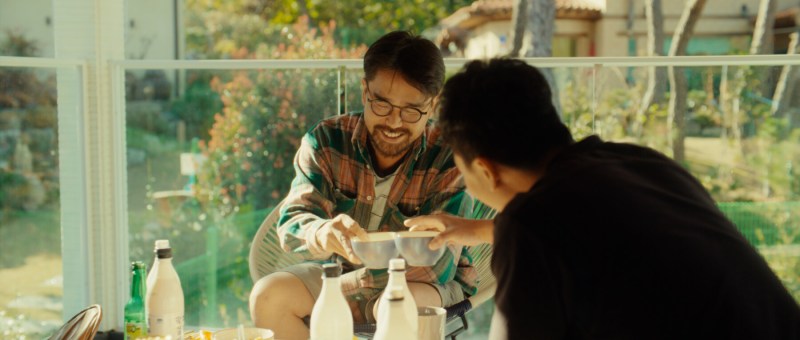
What’s also clear is that Gi-hong has an inappropriate crush on the piano teacher whose studio he’s refitting and a lack of understanding about personal boundaries. At several points he encounters doors that don’t open for him, while ironically his landlord doesn’t seem to believe in them. Though he rents the annex which has a separate entrance, Jung-hwan is keen for Gi-hong to treat the main house as his own entering and exiting through the front door which is all very well but also means that Jung-hwan (Ahn Ju-min) could presumably also wander into Gi-hong’s space whenever he feels like it. Jung-hwan is also living a “separate but connected” life with his enigmatic wife Hyun-jun (Jeon Gil) who he says doesn’t actually like him and never has. For reasons not entirely explained, Jung-hwan is home all day and seemingly lonely hoping he can adopt Gi-hong, who is also home a lot because there’s no work coming in, as a kind of surrogate little brother. 

Yet for all that Gi-hong seems, as his friend describes him, “irresponsible” and self-interested, there’s childlike vulnerability in him that finds an outlet when he unexpectedly encounters a young woman he assumes is responsible for the sizeable dent in the roof of his van. Skittish in nature, Hana (Lee So-jung) is in someways earnest and others helpless. She has no home or family and is in that sense separate and in search of connection while Gi-hong seems to feel guilty about asking her to take responsibility for what happened to his van considering she has no means to do so though is doing her best. She assumes that Gi-hong, Jun-hwan, and Hyun-jun must be “family” considering that they share the same space and seems to want to join them in a separate but connected existence. 

The mechanic they contact about fixing the van goes off on a minor rant about the younger generation, or more accurately those now approaching middle age in their 30s or early 40s, who he claims have been given false expectations because of Korea’s unexpected success in the 2002 world cup which has led them to assume that dreams come true on their own and things will just work out without the need to really do anything to make them. The irony is that he’s pretty much describing Gi-hong who seems to have an insecurity and baseless hope that his business will pick up while terrified it won’t. But then everyone seems to be living a life of quiet separation, privately anxious and dependent upon the loose connections that have replaced the certainties of a blood family. Gi-hong, whose attempts to construct pleasant spaces for others are often imperfect, may have found himself a home of separate connection. “It feels so weird” a woman exclaims on looking at a precariously balanced rock, but like so many things in Lee’s strange world it seems to work even if you think it shouldn’t.


A Wild Roomer screens 11th November as part of this year’s London Korean Film Festival.

Origina trailer (English subtitles)
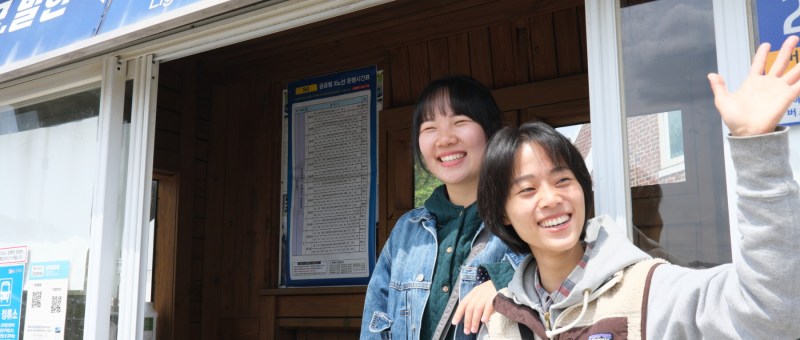
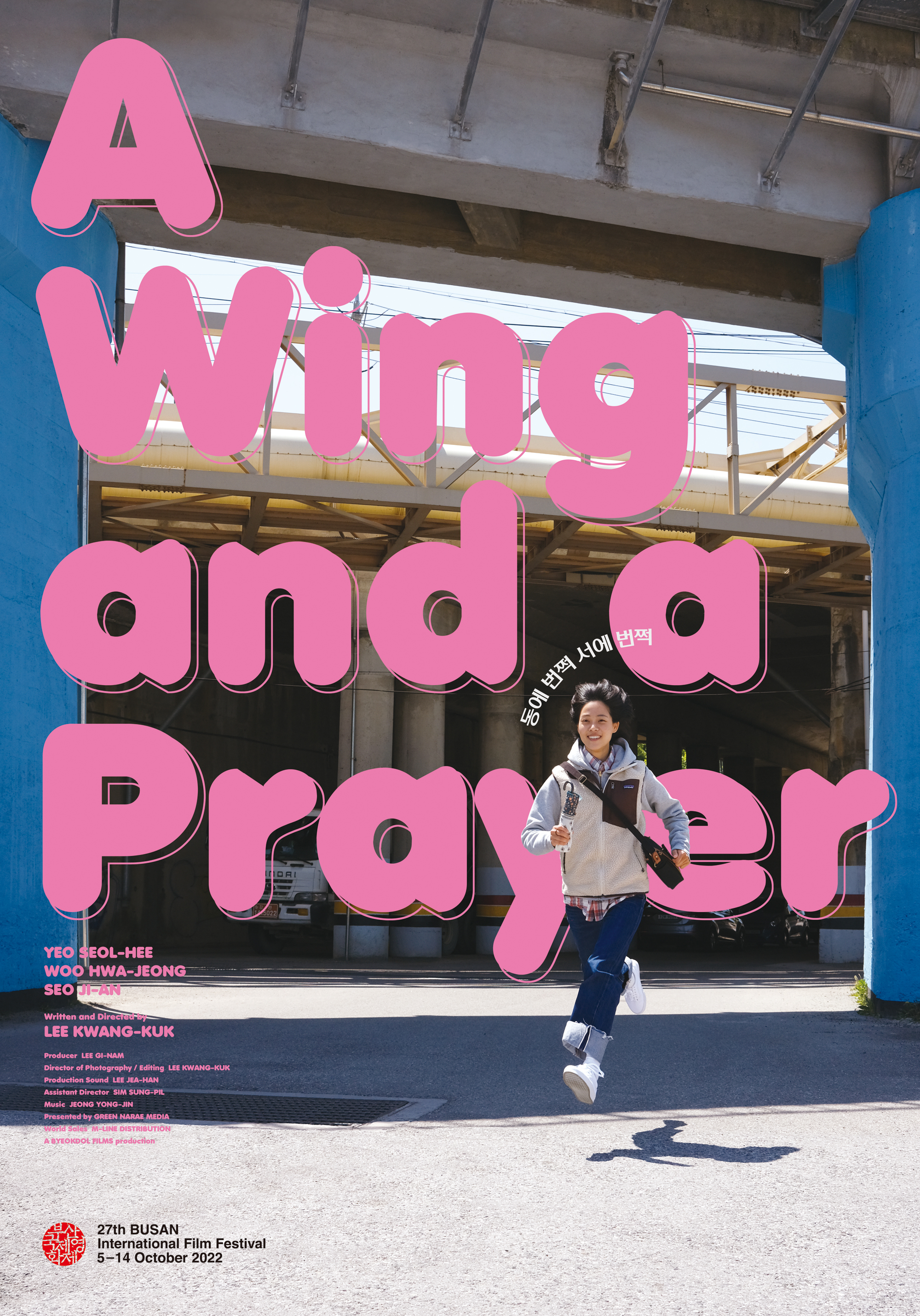
A Wing and a Prayer (동에 번쩍 서에 번쩍, Lee Kwang-kuk, 2022)

A pair of 25 year olds find themselves marooned in adolescence thanks to the precarious socio-economic conditions of contemporary Korea in Lee Kwang-kuk’s indie dramedy A Wing and a Prayer (동에 번쩍 서에 번쩍, Dong-e Beonjjeog Seo-e Beonjjeog). Not quite as quirky as Lee’s previous work, the film nevertheless finds its twin protagonists undergoing parallel journeys while each preoccupied with the progression to adulthood and what that might actually mean in real terms while perhaps guilty of a childish naivety in their vision of what it is to be grown up.

Seol-hee (Yeo Seo-hee) and Hwa-jeong (Woo Hwa-jeong) are best friends and roommates each currently without jobs and feeling lost without clear direction for their future. Seol-hee was on track to be an athlete but was forced to give up following injury. At an interview for a job in a coffee shop she’s asked a series of questions which seem to her somewhat unnecessary. “Do I need a dream in order to work here?” she asks, “Can’t I just make good coffee and try my best at everything?” Predictably, her answer does not go down well with the interviewer and it seems unlikely she’s going to get this job though Seol-hee remains cheerful and upbeat unable to understand why everyone keeps pressing her about her hopes and dreams when she’s just trying to live. By contrast, Hwa-jeong has reached the final stages for a job at a company and feels her interview went well so she’s optimistic that this time it really might work out.

Though in quite different places, the pair decide to take an impromptu trip to the seaside to wish on the sunrise only to fall asleep and completely miss the moment. The mismatch in their circumstances comes to the fore when Hwa-jeong reveals that with their lease about to come to an end she’d like to try living on her own, “like a real adult”. Of course, that’s quite destabilising and hurtful for Seol-hee who has no real expectation of being able to get the kind of job that would let her find an apartment she could rent on her own. After a small argument, the pair end up separated and on parallel adventures as Seol-hee bonds with a slightly older woman, Ji-an (Seo Ji-an), whose life has been ruined by unresolved trauma caused by high school bullying while Hwang-jeong meets a high schooler, also bullied, who is looking for her missing parrot. 

When Hwang-jeong comes to the rescue of the high school girl after she’s lured by bullies who claimed to have info on her parrot, it’s obvious that they immediately recognise her as an “adult” though she holds little sway over them. Hwang-jeong is fond of saying that she isn’t a kid anymore, but it’s also clear that getting a job is central to her definition of adulthood. When the high school girl asks what she does for a living, Hwang-jeong answers pre-emptively that she’s a “respectable company employee” to which the high school girl replies “an adult” but then goes on to ask at exactly what age one becomes one. Hwang-jeong has no answer, because perhaps it’s not an age after all but a state of being. 

She also accuses Seol-hee of behaving like a child as they continue to argue about Hwang-jeong’s plans for solo adulting. Seol-hee meanwhile finds herself trying to help another lost woman who is herself arrested but trying to break of the “jail” she feels she’s been placed in by an overprotective mother she nevertheless feels may be ashamed of her for her own “failure” to progress into a more conventional adulthood. Like the high school girl Seol-hee claims she has no friends and tries to make one of Ji-an only she refuses. On seeing the flyers for the lost parrot, which Seol-hee herself at times resembles, she wonders if recapturing it is the right thing to do or if it wouldn’t be happier flying free rather than trapped within a cage that to Seol-hee represents conventionality and socially accepted ideals of success.

They’re all lonely, wounded, and insecure, afraid of talking to each other about their worries because of the internalised shame of feeling to meet the demands of “adulthood” despite, in all but the case of the high school girl, being well over the age of majority. The high school girl herself may represent Hwang-jeong’s refusal to confront her past while throwing herself into an adulthood she hasn’t quite earned just as the parrot represents both her friendship with Seol-hee and the elusiveness of their future, but it also returns to her the sense of positivity she may have been missing just as Seol-hee’s care of Ji-an also allows her to take care of herself. They might not quite be adults, but then who really is and at least they have a little more clarity about that means and what they want out of life in the realisation that they aren’t alone and not least in their worries.


A Wing and a Prayer screens 10th November as part of this year’s London Korean Film Festival.

Original trailer (English subtitles)

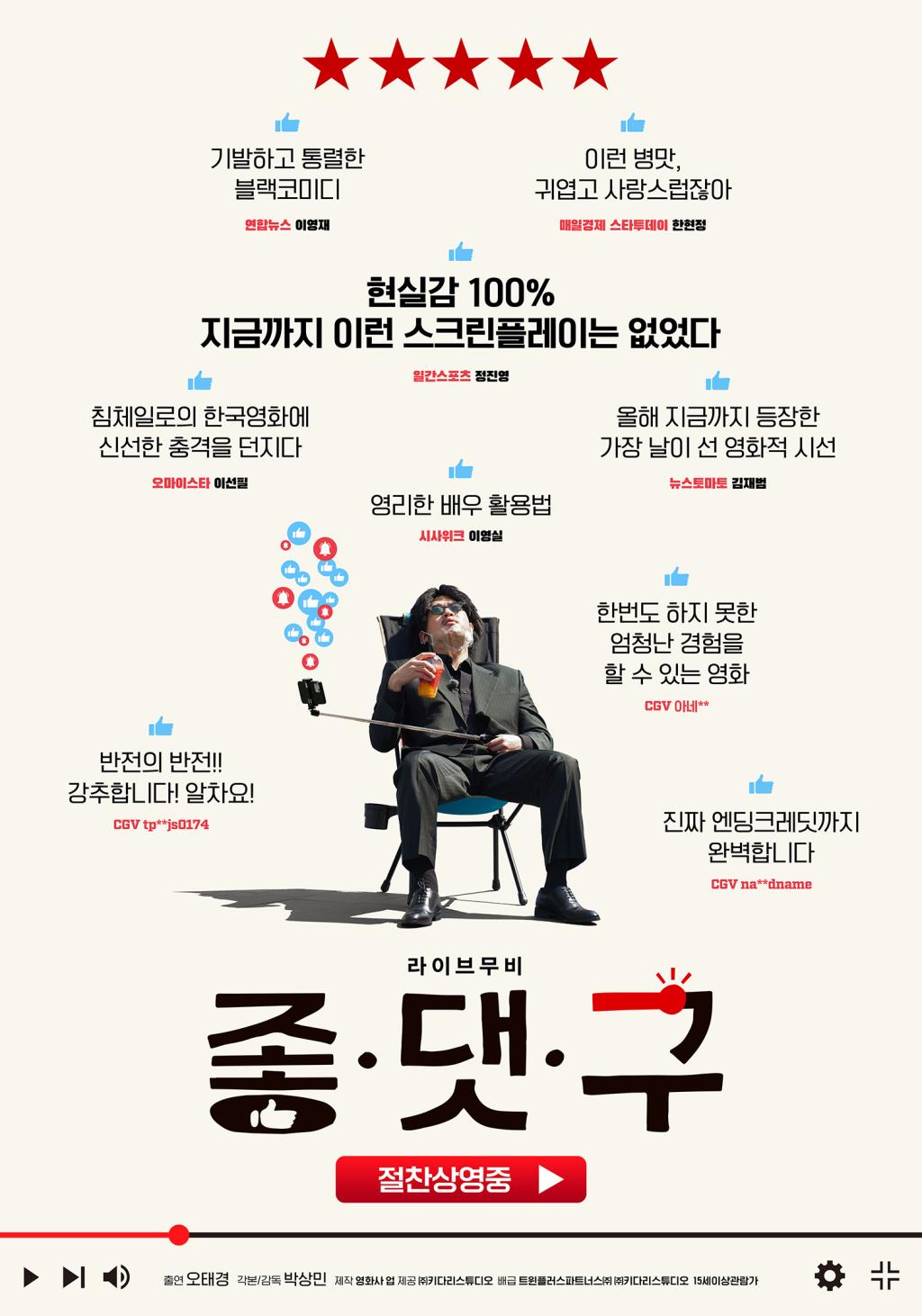
I Haven’t Done Anything (좋.댓.구, Park Sang-min, 2022)

The central irony of Park Sang-min’s meta comedy I Haven’t Done Anything (좋.댓.구, Joh.Daes.Gu) is that a man who remains defiantly silent generates much more interest than the one desperately chasing YouTube success. Adopting a “screen life” aesthetic in which much of the action is told through social media and video screens, the film asks a series of questions about our petty obsessions, online authenticity, media manipulation, and the impossibility of escaping a predetermined image as its embattled hero strives to reinvent himself by his inhabiting most famous role.

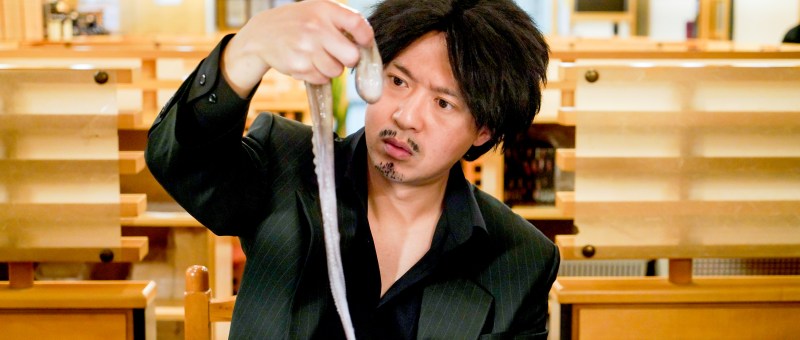
Actor Oh Tae-kyung plays a version of himself who is struggling to maintain his career as an actor having begun as a child star with his most high profile roles including that of the younger Oh Dae-su in Park Chan-wook’s Oldboy. With work thin on the ground, he turns to YouTube but fails to make an impact with content that commenters describe as old hat such as “mukbang” eating videos and unboxings. It’s then that he comes up with the idea of rebranding as “Li’l Oh Dae-su”, dressing up as the protagonist of Old Boy and accepting viewers’ challenges which at one point include him taking revenge on a gang of class bullies by hitting them on the head with a plastic mallet while mimicking the famous corridor fight scene from the landmark drama.

But then, someone else has already shared their screen with us. Going under the name “Bulldog”, a viewer asks Tae-Kyung to solve the mystery behind a man who’s been standing silently in the square with a large sign reading “I Haven’t Done Anything”. Tae-kyung reasonably wonders why Bulldog didn’t just ask the guy himself, but as he explains “Picket Man” refused to answer him. Given the large amount of money Bulldog has pledged for this seemingly simple request, Tae-kyung accepts the challenge but Picket Man continues to ignore him no matter the silly stunts he pulls an attempt to break his concentration. 

Bulldog’s apparently strong desire to know the truth, willing to offer up vast sums of money just to satisfy his curiosity, hints at our own petty obsessions. After all, the cryptic quality of the sign is intriguing. What exactly is Picket Man trying to say, what didn’t he do and who says he did it? Of course, in another way, Tae-kyung also feels he hasn’t done “anything” with his life and stuck in a career morass unable to shed the image of himself as a child actor and young Dae-su in particular. Every time someone offers him another role, he worries that the baggage of his early career follows him and he’s simply not credible as a hardened gangster, for example, if everyone only sees him as the eldest of six siblings in a much loved TV drama or the little boy who grow up to become the schlubby captive Oh Dae-su. 

When the skit becomes an accidental viral hit, Tae-kyung begins to worry that perhaps he’s doing Picket Man a disservice and this kind of publicity isn’t really what he was after though it’s puzzling that he himself refuses to speak about what it is he hasn’t done. What he realises is that Picket Man is much like himself and he’s done to him what others have done to Tae-kyung in reducing him to a single image. How will anyone ever see this otherwise anonymous person as anything other than “Picket Man” now? Tae-kyung has unwittingly exploited him for his own ends and possibly ruined his life in the same way that anyone who becomes a meme is robbed of an identity. 

Then again, in this very meta tale not everything is as we think it is and we ourselves, like the YouTube commenters, are being manipulated by unseen forces. As Picket Man becomes the latest social media phenomenon, other content creators start arbitrarily jumping on the hashtag, randomly mentioning Picket Man to boost their own views while unscrupulous forces also exploit the meme potential to run scams featuring Picket Man’s image. Park carries the meta quality through to interrupting the film with fake YouTube ads and product placement from sponsors that remind us we are being sold something whether we realise it or not and that we might not even realise what the product is or who’s selling to us as the final reveal implies. Nevertheless, there’s a sense of triumph in the success of this heist that’s been pulled on us in the winning self-deprecation of dejected former child star Tae-kyung and his great master plan to shed himself of an otherwise inescapable image. 


I Haven’t Done Anything screens 5th November as part of this year’s London Korean Film Festival.

Original trailer (English subtitles)