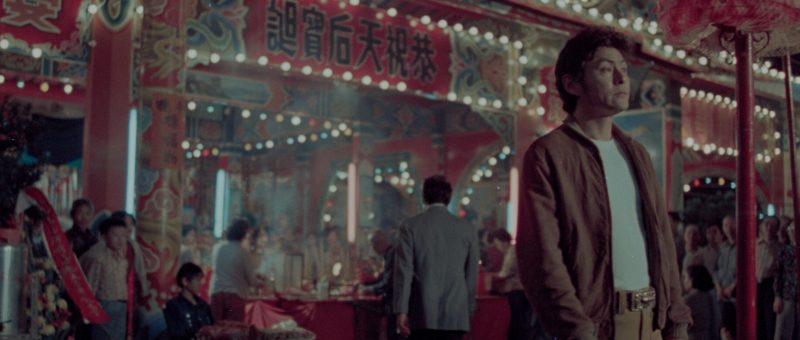
“How else can people like me survive?” a unwilling informant ironically asks in Peter Yung Wai-Chuen’s New Wave cops and robbers thriller The System (行規), while Inspector Chan (Pai Ying) is already far too aware of the ironic symbiosis of law enforcement and crime. He’s dependent on informants to be able to do his job and catch the kingpins, but that means the informants continue to perpetuate crime. Even when they manage to make an arrest, they have to let the suspect go because it turns out that they’re already cooperating with another officer. The police aren’t so much solving crimes as, at best, managing, if not actually enabling them.
Director Peter Yung drew on research he’d done for a documentary to depict police work and the realities of drugs in late British Colonial Hong Kong in a more authentic way, often using held camera and shooting on location out in the streets. Chan is seen as something of a zealot, an idealistic cop too pure-hearted to understand his colleagues’ dirty jokes and with a penchant for retreating to Lantau Island to go bird-watching, even if his address to his officers is a little on the crude side. Nevertheless, even if he hates police corruption, he’s not above playing this game and is keen to recruit exclusive informants of his own, essentially by blackmailing them, finding evidence of crimes they’ve committed and promising to overlook it if they agree to feed him information.
That’s how he recruits Tam (Sek Kin), a drug user with a gambling problem working for a syndicate run by Hung (Nick Lam Wai-Kei), the kingpin Chan has been trying to catch for a decade. But at the same time, Tam appears to keep his life of crime separate from that as a family man with two children and an ailing mother. He doesn’t really want to help Chan because he fears retribution from Hung, but he doesn’t want to go to prison for 36 years and leave his family destitute, either. Tam may be carrying on with underworld figure Third Auntie (Lisa Chiao Chiao) who runs the domino parlour which acts as a hub for the gang, but he’s not necessarily bad or dangerous, just someone trying to live under this oppressive system.
For those reasons, the relationship between the two men is tense and fraught with danger and resentment. The first operation ends up going wrong when Customs interferes, arresting Third Auntie which is a huge problem for Tam as is the fact they seized the drugs, which is a problem for Hung. But even Hung knows how this game works. He knows Tam betrayed him by working with the police, but he doesn’t necessarily blame him. He just asks for the money he assumes the police paid him in exchange for the lost drugs, and also has Tam beaten up for good measure. The beating in particular causes Tam to resent Chan and plot revenge by framing him as corrupt. That doesn’t go to plan either, but even though Tam constantly betrays him, Chan remains loyal and defends Tam to his increasingly irate bosses in the hope he’ll finally lead them to Hung.
It’s this aspect of police corruption that really hangs over the film. Even Customs take a position of the drugs they seize for themselves, which is how Chan is able to convince them to release Third Auntie. The operation is nearly derailed by a corrupt cop who frequents Third Auntie’s domino parlour, trying to bet with his gun when he runs out of money and then following her to demand a payoff for not reporting the drugs. Chan makes reference to the fact that the drug dealers think nothing of paying off police because the profits they can make selling drugs in Hong Kong are so vast, but, thankfully, it doesn’t happen so much any more because of the institution of ICAC. ICAC is held up as a kind of threat even if Chan suggests that it’s already cleaned up the police force and ushered in a new culture of earnest policing, though even he says that it’s caused a drop in morale that might be improved if they can catch a big fish like Hung.
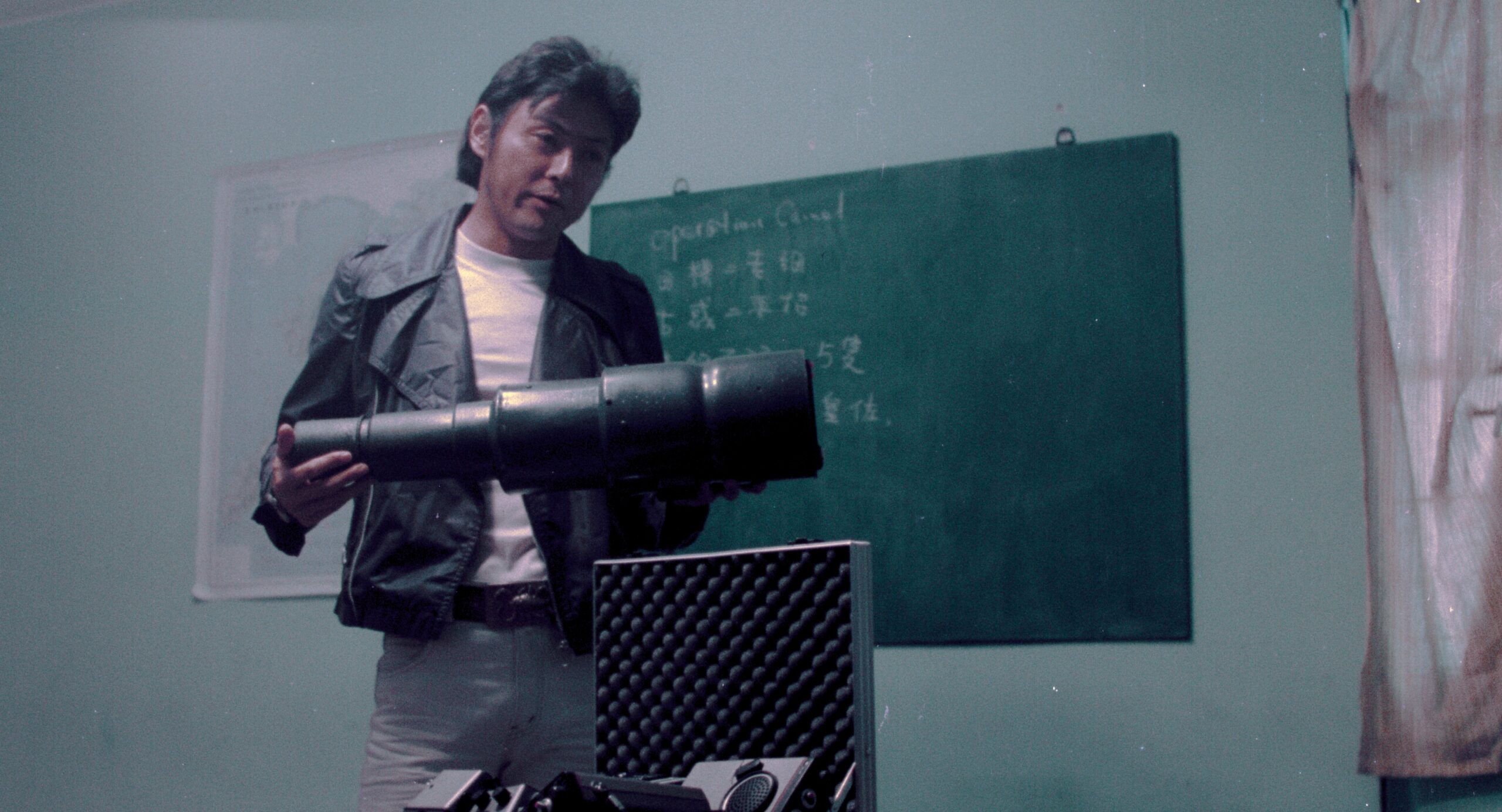
Chan’s bosses are British, while he later ends up working with an American DEA officer who gives them even more new technology like radio mics, though Chan was already keen to show off their modern policing methods, which include things like hidden cameras, secret recordings, and a massive telephoto lens. “We’re just using each other,” the corrupt cop says when his partner asks him if he’s not pushing his luck by going back to ask Third Auntie for more money after noticing how big her haul is knowing that she can’t really do anything about it without exposing herself. In the end, they are all trapped by this ridiculous system of symbiotic crime that leads only to destruction.
The System screens as part of this year’s San Diego Asian Film Festival.
 Windows on Worlds