BL Metamorphosis (メタモルフォーゼの縁側, Shunsuke Kariyama, 2022)

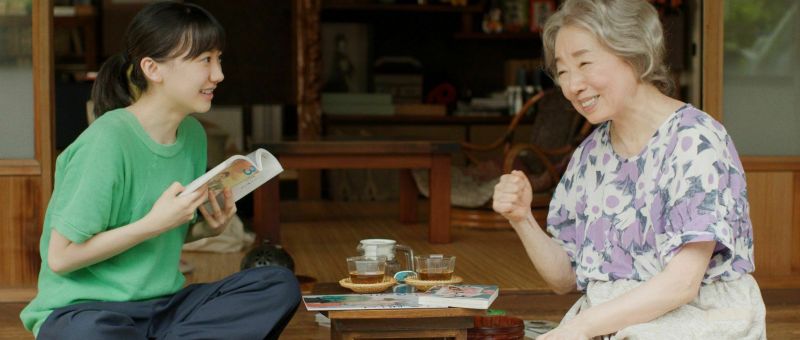
As the heroines of Shunsuke Kariyama’s charmingly heartwarming dramedy BL Metamorphosis (メタモルフォーゼの縁側, Metamorphosis no Engawa) introduce themselves to each other, the older, Yuki (Nobuko Miyamoto), reflects that their names mean “snow” and “sunshine” respectively though for much of the film their roles are reversed. 17-year-old Urara (Mana Ashida) is gloomy and introverted, diffident to the point of inertia and in danger of becoming resentful while the widowed 75-year-old Yuki is relentlessly cheerful despite her loneliness and the increasing effects of age. 

What brings about their serendipitous meeting is, strangely enough, BL manga which a curious Yuki picks up on a whim struck by the beauty of its artwork much to the embarrassment of secret BL fanatic and part-time bookshop girl, Urara. “BL” or “Boys’ Love” manga is a genre which focusses on romance between men but is largely written by and for a straight female audience. Readers have been termed or may term themselves fujoshi, which literally means “rotten girl” and hints at the disdain with which the genre is sometimes held explaining Urara’s intense sense of shame about her secret hobby. She keeps her substantial collection of BL manga in a cardboard box hidden behind several other boxes under the desk in her room where no one will find it, and when an enthusiastic Yuki takes her to a cafe for a few primers, Urara snatches the book from the table before the waitress can see it while two women snigger from behind struck by the incongruity of hearing an elderly lady speak so enthusiastically about a love story between teenage boys. 

Yuki is more open-minded than many might assume even if the lovely suburban house where she holds calligraphy classes is the peak of refined elegance. She’s exactly the sort of person you wouldn’t think would be into BL, but unlike Urara and perhaps because of her age she feels no embarrassment at all and asks her questions straightforwardly without shame. Her cheerfulness and positivity begin to rub off Urara who begins to wonder what it is she’s so ashamed of, why she resents the popular girlfriend of the childhood friend she may or may not have a crush on, and what it is she’s really afraid of pursuing in the course of her life. As the two women bond over over their shared interest a new connection develops that brings sunshine back into each of their lives along with a new sense of strength and possibility in a true tribute to intergenerational friendship. 

Yet the nature of their connection leads Urara, who had considerately brought out a stool for Yuki while searching for a book she wanted at the store, to forget that Yuki is not as young as she was and cannot necessarily accompany her as a friend of her own age might. She invites her to come to a large convention for self-published manga, but then begins to rethink on seeing pictures of the queues realising it might not be much fun for a 75-year-old woman with a couple of mobility problems to stand in line for hours on end just to walk around inside. Her sense of embarrassment in her thoughtlessness causes her to pull away from Yuki, only to come to regret it on returning to her home and finding it a little emptier as if a part of Yuki had already disappeared. 

Nevertheless, it’s Yuki’s encouragement that finally gives Urara the courage to write a manga of her own which is part fan fiction based on the BL manga they’d read together and a tribute to their friendship retold as a BL love story in which two people find each other and bring joy and happiness back into each other’s lives. Yuki ended up becoming a calligraphy tutor because she’d wanted to write a fan letter to the author of a manga she liked as a child but was ashamed of her handwriting and never sent it. The author stopped publishing a while later and she regretted not having told her how much the manga had meant to her. Similarly the author of the manga the pair read (Kotone Furukawa) is mired in creative difficulties and artistic doubt only to unexpectedly rediscover her confidence on coming across Urara’s fan fiction and realise that her work had touched someone and held meaning in their life. The film’s Japanese title translates more literally as “the engawa of metamorphosis” which refers to the small deck area looking on to Yuki’s beautiful garden where the pair often sit together sharing their love of manga, each somehow blossoming under the warm summer sunshine transformed by their friendship and ready to embrace the future.


BL Metamorphosis screened as part of this year’s Japan Foundation Touring Film Programme.

Original trailer (English subtitles)

Under the Stars (星の子, Tatsushi Omori, 2020)

“The time of realisation comes and then that person changes” according to the words of a new religion guru. The sentiment is true enough, even if the meaning is slightly different from that which she’d intended. Young Chihiro, however, the heroine of Tatsushi Omori’s adaptation of the novel by Natsuko Imamura Under the Stars (星の子, Hoshi no Ko), is indeed approaching a moment of realisation as she begins to question everything about the world around her as it had been presented throughout the course of her life. 

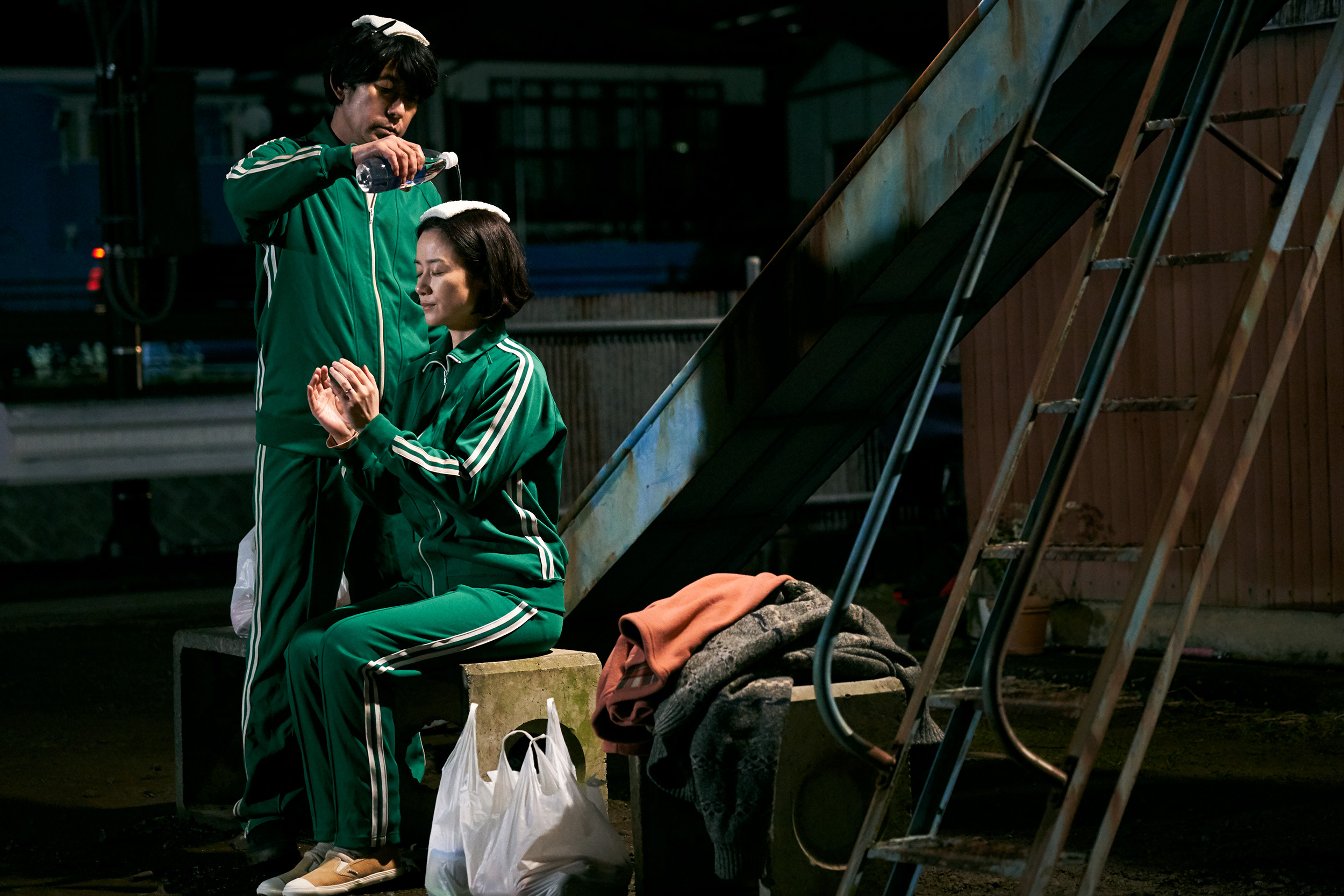
As a baby, Chichiro (Mana Ashida) had suffered from severe eczema which had left her in terrible pain and her parents suffering with her in witnessing her distress. On the advice of a colleague, Chichiro’s father (Masatoshi Nagase) decides to try using “Venus Blessed Water” which is apparently full of cosmic energy that can cure all ills. Chihiro begins to recover and her parents become devotees of the cult which produces it eventually alienating her older sister, Ma (Aju Makita), who is unable to reconcile herself with the outlandish beliefs they advance and rituals they conduct. 

For Chihiro, however, the cult is all she’s ever known so it is in that way “normal” and it’s never really occurred to her to question it even after her sister’s mysterious “disappearance”. But as she approaches the end of middle-school, a few well placed questions from her classmates give her pause for thought wondering if her parents’ claims about the miracle water could possibly be true or if, as her best friend Watanabe (Ninon) wonders, they are simply being scammed. After all, if water could solve all the world’s problems it would either be ridiculously expensive or completely free and if you could stay healthy by placing a damp towel on your head then everyone would be doing it. Her parents claim they don’t get colds because the water boosts their immune system, but perhaps they’re just lucky enough to be the kind of people who don’t often get that kind of sick or the fact that they obviously spend almost all their time in the bubble of the cult reduces their exposure. 

Her crunch point comes when her handsome maths teacher (Masaki Okada) on whom she has a crush spots her parents doing the ritual in a park and exasperatedly points them out as complete nutcases. When she eventually tells him who they are, he inappropriately calls her out in front of the entire class by telling her to get rid of her “weird” water while subtly undermining her religious beliefs with advice about how to avoid getting colds or other potentially dangerous seasonal viruses. Omori presents the cult neutrally, hinting that the discrimination Chihiro is facing as a member of a “new religion” may be unfair while the beliefs of traditional religions may seem no stranger to the unfamiliar and to criticise them so directly would be deemed unacceptable in any liberal society. In a sense perhaps we all grow up in a kind of cult only latterly questioning the things our parents taught us to be true. Chihiro’s uncle Yuzo meanwhile had once tried to use science and experience to undermine her parents’ beliefs, he and Ma swapping out their holy water for the tap variety to prove to them that they are being duped only for them to double down and refuse to accept the “truth”. 

Uncle Yuzo and his family eventually offer Chihiro a place to stay in the hope of getting her out of the cult but are also of course asking her to betray her parents by leaving them. She remains preoccupied by the fate of her sister, particularly hearing rumours about the cult supposedly disappearing those who turn against them, but is torn between her growing doubts and love for her parents while privately suspicious about the fate of a child much like herself kept locked up by his mum and dad who say he’s terribly ill and unable to speak (which doesn’t exactly support the cult’s claims of universal healing), but who knows what might actually be true.

Shoko (Haru Kuroki), the wife of the guru Kairo (Kengo Kora), is fond of reminding the younger members that they are not there of their own free will which is of course true whatever the implications for fate and determinism because they are children whose parents have forced them to attend which might explain their sense of resentment or what she implies is “resistance” to their spiritual messaging in urging them to make an active choice to accept the cult’s teachings. Chihiro is coming to a realisation that she may be on a different path than her parents but delaying her exit while they too are possibly preparing her for more independent life. Lighter than much of Omori’s previous work despite its weighty themes, Under the Stars is also in its way about the end of childhood and the bittersweet compromises that accompany it. 


Under The Stars streamed as part of this year’s Nippon Connection.

Original trailer (no subtitles)

Images: (c) 2020 “Under the Stars” Production Committee

The Floating Castle (のぼうの城, Isshin Inudo & Shinji Higuchi, 2012)

What happens if you call the bluff of those who thought they could take your complicity for granted? As it turns out, at least in the case of a small provincial outpost in Isshin Inudo & Shinji Higuchi’s lighthearted historical drama The Floating Castle (のぼうの城, Nobo no Shiro), something and nothing. Inspired by a real life incident which took place in 1590, 10 years prior to the era defining battle of Sekigahara, the film asks how far standing up to corrupt authority will get you but as history tells us this this is the twilight of the Sengoku warring states period and in the end any victory can at best be only partial and temporary. 

With Hideyoshi Toyotomi (Masachika Ichimura) poised to unify all of Japan under his rule he turns his gaze towards Hojo, the last remaining hold out in the East of Japan. The small castle of Oshi is asked to commit its forces to protecting the main castle at Odawara where lord Ujinaga (Masahiko Nishimura) is to meet with the head of the clan which has decided to resist the Toyotomi invasion. Ujinaga meanwhile is privately doubtful. He knows they do not have the manpower to protect themselves and the only viable course of action is immediate surrender though he cannot of course say this openly even if buffoonish lord in waiting Nagachika (Mansai Nomura) is brave enough to raise the idea of neutrality in front of the messengers. Preparing to head to Odawara, Ujinaga tells his closest retainers to strengthen defences but to open the castle should the enemy approach while revealing that he plans to write to Hideyoshi, whom he apparently knows personally, and privately pledge allegiance in order to avoid destruction. 

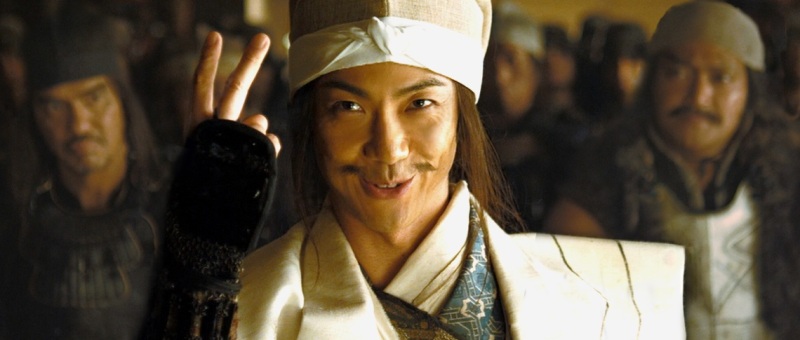
Nagachika, however, eventually makes the decision to resist following the arrogant entreaty from Natsuka (Takehiro Hira), the right-hand man of the Toyotomi retainer leading the assault, Mitsunari Ishida (Yusuke Kamiji). He does this largely because Natsuka makes the unreasonable demand that they surrender their princess, Kai (Nana Eikura), herself a fearsome warrior though somewhat sidelined here relegated to the role of contested love interest, to be sent to Hideyoshi as a concubine but also correctly reads that Natsuka and Ishida are overreaching and actually have little more than their bluster to leverage other than the 20,000 men standing behind them which they may not know how to use. Nagachika may play the clown, but he’s not stupid and knows that the 20,000 men are there for the purposes of intimidation and are not expecting a force of a mere 500 to tell them where to go so it stands to reason to think they are not entirely prepared for battle. 

In this he’s mostly correct. Hideyoshi has essentially given Ishida, previously in finance, an easy ride to improve his reputation among the other lords instructing the more experienced Yoshitsugu Otani (Takayuki Yamada) to ensure he comes back painted in glory. Otani had said that others admired Ishida for his “childlike sense of fair play”, but his sense of fair play is often childish as in his gradual realisation that everyone is surrendering to him because of the 20,000 men rather than his prowess as a general annoyed with his enemies for backing down from a challenge which is why he sends Natsuka to alienate Nagachika hoping to provoke a battle which no rational person could ever describe as “fair”. Having assumed that Nagachika would back down or that the castle would be easy to take with only 500 country bumpkin soldiers defending it, the Toyotomi are in for a rude awakening discovering the extent of the counterstrategies in place to protect the small provincial outpost, forced into a humiliating defeat licking their wounds from a nearby hill. 

But then, as Ishida manically proclaims power comes from one thing, gold, using his vast resources to dam two nearby rivers and then burst them to drown the town as Hideyoshi had done once before. Designed by effects specialist Higuchi the flooding of the town is indeed terrifying, a spectacle which delayed the film’s release as the eerie similarities with the catastrophic tsunami of the year before may have been too traumatic for audiences, and speaks to nothing if not Ishida’s intense cruelty in which he is willing to go to any lengths in order to win even destroying the lives of innocent farmers far removed from these petty samurai games. As the film would have it, his arrogance and entitlement eventually come for him, his trap turned back on himself after an ill-advised potshot at Nagachika, a natural leader beloved by all because rather than in spite of his deceptive clownishness, causes disillusionment with his leadership. 

In any case, we already know how this story ends, Ishida is defeated at Sekigahara and beheaded in Kyoto. Nagachika’s victory can be only partial and in fact does not even win him the thing he went into battle for even if he strikes a blow at corrupt government in refusing to simply give in to intimidation, calling their bluff and showing them they cannot continue to push smaller clans around solely with the threat of extinction. In the end they are all at the mercy of their superiors, a truce imposed and imperfect to each side in an act of compromise which spells the end of an era many of those surviving the battles voluntarily renouncing samurai status as if realising their age is drawing to a close, Nagachika proved on the right of history in cultivating links with the Tokugawa soon to take the Toyotomi’s place as rulers of a unified Japan. His resistance was then not foolhardy but justified, necessary, and principled in standing up to injustice even if it could not in the end be fully stopped. 


The Floating Castle streamed as part of Japanese Film Festival Online 2022.

International trailer (English subtitles)