Youth (Spring) (青春, Wang Bing, 2023)

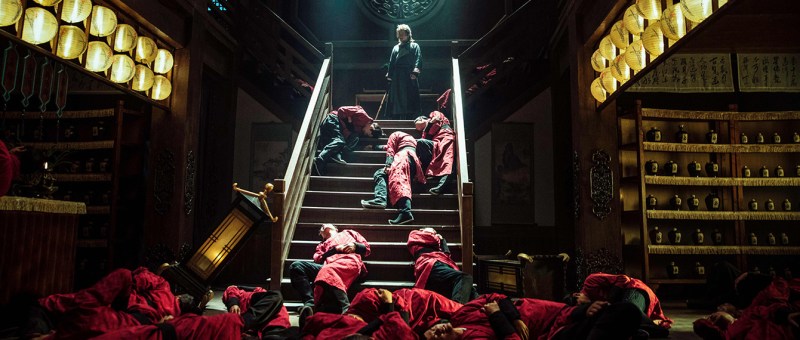
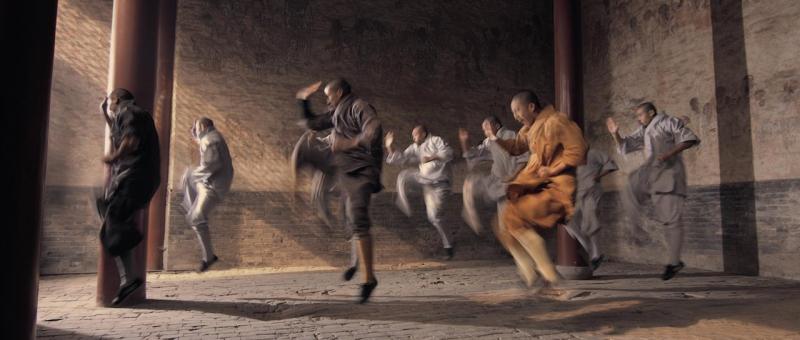
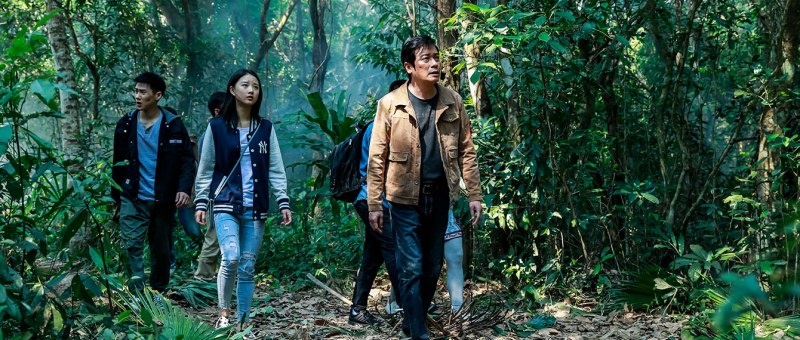
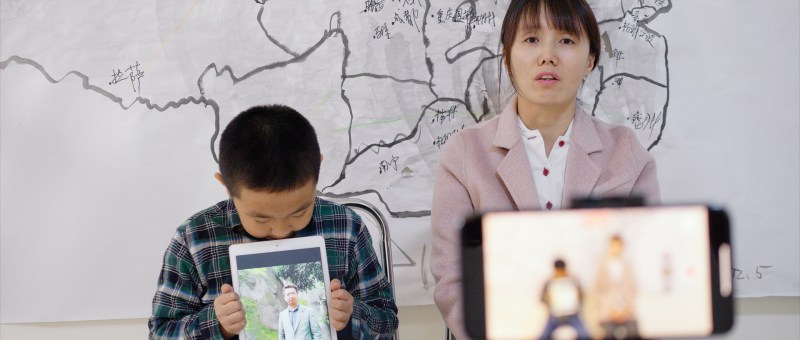
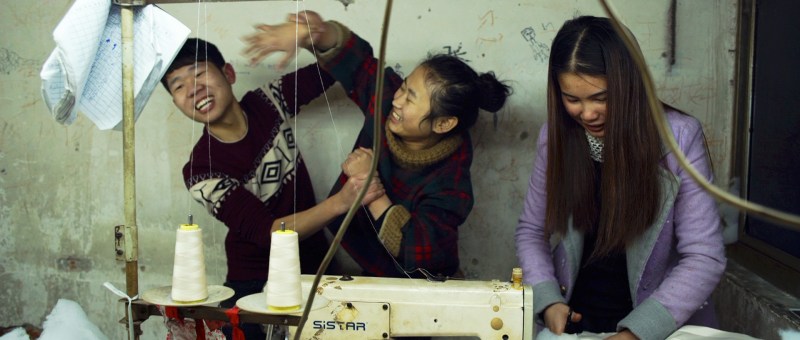
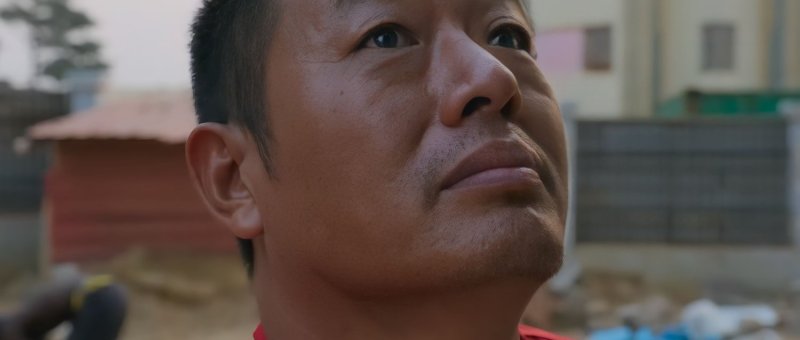
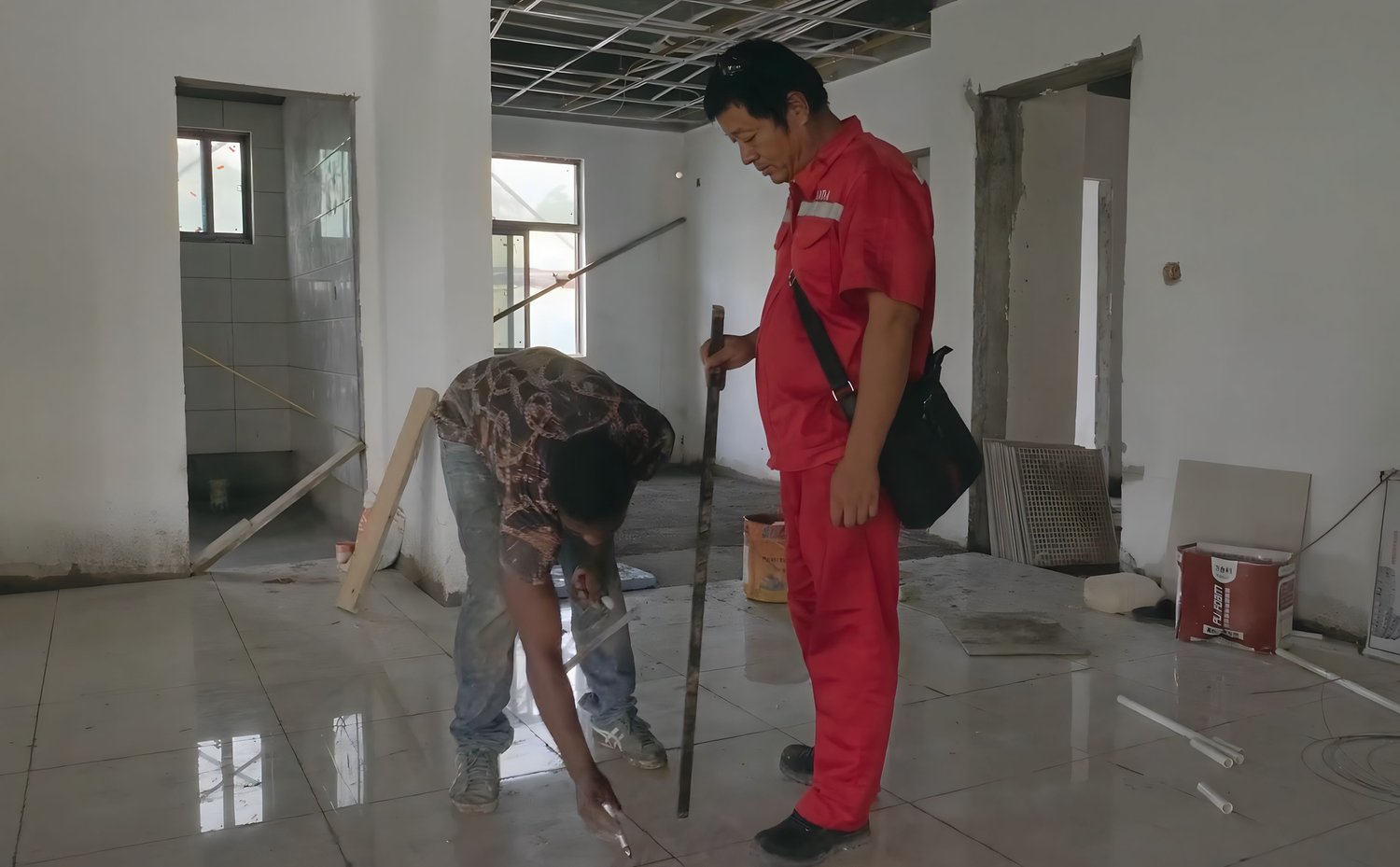
There’s an almost eerie quality to the absence of age in Wang Bing’s sprawling exploration of the Zhili textile industry Youth (Spring). Perhaps for reasons of tact, the ages of older workers, unlike those under 35, are not displayed while they are also predominantly female. One has to wonder where the young men who currently work on the shop floor will later end up if they generally do not stay in this line of work though alternatively it may be further evidence of generational shift in which the young men of 30 or 40 years ago simply did not take up jobs as seamstresses. In any case, the only older men we see here are factory owners and floor managers while the older women are often at the forefront of mostly futile attempts at collective bargaining. 

Many young migrant workers apparently prefer the factories in Zhili because they offer a greater degree of freedom than the large state-run complexes which often micromanage the lives of their employees in almost prison-like conditions. But then it’s also obvious that they struggle and largely cannot earn a living wage despite the long hours they are often forced to put in. One younger worker tries to complain about the lack of overtime pay on offer, explaining that he needs to make at least 4-500 yuan a day and cannot do that without the extra payment but the manager simply tells him that he pays better than other shops and in any case there are plenty of rural youngsters who will be happy to take his job. 

The later part of the film is largely concerned with attempts at collective bargaining led by veteran workers who find themselves frustrated by the system. This kind of work is often seasonal and ironically unavailable in the spring during which many workers return home to their villagers. They are paid on piece rate contracts but the rate is set by the kinds of garments they’re making and they often can’t know how much money they’ll be getting by the end of the season. Consequently they try to work up the rate on certain items while at times resentful of other workers who’ve been able to make more solely because they were assigned different tasks which pay better. The managers give them all the usual excuses, largely refusing to budge or offering only a modest per item increase which as one worker points out will barely make a difference if the quota is small anyway. 

Wang gives more of an overview rather than focussing on a series of individuals but discovers an ironic intersection of the legacy of the One Child Policy and the economic realities of today. At the first workshop, a couple who met on the shop floor experience an unexpected pregnancy. The young woman, Shengnan, seems to be given little choice in the matter which is largely being decided by the respective parents on each side. Because of the additional complications of the residence system (they are each from different districts) the parents both want the couple to move closer to them especially as the boy’s parents are economically dependent on him as they age. Shengnan’s mother puts her foot down and negotiates with the manager to get Shengnan time off for an abortion but he refuses until Shengnan has finished her current quota after which he says he’ll be very happy for her to take some rest at home to get over it though as another suggests, trying to offer comfort, an abortion is just like getting bitten by a dog and then biting back. He does however accept that it’s the girls who suffer while all the men are “little emperors”.

Evidence of sexism is rife. Another worker needles his girlfriend about her job in an overnight internet cafe, telling her that it’s not good for girls and that it might cause acne while seemingly not bothering to think about how his long shifts at the factory might be affecting him. “Women are useless” another man later exclaims despite being largely supported by them in the workplace, not least by his own mother who works in the same factory. The younger workers are often cheerful, messing around with silly banter and constant flirting. It’s not surprising that relationships often arise with people trapped together such long periods of time with little possibility of going out to meet someone else, but they’re also largely impossible given the futility of trying earn enough to support a family through seamstressing. Another man faces a similar dilemma when he discovers his girlfriend has also become pregnant but cannot decide if he wants to get married, worrying about shouldering the responsibility of a wife and child while financially insecure. 

All of which would seem to conflict with a wider anxiety about children not getting married as parents often reject a potential suitor based on low economic status or residency while young men find themselves frustrated unable to envisage a time when they might be financially stable enough to start a family. Meanwhile, the old-style factory dorms are strewn with rubbish and in general depressing in their grey concrete exteriors and poorly lit rooms. An outburst leading to a physical confrontation between workers seems only natural given the fraught conditions though Wang presents it as a howl of despair from a generation trapped between the old China and the new with very little to show for it.


Youth (Spring) screened as part of this year’s BFI London Film Festival.

Coo-Coo 043 (一家子兒咕咕叫, Chan Ching-lin, 2022)

Why would a pigeon, or a child, return to you if you failed to make them a home? The enigmatic title of Chan Ching-lin’s gritty familial drama Coo-Coo 043 (一家子兒咕咕叫, yījiāzi ér gū jiào) refers to a homing pigeon that unexpectedly arrives seven years late but bringing with it less joy than an unwelcome confrontation with the unresolved past. A tale largely of male, patriarchal failure the film revolves around the taciturn figure of a middle-aged man obsessed with pigeon racing who attempts to build a coop an in abandoned field for the birds he no longer has means to care for even as his own home crumbles.

Old Ching (Yu An-shun) appears to be a broken man who’s never quite recovered from the massive success of having won a lot of money on a pigeon race several years previously though most of his birds since have never returned at all. Gambling is technically illegal in Taiwan, and the sport of pigeon racing is itself a little taboo though popular enough at least in the small town where Ching lives. It appears the family is mostly supported financially by his second wife Ming’s (Yang Li-yin) banana farm, while ironically enough his daughter Lulu (Rimong Ihwar) dreams only of flying the coop for a less depressing life somewhere else. Part of the reason for the difficult atmosphere in the family home is the sense of absence left by Shih, Ching’s son from his first marriage who disappeared on his way to school aged 12 more than a decade earlier.

Ching continually blames Ming for Shih’s disappearance because on that day she did not drive him to school as usual, ignoring the fact that she stayed to clean up the house after he trashed it in a violent fit after losing at gambling and told the boy to walk. Ching’s irony is that he is always waiting for something to come back to him, but never gives any reason why it should. Though he is often seen tenderly caring for his pigeons, he treats his family members with coldness and contempt and is on occasion violent towards Ming who has a sideline working as part of a troupe conducting death rituals and is considering leaving him. She takes pigeon 043’s miraculous return after seven years as a sign that they should look into having Shih declared legally dead to help them accept he won’t come back but Ching refuses to do so and continues to wallow in his own violent and angry grief unable to see that it may be him that drove his son, and later his daughter, away.

His limp also hints at a violent past as do his ties to a group of local gangsters who seem to be well into the pigeon racing scene, while gang young toughs make a living kidnapping birds and ransoming them back to their owners or else killing them for fun if they don’t pay. Ching finds a surrogate son in the orphaned Tig (Hu Jhih-ciang), Lulu’s sometime pigeon-catcher boyfriend, but fails to see him as such until it’s too late. Unlike Lulu, Tig is a man looking for a coop. He slides into the vacant space in the family longing to be accepted, but finds only coldness and abandonment left behind while everyone else flies away in search of a better life. 

Often captured behind bars, the two men are just as caged as the pigeons though the kind that don’t fly away when the doors are opened. Some of those who leave do so for the after life, no longer seeing any point in continuing this miserable existence which shows no sign of improvement and unable to envisage any other kind of escape. Even Lulu’s flight to the city to become a nightclub dancer seems as if it may just be another kind of cage from which she cannot fly. Ching’s pigeon coop is eventually ruined by a more literal kind of storm, but mainly because he failed to protect it unable to look past his personal despair and indifferent to the vulnerabilities of his home. Bleak in the extreme, Chan paints a grim picture of life on the margins in rural Taiwan in which the wings of all have long been clipped and those who return do so only because they have nowhere else to go.


Coo-Coo 043 screened as part of this year’s London East Asia Film Festival.

Original trailer (English subtitles)
Hidden Blade (无名, Cheng Er, 2023)

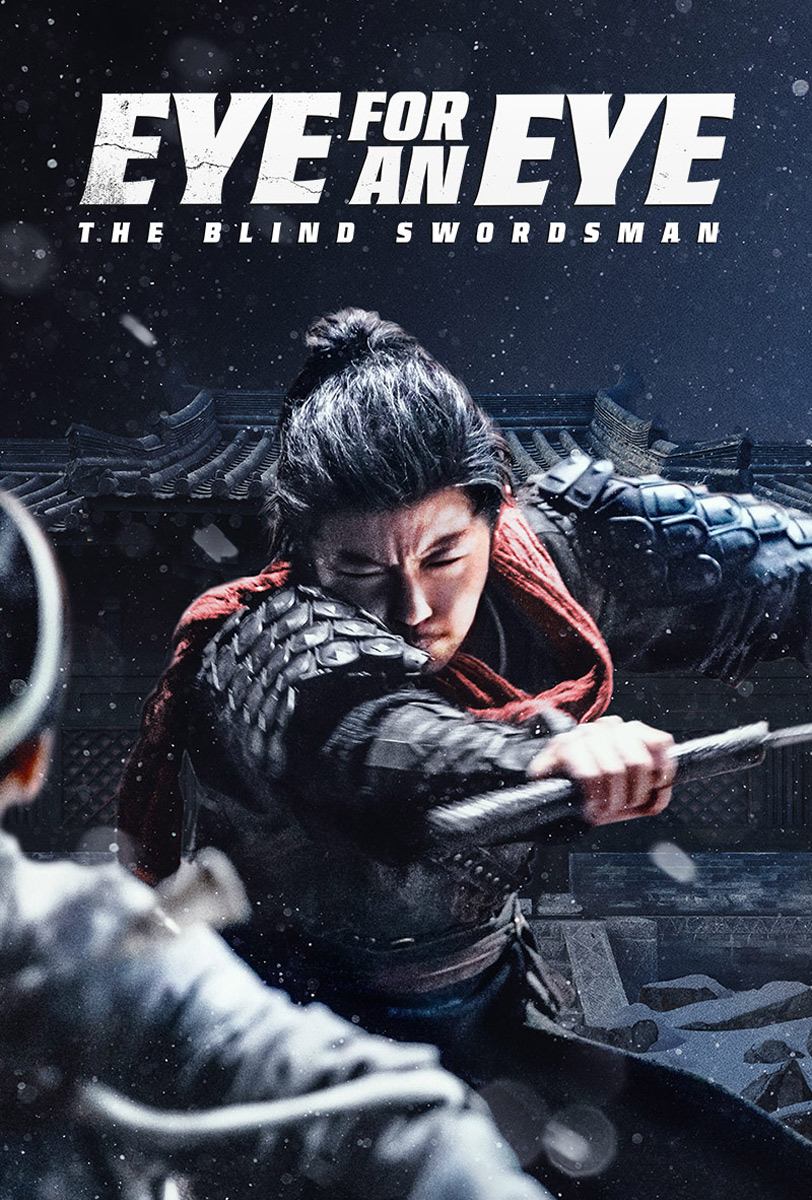
In a moment of calm in Chang Er’s Hidden Blade (无名, Wúmíng), a man is served drunken shrimp and watches the poor creatures flail as they’re cooked alive in a bloody soup before placing them in his mouth still kicking, the red liquid dripping from his lips. The heroes are to some extent much the same, plunged into the dangerous waters of the Sino-Japanese war and drowning among its myriad confusions no longer even certain of their own identity let alone that of others. 

It’s at this that the Chinese title, Anonymous, hints for in this world of constant duplicity names are rarely exchanged or on occasion given only posthumously. That is aside from Mr. He (Tony Leung Chiu-wai) who introduces himself promptly after giving a secret knock to enter a hotel room marked with a Japanese character to meet a Mr. Liang who, it seems, intends to betray the Communist cause and instead serve the Wang Jingwei Regime which has sided with Japan in the puppet state of Manchuria, though we can in no way be sure if either of these men are telling the full truth or are who they claim to be. 

Chang replays this scene later with additional content as he will with several scenes throughout the film adding new context as he goes. Like Lou Ye’s Purple Buttlerfly, the fractured narrative hints at the chaos of an age in which nothing is quite as it seems and the truth is always obscured if at times irrelevant. Spanning the second Sino-Japanese war and its immediate aftermath, the film suggests that the motivations underpinning Japanese imperialism are anti-Communist and that Manchuria is a key asset for them as a bulwark against Soviet incursion. Collaborating with the Japanese, the Wang Jingwei Regime is the third point in a triangle lodged between Chiang Kai-shek’s Nationalists and the Communist Party with the implication that it essentially needs to drop out lowering the barriers for a confrontation between the two and the eventual victory of the Communists which occurs three years after the end of the film in 1949.

Technically the third part in the “China Victory Trilogy” which was conceived as “a gift to the Communist Party for its centenary” the film may make some bold claims as to the role of Communist spies in the 1930s but nevertheless neatly aligns the covert resistance movement with the Party’s eventual triumph if subversively ending on a note of loss and melancholy which leaves the survivors in lonely exile, ideologically victorious but emotionally ruined. Both Liang and the ambivalent Japanese soldier Watanabe (Hiroyuki Mori) talk of wanting a quiet life retiring to ancestral land as ordinary farmers freed from the murky world of politics but are each frustrated while He and Watanabe’s young goon Ye (Wang Yibo) wrestle with the romantic costs of their political choices. Yet the most dignified performance is reserved for an impossibly beautiful KMT assassin caught before she was able to take out a government minister while posing as his mistress “He used to write poems, now he writes execution orders,” Watanabe laments of the Minister (Da Peng) who later it seems pays a heavy price for his ruthless opportunism. At least his would-be-assassin remained true to her ideals and accepted her fate with dignity. Indeed, she may be the only one who is certain of herself and her identity even in her impeccable elegance which is a something of a mixed message given her political affiliation. 

In the end, it may be the self-denial that slowly erodes their souls while forced to conceal their true intentions even to those close to them. Then again, it’s impossible to know what’s for real and what’s for show. An intensely emotional exchange could in fact be intended for someone else’s ears or merely a cruel tragedy of misrepresentation. The real hidden blade is the self-repression living in an atmosphere of oppressive suspicion requires rather than the communist sleeper agents who in this version of the tale beat the Japanese into retreat. Featuring top notch production design and costuming, Chang’s oscillating venture through an abyss of cruelty and betrayal finds its heroes victorious but no so much anonymous as robbed of both name and country, lonely exiles of a war not quite won. 


Hidden Blade is available digitally in the US courtesy of Well Go USA.

US trailer (dialogue free)

Only the River Flows (河边的错误, Wei Shujun, 2023)

Spoiler warning

In the opening moments of Wei Shujun’s Only the River Flows (河边的错误, Hébiān de Cuòwù) children run through an abandoned building playing cops and robbers amid the ruins of a changing China. One could argue that detective Ma Zhe (Zhu Yilong) is little different from the boy who chases after the other children with a plastic toy gun in his hand and an apparent love of justice in his heart only to enter a room and find himself on the edge of precipice looking down on a digger several floors below already sweeping up the rubble while Ma and his police partner look on obliviously. 

Wei fully recreates the aesthetics of sixth generation cinema, filming on grainy 16mm with a score that immediately echoes the films of the 1990s. Yet this small town in southern China is also a noirish place full of dank corridors and crumbling buildings that reflect the slow death of the old factory system along with the accompanying anxiety and displacement. Ma Zhe is also somewhat displaced. As he’s first introduced it’s as the only plainclothes detective in a room full of policemen in military uniform. His genial boss sells a message of “collective glory” that sounds somewhat outdated and is continually undermined by the fact he seems to do little himself and in fact continually instructs Ma to close the case he is working on even if he isn’t really convinced that primary suspect really is the guilty party. 

Based on a novel by Yu Hua, the film’s Chinese title more accurately means “a mistake on the river bank” which could refer to the murder itself, a strange case of an apparently well liked old lady killed with a sharp object, or to an encounter Ma later has with the suspect who is referred to only as “The Madman”. Apparently adopted by the old woman, Granny Four (Cao Yang), to stave off loneliness after her husband’s death (presumably they had no children of their own) the Madman is middle-aged with some kind of learning difficulties and otherwise mute and docile never having displayed any signs of violence or volatility. Yet in his way Ma is also a “madman”, increasingly out of touch with objective reality and driven near out of his mind by his preoccupation with the case. 

Pushed past his limit, Ma feels himself stalked and eventually descends into a lengthy dream sequence in which he watches his recollections projected on a cinema screen only for the negative to dissolve in flames as if it were burning a hole in his memory. His own perceptions are not reliable as confirmed by the confusion surrounding a commendation he received at a previous posting that he can no longer find, while a friend he contacts says he can’t remember him every receiving it and would have been surprised if he had as back then Ma was drinking quite heavily. Overburdened by the case, he begins drinking again and is also filled with paternal anxiety while his pregnant wife spends her time to trying to construct the image of their family by completing a jigsaw puzzle featuring a picture of a mother and child. 

The couple are told, by a very unsympathetic doctor, that there is a small chance the baby may be born with a genetic abnormality that could result in cognitive impairment. While Ma leans towards an abortion (the one child policy in this era perhaps influencing his decision) his wife is determined to keep it, calling Ma a heartless man but also suggesting that the fate that has befallen him is some kind of karmic retribution. He feels the Madman in himself echoed in the fate that awaits his child and is unwilling to accept it, wondering what their life would be like with the world the way it is.

His sense of “madness” is centred in his individuality as the member of a collective and something that he finds echoed in the frustrating dead ends of his case. Several witnesses saw the body but did not report it, fearful of their own secrets being exposed. More deaths soon occur, not exactly related to the first but somehow as a result of it as if murder were catching and Ma is a point of infection bringing a hidden truth to light that accidentally exposes something others would have preferred remain private. Ma’s quest is to quell the madman within himself, as perhaps he does in once again putting on his uniform and joining the collective even if it means accepting their truth above his own or the doubts in his heart. A brief coda featuring Ma and his wife happily bathing their son in an atmosphere of warmth and comfort might suggest that order has been restored were it not for the unsettling look in the child’s eyes in the film’s final frame. Beguiling and mysterious, the film lends itself to multiple viewings in its consistently slippery realities and noirish sense of existential dread as Ma attempts to find himself amid the contradictions of ‘90s China in a land very much under construction. 


Only the River Flows screened as part of this year’s BFI London Film Festival and will be released in UK & Irish cinemas in spring 2024 courtesy of Picturehouse Entertainment.

International trailer (English subtitles)

The Ex-Files 4: Marriage Plan (前任4:英年早婚, Tian Yusheng, 2023)

Why do people get married? In the fourth instalment of the popular Ex-Files rom-com franchise,The Ex-Files 4: Marriage Plan (前任4:英年早婚, qiánrèn 4: yīngnián zǎohūn) the guys are beginning to feel their age and settling down is now it seems on the cards but for Meng Yun (Han Geng) at least it’s not so simple despite receiving some unexpected medical news that undermines his sense of youth and masculinity. As a single urbanite, he’s become set in his ways and used to living alone while haunted by the spectres of old love and missed opportunities. 

Yu Fei (Zheng Kai) meanwhile has been somewhat bamboozled into proposing to his slightly younger girlfriend of three years Ding Dian (Zeng Mengxue) who is herself on the fence about the idea of marriage. The couple end up opting for what they describe as a “marriage cooling off period” but is really just a trial run while they figure out if they can actually live together. To begin with it’s more difficult than expected as both struggle to transition from “dating” to “settled”, each on their best behaviour at home and engaged in a constant game of oneupmanship over household chores trying to prove how considerate they are to each other which is as they begin to realise exhausting. But deciding to just be themselves doesn’t quite work either as they quickly descend into slobbishness with no one taking care of domestic tasks each assuming it’s the other’s responsibility.

To try and work out their differences they come up with a solution that’s both very mature and not in turning their family meetings into drinking games in which the person who recognises they’re in the wrong has to take a shot. The kinds of things they argue about are the usual points of tension like leaving the cap off the toothpaste or waiting too long to wash your smalls, though before long more serious cracks start to appear such as in their different approaches to money management with Ding Dian keen to set up a household joint account and Yu Wei resentful of what he sees as an intrusion into his financial freedom in order to force him to be more responsible about his spending. 

It’s this idea of “freedom” that seems to be keeping the guys from settling down, but as someone later says to Meng Yun it might be his desire for “freedom” that’s holding him back. An ageing Casanova, Meng Yun is hounded by his mother about getting married while otherwise lamenting his descent into solitude and acknowledging that he may now be so afraid of a return to loneliness following a breakup or else a change in his routine that he’s losing interest in starting new relationships which is one reason he’s badgered into blind dates with women looking to get married. He’s not sure if marriage really is the “tomb of love” as some describe it, but can’t see what the point is or why it’s any different to being in a longterm committed relationship without a certificate to prove it. 

In many ways his battle is with looming middle age as he begins to wonder if he’s too old to change his ways and if solitude is what he’s choosing for the rest of his life, while Yu Wei conversely wrestles with the demands of adult responsibility in learning to accept a little more give and take in his life. The film flirts with the idea that Meng Yun may get back together with one of his many exes, in particular Lin Jia (Kelly Yu Wenwen) who seems to be the one that got away, but refreshingly falls back on the idea that some things aren’t meant to last and it’s better to let them go. Meanwhile, Meng Yun is himself a little sexist and chauvinistic in his dealings with his many blind dates, failing to consider the woman he’s talking to may be a doctor rather than a patient rushing out to meet him after undergoing major surgery and hurt after being rejected out of hand for his educational background and financial profile despite doing more or less the same thing himself scrolling past women who don’t match his ideals. 

Both men are in many ways selfish and immature, but also becoming more aware of their flaws and on opposite sides of the fence when it comes to the possibility of change. Despite having met a potential soulmate in philosophical lawyer Liu Liu, Meng Yun can’t decide if it’s worth the risk of abandoning his solitude or if he’ll ever be able to give up the ghost of lost love and open himself to a greater emotional intimacy. A little more melancholy than previous instalments, the film ponders urban loneliness and the trade-offs involved in a life of “freedom” while leaving the door ajar for middle-aged love in the life of the increasingly lovelorn Meng Yun. 


The Ex-Files 4: Marriage Plan is currently previewing in UK cinemas ahead of a 6th October opening courtesy of CineAsia.

International trailer (English subtitles)

The Best is Yet to Come (不止不休, Wang Jing, 2020)

A man denied a fair chance in life because of his impoverished background comes to identify with the plight of those carrying the hepatitis B virus in Wang Jing’s true life drama, The Best is Yet to Come (不止不休, bùzhǐ bùxiū). Inspired by the story of Han Fudong, a journalist who exposed the societal prejudice against those with a previous diagnosis of the disease, the film’s Chinese title “no pause no rest” makes clear how tirelessly he strived to reveal the truth even at the potential cost of destroying his dream of becoming a professional reporter. 

Han Dong (Bai-Ke) came to Beijing in 2003 in the hope of landing a job at a paper, but just like everywhere else journalism is a largely closed profession almost impossible to break into without elite qualifications and connections. At a jobs fair, Han Dong tries to pass off his reluctance to hand over a CV as a recruitment tactic to get people to remember him, circulating copies of his portfolio instead though recruiters quickly lose interest on realising they are all self-published articles posted online. Once he admits that he only finished middle school, it’s game over no matter how talented a writer and investigator he may turn out to be. 

It’s this sense of unfairness, of being turned away on the grounds of a few words on a piece of paper that eventually leads him to sympathise with those carrying the hepatitis B virus after investigating a company that claims it buys blood, discovering that they provide a service helping people to forge health certificates for job and school applications. Vox pop-style interviews recreated in the manner of the time feature several people describing the various ways their lives have been ruined simply because they happen to carry the virus, many of them infected since birth or early childhood. One man has been trying to apply for jobs and graduate schools for several years but finds the offers are always withdrawn after the health screening, while another woman recounts that her fiancé cancelled their engagement because his family could not accept someone with hepatitis B. 

This is also in the immediate aftermath of the SARS epidemic which perhaps caused a preoccupation with infectious disease which may be largely unfounded in the relative difficulty of passing on the hepatitis B virus. After landing a golden opportunity of an unpaid internship compensated only with 50% article fees, Han Dong finds himself conflicted. He knows the forgery operation is illegal and a threat to public health, but also cannot blame the people who make use of it when their lives have been rendered so impossible that is difficult for them simply to live. An early assignment had seen him cover a mine collapse and witness a destraught mother bounced into accepting compensation for her son’s death while shouted at by the foreman (played by film director Jia Zhangke who also produced) for having the temerity to ask to see his body. Han Dong got a front-page byline as co-author with his mentor figure, Huang (Zhang Songwen), but wonders what the point is if nothing ever changes and the truth is not enough on its own. 

For obvious reasons, films about crusading journalists are rare in Chinese cinema given that whistleblowing is not regarded as a virtue and those who try to expose wrongdoing are often shouted down or hounded into silence as seen with the doctor who drew attention to the poor medical practices in rural blood clinics that caused an HIV epidemic in farming communities, and most recently with the physician who tried to raise awareness of the new respiratory illness that later developed into a global pandemic. Journalists who report problematic stories can also find themselves facing prosecution and imprisonment. Han Fudong’s writings did however lead to an eventual change in the law and the destigmatisation of hepatitis B while he himself overcame the educational elitism of the contemporary society to achieve his dreams of becoming a professional reporter. As such, Wang’s dramatisation of his life may be in a way subversive if subtly so in hinting at a greater role for a currently not so free press in the modern China while also embracing a central philosophy that one need not simply accept an unacceptable status quo but actively reject and challenge it and that by doing so something might actually change. 


The Best is Yet to Come screens in Chicago Sept. 30 as part of the 17th season of Asian Pop-Up Cinema 

International trailer (English subtitles)

Creation of the Gods I: Kingdom of Storms (封神第一部:朝歌风云, Wuershan, 2023)

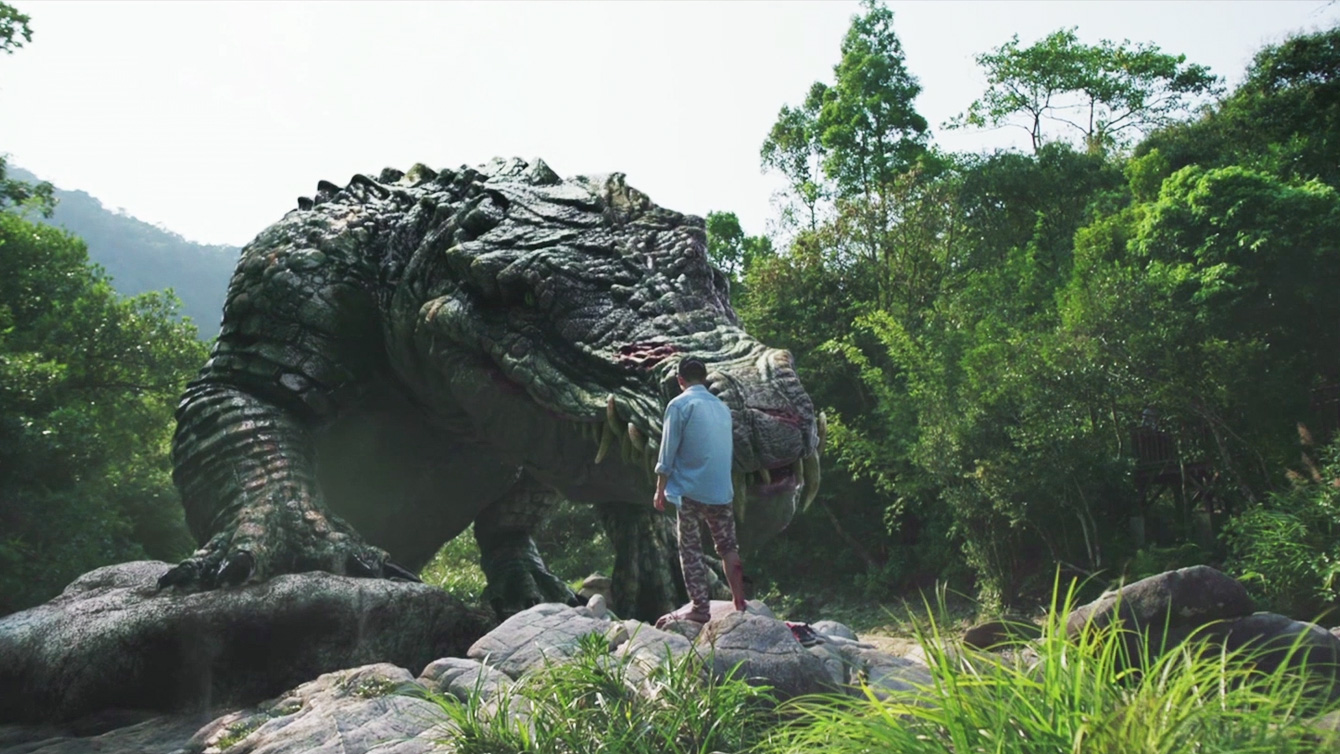
A bad ruler, like a bad father, has only bad lessons to teach his sons and will receive the same in kind in Wuershan’s beautifully produced fantasy epic, Creation of the Gods 1: Kingdom of Storms (封神第一部:朝歌风云, Fēng Shén Dìyī Bù: Zhāogē Fēngyún). Inspired by the classic work of 16th century literature also known as Investiture of the Gods which serves as a kind of foundation myth, the film is the first of three and a 10-year labour of love from the director that began shooting in 2018 and took nearly four years to complete post-production. 

As the opening title card explains, the film focusses on the fall of the Shang dynasty at the hands of its last king and King of All the Realms Yin Shou (Fei Xiang), known posthumously as King Zhou. He is first introduced, however, through the eyes of the young man that is really the hero of the tale, Ji Fa (Yu Shi), who describes him as a hero of the kind he dreams of becoming. Yin Shou is charged with leading an attack on the compound of rebellious lord Su Hu who has refused to pay his taxes, taking with him the four hostage foster sons of the primary dukes along with that of Su Hu himself. The boy is sent to plead with him but gets no reply. In a show of what seems like kindness, Yin Shou asks him what sort of father his must be to give no reply and formally adopts the boy but only in the knowledge that honour dictates he now take his own life as proof of his loyalty to the Shang. 

These young men, Ji Fa included, are forced to ask themselves to whom they owe their loyalty, a man who gave them up and may long have forgotten them or Yin Shou who has in a sense raised them and demands their loyalty. Ji Fa is fiercely loyal to Yin Shou and thinks him everything a good father, a good commander and eventually king should be. Yet Yin Shou has extremely strong second son syndrome and resents his father and older brother for treating him as an also ran. Ji Fa meanwhile is still naive and egotistical, coming to the palace dreaming of becoming “a hero” with only a superficial understanding of what that would mean and easily swayed by Yin Shou’s majesty while Yin Shou in turn rejects his own son ironically fearful of him as a rival having watched the old king die at the hands of his brother while privately pleased that he will finally take his rightful place on the throne only to be told that the kingdom is in peril and the only way to save it is to commit public self-immolation. 

When the legendary heroes Jiang Ziya (Huang Bo), Nezha (Wu Yafan), and Yang Jian (Cisha) turn up with a magic scroll that can undo the Great Curse bearing down on the land, Yin Shou describes it as blessing on realising the talisman gains in power the more souls it receives. There may be something a little chilling the contemporary echoes of his paranoid authoritarianism as he actively begins to round up subversive elements even as he takes as a mistress the daughter of a man he beheaded who in reality took her own life and has been possessed by a fox spirit though it is also quite ironic that it is Su Daji (Narana Erdyneeva) who will bring down the Shang. 

In any case, Wuershan brings the classic tale to life with a sense of magic and wonder painstakingly recreating the fantasy world of feudal China with its beautiful landscapes marred by chaotic infighting and destabilised by dysfunctional filiality. In the end, Ji Fa will return to his true father and with him the path of righteousness which will overcome the Great Curse and begin to restore order laying the foundations for the Chinese society. Meanwhile, in this age of demons and strange creatures, interventions from the heavens and the mortal world in so much chaos that Nezha has been brought in to help, Wuershan discovers a kind of soulfulness embracing the timeless quality of this ancient mythological tale yet grounding it in a well honed sense of emotional reality.


Creation of the Gods I: Kingdom of Storms is in UK cinemas now courtesy of CineAsia.

Trailer (Simplified Chinese / English sutbtitles)

Seven Days in Heaven (父後七日, Essay Liu & Wang Yu-Lin, 2010)

A young woman embarks on what she describes as the most ridiculous journey of her life after her father passes away and she must return to her hometown for a series of incredibly involved traditional funeral rites in Essay Liu and Wang Yu-Lin ’s lighthearted drama Seven Days in Heaven (父後七日, fù hòu qī rì). Perhaps the intent is more to keep the mourners occupied in a slow burn dissolve of their grief than it is to console a parting soul but in any case Mei finds herself meditating on the past and her already fading memories of her late father. 

The strangeness begins at the hospital where Mei (Wang Li-Wen) and her brother Da-zhi (Chen Cha-Shiang) are repeatedly asked to explain to their father, who has just died, that they are taking him home. In the transport ambulance they ask if the family is Buddhist or Christian, and then simplify the question to whether they use incense sticks when a confused Mei is uncertain how to answer though as it turns out the rites they will be performing are largely Taoist. Anyway, the driver accidentally puts in the wrong tape and they get a blast of the Hallelujah chorus before he switches over to a series of sutras instead. A similar confusion sets in once they arrive back at the house where the funeral is being managed by a distant relative who works as a Taoist priest performing rituals largely concerned with death. 

A running gag sees these familial relationships so tangled that they need lengthy explanations, Yi (Wu Peng-Fong) the priest explaining to Mei’s cousin Zhuang (Chen Tai-hua) that he should have been calling him “brother” and not “uncle” while as it turns out Yi still carries a torch for Zhuang’s mother, Feng (Angie Wang), who left him to work in another town and married a wealthy man. Currently in Paris, she does not return for her father’s funeral and sends her son instead who is equally mystified by these strange rituals and decides to film them as part of a university project. 

Yi consults some religious calendars and schedules the days of the funeral accordingly from when they close the coffin to when they conduct the final rites with Mei and Da-zhi merely expected to keep up. A detached Mei explains that as the daughter she’s explicitly instructed when to cry and when not to, forced to run in and wail by the coffin on cue. Yi’s partner, Chin (Chang Shih-Ying), herself works as a professional mourner wailing on the behalf of others merely altering the identity of the deceased but in this case the siblings are alternately bored and run ragged, possibly too exhausted by the process of mourning to fully process their grief. 

Zhuang’s film exposes the labour involved as he closes in Da-zhi explaining that he has to sweep up the ashes from the burning of ghost money. He asks him how he feels about his father’s death which might in itself be a little insensitive especially while pointing a camera in his face and he snaps back that he doesn’t know. Mei meanwhile is repeatedly drawn back to memories of her father, picking out a picture of him singing karaoke for the altar only to be told off by the older relatives. Zhuang eventually photoshops it to replace the mic with flowers and the background with a more appropriate scene of mountains and rivers. She doesn’t tell her friends her father passed away until months later and still finds herself forgetting, brought to tears on accidentally reminding herself to pick up some “longevity” cigarettes for him on a trip back from abroad only to realise there’s no need anymore. “Please stow your emotions” she imagines hearing the captain say in her father’s voice as she strives to accommodate her grief. 

Filled with a series of humorous digressions from Yi’s love life and their late father’s ability to charm his nurses even at death’s door, the film paints a warm and nostalgic portrait of small-town life and the various rituals that go along with it, including a small tangent on political corruption as a host of politicians are obliged to attend the funeral, because of the aforementioned ill-defined familial relationships, and send elaborate gifts including a large tower of beer cans that later collapses and requires even more tiding up. Finally the siblings must burn their mourning clothes as if symbolically moving on from their seven says in “heaven” and returning to their everyday lives but discover perhaps that grief is an ongoing process the rituals of which may continue long after the funeral is finished.


Seven Days in Heaven is available to stream in the US Sept. 25 to Oct.1 as part of the 17th season of Asian Pop-Up Cinema.

Trailer (English subtitles)
Bad Education (黑的教育, Kai Ko, 2022)

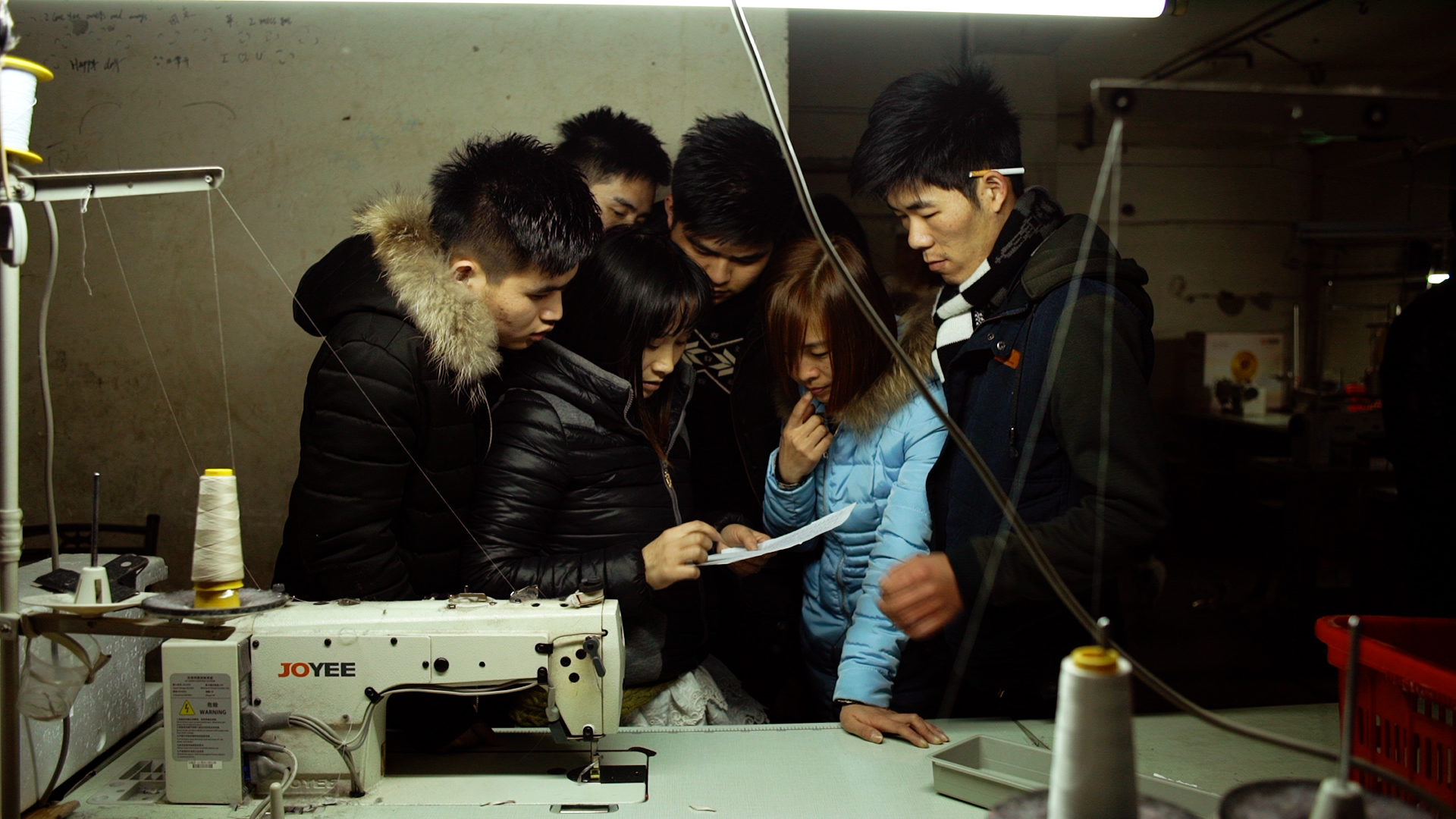
According to a jaded policeman in Kai Ko’s directorial debut Bad Education (黑的教育, Hēi de Jiàoyù), only 10% of people are good and 10% bad with 80% somewhere in the middle depending on the circumstances. As another person puts, even bad people have principles and in an odd way it’s a sadistic gangster who becomes a moral authority teaching the trio at the film’s centre a few valuable lessons in just how far south something can go when you allow yourself to be swayed by peer pressure and adolescent bravado. 

Perhaps intended as a graduation prank, Chang (Berant Zhu) suggests he and his friends Han (Edison Song) and Wang (Kent Tsai) exchange otherwise unspeakable secrets to cement their ongoing friendship through the threat of blackmail and exposure. Chang tells a frankly disgusting story that he raped and impregnated a young woman with learning difficulties while Han claims that he bludgeoned a homeless man to death but no one noticed. The only one to be going on to university, Wang does not have any particularly dark secrets to share. All he can come up with is that he once read his father’s texts and found out he’s having an affair, while otherwise confessing to having stolen the answer sheet to a test. As expected, Chang and Han don’t like his answers and begin to threaten him, pushing Wang back towards the edge of the roof as if they meant to kill him so wouldn’t spill the beans. 

Chan and Han were of course bullshitting, they haven’t done anything of the sort, but they manage to persuade Wang that he’ll have to do something similar to complete the pact. They challenge him to throw paint at a gangster which turns out to be an incredibly bad mistake though to be fair to them, Chan and Han may not have expected Wang to actually do it. It’s only then that they start to realise they aren’t children any more. Actions will have consequences and even if, as Mr. Hsing (Leon Dai) the gangster boss later says, they haven’t done “anything wrong” they’ve gone about everything in the wrong way and will eventually have to pay. Chan looks up at him pleadingly and answers like a child that he’s sorry and won’t do it again, but Mr. Hsing points out that whether he does it again or not is of no interest to him. It’s not what this is about. 

What it’s about is perhaps a different kind of “graduation”, leaving the innocence and naivety of childhood behind for the cynicism of adulthood and the moral greyness of grownup society. Then again, they weren’t all that innocent to begin with that they could come up with heinous crimes to confess and imagine that their friendship would survive it. The policeman says that 80% of people could go either way in most situations, himself included it seems, painting a fairly bleak picture of the contemporary society. Chased through the city by Hsing’s foot soldiers, Chan and Wang end up stealing a taxi from a taxi driver who had just raped the young woman passed out drunk in his car though no one makes much of an effort to help her as each remains fixated on their personal goals such as escaping and fleeing the city. 

In the opening scenes, a lobster had been plucked from a tank and had its legs cut off in a moment of foreshadowing while customers in Mr Hsing’s seafood restaurant with greasy mouths suck on shrimp whose corpses they soon spit out and discard. Something quite similar happens to the boys as the cracks in their friendship are further exposed. Even back on the rooftop, they’d reflected on the class difference between them with Wang, whose father owns a factory he is expected to take over, the only one going to college, while Chan jokes about becoming his driver and Han remarks that he’d like to drive a Maserati (one stands across from him as he’s viciously beaten in his underwear by Hsing’s goons). 

Figuring out they have no underworld connections, Hsing asks for money and the boys immediately look to rich kid Wang only he refuses because it’s too embarrassing to ask his dad for that amount of cash. Engaged in some kind of sadistic power play, Hsing tries to get them to cut each other’s pinkies off with the guys each turning on and blaming each other. Chan too tries to argue that they came back to save Han so he owes them (only they didn’t), while later blaming Wang for going ahead with the dare rather than himself for setting up this stupid prank as a means of having something to remember in their old age. Later he admits his insecurity, uncertain of his own future and frightened that his friends will leave him behind but it’s already too late. Wang ironically fulfils the pact, his graduate rosette fluttering as he does so as if to remind us that he’s now “graduated” from childhood innocence, but ironically destroys rather than cements the boys’ friendship with one chaotic night of violence and terror. Incredibly dark with moments of bleak humour, Bad Education offers a lesson in retribution and the costs of peer pressure and bravado and leaves each of its heroes changed, if not slightly broken, by the realities of a duplicitous adulthood. 


Bad Education screened as part of this year’s New York Asian Film Festival

Teaser trailer (Traditional Chinese / English subtitles)

No More Bets (孤注一掷, Shen Ao, 2023)

That the two biggest hits at the Chinese box office in summer 2023 both had a strong anti-gambling message perhaps hints at a contemporary anxiety, though No More Bets (孤注一掷, gūzhùyīzhì) is clearly the more direct of the two even if it also shares with Lost in the Stars its echoing of a theme in contemporary mainstream cinema that Chinese citizens are safe nowhere other than China. Then again, that particular message maybe somewhat disingenuous seeing as the villains here are all themselves Chinese if operating abroad to try and evade the law. 

This ambitious programmer Pan (Lay Zhang) learns to his cost when he abruptly quits his job after being passed over for a promotion in favour of someone with an influential father and accepts a too good to be true offer from what he’s been led to believe is a gaming company in Singapore. Soon enough, however, he realises their brief stopover is actually their destination and he’s been trafficked to another South East Asian nation where he is forced to participate in online gambling scams. Pan is however a righteous young man and immediately takes a stand, explicitly telling his captors he won’t do their bidding though they viciously beat him. Eventually he teams up with the slightly less conflicted model Anna (Gina Jin Chen) who vaguely understood the job when she agreed to it but not that they’d confiscate her passport and she’d be unable to leave. 

Like Pan, Anna accepted the job while frustrated by the vagaries of her industry after being unfairly let go by her agency after her photo was used on a flyer advertising sex work without her (or their) consent. Like those who play the games, she was suckered in by the promise of easy money that could be earned quickly and didn’t really think about the implications of what she was doing. That the film positions the victim, Tian (Darren Wang), as an incredibly wealthy young man who had access to vast generational wealth avoids the implication that some are drawn into scams for the same reasons that Pan and Anna were in they feel a sense of impossibility in their lives because of societal unfairness and economic hopeless but nevertheless paints his gradual descent into madness and addiction as a personal failing born of his insatiable greed rather than a misfortune that might befall anyone with a smartphone. Even so, if a highly educated young man can be tricked by such an obvious scam it suggests that it really can happen to anyone. 

At least, the film seems to say that in any case it’s bad to gamble but you should definitely think twice about promises that sound too good to be true, especially if they involve offers of work abroad. A series of talking heads interviews (with blurred faces) from victims of trafficking at the film’s conclusion all advise viewers not to travel to other countries to work, while several remark on how relieved they felt to see Chinese police when they were eventually rescued. Uniformed police also give a press conference during the film insisting that they are doubling down on combatting fraud and other kinds of cybercrimes while Inspector Zhao (Yong Mei), whose speech bookends the film, struggles to get anything done because the crimes are taking place overseas and therefore outside of her jurisdiction. Then again, the entire operation is run by Chinese businessmen who try to engender a sense of loyalty and rebellion among the men whom they’ve essentially enslaved by making them think that they’re merely rebelling against an unfair society by taking the money of the “greedy” people who play their games and redistributing it to their own, downtrodden families. 

Pan is trying to do the right thing, but often does it in the wrong way actively putting others in danger while trying to find a way to blow the whistle on the whole operation in the hope of being rescued while even Inspector Zhao at times seems dismissive, failing to take the claims of Tian’s girlfriend that he’s being swindled out of his entire family fortune by online scammers seriously until it’s too late. Even so, Shen crafts an often tense tale of escape as Pan does his best to send out coded messages under the noses of his kidnappers while unwillingly participating in the fraud hoping that eventually someone will figure out what’s going on and put a stop the cruel cycle of misery once and for all. 


No More Bets opens in UK cinemas 8th September courtesy of CineAsia.

UK trailer (English subtitles)