Memories of His Scent (においが眠るまで, Kahori Higashi, 2024)

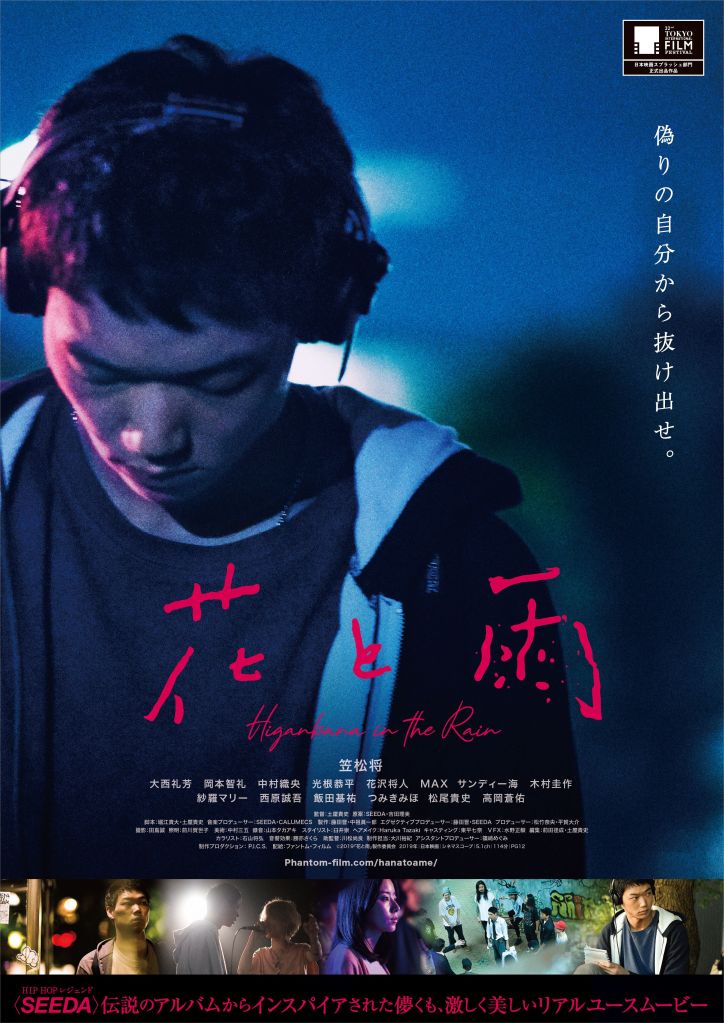
The link between scent and memory is incredibly strong to the extent that they are often inextricable from one another. For Hinoki, what she fears is that her father’s scent will fade from the world around her and she’ll no longer be able to feel his presence either externally or within herself. She tries to recapture and recreate it artificially only to realise that there was a crucial component that she never thought to include but was always central to her memories of her late father.

We can see the way she immortalises him in her dream sequence in which she walks through a gallery looking at a series of small exhibits marking out her father’s life until his hospitalisation at age 45 and subsequent death from illness. The last box appears empty but turns out to contain a simulacrum of his scent in the same way some museums offer the opportunity to experience what it may have felt like to live in a place through breathing in its ambient smells. It’s this sense of intimacy that Hinoki longs to recapture as she attempts to deal with her grief and the series of upheavals to her life in the wake of her father’s death including closing his coffee shop and bean roastery. She’s horrified that her mother’s put his favourite apron in the to go pile as if she were throwing away an essential part of him she can’t recover. It’s this along with a diary dropped off by the owner of a mini theatre he used to deliver coffee to that sends Hinoki on a summer holiday road trip adventure looking for traces of her father in the places he visited and trying to identify that behind a poetic entry at the end of the diary. 

The film then doubles as another in a series of films elegising the dying culture of boutique cinemas in small towns often catering to small but dedicated audiences who have formed a kind of community around their love of film. These smaller screens generally show older and indie films and are key to the success of independent filmmakers whose work often wouldn’t be shown in larger multiplexes, yet audiences have often not returned after the enforced break of the pandemic era while they also face competition from streaming and other forms of entertainment. The first cinema Hinoki visits is closing down in 42 days though she marvels at the scent and atmosphere of this retro space which has its own elegiac quality. Whilst there she also coincidentally runs to a scent scientist who gives her some pointers about how to preserve and recreate her father’s scent before it fades. By the time she reaches the end of her journey the final cinema has already closed down and rather depressingly been replaced by an entirely empty open air car park. 

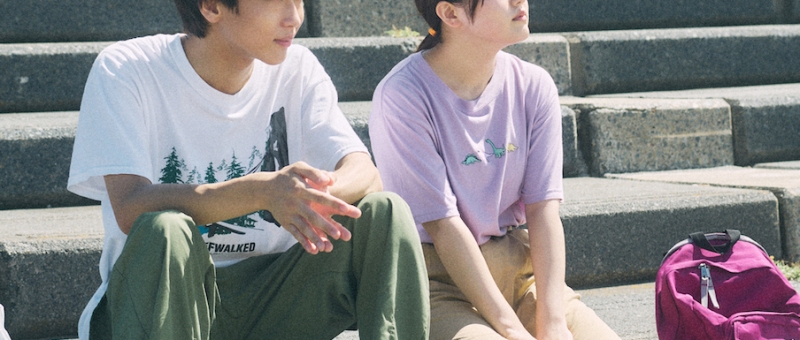
Even so what she begins to realise is that nothing really disappears and experiences can be recreated to an extent as she discovers when they put a movie on in the car park leading to a very personal epiphany. The people she meets along her way teach her various things such as the importance of clearly stating how you feel while there’s still time even if her best friend’s attempt to do just that doesn’t quite go to plan. A single father raising a small daughter brings back painful memories for her of her own childhood and her father’s now continuing absence while also reminding her that those experiences live on in her memory along with the various things her father taught her throughout her life. 

Though suffused with melancholy, the film is ultimately uplifting in its determination that life goes on and nothing really disappears. Originally diffident and describing herself as someone who doesn’t particularly like interacting with others, through her partly solo road trip Hinoki learns to open herself up to the world around her along with its myriad fragrances and what they say about the people who inhabit a place. She thinks she’s looking for her father, but she’s really looking for herself and the path towards the rest of her life lived in his absence while discovering the richness of life as its lived in addition to that which has passed.


Memories of His Scent screened as part of this year’s Osaka Asian Film Festival.
Flowers and Rain (花と雨, Takafumi Tsuchiya, 2019)

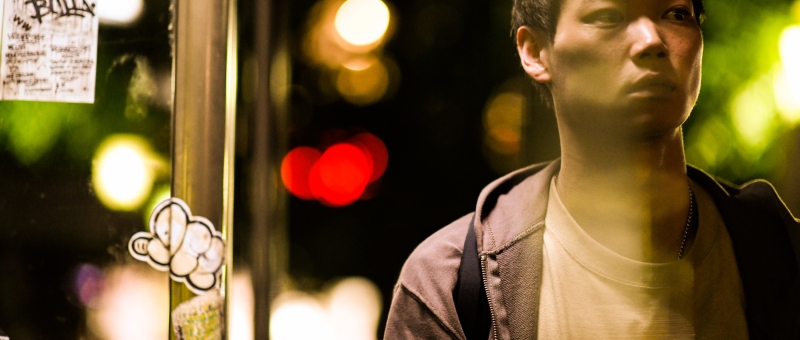
A troubled young man seeks fulfilment in hip hop glory but his self-involved insecurities frustrate his dreams in Takafumi Tsuchiya’s stylish coming of age drama Flowers and Rain (花と雨, Hana to Ame). Inspired by the album of the same name by real life rapper SEEDA, Tsuchiya’s film finds its conflicted hero consumed by a sense of internalised rage and cultural displacement as he struggles to find his place in conformist Japan after a childhood spent abroad realising only too late that he was not the only one struggling and that his self-absorbed inferiority complex has cost him dearly. 

Hakuhiro (Sho Kasamatsu) spent his early childhood in London where his father was working at the time. Whilst there, he was sadly subject to common racist microaggressions from other children who tried to put him down by showing off to their friends with ugly playground chants. Nevertheless, Hakuhiro and his older sister Saki (Ayaka Onishi) profess that they prefer living in the comparatively less stressful UK than in conformist Japan and it is indeed Saki who seems to have the most difficulty when they are forced to move back after the financial crisis. She is determined to return to the UK for university, but as we later see ultimately remained in Japan. Hakuhiro meanwhile has become a sullen and distant teen, bullied by the high school delinquents for being a returnee student. He gives them the same treatment as he gave the playground bullies, ignoring them until he is able to ignore them no more. Mostly he just keeps to himself, listening to hip hop on cassette via his retro walkman and vintage headphones. 

Hakuhiro dreams of becoming a top rapper by rapping in English, but a small circle of likeminded friends including a fellow high school student, Aida, are unconvinced. Though he actually comes from quite a wealthy family and still lives at home supported mainly by his parents, Hakuhiro wants to rap about the same things as his heroes such as street life and social oppression, none of which rings true to those around him who are painfully aware that he is somewhat uncomfortably appropriating the struggles of others and pretending to be something he’s not. He blames his friend Aida for his lack of success in not writing good enough beats for his words and Japan as a country for failing to “get” true hip hop. His sense of insecurity eventually tips over into belligerent arrogance that sees him taken in by an unscrupulous promoter who allows him to humiliate himself during a live rap battle with his high school bullies resulting in the probable end to a credible career as an underground rapper. 

To get more experience of what he sees as “the life”, Hakuhiro has also gotten himself involved with drugs firstly by growing cannabis and then by trafficking cocaine on behalf of a shady street gang. His relationship with his family has obviously suffered and though he’s nominally gone back to uni he doesn’t seem very invested in his studies. Saki, herself troubled in repeatedly failing to pass the final exams for her MBA, tries to talk some sense into him but Hakuhiro repeatedly fails to notice that she is also in distress and trying to tell him something important. A brush with the law pushes him back towards the straight and narrow, but does not exactly humble him and he is still blind to the various ways in which his self-absorbed and arrogant behaviour ruins his relationships and with them his chance of ever making it in the music business. 

Only tragedy finally awakens him to his failings. As Aida had tried to tell him, his problem was a refusal to face reality as reflected in the inauthenticity of his lyrics. If he wants to make it as an artist he’ll have to face himself from a position vulnerability and give up the macho posturing of his adolescence for something a little more “real”. Drawing inspiration from SEEDA’s life and music, Tsuchiya is unafraid to allow his hero to appear unsympathetic even while emphasising the lingering traumatic echoes of a sense of displacement and rejection that prevents him from stepping into adulthood with a fully formed identity, but eventually allows him to find a sense of peace in art even if too late to repair fractured relationships with those he loves.


Flowers and Rain streamed as part of this year’s online Nippon Connection Film Festival.

Original trailer (no subtitles)