 Considering how well known sumo wrestling is around the world, it’s surprising that it doesn’t make its way onto cinema screens more often. That said, Masayuki Suo’s Sumo Do, Sumo Don’t (シコふんじゃった, Shiko Funjatta) displays an ambivalent attitude to this ancient sport in that it’s definitely uncool, ridiculous, and prone to the obsessive fan effect, yet it’s also noble – not only a game of size and brute force but of strategy and comradeship. Not unlike Suo’s later film for which he remains most well known, Shall We Dance, Sumo Do, Sumo Don’t uses the presumed unpopularity of its central activity as a magnet which draws in and then binds together a disparate, originally reluctant collection of central characters.
We begin with a lecture given by Professor Anayama (Akira Emoto) in which he recounts the brief mention of sumo in the work of Jean Cocteau. It seems that Anayama is something of a sumo fanatic and had previously been a champion wrestler in his student days. Shuhei Yamamoto (Masahiro Motoki) is currently registered for Anayama’s class but he’s here on a party mandate and never attends classes – he even has someone raise their hand for him at registration. Shuhei already has a job offer for when he leaves so he needs to graduate – Anayama makes him a proposition, join the currently moribund sumo club and he’ll forget about the lack of attendance problem and fill his credits up too.
Actually, the sumo club has only one member – fanatical sumo fan and mature student, Aoki (Naoto Takenaka). Aoki takes tradition very seriously and it’s not long before he’s got Shuhei in a traditional “mawashi” sash (don’t call it a fundoshi!) and parading about the campus trying to find others they might be able to coerce into the club so they can compete in the next competition. Luckily they run into shy student Hosaku (Hiromasa Taguchi) who’s quickly convinced to help them keep the sumo club open, before also recruiting Shuhei’s younger brother Haruno (a refugee from the regular wrestling team), and even a foreign student, George Smiley, who only joins up to save on his rent. Together, they face an uphill battle but can they really conquer this demanding game with so little experience between them?
At heart, Sumo Do, Sumo Don’t is a standard sports comedy in which a rag tag collection of amateurs attempt to triumph over adversity whilst finding out more about themselves and each other. No one, other than Aoki, really wanted to be in the sumo club with its embarrassing attire and total lack of social kudos. Shuhei is only there because he needs the grades, but after seeing how much Aoki cares about his sport he becomes determined to support his new found friend. Similarly, Hosaku had been leading quite a lonely life but enjoys being part of a team where his friends enthusiastically cheer him on.
By bringing in the foreign student (supposedly an English rugby player but played by an American with an unusually gung-ho attitude) Suo attempts to define sumo and, in a roundabout way, other aspects of Japanese culture from a more detached view point. “You Japanese never think things through” he’s fond of saying after asking a perfectly logical question that no one seems able to answer such as why they have a shrine to a household god in their clubhouse when this is a Christian university or why it’s frowned upon for him to wear shorts underneath his mawashi. Later, the group get a hanger on in the form of Masako (Ritsuko Umemoto) who has taken a liking to sumo, and more particularly to Haruno. Women aren’t allowed in the sumo ring but this is one aspect of tradition that it seems even the sumo diehards are prepared to let go. Far from the serious and rarified sumo world, the sumo club is a strictly equal opportunities enterprise built on mutual trust and acceptance. No one who loves the beautiful art of sumo is getting turned away.
Perhaps with less serious intent that some of Suo’s later works, Sumo Do, Sumo Don’t is a prime example of the ensemble comedy drama. The essence of the humour is physical leaning mainly on slapstick but with a side serving of wit and irony. Suo keeps things simple and straightforward, allowing the gentle comedy to emerge organically underpinned by strong characterisation and performances. Unashamedly feel good yet never tipping over into the mawkishly sentimental, Sumo Do, Sumo Don’t is the best kind of sports comedy where the outcome itself is almost irrelevant in light of the greater game that’s been in play right the way through.
Unsubbed trailer:
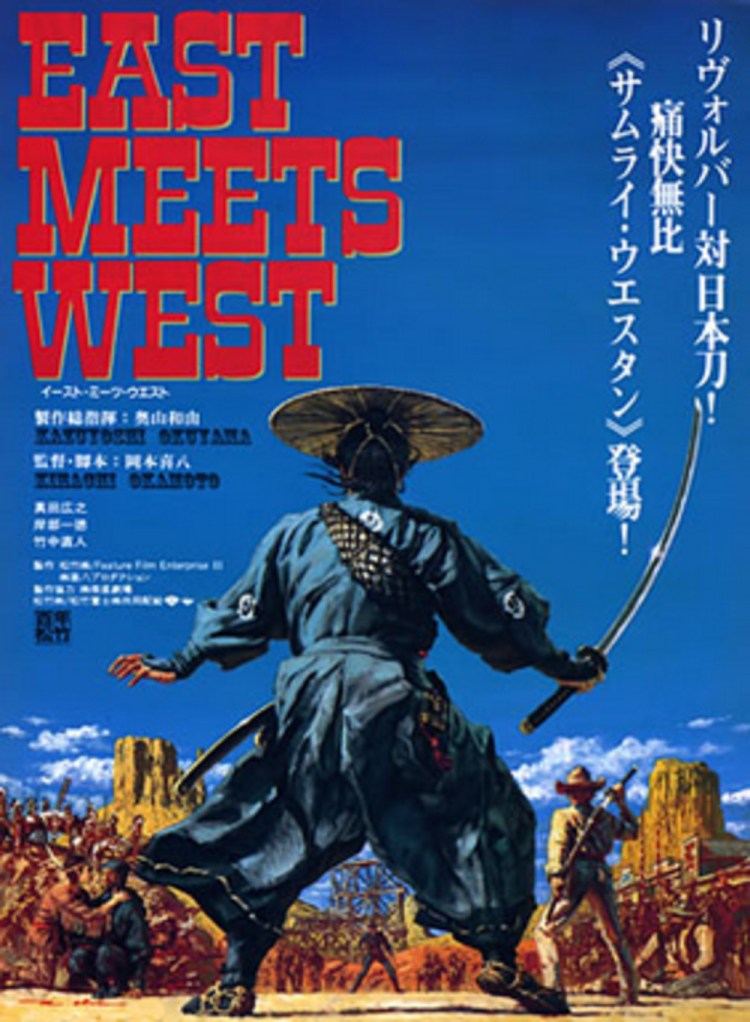 East has been meeting West in the movies from time immemorial and though it’s often assumed that the traffic is only running in one direction, in reality the river runs both ways. Kihachi Okamoto was always fairly open about his love of Hollywood westerns, particularly those of John Ford, and even mixed a fair amount of wild west style action to his 1959 Manchurian war movie, Desperado Outpost. Returning to the theme almost 40 years later in East Meets West (イースト・ミーツ・ウエスト), Okamoto retains his wry, ironic eye but adopts a tone much more in keeping with the slightly silly exploitation cowboy movies of the ‘70s.
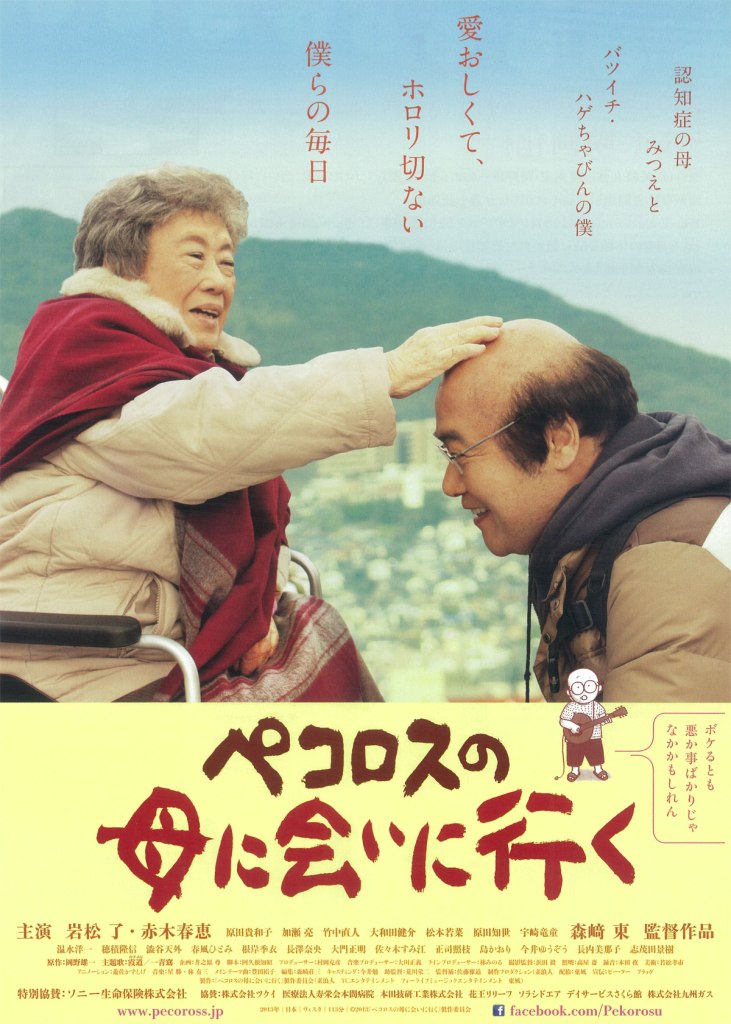 Topping the “best of 2013” lists in both Kinema Junpo and Eiga Geijitsu (something of a feat in itself), Pecoross’ Mother and Her Days (ペコロスの母に会いに行く, Pecoross no Haha ni Ai ni Iku) is a much more populist offering than might be supposed but nevertheless effectively pulls at the heartstrings. Addressing the themes of elder care and senile dementia in Japan’s rapidly ageing society, the film is both a tribute to a son’s love for his mother and to the personal suffering that coloured the majority of the mid-twentieth century in Japan.
 Windows on Worlds