Egoist (エゴイスト, Daishi Matsunaga, 2022)

If love is unselfish, is it really love at all? Based on a semi-autobiographical novel by Makoto Takayama, Daishi Matsunaga’s deeply moving romantic drama Egoist (エゴイスト) asks if all love is in the end transactional and if to deny its “selfishness” is akin to denying love itself because it would mean denying a basic human need for connection and reciprocity. In the end, perhaps selfish is what we should be with love because we are always running out of time and if we aren’t careful it will slip away from us unnoticed.

An “extreme realist”, fashion editor Kosuke (Ryohei Suzuki) is already full of regrets and many of them linking back to the early death of his mother from illness when he was only 14. It’s clear that his financial wealth helps to fill an emotional void but also that he’s lonely and longs for a sense of family that’s long been absent from his life. He rarely visits the conservative hometown where he was bullied for being different, and seems to have a strained relationship with his widowed father (Akira Emoto) who doesn’t know that Kosuke is gay and continues to ask him about getting married and settling down. Early on in his courtship with Ryuta (Hio Miyazawa), a personal trainer he met through a friend, Kosuke remarks that he’s never met a lover’s mother before hinting at the landmarks of a relationship such as marriage that LGBTQ+ people often miss out on in a conservative culture in which such things cannot always be discussed openly.

Later, Ryuta’s mother Taeko (Sawako Agawa) tells Kosuke that knew from that first meeting that they were more than just friends and was happy that her son had someone he loved who loved him regardless if they were a man or a woman. But just when the relationship had seemed to be blossoming, Ryuta had abruptly tried to break up with Kosuke explaining that he had been involved in sex work since his early teens in order to support his mother who was unable to work due to illness. Now that he’s experienced real romantic love he finds sex work “painful” but has no other means of supporting himself and so gives up love for economic necessity. “I’ll buy you,” Kosuke unironically counters adding a note of literal transactionality to their relationship which is already fraught with disparity in the respective differences in their ages along with Kosuke’s wealth and Ryuta’s poverty. 

Kosuke later describes his gesture as “pure”, something he’d previously called Ryuta while also remarking that he found him too “polite” in bed and would rather he be a little more “selfish”. In a way it’s altruistic, he isn’t really trying to trap Ryuta into a compensated relationship only to help him while simultaneously ensuring that he stays in his life. His wealth fills a void, but it’s by giving pieces of it away that he feels that void decreasing. Kosuke first gives Ryuta gifts for his mother, knowing that it’s easier for him to accept them because doing so is unselfish when the gift is for someone else. Even so as he later acknowledges sometimes the gift is more for himself than the recipient, a means not of manipulation but of healing. Kosuke claims not to know what love is and largely mediates it through money along with additional acts of care, but as Taeko later tells him it doesn’t really matter if he doesn’t know because they felt his love anyway. 

Matsunaga frequently cuts backs to visual motifs such as door numbers, envelopes, and dropped coins to hint at the transactionality of love but eventually reflects that love is an act of exchange in which the desire to be loved is an essential component. Kosuke eventually asks his father how it was for him when his mother was dying and he recalls a conversation in which she said she wanted to leave him because she couldn’t bear to see him suffering for her, a request which could in itself be read as “selfish” even in its “selflessness” with his reply implying that it’s alright to be selfish in love because in way it might be its ultimate expression. Filming with handheld realism, Matsunaga captures the rhythms of contemporary gay life along with the easy giddiness of burgeoning romance and the poignancy of profound loss tempered only by a fleeting feeling of warmth and the jealous memory of a “selfish” love. 


Egoist screens in Frankfurt 9th June as part of this year’s Nippon Connection.

International trailer (English subtitles)
Missing (さがす, Shinzo Katayama, 2021)

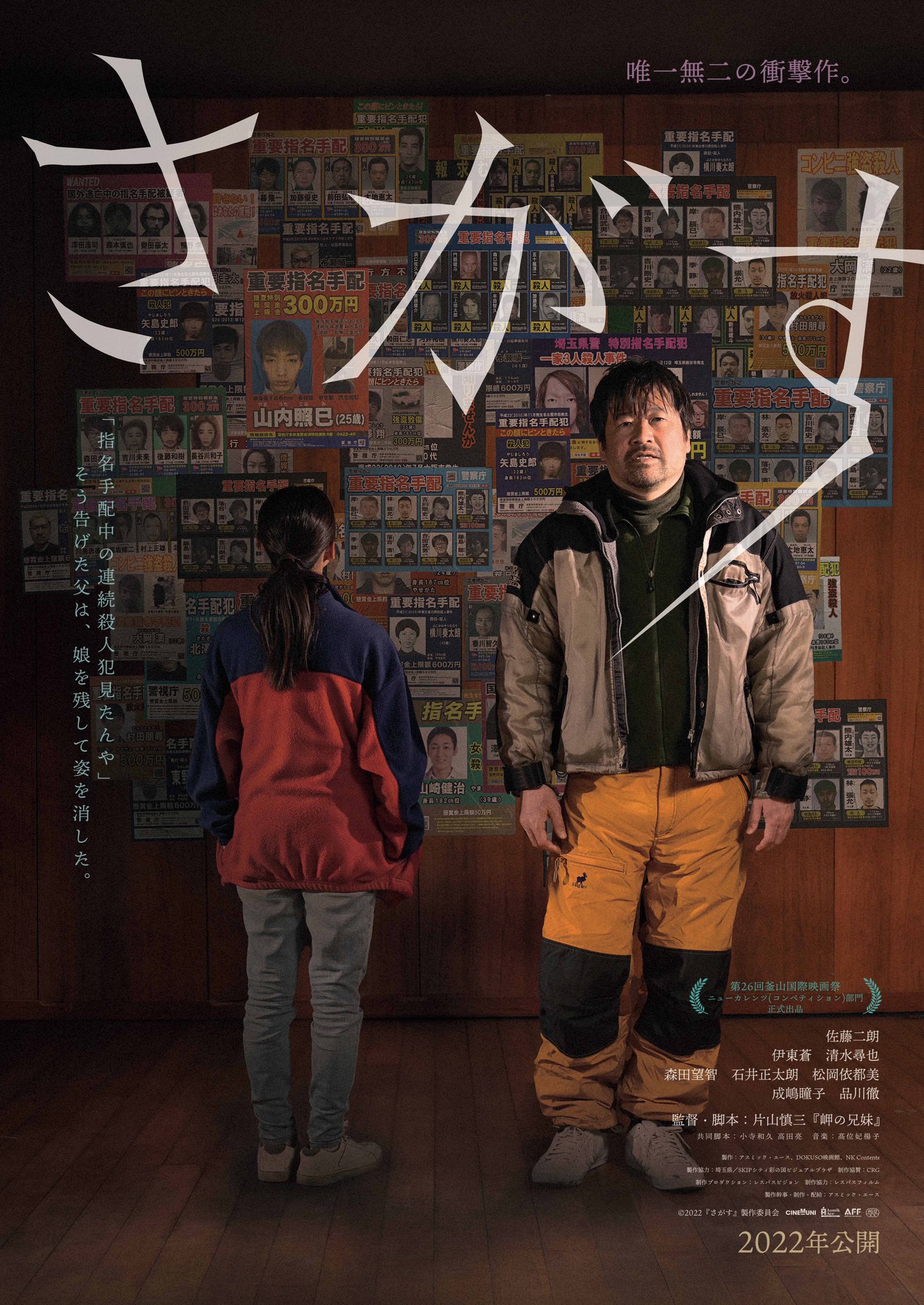
“None of us are needed” claims the nihilistic serial killer at the centre of Shinzo Katayama’s dark mystery drama, Missing (さがす, Sagasu). That he’s wrong is an obvious point, but also one reinforced by the teenage heroine’s determination to find her father not just literally and physically, but spiritually and emotionally as she struggles to reorient herself and find direction in her life in the midst of grief and despair. Drawing inspiration from the so-called “Twitter Killer” case of 2017 Katayama asks some difficult questions about the ethics of life and death and how seemingly ordinary people can be pulled towards the dark side by a mixture of greed and misplaced compassion. 

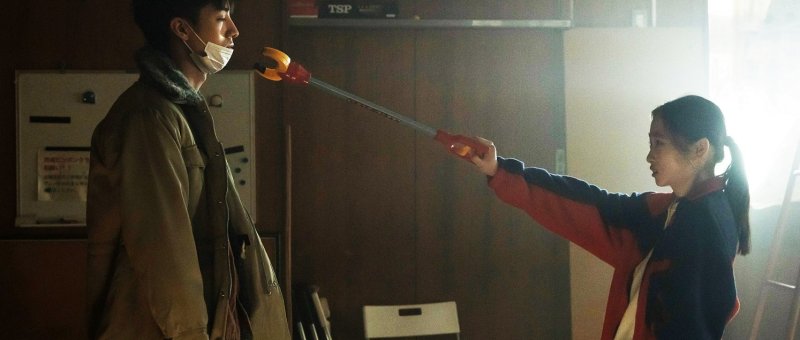
As the film opens, young Kaede (Aoi Ito) is running through the backstreets of Osaka looking for her dad (Harada). What occurs is something of a role reversal as she arrives, breathless, at a convenience store and is forced to apologise because her father has been caught shoplifting having been short the paltry sum of 20 yen which she then has to pay to smooth things over so he won’t actually be arrested. It’s at this point that Satoshi tells her about his big get rich quick scheme which involves claiming the reward for catching a fugitive serial killer, Terumi Yamauchi (Hiroya Shimizu), known as “No Name”, whom he believes to have seen in the local area. Kaede does not take her father seriously, but then Satoshi suddenly disappears. She can’t help but wonder if he was telling the truth and that something untoward has happened to him. 

What she quickly discovers, however, is that no one except herself is very interested in her father’s disappearance. Her teacher tries to help by taking her to the police, but it’s clear that they do not consider Satoshi to be a person worth looking for suggesting that whatever’s happened to him is most likely his own fault for being an imperfect person, implying that he drinks and has debts so most likely has gone missing on purpose. The teacher later comes to the same conclusion, getting a nun from a local orphanage to come and fetch Kaede believing her father has no intention of returning. Probably meaning well, the nun also tells her that her father has abandoned her and there’s no point waiting for him. But even if everyone else thinks that Satoshi is an “unnecessary” person, he is important to her and so she will not stop until she finds him even if that puts her in similar danger hot on the heels of a serial murderer. 

Like the Twitter Killer, Yamauchi disingenuously claims to be helping people, offering “salvation” to those who want to die but cannot bring themselves to end their own lives. By his logic, there are some who are only clinging on to life out of guilt for those who will be left behind while simultaneously blaming themselves that they are “unneeded” and nothing more than a burden to the few who do care about them. His claims are however nothing more than sociopathic justification designed to convince others that what he’s doing is in some way compassionate rather than a sickening attempt to satisfy his own dark desires. As he finally concedes with a repeat customer, in the end none of the people he killed wanted to die but were looking for something else which obviously was not what he wanted to give them. 

Perhaps Satoshi was looking for something too though whether he found it or not only he could say. Katayama hints at the grimness of everyday life in Satoshi’s unsatisfying existence of casual labour, guilt, and loss. When Kaede tries to check whether or not he’s been going to work, no one recognises his picture and it turns out that someone else has been working under his name. A migrant worker urges her to be careful, that the man calling himself Satoshi Harada has bad vibes of the kind he claims you often find “in places like this”. All Satoshi wanted to was to reopen the ping pong parlour he was forced to close in order to care for his wife during a longterm illness which left him with financial debts along with the emotional. It is quite literally a back and fore between father and daughter, a ping pong ball flying across a table until finally hitting its mark as Kaede reveals that she has found the answers she was looking for even if not quite the ones she wanted. Lightened by moments of dark humour, Katayama’s strange procedural grimly suggests that none of us is really so far away from acts of desperate brutality but equally that none of us is ever unneeded no matter how lonely it might feel. 


Missing screens in Chicago on Oct. 30 as part of the 15th season of Asian Pop-Up Cinema. It will also be released in the US on Nov. 18 courtesy of Dark Star Pictures.

US release trailer (English subtitles)

Lesson in Murder (死刑にいたる病, Kazuya Shiraishi, 2022)

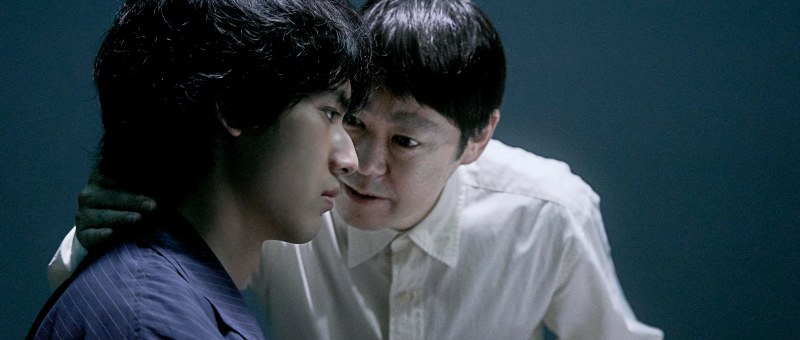
Parental disconnection and the legacy of abuse come under the microscope in a dark psychological thriller from Kazuya Shiraishi, Lesson in Murder (死刑にいたる病, Shikei ni Itaru Yamai). Adapted from the novel by Riu Kushiki, the film’s ironic Japanese title means something more like Sickness Unto Death Sentence and hints at an almost spiritual infection that spreads violence and cruelty as embodied by the moral vacuum at the film’s centre, a genial serial killer of stereotypically “good” kids chillingly played comic actor Sadao Abe. 

The psychodrama is played out, however, in the mind of young legal student Masaya (Kenshi Okada) who once frequented the popular bakery owned by Yamato (Sadao Abe) before he was exposed as the killer of 23 teens and one adult woman. On returning home for his grandmother’s funeral, Masaya is surprised to receive a letter from Yamato asking for his help. He admits killing the 23 teens (and perhaps more) but claims that he is not responsible for the death of the adult woman who after all does not fit his pattern. As he reveals, Yamato killed teens in their last year of high school and the grooming process which may have started even years before was central to his M.O. He delighted in winning their trust and then betraying it by torturing them to death in a smokehouse on the grounds of his isolated farmhouse. 

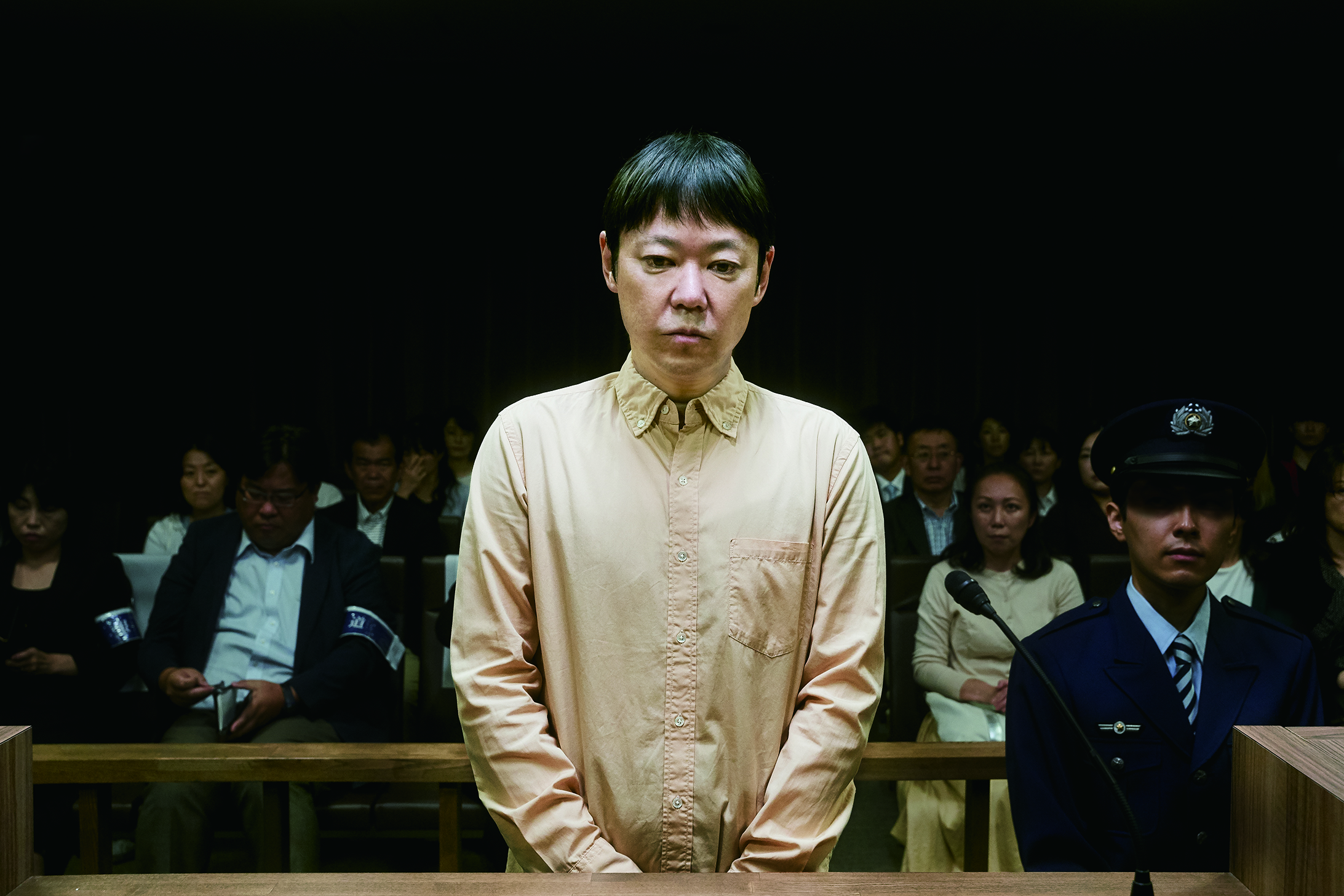
In court, Yamato explains that killing is simply “essential” to his being while insisting that he was caught because he became complacent rather than as a result of efficient policing. Yet he tells Masaya that it annoyed him that he never fell under suspicion, people always trusted him without question and he wanted to challenge that level of social complacency. In any case what’s clear is that he is and has always been a manipulative narcissist attributing those personality traits to his childhood abuse implying that they were a part of an abandoned child’s defence mechanism. He praised others to make them love and protect him, becoming drunk on the power he held over them. At first it seems as if his killings stem from resentment towards these “perfect” children who were well behaved and studied well in school but in fact the reason the children behaved in that way was often born of a desire for parental approval which made them vulnerable to Yamato’s grooming. “Repressed children have low self-esteem” he tells Masaya, an abused child himself, claiming that he wanted to help them grow in confidence through his persistent love bombing. 

Masaya is also on some level being groomed and may at times even be aware of it, but is so consumed with resentment towards his own father that he longs for a more sympathetic father figure and is even willing to accept to a serial killer as a potential paternal mentor. He becomes desperate to prove Yamato didn’t kill Kaoru (Ryo Sato), a 26-year-old office worker, almost forgetting that the killing of the 23 teens is not in dispute. His father resents him because the family run a prestigious school but Masaya was not academically gifted, bullying and beating both Masaya and his mother who is also an underconfident survivor of childhood neglect. She constantly asks for Masaya’s help making decisions, as do other survivors that he meets, while Yamato ironically tells him that the choice to investigate Kaoru’s death is entirely his own while wilfully manipulating him. Even so under his influence, Masaya’s own feelings of resentment towards the conservative society as mediated through middle-aged salarymen eventually bubble to the surface leading him on a dark path towards a potentially murderous destiny. 

Then again, as much as Yamato tries to take control of the narrative Kaoru’s death would still have been as a result of his actions no matter who it was who actually killed her. In another uncomfortabe irony what he’s doing while clearly grooming Masaya is in a sense as he claimed to be doing with his victims restoring his self-confidence in forcing him to face his dysfunctional family situation while proving that he is capable of solving this crime and perhaps in the end solving it a little better than intended. A killer final twist lends an additional layer of insanity to Yamato’s banal evil while Shiraishi’s cool direction at times superimposing the faces of the two men one over another in the glass that divides them at the prison with the faces of the victims projected behind may suggest that darkness hangs all around us and more to the point within. 


Lesson in Murder screens at Lincoln Center 21st July as part of this year’s New York Asian Film Festival.

International trailer (English subtitles)
Images: ©2022 ”Lesson in Murder” Film Partners