Fast & Feel Love (เร็วโหด..เหมือนโกรธเธอ, Nawapol Thamrongrattanarit, 2022) [Fantasia 2022]

A 30-something couple find themselves pulled in different directions by their conflicting desires in Nawapol Thamrongrattanarit’s post-modern comedy, Fast & Feel Love (เร็วโหด..เหมือนโกรธเธอ). As the title implies, the self-involved hero is eventually forced to accept that his success is founded on the support of those around him while belatedly stepping in to adulthood in undergoing a baptism of fire learning basic life skills along with the confidence to look after himself in a new world of grownup responsibilities. 

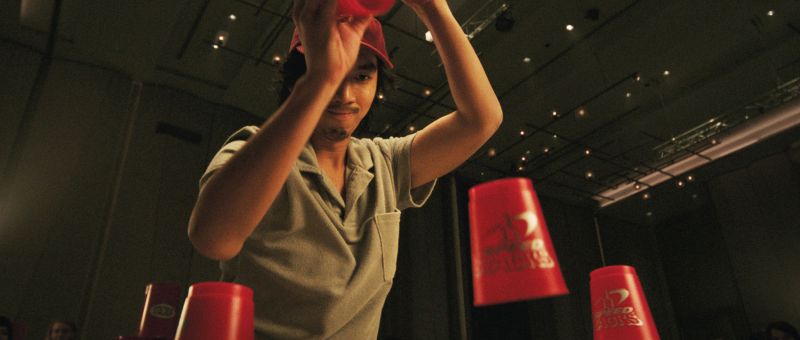
Jay (Urassaya Sperbund) and Kao (Nat Kitcharit) met as outsiders in high school, she excelling in English but not much else aside from her love of plants, and Kao obsessed with the art of sport stacking and dreaming of becoming a champion. 10 years later the pair are still a couple, kind of, living in a well-appointed home which they technically co-own though its clear Jay is shouldering the mortgage along with all the other domestic responsibilities. Kao is technically arrested in childhood, spending all of his time shut up in his room practicing sport stacking oblivious that others in his life have sacrificed themselves on his behalf. Jay used to think that it was all worth it as long as Kao achieved his sport stacking dreams but now she’s reached a crisis point realising that for everything she’s done for Kao she’s got very little back and if she waits much longer her own small dream of becoming a mother and having a conventional family life may pass her by. 

There is something of an irony in the fact that all of Kao’s major challengers are young children though as he points out sport stacking is an egalitarian sport in which things like age, gender, and nationality are irrelevant. Having successfully broken a record, Kao begins receiving creepy phone calls from a new rival, Edward, a little boy in Colombia who complains to his mother asking why people can’t go on stacking forever only for her to point out that adults have other things in their lives they have to attend to though Edward simply doesn’t understand. To begin with, Kao doesn’t either because he’s been lucky enough to be surrounded by people who supported his dream and went out of their way to make it easy for him by relieving him of basic tasks so that he could devote himself entirely to sport stacking. Because it had always been this way, it never really occurred to Kao that he needed to grow up and begin taking some responsibility for himself or at least acknowledge the sacrifices others were making on his behalf. 

When Jay eventually leaves him fearful that she’s wasted too much time and he’s never going to change, Kao is suddenly confronted by the frightening world of adulthood in which he must finally learn to look after himself while simultaneously accepting that it’s alright to ask for and receive help while helping others in return. What appealed to him about sport stacking was that it could be done alone, yet he failed to use the sport to block out everything else but was perpetually bothered by the intrusions of ordinary life his concentration ruined by the slightest noise. What he learns is that he cannot, and does not want to, win alone but only thanks to the support he receives from those around him while accepting that perhaps it’s time to move on from competitive sport stacking. 

Nawapol Thamrongrattanarit throws in plenty of meta references as Kao breaks the fourth wall or laments that he thought this was supposed to be an action movie but he’s hardly done any stacking at all and people might be disappointed. An extended running gag directly references Bong Joon-ho’s Parasite, while one of the kids Kao teaches at the sport stacking club talks like a gangster because she’s apparently watched too much John Wick. Even so, the relationship between Jay and Kao is drawn with a poignant naturalism rather than rom-com superficiality that allows Kao to accept that it’s time for them both to do what makes them happy even if that means they may not be able to stay together while little Edward seems to come to the same conclusion, ahead of the game in realising that a prize you don’t really want may not be worth winning. 


Fast & Feel Love screened as part of this year’s Fantasia International Film Festival.

International trailer (English subtitles)

Images: ©2022 GDH 559 Co., Ltd.

4 Kings (4 Kings อาชีวะ ยุค 90’s, Puttipong Nakthong, 2021)

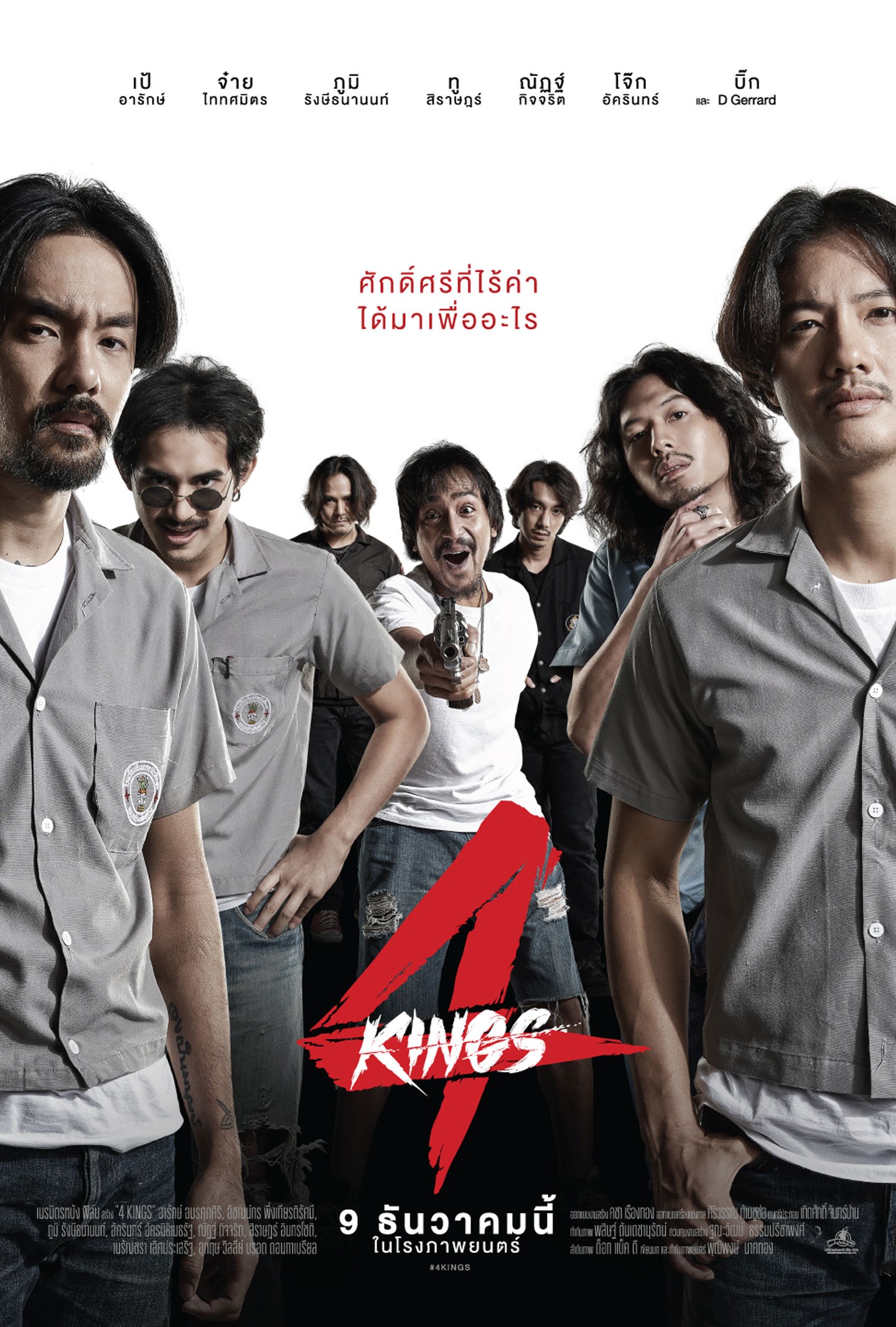
Marginalised young men turn to internecine gang violence in ‘90s Bangkok in Puttipong Nakthong’s edgy youth drama 4 Kings (4 Kings อาชีวะ ยุค 90’s). In essence a high school delinquency movie, 4 Kings finds little glory in pointless macho posturing but suggests that the older generation is no different, a parade of absent or authoritarian fathers no better than the sons they criticise attempting to preserve their patriarchal authority through threats of violence while roundly rejecting the right of these young men to try to make a life for themselves simply because of their social class and a stigma surrounding vocational schools. 

In a framing sequence set around 2010, the hero Billy (Itchnakorn Pheungkiatrasmee) has become an embittered middle-aged man with a drinking problem bringing up his teenage daughter Amm alone though she holds only contempt for him. When Amm is caught up in gang violence and injured while he is unable to protect her, it forces Billy to remember his own past as a high school delinquent especially when he recognises her teacher as former gang rival. Flashing back to 1995, Billy is one of four guys representing their school as a street gang engaging in pointless fights with rival institutions while experiencing problems at home with his authoritarian stepfather who has already written him off causing him to temporarily move in with best friend Da (Arak Amornsupasiri) and his warmhearted mother. Da meanwhile has problems of his own as his girlfriend Au whose father is a local policeman has become pregnant and though he wants to do the right thing and raise his child his prospective father-in-law does not approve. 

Though they treat the boys like stray dogs and openly insist that they have no future nor any right to one, the fathers behave no better expressing their patriarchal authority though macho posturing. Au’s father more or less describes Da as a thug no good for his daughter insisting that only he has the right to decide who she dates or marries but then punches him in the face and threatens him with his service gun. Billy’s dad meanwhile barks that “there’s no point being nice to him” telling Billy to go sleep in a dog’s cage, insisting that he needs “discipline” because he has his father’s “vile blood” again punching him in the face and telling him to get lost and never come back. The only expression of masculinity the boys have ever learned is exerting their dominance through violence so it’s little wonder that they seek the same kind of validation in fighting each other in the streets with only the solace of the solidarity they find among their friends and allies. 

After all, everyone is telling them they have no future anyway because they attend a technical high school and are already at the bottom of the social ladder with no real prospect of moving up. The boys don’t know why they’re fighting each other merely owning the uniforms they’ve been given. When Billy is sent to prison after his stepfather refuses bail and decides to press charges on the theft of his camera, he ends up becoming friends with two guys from other gangs now each on the same side wearing the white T-shirts of prison inmates while finding themselves lost within an entirely different gang hierarchy of which the guards are at the top. Meanwhile even on the outside there are other elements too such as randomer drug dealer Yad who has a beef with technical students in general but is otherwise outside of their struggle. The former prisoners might individually have decided to put their differences behind them but are still members of their respective gangs and it’s a minor irony that the climactic act of violence which changes each of their lives occurs only after they’ve graduated and are no longer members of their respective schools. 

Even so as the framing sequence makes clear, the legacies of these intergenerational conflicts continue to echo into the present with Billy “wallowing in the past” as he struggles to raise his daughter she wondering if he really loves her or only feels an obligation while he struggles to get over his delinquent past even after having made a good life for himself as a successful contractor. 4 Kings certainly does not glorify gang violence even if it may celebrate the brotherhood between the young men who are basically good at heart just hotheaded and immature making bad decisions and paying a heavy price for them, but may in a sense also glamourise the same kind of macho posturing the film otherwise critiques especially in its post-credits sting teasing the possibility of a sequel if ultimately undercutting it with its otherwise positive conclusion healing the generational divide through emotional honesty. 


4 Kings screened as part of Osaka Asian Film Festival 2022

Original trailer (no subtitles)