God Skin (หมัดเทวา ท้าเดิมพัน, Paween Purijitpanya, 2026) [Fantasia 2026]

In the closing moments of Paween Purijitpanya’s God Skin (หมัดเทวา ท้าเดิมพัน), protagonist Win (Sutthirak Subvijitra) remarks that the question isn’t if we can win the game, but if it was always rigged against us from the start. The house always wins, the film seems to say, though most people never even realise they were playing the game. Win comes to the realisation only too late, reflecting that he was suckered in by that first win that encouraged him to think that the system was fair when, in reality, it was anything but.

Set in the near future, Win is one of many regular office workers who’ve lost their jobs to AI. He now works as a food delivery driver, but struggles to meet his expenses while caring for his mother who has serious health issues. When he runs into old school friend It seemingly by chance, he’s introduced to an underground world of illicit prizefighting in which the wealthy and powerful bet on augmented matches in which they can award special items to fighters enhanced with all-powerful nanobots. Evicted from his apartment and with his mother hospitalised awaiting expensive medical treatment, Marwin decides it might be worth stepping into the ring despite his age and lack of familiarity with the game.

The fact is that in this world, Win’s physicality is almost irrelevant while his body is exploited as a tool for wealthy men to fight each other by proxy. Against the odds he manages to make it past the first round with the help of unlikely patron Guan Yu, an anime obsessive nicknamed “nerdass”, who takes a liking to him because of his bold, underdog spirit. Though he swore to do this only once to get the money for his mother’s operation, Win is emboldened by his unexpected success, and decides to continue playing despite knowing the potential health risks involved with upgrading his nanobots and exposing himself to physical punishment in the ring. 

In a way, this kernel of greed that exists within Win’s desire for success subtly undercuts the film’s sense of rebellion against the inherent unfairness of a capitalistic system especially once it becomes clear that some of what’s happening to him is a direct consequence of questionable choices he himself may have made. Then again, perhaps it’s fairer to say that he fell victim to an irresponsible product designed to prove addictive and exploit a sense of dissatisfaction with the system even if it seems his life may have been comfortable enough as it was without being tricked into always wanting more.

But in the world of underground prizefighting, he can convince himself he’s not fighting for himself but for others. After covering his mother’s medical expenses, he becomes determined to pay off the debts of his high school girlfriend Praewa who has apparently been sold to the bar as a hostess to satisfy her father’s debts. There are two female fighters, one a former hostess and the other a transwoman, who are also challenging this system in the ring though it seems fighting to protect his mother and girlfriend becomes a key factor in Win’s sense of himself as a masculine hero succeeding through physical dominance of other men in the gladiatorial ring. He is unwilling to fight women on an equal footing, and when he discovers that his opponent is only a teenager refuses to fight altogether while taking It to task over the game’s questionable ethics. 

Nevertheless, Win stays in this world because he still thinks he can win even as his body begins to betray him. It isn’t really about Praewa or his mother, he wanted to be a winner without realising that the only “winners” are the men upstairs and you can’t become one of those by playing the game honestly. It may have succeeded in becoming one, but only by accepting that being an elite means exploiting other people’s desperation to get them to fight for you while creaming most of the profits. That’s not even something that’s really occurred to Marwin, who is as the mad scientist nanobot tattooist says, not someone who’s naturally disposed to hurting other people which makes him a natural sucker for this game. Bleak and dystopian in the extreme, the conclusion seems to suggest that in the end, Win was a victim of his own deluded hopes who never realised the only way to win was not to play in the first place.


God Skin screened as part of this year’s Fantasia International Film Festival.

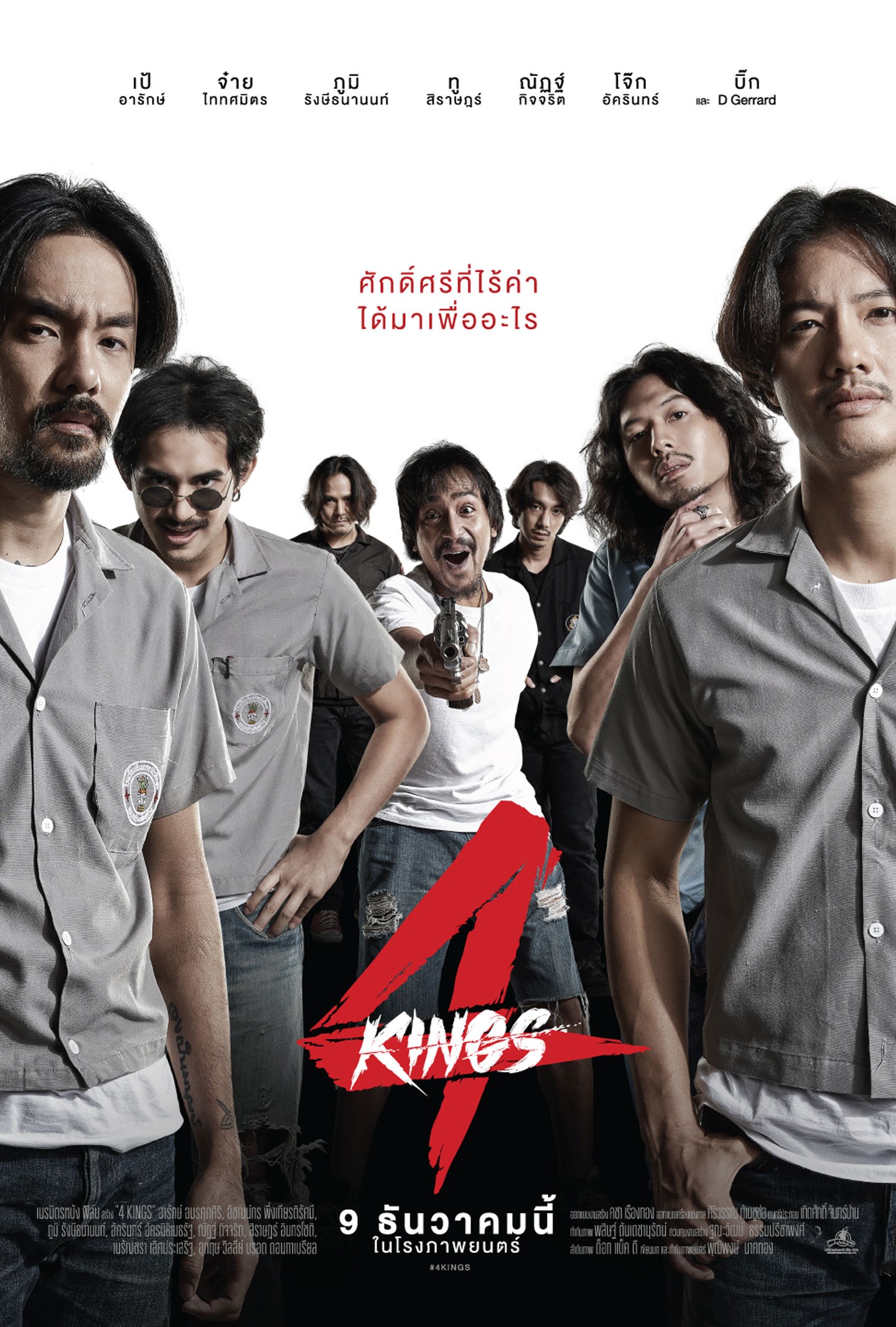
4 Kings (4 Kings อาชีวะ ยุค 90’s, Puttipong Nakthong, 2021)

Marginalised young men turn to internecine gang violence in ‘90s Bangkok in Puttipong Nakthong’s edgy youth drama 4 Kings (4 Kings อาชีวะ ยุค 90’s). In essence a high school delinquency movie, 4 Kings finds little glory in pointless macho posturing but suggests that the older generation is no different, a parade of absent or authoritarian fathers no better than the sons they criticise attempting to preserve their patriarchal authority through threats of violence while roundly rejecting the right of these young men to try to make a life for themselves simply because of their social class and a stigma surrounding vocational schools. 

In a framing sequence set around 2010, the hero Billy (Itchnakorn Pheungkiatrasmee) has become an embittered middle-aged man with a drinking problem bringing up his teenage daughter Amm alone though she holds only contempt for him. When Amm is caught up in gang violence and injured while he is unable to protect her, it forces Billy to remember his own past as a high school delinquent especially when he recognises her teacher as former gang rival. Flashing back to 1995, Billy is one of four guys representing their school as a street gang engaging in pointless fights with rival institutions while experiencing problems at home with his authoritarian stepfather who has already written him off causing him to temporarily move in with best friend Da (Arak Amornsupasiri) and his warmhearted mother. Da meanwhile has problems of his own as his girlfriend Au whose father is a local policeman has become pregnant and though he wants to do the right thing and raise his child his prospective father-in-law does not approve. 

Though they treat the boys like stray dogs and openly insist that they have no future nor any right to one, the fathers behave no better expressing their patriarchal authority though macho posturing. Au’s father more or less describes Da as a thug no good for his daughter insisting that only he has the right to decide who she dates or marries but then punches him in the face and threatens him with his service gun. Billy’s dad meanwhile barks that “there’s no point being nice to him” telling Billy to go sleep in a dog’s cage, insisting that he needs “discipline” because he has his father’s “vile blood” again punching him in the face and telling him to get lost and never come back. The only expression of masculinity the boys have ever learned is exerting their dominance through violence so it’s little wonder that they seek the same kind of validation in fighting each other in the streets with only the solace of the solidarity they find among their friends and allies. 

After all, everyone is telling them they have no future anyway because they attend a technical high school and are already at the bottom of the social ladder with no real prospect of moving up. The boys don’t know why they’re fighting each other merely owning the uniforms they’ve been given. When Billy is sent to prison after his stepfather refuses bail and decides to press charges on the theft of his camera, he ends up becoming friends with two guys from other gangs now each on the same side wearing the white T-shirts of prison inmates while finding themselves lost within an entirely different gang hierarchy of which the guards are at the top. Meanwhile even on the outside there are other elements too such as randomer drug dealer Yad who has a beef with technical students in general but is otherwise outside of their struggle. The former prisoners might individually have decided to put their differences behind them but are still members of their respective gangs and it’s a minor irony that the climactic act of violence which changes each of their lives occurs only after they’ve graduated and are no longer members of their respective schools. 

Even so as the framing sequence makes clear, the legacies of these intergenerational conflicts continue to echo into the present with Billy “wallowing in the past” as he struggles to raise his daughter she wondering if he really loves her or only feels an obligation while he struggles to get over his delinquent past even after having made a good life for himself as a successful contractor. 4 Kings certainly does not glorify gang violence even if it may celebrate the brotherhood between the young men who are basically good at heart just hotheaded and immature making bad decisions and paying a heavy price for them, but may in a sense also glamourise the same kind of macho posturing the film otherwise critiques especially in its post-credits sting teasing the possibility of a sequel if ultimately undercutting it with its otherwise positive conclusion healing the generational divide through emotional honesty. 


4 Kings screened as part of Osaka Asian Film Festival 2022

Original trailer (no subtitles)

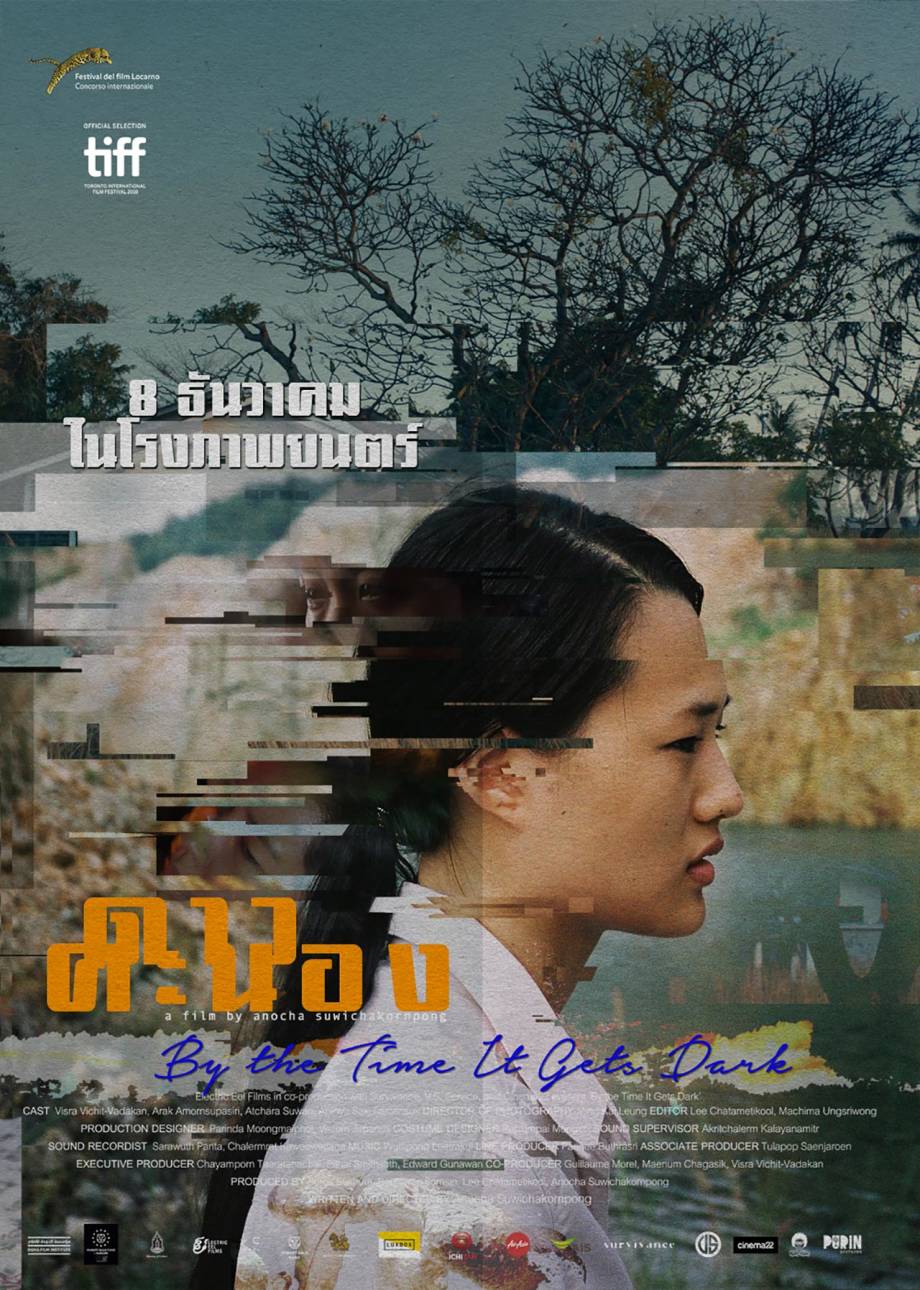
By the Time it Gets Dark (ดาวคะนอง, Anocha Suwichakornpong, 2016)

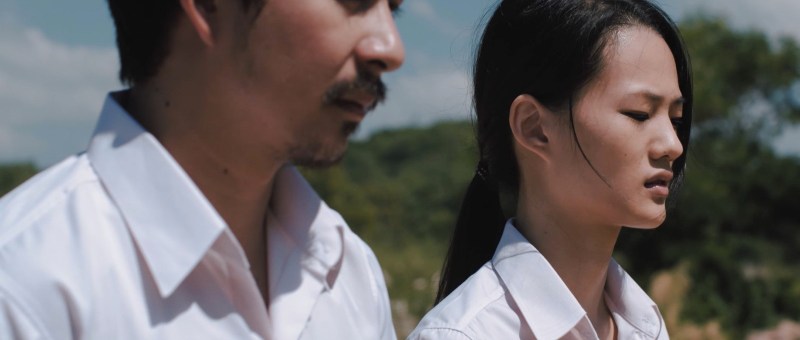
by the time it gets darkAnocha Suwichakornpong’s second feature, By the Time it Gets Dark (ดาวคะนอง.Dao Khanong), bills itself as an exploration of a traumatic moment from the recent past but quickly subverts this conceit for a wider meditation on the veracity of cinema. Beginning in a manner typical of indie-leaning Thai films, Anocha gently undercuts herself as her images prism into their separate “realities”, informing and commenting on each other but perhaps not fully interacting. The Thammasat University student massacre of 1976 is the dark genesis of this fracturing future, but it’s also in the process of becoming a collective legend, cementing a “historical truth” as cultural currency even whilst expunged from the history books, leaving its young lost in a black hole of memory from which they are powerless to emerge.

A young woman welcomes an older one to a remote country villa. The younger woman treats the older with respect, talks up the merits of the house and insists she take the larger upstairs room. The younger woman, Ann (Visra Vichit-Vadakan), is a 30-something filmmaker who has invited the older woman, Teaw (Rassami Paoluengtong) – a former student protest leader turned respected writer,  for a prolonged interview period she hopes to use as research for a film about the events of 1976. Ill equipped to cope with the weight of her grim investigation, Ann begins to slip into something like a nervous breakdown filled with strange visions culminating in a forest chase in which she follows the figure of a young girl in a bear suit, eventually falling into a grove next to a strange sparkly mushroom.

Anocha takes us on an odyssey through contemporary Thailand all the while holding 1976 in the back of the frame. From Ann we jump to Peter (Arak Amornsupasiri), whom we meet as a tabacco farmer only to realise he’s also a much lusted after singer/actor/model with a complicated love life and media set friends. Peter’s story seems unrelated but then it turns out he might be up for a part in Ann’s movie (written for him, in director speak at least as one of his less tactful friends points out), but more than that they’re connected by the shadowy figure of an invisible working class woman, Nong (Atchara Suwan), whom we first met serving coffee to Ann and Teaw at a rural bar but now switches between waitressing at a country club, bussing at riverboat diner, and cleaning toilets at a gym. Unseen as it is, it is her private revolution which ultimately forces a cinematic reset as the screen dissolves into dizzying disruption only to morph into the true beauty of Thailand’s untouched natural vistas.

Ann intends to film “a drama of sorts” about the events of 1976. An early scene exposes Anocha’s more subtle motive as Ann stages a reconstruction of an act of state brutality. Students lie on their bellies, stripped of their shirts and with hands tied behind backs while soldiers with guns bark at them to keep their faces on the floor. We think this is a flashback – an objective capture of objective truth, but we’re wrong, this is a scene from Ann’s movie and it takes a few liberties with the tale later told by Teaw in which she talks about seeing her fellow students in a similar situation on but a football pitch rather than an indoor hanger. Similarly, we get the first scene again half way through with slightly different lines as two entirely different actresses inhabit the roles of Ann and Teaw. The house is now more opulent, the women more conventionally beautiful and elegantly dressed. We film “the truth”, but we can’t help “colour correcting” it towards that which seems prettier than the way we really view things.

“The truth” is a similarly difficult concept to pin down. Ann is fascinated by the massacre but from her rather privileged, largely apolitical viewpoint she can’t quite understand it. She asks Teaw banal questions about her student life – boyfriends, her parents, the gradually unfolding horror of it all. In one particularly tone deaf moment, she marvels at Teaw as a piece of “living history” – a first hand witness to the (failed) revolution. No, Teaw tersely points out, she is merely “a survivor”. Tellingly, Teaw’s early monologues do not quite tally with her later ones, but asked on her current views towards her past self and her more engaged generation she simply replies that where they saw injustice, the young rose to oppose it. They wanted to make things right – unlike the young of today. Ann obsesses over a failed revolution yet regards herself as an empty vessel who “appropriates the lives of others” for her films. She pithily asks a local waitress where the beans come from for her coffee but doesn’t seem to know what to do with the impressive answer that they’re a locally sourced variety brokered by an American living nearby who speaks excellent Thai right down to mastery of the local dialect. Her concerns are surface ones whereas Teaw felt her concerns to be deeper and more important – her friends died for them, but then nothing in particular came of it.

The camera lies repeatedly, from the restaged footage to ever the apparent reframing of “reality” and our own inability to discern one from the other. Peter’s life is perfect, but then perhaps it’s not or at any rate, he’s subject to the same vagaries of fate as the rest of us. Nong, the working class woman may be one girl trapped in a casual employment nightmare or a symbol of the faceless masses who are largely ignored by the likes of Peter and his friends and even by the well meaning Ann, gazing out into a world which they can barely touch. Cinema is not a place for objective truths but for emotional ones – a ghost can be interrogated, its existence explained, but it cannot be exorcised, the film traps it in concentric mirrors, forever distorting its reflection.


Released in the UK by Day for Night

Original trailer (English subtitles)