All the Songs We Never Sang (Chris Rudz, 2023)

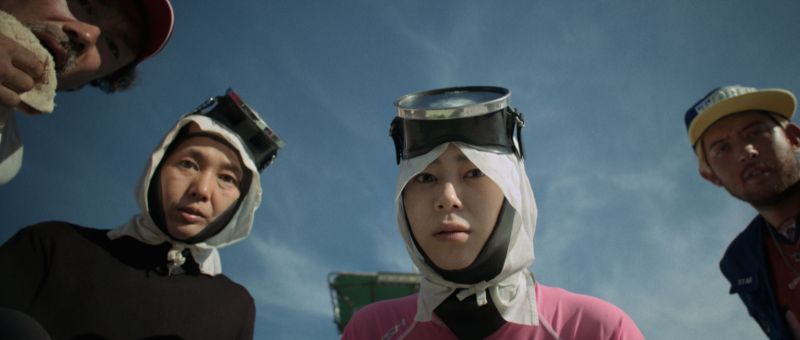
A young woman finds herself diving into the past after receiving a less than enthusiastic welcome on visiting her mother’s island home in Chris Rudz’s gentle indie drama, All the Songs We Never Sang. As the title implies, the film is as much about time wasted in bitterness as it is about the surreality of life on a small island where pearl diving is still a dominant force in the local economy.

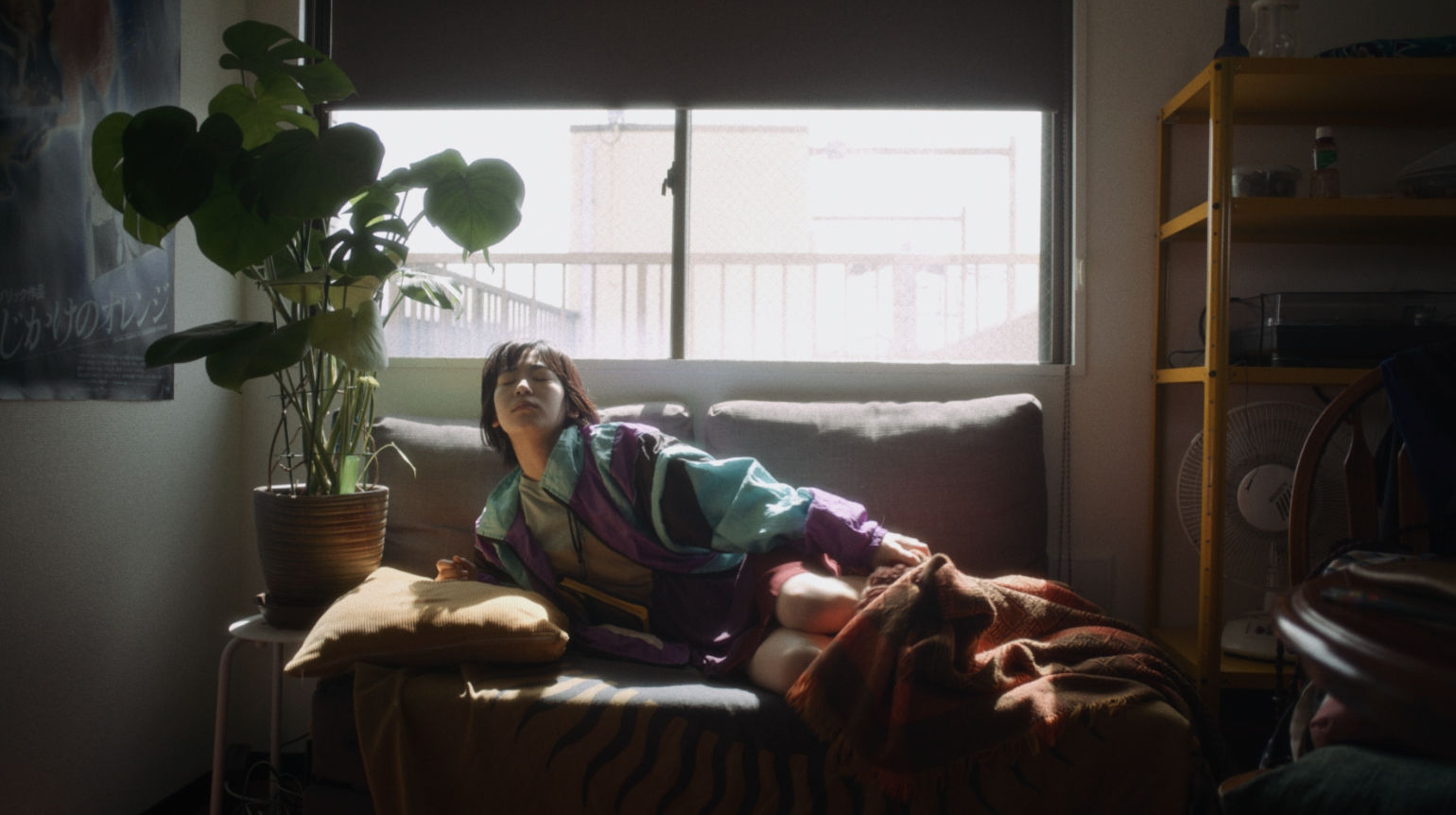
17-year-old Natsumi (Miru Nagase) has travelled to Kojima in search of her estranged aunt, Reiko (Junko Kano), her mother’s twin sister, only as it turns out Reiko is a strange and embittered woman who is only ever comfortable in the water. She grudgingly allows Natsumi to stay but only to avoid further island gossip and is unconvinced by her desire to become a pearl diver like her ancestors. As far as we can see, Reiko is one of a handful of divers left on the island and the other two are approaching old age. In fact, there don’t seem to be a lot of other young people around except for Shijo (Kai Hoshino Sandy), an eccentric boat operator and aspiring rapper with a nascent crush on Natsumi. Nevertheless, people on the island mainly remember her mother Akiko as the one who ran off with a fisherman and was never seen again.

Though the older pearl divers are kind to her, not everyone is happy to see an outsider visit and most especially rookie policewoman Yuka (Aoi Shono) who according to some has been given grandiose ideas thanks to going to university on the mainland. She is suspicious of everyone and hungry to uncover some kind of major crime, quickly coming up with an unlikely yakuza invasion as a possible explanation for a missing boat despite the fact that its owner is known to be fond of a drink or two and may simply have neglected to tie it up properly. A patient superior, Sarge (Pierre Taki), tries to explain the nature of small community policing to her that she should integrate more with the people of the island so she can tell when something’s not right and know best how to help. But her zeal for preventing crime eventually leads to accidental cruelty in bluntly divulging upsetting news, smugly proud of her successful bust without reflecting on its implications or the necessary hurt caused by an improper application of her authority as a police officer.

In a way it’s this kind of insensitivity that lies at the centre of the film as it becomes clear that Rieko has wasted the last 18 years of her life in bitterness unable to get over an act of emotional betrayal. She’s sworn off music, which she once loved, and often retreats to her bathroom to plunge herself into the water only really at peace when she’s diving. Looking for a treasure her mother supposedly left for her, Natsumi is diving too, reaching into the past while trying to figure out why her mother and Rieko became estranged and looking for a sense of home and family she feels she’s lost.

That might be the real treasure that her mother left for her even if she has to go diving for it and will need some help to bring it to the surface. In some ways a typical “island movie” about a slightly strange place more or less cut off from time, Rudz hints at a sense of despair in living somewhere there is not much else to do than drink and sing but otherwise captures the warmth of the community most of whom are very welcoming of eccentrics and outsiders even if somewhat prone to gossip for a lack of other entertainment. Through the process of their reconnection, old wounds begin to heal and a kind of peace is found with the past which is in many ways filled with “mermaid’s tears” more than pearls of joy. Still there’s a kind of lament for the songs unsung because of hurt and bitterness, and for the lost love and opportunities that went with them that has its own sense of poignancy tempered by the infinite possibilities of making up for lost time amid the gentle island atmosphere.


All the Songs We Never Sang screened as part of this year’s Osaka Asian Film Festival 

Original trailer (English subtitles)

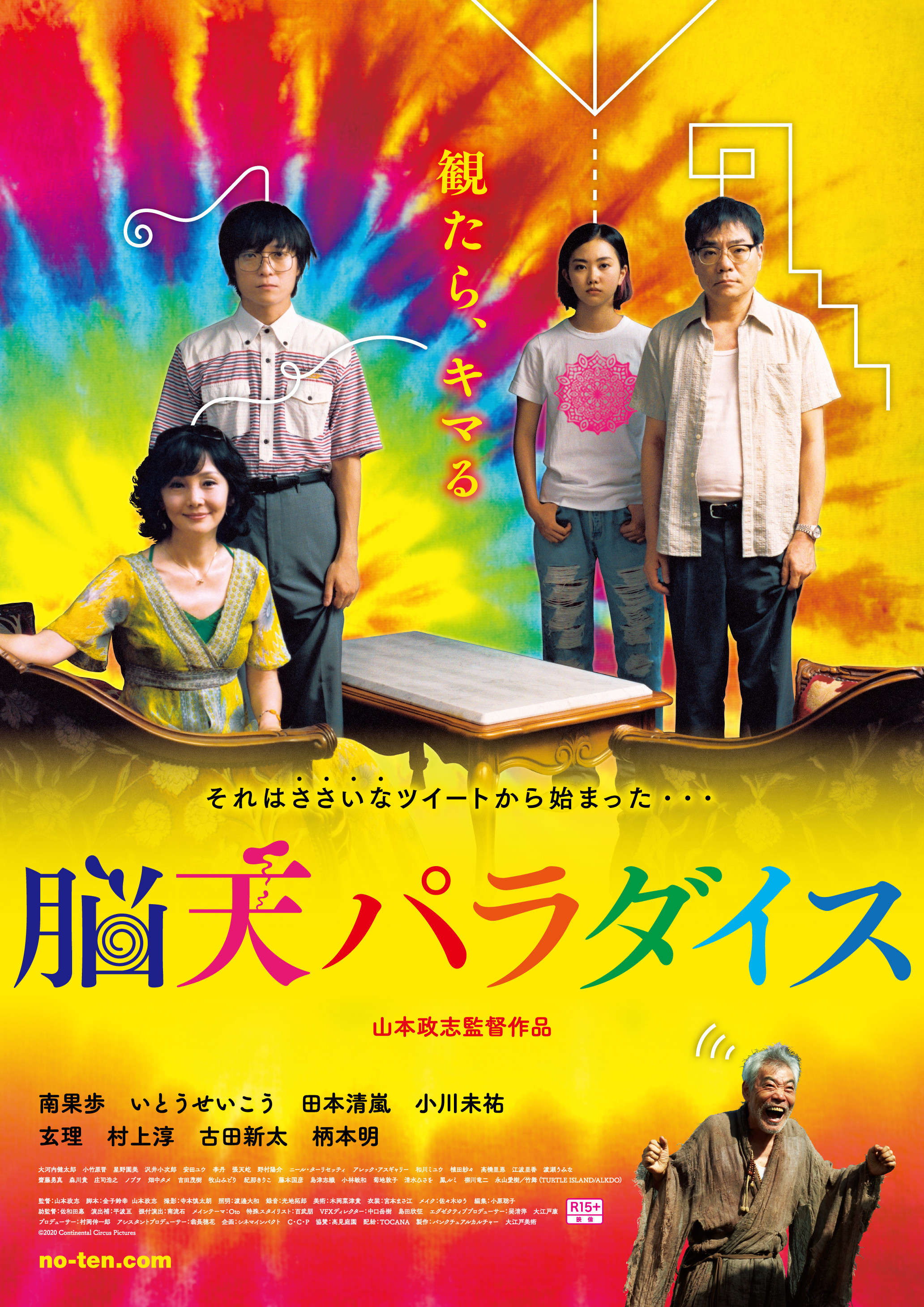
Wonderful Paradise (脳天パラダイス, Masashi Yamamoto, 2020)

A moribund Tokyo mansion becomes the scene for an orgy of life, death, love, and rebirth in Masashi Yamamoto’s surrealist party movie Wonderful Paradise (脳天パラダイス, Noten Paradise). Sometimes you have to learn to say goodbye and move on, other times you have to learn to forgive and let go of past resentment. Of course, sometimes you have to do both of those things at the same time, which is perhaps appropriate for the former home of the Sasayas which seems to exist between the realms of life and death, a perpetual Bon festival where departed spirits and lost souls congregate for one almighty party. 

Dad Shuji (Seiko Ito) has had a run of bad luck and unfortunately lost the family home he inherited from his parents meaning he and his two adult children, son Yuta (Soran Tamoto) and daughter Akane (Mayu Ozawa), are having to move on though who knows where to. Resentful that she’s having her life uprooted by her father’s fecklessness, Akane takes to social media and Tweets that there’s a party at hers and everyone’s invited as kind of goodbye to the house. Meanwhile, a series of strange events occur from a weird old monk (Akira Emoto) who keeps trying to pray to the various neoclassical statues on the property going nuts at a belligerent removal man and then apparently dropping dead, to the resurfacing of mother Akiko (Kaho Minami) who apparently left the family some years previously for a man who ran a coffee shop but has since passed away. 

The first people to arrive for the party are a gay couple looking for somewhere to celebrate their marriage, a minor irony in that the event will later descend into an elaborate funeral for two people who may or may not be dead. As more and more guests arrive, along with a series of opportunistic commercial food stands and other businesses, the party begins to get out of hand becoming ever stranger as the night wears on. 

At the heart of it all are the tensions in the family, an unresolved resentment directed at son Yuta who is, according to his brash aunt Yuka (Sonomi Hoshino), overly preoccupied with his family circumstances to the extent that it prevents him from getting a regular job and moving on with his life. Shuji has quite clearly failed both as a son and as a father, eventually betting one of his dad’s precious antiques in a card game run by yakuza loansharks setting up shop in the house. Akane appears exasperated, but is also harbouring an intense resentment towards Akiko for her abandonment that prevents her being able to “move on” from her former family home. 

Moving on is also a problem for a few of the ghosts, the line between the living and the dead becoming increasingly blurred. One random surreal moment to the next, Yamamoto careers between absurdist episodes culminating in a fight between a murderous sentient coffee bean and a statue come to life. What began as a lowkey wedding eventually becomes a bizarre funeral enacted through the medium of Bollywood song and dance transitioning into a traditional enka festival number all of which happens before a couple of hapless crooks who’ve been operating a drug factory on the family’s property for the last two years without them ever knowing turn up with their “super mandala drug of paradise” to send the evening in a psychedelic direction. 

Yet for all the surreality of death, violence, sex, and rebirth when dawn arrives it brings with it a kind of calm brokering a new peace between friends and family members as they learn to accept each other and the past in an unburdened sense of openness. Possibly deceased monks, talking cats, kids who can’t figure out how to stop swinging and mysteriously turn themselves into sticks or dissolve in bath water, scorned lovers, unrepentant thieves, ghosts and family secrets descend on this weird gothic mansion in the middle of a city, creating a “wonderful paradise” for one night only filled with surrealist magic and unforgettable strangeness that nevertheless pushes the family back together through dream logic and a taste of the absurd. A weird, sometimes incomprehensible, journey into an etherial, psychedelic twilight psychodrama rave, Yamamoto’s charmingly bizarre nighttime odyssey is a law unto itself but one filled with wonder for the uncanniness of the everyday. 


Wonderful Paradise streamed as part of this year’s Nippon Connection.

Original trailer (English subtitles)