Back To That Day (幕が下りたら会いましょう, Seira Maeda, 2021)

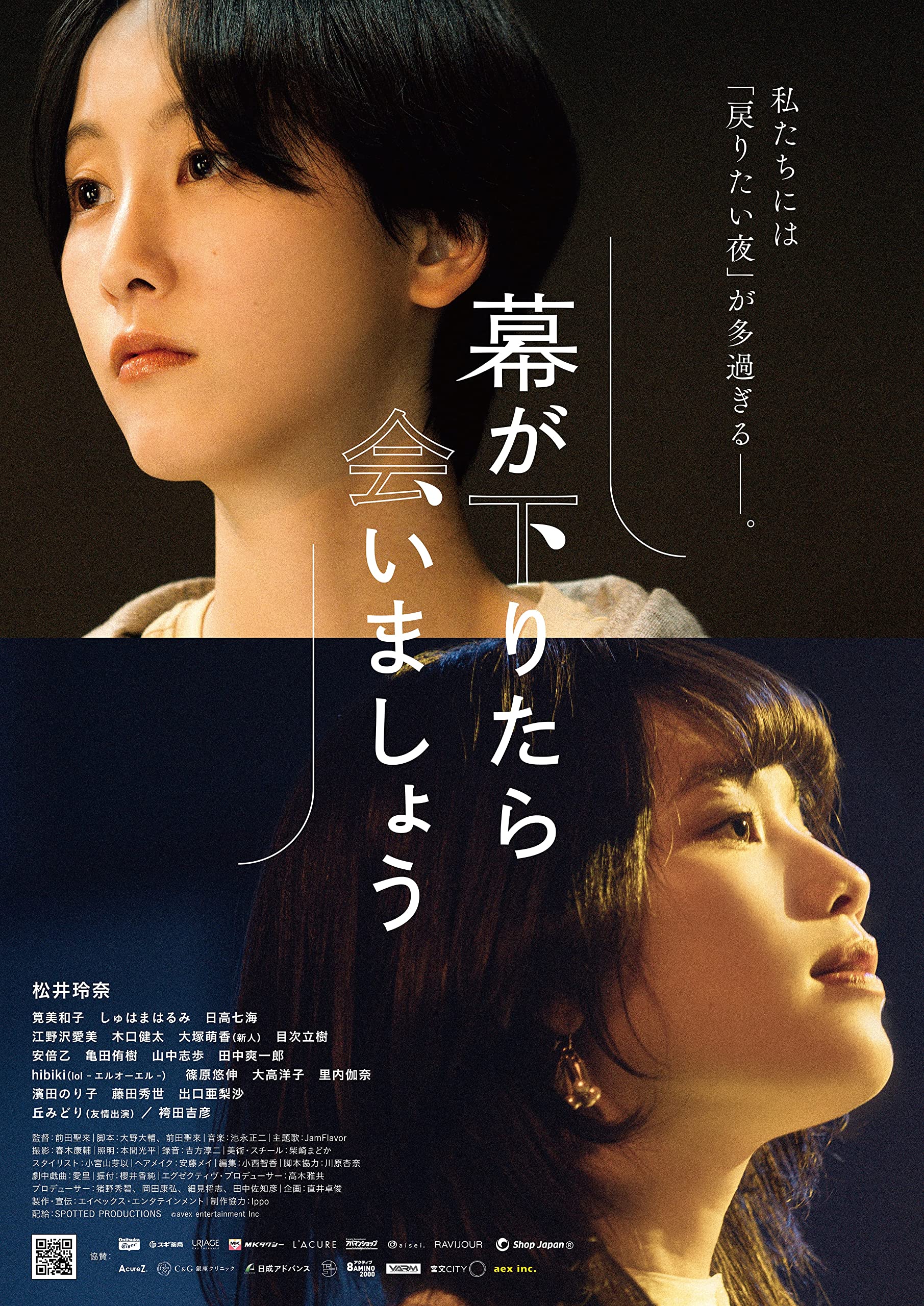
A young woman facing a life crisis is forced to reevaluate her relationships with art, friends, and family after learning that her estranged younger sister has suddenly passed away in Seira Maeda’s indie drama, Back to that Day (幕が下りたら会いましょう, Maku ga Oritara Aimasho). Facing a patriarchal society, the young women at the film’s centre wonder if it’s better to chase your dreams even if they won’t come true or contend with the unfair demands of contemporary salaryman culture in the hope of achieving conventional success and a comfortable life. 

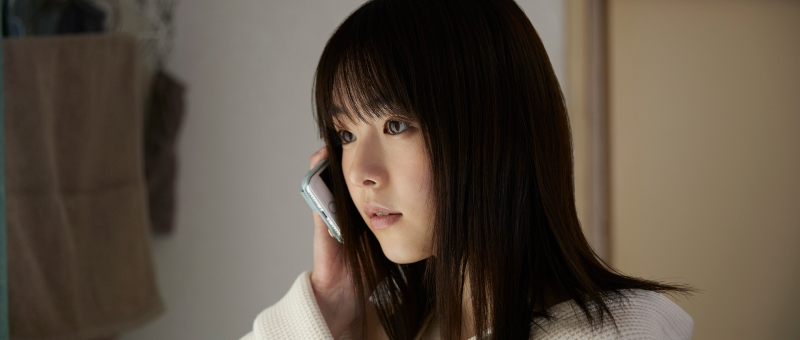
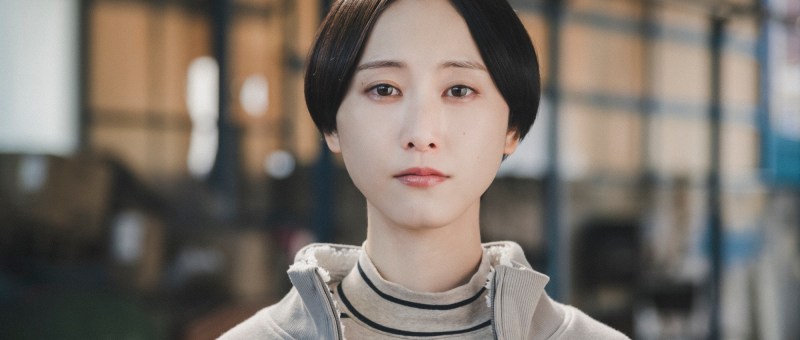
At around thirty, Manami (Rena Matsui) is beginning to lose patience with herself feeling that she’s achieved little in her career as a theatre director in the last 10 years while continuing to work part time at her mother’s hair salon. Her younger sister, Nao (Miwako Kakei), left abruptly for the city some time previously and the pair have hardly spoken since partly as we discover because of a high school falling out that continues to play on Masami’s mind in undermining her sense of confidence in her art. 

The two women have in many ways chosen different paths, Nao striking out by heading to the city and getting a regular office job and Manami staying at home trying to make it work in theatre but finding herself treading water. On the night that Nao dies, the sisters mirror each other each black out drunk collapsed in the street but only one of them is alone which in the end perhaps makes all the difference. Out to dinner with members of her theatre troupe celebrating an engagement, Manami has far too much to drink, much more than than anyone else or than is really appropriate becoming embarrassing in her belligerence as she lays into even her closest friends while others wonder why they bother with the troupe at all now that most of them are ageing out of their carefree days, have full-time paying jobs and growing familial responsibilities to take of. 

Nao, meanwhile as we discover, was pressured into drinking more than was wise by her boss at a semi-compulsory work do, an all too common form of power play in the contemporary working culture. Carrying her own share of guilt, Manami is alerted to this hidden source of her sister’s suffering by one of Nao’s colleagues, Mihashi (Manami Enosawa), who alone attended the funeral. Facing the same continued harassment, Mihashi is determined to confront her boss with the help of Niiyama (Kenta Kiguchi), an activist working on behalf of employees experiencing workplace bullying, but is later blamed herself with the implication that Nao drank on her behalf while she perhaps should have stayed to make sure she was alright before leaving for the last train. Her colleagues insist that Nao seemed cheerful and engaged with the party, while Manami and her actress friend Sanae (Nanami Hidaka) wonder if she wasn’t just playing the part, that in feeling disconnected from her family she wanted to feel accepted by those around her. 

In an unexpected turn of events, however, Manami decides to not to take Nao’s employer to task or attempt to change a dangerous and outdated workplace culture but to try and make peace with difficult relationship they had through restaging the high school play that set them apart which as it turns out was actually written by Nao but for which Manami had taken credit. Along the way she’s led towards a more commercial path by the duplicitous Niiyama who turns out to be a bit of a sleaze and not much better than those he claimed to be challenging. What she discovers is that restaging Nao’s play may not be the best way to honour her, gradually working through her grief and guilt by writing an original piece inspired by their relationship while reconsidering herself and her life up to that point. Of course, in one sense, she reduces Nao to a plot device in the mere motivation for her own creative rejuvenation while partially letting herself off the hook in discovering a family secret that explains a lot about her difficult relationship with her mother but does at least allow her come to terms with her sister’s death in letting her burn out bright just as in the alternate ending she’d crafted for Anna Karenina as a woman driven to extremes by the strictures of her society. 


Original trailer (no subtitles)
Baby Assassins 2 Babies (ベイビーわるきゅーれ2ベイビー, Yugo Sakamoto, 2023)

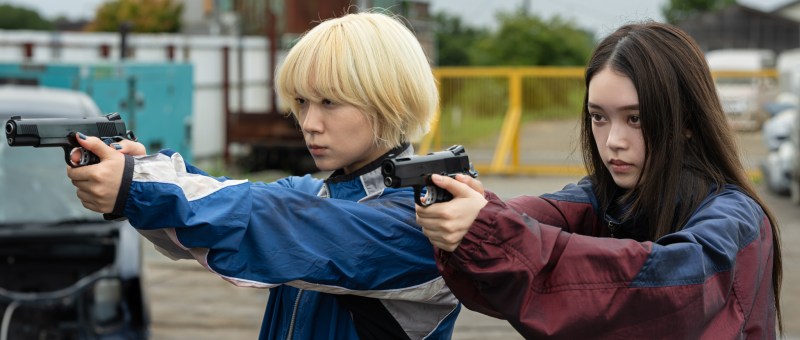
Chisato (Akari Takaishi) and Mahiro (Saori Izawa) continue to struggle with everyday life in Yugo Sakamoto’s sequel to the hugely popular slacker comedy action fest, Baby Assassins, Baby Assassins 2 Babies (ベイビーわるきゅーれ2ベイビー, Baby Valkyrie 2 Baby). A deadpan satire on institutional bureaucracy in the underground hitman society, the film sees the girls targeted by a pair of rivals that in any other film may be the heroes of the story only this time around they’re hapless challengers whose attempt game the system only results in more chaos and misery. 

Beginning to get their act together, the girls are still it seems completely hopeless at managing their money and are suddenly faced not only with a hugely expensive bill for a gym membership they took out five years previously and forgot to cancel, but also reminded that they were upgraded from the “Jolly” insurance scheme to the “Merry” insurance scheme when they graduated high school so their payment information has expired and needs updating. It’s this extreme set of circumstances that lead to them being in a bank at the moment it is robbed by a pair of fugitive thieves. The terms of their assassins contract forbid them from using their skills outside of the job, but they can’t afford to wait any longer and decide to tackle the robbers so they can send their transfer through before the deadline but end up getting suspended for their pains. While suspended they’re forbidden from killing anyone and get no salary so they’re back where they started looking for part-time jobs to help make ends meet. 

Their predicament is mirrored by antagonists Yuri (Joey Iwanaga) and Makoto (Tatsuomi Hamada) who as the film opens end up killing completely the wrong gangsters because of a logistical mixup. The problem is that Yuri and Makoto are subcontractors not yet admitted to the Assassins Guild which means they don’t get access to the best jobs and have no workplace protections. Essentially what they want is to join the union, but they aren’t qualified so their boss, Akagi (Junpei Hashino), comes up with the neat idea of knocking off Chisato and Mahiro to free up their spots in the Guild. 

Sakamoto has great fun satirising Assassin’s Guild bureaucracy as the girls are constantly forced to reference their contract through Mr Susano (Tsubasa Tobinaga) and his little blue book to figure out what is and isn’t allowed in their lives as top hit women. Meanwhile, they’re once again forced to try and live “normally” and find they aren’t very good it at it while having to take quite literally odd jobs as shopping arcade mascots managed by a weird old man (Tetsu Watanabe) obsessed with Masaki Suda and the film We Made a Beautiful Bouquet which becomes something of a running gag. Both Chisato and Mahiro and Yuki and Makoto reflect on the strange cafe hierarchy of being offered a selection of tiered menu sets at escalating prices all the way from basic chicken to barbecued meats as reflective of a wealth-based social system while the boys continue to vacillate over asking out the pretty waitress. 

It’s kill or be killed but the girls know on some level that the guys are just like them and even quite good hitmen for “amateurs” so it’s a shame they have to die for having attacked and nearly killed one of their friends. After sorting out who’s won through a high octane series of shootouts and one on one fights, the four sit down on the ground and share snacks while waiting for the inevitable like they’d just been having a violent picnic while hanging out in a disused warehouse. Even the losers seem to accept their fates, acknowledging that they’ve lost in a fair fight and making no further attempt to resist. 

In any case, adulting is hard even when you’re not a top assassin struggling with when it’s appropriate to put your training to use. As the girls point out, it’s hard to get by on part time work when it would take a hundred days dressed in a humiliating panda outfit to earn what they’d get for one kill while freelancing is strictly forbidden along with strike action and taking one’s grievances to Twitter. Turns out the assassin life is more complicated that you’d think and just as filled with annoying bureaucracy as any salaryman job. Thankfully the friendship between Chisato and Mahiro has only grown stronger as they face off against the twin threats of red tape and adulting in their lives as “contract” killers.


Baby Assassins 2 Babies screens in Frankfurt 10/11th June as part of this year’s Nippon Connection.

Original trailer (English subtitles)

Images: ©2023 “BABY ASSASSINS 2” Film Partners

When Morning Comes, I Feel Empty (朝がくるとむなしくなる, Yuho Ishibashi, 2022)

A young woman finds herself dealing with feelings of inadequacy and worthlessness after giving up on the corporate life in Yuho Ishibashi’s zeitgeisty indie drama When Morning Comes, I Feel Empty (朝がくるとむなしくなる, Asa ga Kuru to Munashiku Naru). Set against the backdrop of a society in which death from overwork is not uncommon and there have been countless reports of young people taking their own lives because of workplace exploitation, the film seems to ask if there isn’t another choice and if one can really be forgiven for rejecting the conventional path in an intensely conformist society. 

Nozomi (Erika Karata) quit her job at an ad agency six months previously and is currently working part-time in a convenience store not far from where she lives. So ashamed is she of her failure to live up to the demands of corporate life that she can’t bring herself to tell her parents that she no longer works in an office. Her co-workers at the store seem to know, but when they ask questions she tells them that she quit because of too much overtime which is ironic as her boss is forever asking her to work an additional late shift because of poor staffing levels and she always meekly agrees though never seems all too happy about it despite the extra money. 

Then again, she doesn’t seem too happy about anything. In a repeated motif, her mother sends her fresh vegetables from back home but she never has the energy to cook for herself and is usually seen eating bento from the store or slurping cup ramen. The fact her life is out of kilter is brought home to her when one side of the curtain rail in her room suddenly collapses in a bid for freedom from its imprisonment on the wall. Barely speaking and aloof from her colleagues, she seems to carry a deep-seated sense of shame that she “failed” to settle in to company life, later telling an old friend she’s unexpectedly reconnected with that she couldn’t cope with the intense overtime that often meant she’d miss the last train and have to overnight in a manga cafe or fork out for a taxi. Her boss always yelled at her, but she felt like everyone else seemed to be managing so the fault must be with her. She regards her decision to leave as a defeat and not a victory even as she recounts feelings of despair and hopelessness crossing the bridge every day to work with only a sense of emptiness in the hollowness of the salaryman dream. 

But then the film takes it title from a reflection something her younger colleague said about earnestly feeling that it was wonderful just to get up every day and come to work. Ayano doesn’t mean it as some kind of cultish devotion to the combini life or a toxic commitment to an unreasonable worth ethic, but more that she manages to find joy in the seemingly mundane even as she jokes about her nerdy college boyfriend who wears glasses, and sheepishly reveals that she’s been saving money with the intention of studying abroad. Nozomi’s only in her mid-20s, but perhaps it is a little different for these contemporary college kids who have bigger dreams and don’t feel the need to throw themselves into the corporate straightjacket just so they can feel like legitimate “members of society”. Their relative youth and sense of possibility may fuel Nozomi’s sense of failure, that she’s back doing a college kid’s part-time job at 24 and surrounded by students as if accidentally arrested in adolescence, but perhaps also shows her that there are other options and making a different choice doesn’t necessarily equate to failure. 

More than anything, it’s an accidentally encounter with a former middle school classmate (Haruka Imo) that finally allows her to make peace with herself and feel like a human being again, someone worthy of love and respect and with new hope for the future. Evoking a sense of disillusionment with the salaryman dream and the emptiness of corporate success that is devoid of human connection, Ishibashi shoots with a laidback ease that on one level reflects the heroine’s malaise but soon gives way to a comforting breeziness as Nozomi discovers a new home for herself in the wholesome pleasures of friendship and mutual acceptance as a bulwark against the vagaries of a capitalistic society. 


When Morning Comes, I Feel Empty screened as part of this year’s Osaka Asian Film Festival.

Images: (C)Ippo