Life is theatre in Banmei Takahashi’s A New Love in Tokyo (愛の新世界, Ai no Shinsekai). Strangely marketed in some quarters as a kind of sequel to Ryu Murakami’s Tokyo Decadence though it is entirely unconnected to it, Banmei Takahashi’s after hours drama is a breezy riot that runs in direct contrast to other post-Bubble era movies which saw only despair and disillusionment in economic stagnation. For Rei (Sawa Suzuki) and Ayumi (Reiko Kataoka), however, life is one long party that they live on their own terms hoping to ride the wave all the way to the sea.
That said, it’s true that Rei, at least, is doing her dominatrix job because it’s impossible to support oneself as an artist in this economy. She is, in fact, basically subsidising her whole theatre troupe through sex work as a means of keeping it going. Her relationship to the men in the group is almost like Snow White and the Seven Dwarves while, for unexplained reasons, she sleeps with each of her dopey castmates on a rota system. It’s not until crunch time that they realise they should probably get jobs too, while the only other woman in the group (Yoko Nakajima) takes a job as a receptionist answering the phone at the call girl agency where Ayumi works.
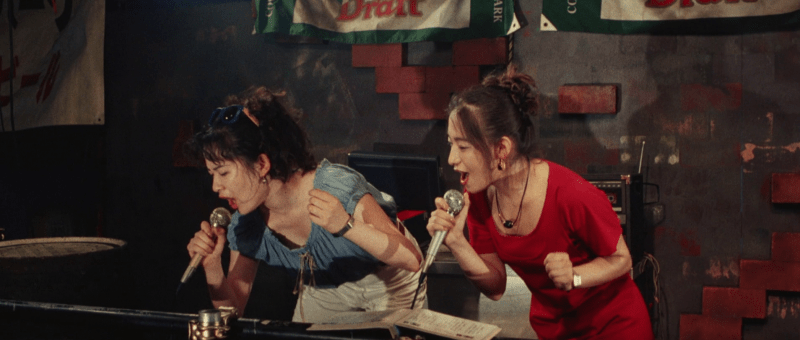
Rei often runs into Ayumi leaving hotels and the pair soon become fast friends, though unlike Rei, Ayumi is a regular sex worker who sleeps with her clients. Nevertheless, Rei seems to like her precisely because, as she puts it, she’s a good liar, which is perhaps what you need to be to be successful at this business. She manipulates her clients by pretending to be a shy virgin so they pay her more for basic services, while lying to her boyfriend that she’s an office lady. The fact he takes it at face value suggests he might not be all that bright, which is why he’s struggling to finish his exams to become a doctor. Later, she’s thrown him over for a lad training to be a lawyer but just with as much success. Both the men she ends up with seem to be feckless and dim, though she fluffs their egos by pretending to be stupid. She says that her end goal is to become the wife of a professional lawyer or doctor, which is to say she’s looking for class status and respectability, though she’s probably earning more than they are by herself already. Ayumi has a host of savings pots and sometimes transfers large sums of money into one telling her boyfriend it’s from her father to help pay for a wedding.
Which is to say, everyone here is playing a kind of role. Both Rei and Ayumi seem to be using their real names for their work, but as Rei says the dominatrix gig is good for her acting career in allowing her to take on multiple personas. She too writes frequent letters home to her mother which bear little relation to reality in which she claims to be a therapist’s receptionist. But the clients are acting too, because this is, after all, all about role play. One of Rei’s most devoted customers is a yakuza who bosses his men around all day then comes to her to be punished. He is scrupulously polite and really rather sweet, buying up all the tickets to Rei’s play to make sure she’s not embarrassed on the opening night. Generally speaking, the streams shouldn’t cross between Rei the actress and Rei the dominatrix, so the yakuza is crossing a line by intruding on her personal life at the play, though he does so in an otherwise respectful way, apologising for his presence and making it clear that he doesn’t mean to expose her to those who might not know nor does he intend to encroach any further on her personal life.
Another of the women’s clients seems to be a fed up salaryman ranting about his boss and company lay-offs, hinting at the stressfulness of the economic situation for those working outside of the sex industry as well as the emasculating nature of corporate life in which the salaryman can only vent his frustrations through BDSM role-play rather than by actually taking it up with his boss. Rei and Ayumi are, by contrast, free from any such concerns. That is not to say, however, that their lives are easy or without danger. When a sex worker is found dead in a love hotel bathroom, a gloom falls over the industry. Rei asks Ayumi if she’s feeling alright, but as it turns out her agency has spotted a business opportunity seeing as most of the others will have decided to close for the sake for safety and as a gesture of respect. Ayumi too is threatened by a customer with a knife and is only saved by the arrival of a yakuza, in an unexpected cameo from ice cool V-Cinema star Show Aikawa, who intimidates the customer into backing off by eating his own sunglasses. Nevertheless, Ayumi goes straight back to work to meet the next customer, unwilling to let herself be cowed by male violence.
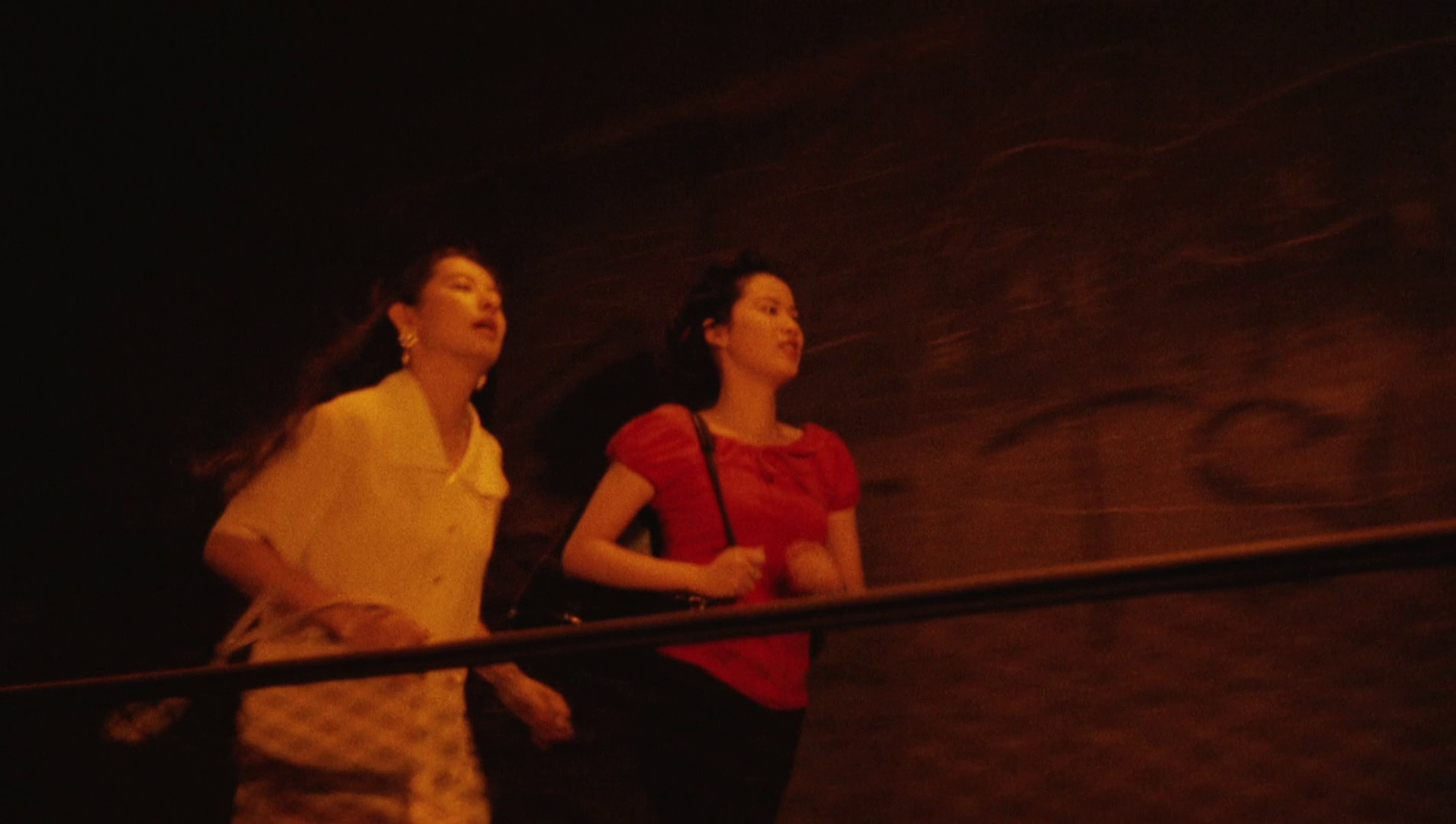
That’s something she has in common with Rei who similarly treats the attempts of men to ruin her night with similar disdain. When one customer proves rebellious, she keeps him waiting for hours while tied up and bound in the dark. She and Ayumi try turning the tables by visiting a host club, but are instantly put off by their poor quality patter. They go on a kind of date with two guys who tried to pick them up, but dump them when they’ve had enough. Rei, in particular, has several boyfriends who think they have some sort of claim on her body and her time, but she only ever does as she pleases. There’s something unexpectedly joyful about the two women running hand in hand through the midnight city, as if this were only ever their playground. The juxtaposition of the erotic photographs taken of actress Sawa Suzuki by Nobuyoshi Araki and those of her childhood hint at this quality of playfulness, as if her life were one of fun games in which she’s never quite grown up. They also remind us, however, of her ordinariness. She had a childhood too, and is, in fact, just like everyone else. Her job is just a job, no different from those of the guys at her theatre troupe who work in restaurants and video stores. She and Ayumi even exchange business cards. This festival might be over now, but that only means it’s time to start preparing for the next in the company of her friends as she and Ayumi enjoy their lives in the permanent dawn of a city that seems to exist only for them.
Trailer (English subtitles)