The Beast (비스트, Lee Jung-ho, 2019)

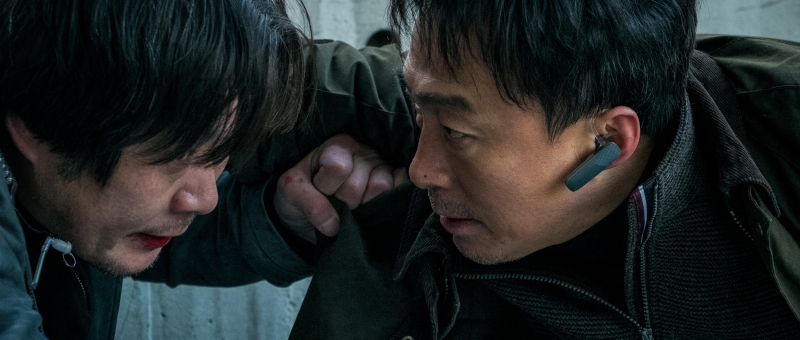
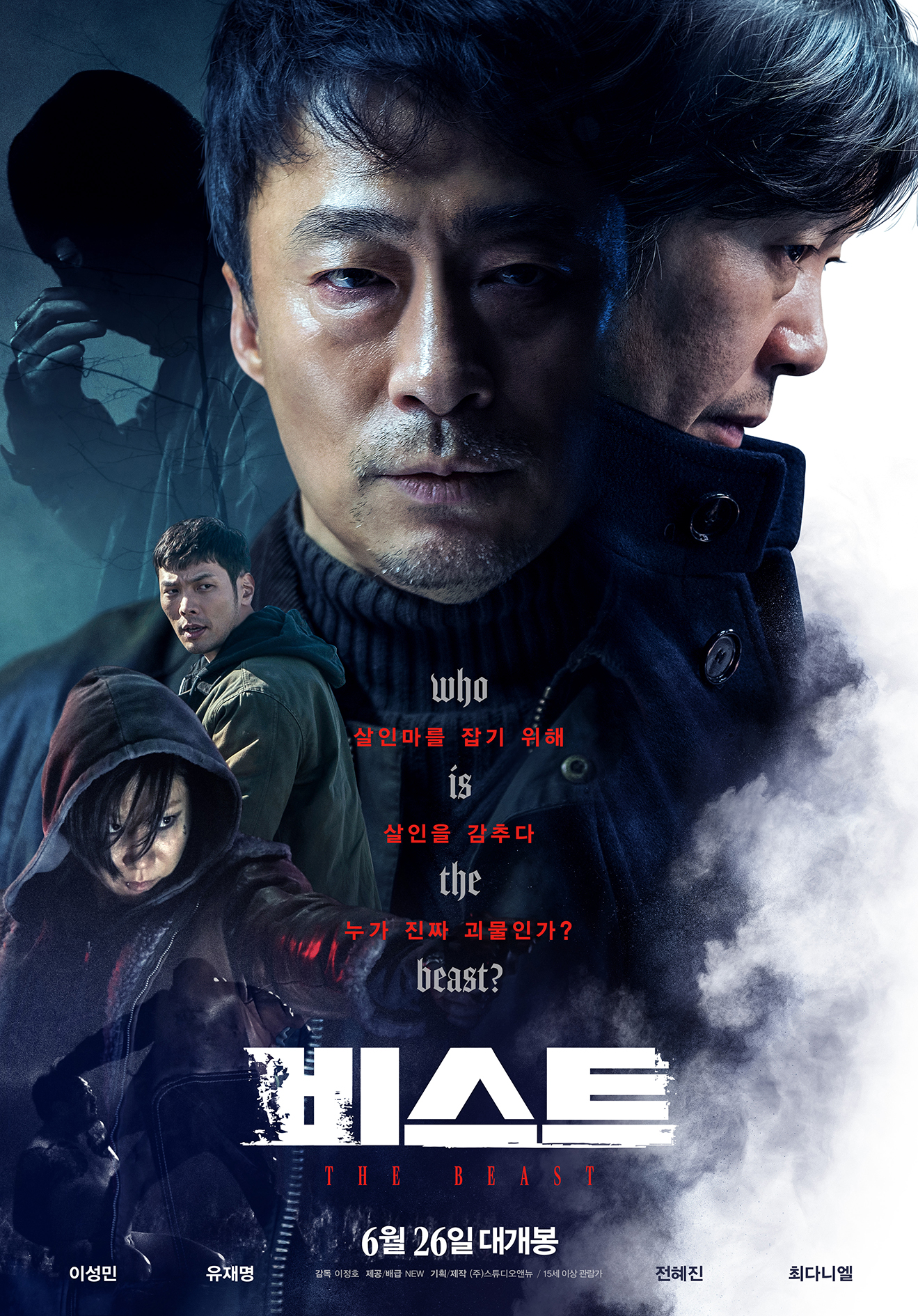
Internal police politics frustrate the hunt for a potential serial killer in Lee Jung-ho’s dark social thriller, The Beast (비스트) inspired by Oliver Marchal’s 36 Quai des Orfèvres. As a pathologist suggests, we all may have a hidden beast and it’s certainly true of the film’s conflicted protagonist, thuggish policeman Inspector Jung (Lee Sung-Min) who finds himself dragged ever deeper into a mire of corruption as a natural result of a series of bad decisions that started long ago, while his rival, Captain Han (Yoo Jae-Myung), presents the facade of efficient modern policing but inevitably turns out to be little better. 

As the film opens, Jung and his subordinate Yang are each wearing balaclavas while driving a heavily tattooed man out into the middle of nowhere though only for the purposes of frightening him so that he’ll back off their informant, local bar owner Madame Oh (Kim Ho-jung). Jung’s inner conflict is palpable as stares at his bloodied, shaking hands asking himself how it is it’s come to this while Yang later reminds him not to become too attached to his sources because once they’ve exceeded their usefulness they’ll simply be arrested. While all of this is going on, the police force is under immense pressure and receiving a lot of negative press over their handling of the case of a missing teenage girl, Mi-jin. Unfortunately, the girl later turns up dead with the murder enquiry split between two teams, those of Jung and Han each of whom are in the running to take over from the superintendent who before all of this happened was about to be promoted which is why he is desperate to solve the case as soon as possible. 

It might at first be tempting to read Jung and Han as representatives of different kinds of policing with their rivalry representing a battle for the soul of the police force only as it turns out each is merely corrupt in their own way. Jung is very much of the jaded veteran cop school, wanting to shift the case off his books as soon as possible by pushing the most likely suspect to confess. In this case that’s a shady pastor at a church Mi-jin used to frequent who was found in possession of her underwear and a series of photos of very young girls. Jung pushes the pastor to “confess” by selling him a story that a woman he was accused of assaulting in university took her own life as did her mother while her father later developed cancer as a result of all the stress and tragedy. Of course the pastor breaks down insisting that he killed her and it’s all his fault, only he’s talking about the other girl not that Jung cares too much about that. Han meanwhile quickly exonerates him by doing actual investigating, but only really so that he’ll still be in the running to solve the case and get the big promotion thereby besting his former partner turned rival. Jung had been the first to mention the possibility of an active serial killer only to be shut down because that would mean they’d lose the case to Major Crimes and therefore the personal opportunities for career advancement solving it would present. 

Both men eventually end up at the showdown by each of their respective routes implying there’s little practical difference between them. Han jeers that he can’t tell anymore if Jung is a bad guy or a cop but all he can answer is that it might be a matter of perspective, while he is also aware of Han’s backdoor deals and willingness to compromise himself in order to win advancement. In the midst of all this jockeying for power, it gets forgotten that a young woman lost her life in the most heinous of ways while whoever really did it may still be out there looking for the next girl to torture and kill. Everyone may indeed have a beast inside them, Jung already acquainted with his in his morally compromised soul while Han battles his internal ambition but the real beast may be the contemporary city and the infinitely corrupt hierarchies of the modern Korea along with the toxic masculinity that forces these men to betray their ideals simply not to be accounted a failure trapped at the bottom of the pyramid by their own problematic righteousness. When they’ve served their usefulness, the system chews them up and spits them out but until then it’s only hanging on as long as they can in the utter futility of a morally bankrupt existence. 


International trailer (English subtitles)

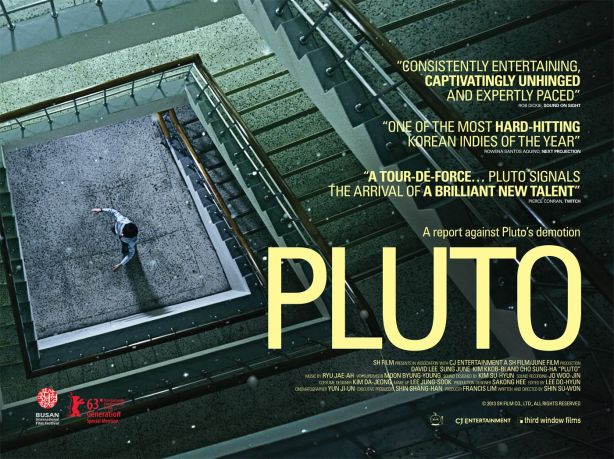
Pluto (명왕성, Shin Su-won, 2013)

GSEOiWzAs we’ve seen lately, there are certainly no shortage of films looking at the complicated and often harsh world of high school in Korea. Pluto (명왕성, Myungwangsung) takes a sideways look at the darker side of academic excellence when the praise and prestige of being one of the top students becomes almost like a drug and makes otherwise bright young people do things even a heroin addict in serious need of a fix might at least feel bad about afterwards with an all encompassing sense of entitlement that gives them a lifetime free pass for even the worst transgression.

June (David Lee) is a bright young boy from a regular high school who’s just transferred into an elite boarding school educating the country’s next great hopes. He may have been a top student at his old school, but here he’s merely average as the school hotshots are pretty quick to point out. Here, the top ten students are treated like princelings – a special computerised teaching room, no curfew, better rooms, better resources and they can more or less do what they like so long as they keep their grades up. Occasionally someone manages to bump one of the top ten from the list but they quickly get kicked out again. The top ten operate like some kind of swatters mafia – they all stick rigidly together, swapping hot tips for the upcoming exams that they refuse to share with the others and engaging in a series of increasingly cruel “pranks” they term rabbit hunts.

The film opens with the police finding the body of the previously number one student Yu-jin (Sung Joon) in a wood with June’s phone lying next him having been used to film the entire grisly affair. June is arrested for the murder but is released after his alibi checks out. Sick of all the struggle and unfairness, June puts his particular talents to use to try and teach the world a lesson about the sort of people this system is producing.

The picture Pluto paints of the Korean schools system is a frankly frightening one in which academic success is virtually bought and paid for or guaranteed by class credentials. Yes, the top students obviously must have ability – some of their activities may come close to cheating but interestingly nobody seems to want to try actual deception to get ahead. However, that natural ability has clearly been bolstered by their parents’ wealth. Attending an elite school and spending more than some people earn on private tutors geared towards knowing how to get into the best universities undoubtedly gives them advantages which are out of reach for others no matter how smart they may be. Perhaps that’s fair enough in a capitalist society, they didn’t ask to be born to rich parents and who would turn that sort of help down if offered it? However, though they may possess the virtues of discipline, hard work and a desire to succeed what they lack is any sort of empathy or even common human decency. Engaging in a series of manipulative hazing exercises, the elite group will stop at nothing to protect their status specialising in thuggery, blackmail, rape and even murder. The sort of people this system is advancing are not the sort of people you want running your schools and hospitals, they are morally bankrupt and only care about their own standing in the eyes of others.

Perhaps it’s fitting that this elite boarding school is housed inside a former compound of the Korean secret police, including a subterranean layer of prison-like tunnels once used as a torture chamber. Aside from the obvious school as torture analogies, much of them film seems to be about what people choose to ‘unsee’. The headmaster of the high school is aware of the ‘untoward’ behaviour of some of his pupils but refuses to do anything in case it upsets their well connected parents, damages the reputation of his school or has an adverse effect on those all important test results. The ‘Pluto’ of the title is referenced in June’s university application essay on the demotion of Pluto from the accepted list of planets. He argues that this is unfair and a fallacy as it’s illogical to measure anything by its proximity to the sun which is, after all, just another star which will eventually die like all the others. Just because it’s a little different looking, you shouldn’t necessarily categorise it as being in some way ‘inferior’ based on a set of fairly flimsy criteria. June, like Pluto, hovers in uncertain orbit on the periphery – always wanting in but perpetually locked out. Naturally gifted but from an ‘ordinary’ background where his single mother sells insurance for OK money, June can’t hope to compete with these elite kids even if his capabilities may be greater. A lot of decisions have already been made as to what people choose to see, have chosen to regard as an ideal, even if the reality is painfully obvious.

Though oddly funny in places for such a hard hitting film, Pluto is a difficult watch at times and paints a depressing picture of the high pressured nature of the Korean educational system and of human nature in general. The elite group are universally awful people who run the gamut from arrogant, entitled prigs to snivelling cowards which makes it difficult to feel any sort of sympathy and you start to long for bad things to happen to them which somewhat undermines the film’s premise. Perhaps the problem is just that they were awful people who were enabled by a system rather than people who started out good and were corrupted by it. Stylishly shot and supported by well grounded performances from its young cast, Pluto is a welcome addition to this perhaps overcrowded genre which brings more than a few new thought provoking ideas to the table.


Review of first Pluto published by UK Anime Network.