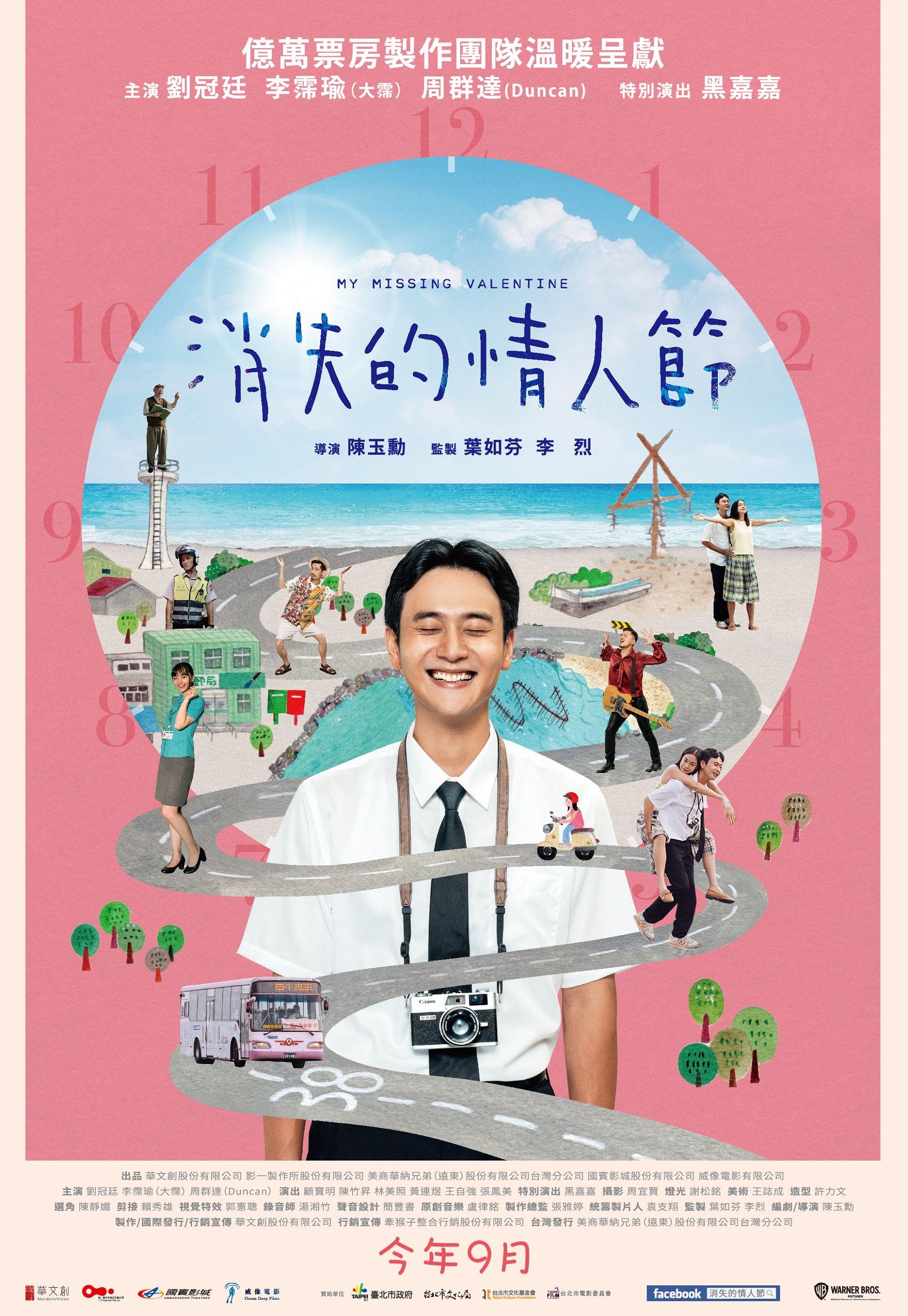
My Best Friend’s Breakfast (我吃了那男孩一整年的早餐, Du Zheng Zhe, 2022)

Teenage romance is always complicated, but it seems wilfully so for the couple at the centre of Du Zheng Zhe’s high school rom-com, My Best Friend’s Breakfast (我吃了那男孩一整年的早餐, wǒ chī le nà nánhái yī zhěng nián de zǎocān). Du’s adaptation of the popular novel by Misa lacks the quirky post-modernism with which Taiwanese romantic comedies have come to be associated save a few fantasy sequences and the heroine’s dialogues with possible versions of her future self, opting instead for a more much more conventional tale of miscommunication and the potential costs of failing to speak one’s true feelings at the right time. 

High schooler Wei-xin (Moon Lee) is in any case sceptical of romance as her parents have recently divorced after years of arguing about money and their conflicting views on success and happiness. Her classmate Yuan-shou (Edison Song Bai-wai), who has an obvious crush on her, convinces Wei-xin to take part in the school concert in exchange for receiving a milk tea every day, while she also makes a habit of eating the breakfasts sent to her best friend, popular girl Qi-ran (Jean Ho), by her various suitors. She then runs into top swimmer You-quan (Eric Chou) who chips in when she’s sort on her pineapple bread snack and starts hanging out with him after witnessing his awkward breakup with an unfaithful girlfriend. 

A brief note of social commentary is introduced as the pair bond over their stigmatised familial circumstances, Wei-xin fearing You-quan will look down on her when she explains her parents are divorced while he reveals he feared the same because his father has passed away and his mother is working in the US while he lives in one of the school dorms. The problem is, however, the central miscommunication in their by-proxy courtship in which You-quan starts sending breakfasts to Qi-ran which are obviously intended for Wei-xin though she remains oblivious both of You-quan’s feelings and those of Yuan-shuo. Assuming that You-quan is interested in Qi-ran she keeps quiet, as does he and everyone else giving rise to a lot of totally unnnecessary emotional suffering for all involved. 

Then again Wei-xin’s romantic predicament pushes her into an intense contemplation of her future, engaging in conversation with possible versions of herself in 15 years’ time firstly as a lonely, overweight woman who lives only to eat, and then as a cool and super-confident musician, each of them helping her figure out her feelings and what to do about them. Meanwhile, her youthful romance is contrasted with her parents’ failed relationship which apparently began when they were both carefree teens with no responsibilities and eventually broke down when faced with the realities of supporting each other as a family. While Wei-xin’s musician father has continued to follow his dreams even if they never payoff, her mother has become an unhappy workaholic desperate to work herself out of debt but also perhaps resentful in having given up on love for the illusion of financial security. 

What Wei-xin learns is that it’s better to be bold and have no regrets than risk becoming the version of her future self who is embittered and resentful that she never told her teenage crush how she felt. These teens do at least seem to have a fairly mature attitude to romantic disappointment, taking rejection with good grace and resolving not to let the awkwardness of a failed romantic confession ruin a friendship. One unexpectedly compassionate teen receives a declaration of love from a same sex crush in the midst of wailing about their own romantic heartbreak and though they do not return their feelings immediately embraces them in empathising with their emotional pain while another reflects on a bad breakup and traumatic incident to work on themselves and gain inner confidence before winning back their former love. 

Given all that the idealism of the film’s conclusion may sit a little oddly if perfectly positioned to appeal to a teen audience with an archetypal romantic moment, but is to a degree earned in teen’s path towards emotional honesty and the necessity of being brave enough to accept the risk of heartbreak in chasing their romantic destiny. Perhaps free breakfast delivered to your best friend by proxy is as a good a way to say I love you as any other. 


My Best Friend’s Breakfast screened as part of this year’s New York Asian Film Festival.

Original trailer (Traditional Chinese / English subtitles)

Images: © 2022, SKY FILMS Entertainment Co., Ltd., all rights reserved.
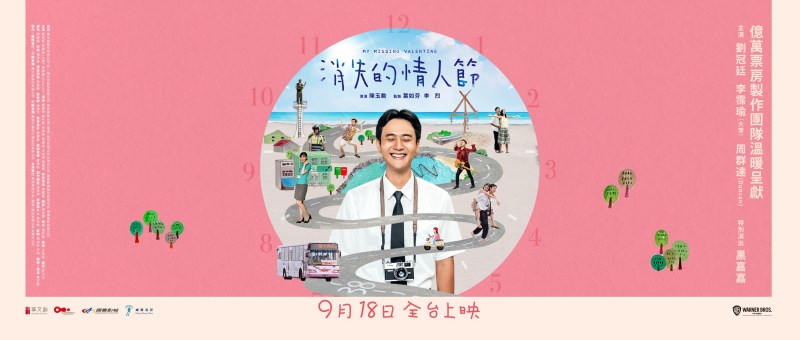
My Missing Valentine (消失的情人節, Chen Yu-Hsun, 2020)

“There’s a lot you don’t remember” the heroine of Chen Yu-Hsun’s quirky rom-com My Missing Valentine (消失的情人節, Xiāoshī de Qíngrénjié) is advised by a mysterious dream gecko arriving with clues retrieved from her subconscious to guide the way towards her romantic destiny. He also tells her that love is a matter of self-hypnosis, and in a sense he might be right in that what Hsiao-Chi (Patty Lee Pei-Yu) apparently needs is a time out, quite literally, to enable her gain a slightly different perspective in order to make peace with the half-remembered past and repair her fracturing sense of self. 

At 30, Hsiao-chi laments that she’s always been slightly out of sync with the world around her, perpetually racing ahead, laughing before the punchline and caught with her eyes closed in photographs. She blames this case of bad timing for her continued romantic failure along with the sudden disappearance of her father ten years previously who went out for tofu pudding and never came back. When she joins in with a dance class in the park and is courted by the handsome teacher (Duncan Chow) who asks her out on Chinese Valentine’s Day she thinks her luck is beginning to change, but when she wakes up with a mysterious sunburn and is told Valentine’s has been and gone she’s left only with a sense of existential confusion. 

As the gecko implies, Hsiao-chi’s existence is defined by the things that she’s “lost”, be they fathers, orphaned memories, or an entire day. The sunburn at least tells her that she experienced Valentine’s outdoors, only she has no memory of it, while she later comes across a photo of herself, unblinking, taken in a place in which she’s sure she’s never been. As it happens, the sweet and funny explanation has its unpalatable qualities, Hsiao-Chi quite literally manipulated without her knowledge or consent unwittingly on an awkward “date” while in a catatonic state but nevertheless guided back towards the hidden secrets of her past the discovery of which will eventually allow her to shift into sync with the world around her.

Meanwhile she remains hopelessly smitten with the improbably suave dance teacher, falling for his obvious scam as he sells her a sob story about his traumatic past and an orphan with a heart condition only for her to ironically suggest they enter a three-legged race in an effort to get money to help her. She resents her pretty colleague at the post office (Joanne Missingham), complaining that ability is irrelevant when all anyone cares about is the superficial while presented with a series of eccentric characters including a chubby guy in search of a wife and a pervert professor, lowkey dismissive of a young man she refers to as the “weirdo” (Liu Kuan-ting) who comes in every day to mail a letter. Living in a rundown house share with another set of unusual people, she penny pinches for all she’s worth while listening to a sympathetic talk radio host and dreaming of romantic fantasy. Ironically what she finds is that she needs to slow down, see things from a different perspective not quite as “superficial” or judgemental as she’s hitherto been while opening herself up to receiving the messages from her past she’d long forgotten were even waiting for her. 

With its retro colour scheme and quirky worldview, Chen’s charmingly sophisticated screenplay marries an intriguing puzzle box structure with a genuine sense of existential questioning as Hsiao-chi ponders the nature of loss wondering if it’s really possible to mislay an entire day even trying to report it to the police as stolen while wondering if her new “boyfriend”, also missing, is more than mere romantic fantasy. The irony is that Hsiao-Chi works at the post office but struggles with communication, finally discovering she can only unlock the secrets of her past through the recollections of others, adding their perspective to her own in order to complete the panorama of their lives and allowing her interior mantra to shift from “love yourself because no one else will” to “love yourself because someone out there loves you”. Hsiao-Chi’s missing Valentine is in many ways the one to her herself as she rediscovers a sense of self-acceptance while finally finding her rhythm in sync with the world around her as she resolves to wait for love hopeful that it too will eventually catch her up. 


My Missing Valentine streams California until May 2 as part of San Diego Asian Film Festival’s Spring Showcase.

Original trailer (English subtitles)