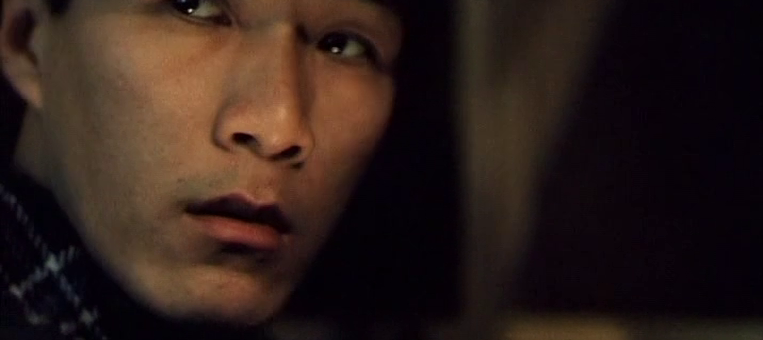
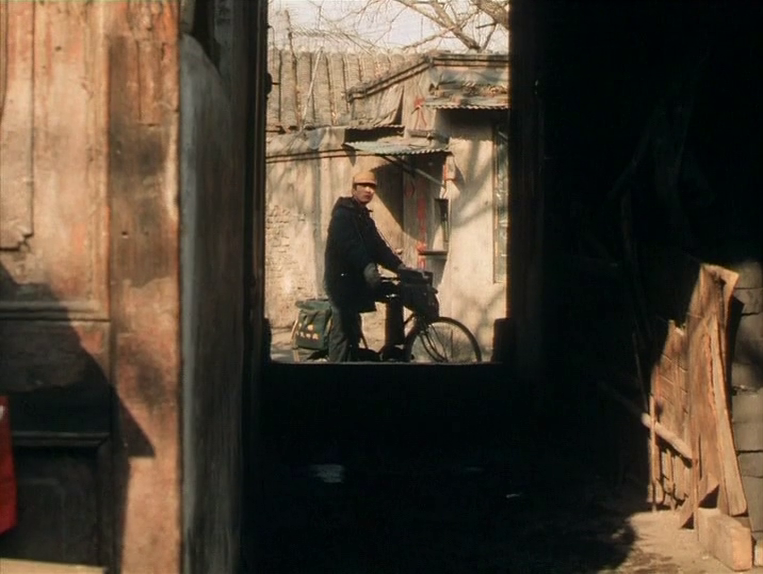
“You young people ask too many questions,” an exasperated postmaster tells a young man trying to refuse a job transfer but somehow embodying an authoritarian voice of order in post-Tiananmen China. The statement is in many ways ironic not least of them being that Xiao Dou (Feng Yuanzheng) barely speaks at all and mounts only a passive resistance to his dissatisfying existence. A portrait of repression, alienation, despair and hopelessness He Jianjun’s epistolary drama Postman (邮差, Yóuchāi) casts its hero as little different from the pillar boxes he instals on behalf of a distant authority, a soulless conduit for the thoughts and feelings of others.
Xiao Dou is only “promoted” to the role of postman after his predecessor, an elderly man, confesses that he had taken to reading the letters he was supposed to be delivering and is ominously put into the back of a police van. In any case, it’s not long before Xiao Dou starts doing the same thing himself, transgressively relishing in his life as an epistolary voyeur reading the correspondence between an unhappily married woman and her lover with salacious obsession. Objecting to the affair on moral grounds he rejects his role as a passive messenger to interfere in their lives and put to a stop to it though later finds himself visiting a sex worker whose letters to a doctor he had stolen, while otherwise withholding a letter from a young man to his father in which he informs him of his intention to take his own life.
Ironically assigned to the “Happiness District”, Xiao Dou encounters only yearning and confusion which echo the sense of hopelessness and despair among post-Tiananmen youth which continues to flounder in the changing China of the mid-90s. Then again in this rural backwater not much seems to have changed in the past few decades. The post-office where Xiao Dou works is marked by the maddening rhythms of his colleague Yun Qing (Huang Jianxin) rapidly stamping letters individually by hand before handing them off to Xiao Dou to deliver. The relentless sound and motion seems to reflect her own sexual repression which she eventually relieves by seducing the shy Xiao Dou who then takes another step forward towards transcending himself in completely abandoning conventional morality and compassion for others.
Hitherto, Xiao Dou had not shown much interest in women and is annoyed when his sister suggests introducing him to a girl from the factory. His first visit to the sex worker, more out of voyeuristic curiosity than desire, ended in failure, yet he remains obsessively invested in the melancholy love letters he collects on his rounds detailing the longing and unhappiness of those around him. Perhaps the most surprising is between a gay writer who has become a drug user and his lover who seems to have disappeared. The writer later dies, presumably of an overdose if one provoked by a broken heart and despair for his life, but the existence of homosexual relationships usually considered so problematic by the censor’s board is otherwise depicted without comment save the uncomfortable implication that is a symptom of the moral decline of contemporary society. In any case, Xiao Dou does not seem to object to it or to the drug taking in the same way he does the affair though he may just assume it will eventually take care of itself.
Like the writer’s lover, however, disappearances become common place. We see someone approach the pillar box to post a letter but when Xiao Dou turns around they have disappeared almost as if they too were sucked inside. Later he will disappear behind a pillar box he has just fitted in a new part of town the mail did not previously reach while his sister watches him fade out of view from the window of a bus as it rounds a corner. Xiao Dou’s sister had been keen for him to marry because she wanted to get married herself but was reluctant to leave the home their parents left them and wary of Xiao Dou’s ability to get by on his own. Yet through his various transgressions, Xiao Dou in a sense comes of age and is able of overcome his own repression to embrace his otherwise taboo desires in defiance of conventional morality.
Xiao Dou asks his colleague why it is that things that are so hard to say come out easier in letters, but she answers him that for her it’s the opposite. She prefers to talk and once wrote a letter to a friend only to find herself unable to post it while standing in front of the box ironically enough because she doubted that it would arrive safely. His sense of reticence reflects the enforced silence of life in post-Tiananmen China, men and women afraid to speak their minds and imparting their true souls only to a trusted confidant in a letter but discovering that not even that is safe from prying eyes or the oppressive judgement of an unseen authority. Xiao Dou may see himself as a kind of angel, a passive emissary working on behalf of a higher power, but in liberating himself from his own repression falls still further a product of an ongoing moral disintegration born of nihilistic despair.
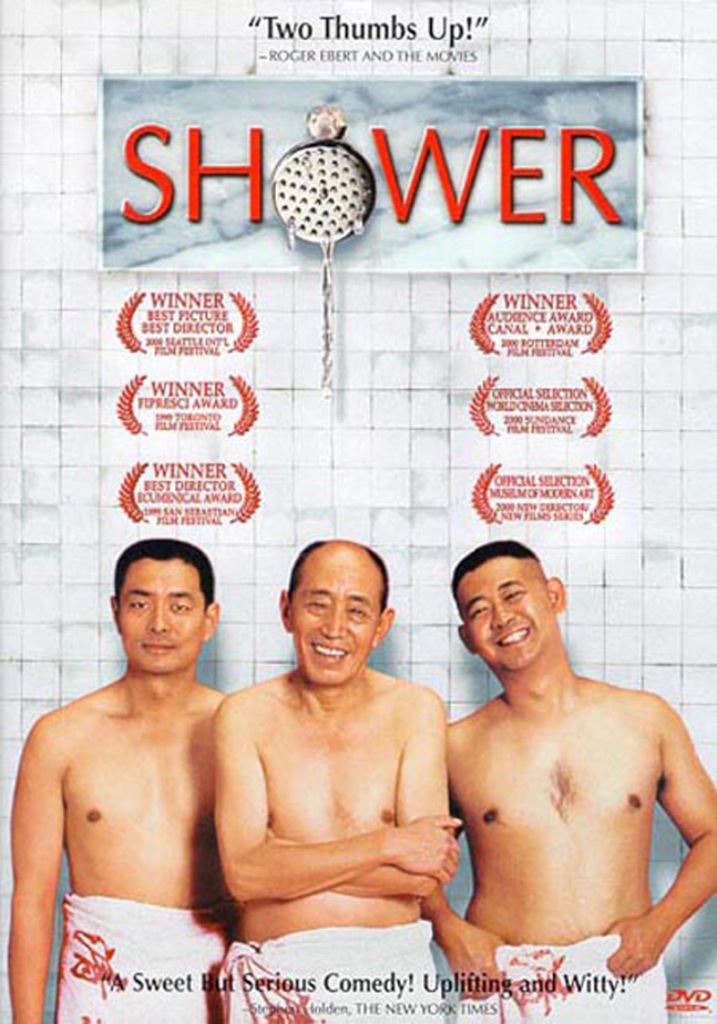 China is changing. Transforming faster than any other society at any other point in history. This brave new future, flooding in as it has across an ancient nation, has nevertheless left a few islands of dry land untouched by modern progress. Old Liu’s bathhouse is just one of these oases, far away from the big city with its frantic pace and high technology. In the city, you can step into a tiny cubicle and “undergo” a shower inside a contraption that’s just like a carwash, only for people. In Liu’s bathhouse you can relax for as long as you like, laughing and joking with old friends or just hiding out from the world.
 Windows on Worlds