Face (顔, Junji Sakamoto, 2000)

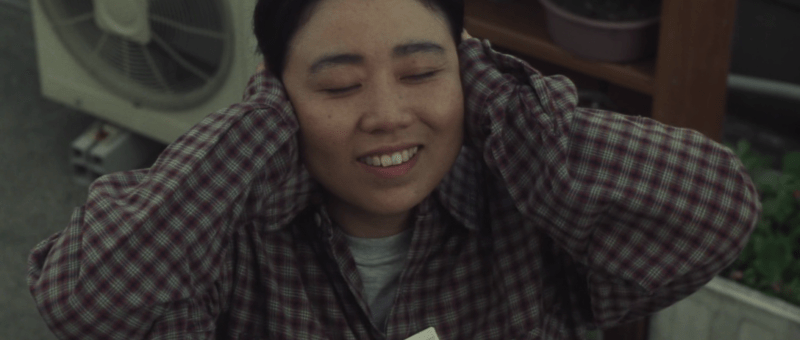
In some ways an innocent’s voyage through the nihilistic landscape of mid-90s Japan, Junji Sakamoto’s Face (顔, Kao) is also a character study of a woman who developed a fear of being seen, in large part because of social prejudice. In a heartbreaking moment, Masako (Naomi Fujiyama) reveals that her father, who left when she was 10, told her that she didn’t have to learn to swim or ride a bike if she didn’t want to. But Masako did want to learn, she just felt she couldn’t because people found her clumsiness “embarrassing”. It’s not completely clear whether Masako’s father said that because he felt bad seeing Masako being picked on by the other kids, or if he too felt ashamed that his daughter was evidently a little different from the other children.

It’s this sense of rejection and loathing that’s manifested in Masako’s bar hostess sister, Yukari (Riho Makise) who is exploitative of her, pressuring her to mend clothing belonging to one of her customers, and becoming physically abusive by tripping her when she refuses. Yukari lies that their mother agrees Masako should be institutionalised, provoking her into a rare trip out of her house running out into the snow in only her slippers and taking a round-trip on a train until Yukari’s gone. The two women are almost polar opposites, and in some ways Yukari’s cruelty may be motived by seeing in Masako’s face the elements of herself that she most fears and dislikes.

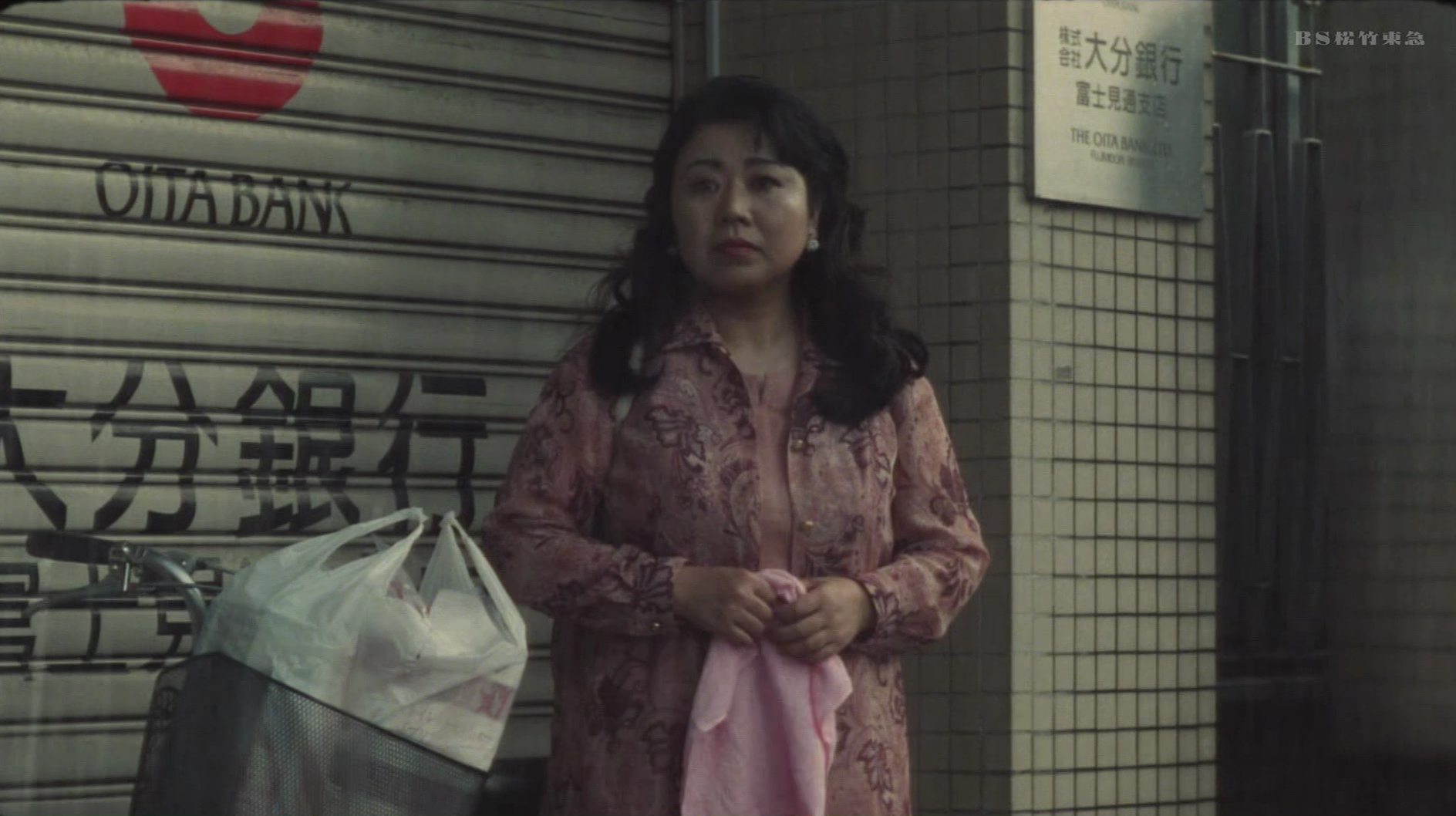
Nevertheless, when their mother dies and Yukari implies she plans to turn the family dry cleaner’s into a cafe evicting Masako in the process, Masako ends up snapping and strangling Yukari with her unfinished knitting. In killing Yukari she has, in a sense, freed herself from the oppressiveness of her hate and the inferiority complex it produced in her. Forced on the run on the eve of the Kobe earthquake, she believes the disaster to be her fault, but also takes advantage of the chaos to disappear into a crowd of other displaced persons making their way towards Osaka. It’s there she ends up getting a job at a love hotel under the name of new wave actress “Mariko Kaga,” but every time she starts to settle into a new life and blossoms when surrounded by more supportive presences, her new family quickly crumbles and she’s forced back on the run.

In an ironic twist, many of the ruined men she comes across, some of whom sexually assault her, take on the role of the father she never had. The manager at the love hotel (Ittoku Kishibe) tries to teach her how to ride a bike, though he is privately drowning in gambling debts and about to lose everything. Later she’s sold by a man trying to escape his life as a yakuza to a regular at a bar where she’s been working who bizarrely also begins to teach her to swim. The man who assaulted her originally had lost work because of the earthquake and tried to exorcise his sense of powerlessness by forcing himself on Masako. Her decision to hand him some of the funeral condolence money she stole before leaving is her way of reasserting power over the situation, paying him for this life lesson and shifting the stigma back onto him rather than accept it herself. 

Hiroyuki (Etsushi Toyokawa), the former yakuza, may have sold her as a kind of revenge seeing as he seems to resent her for her difference, but also identifies with her seeing them both as “losers”, which is a label Masako no longer really agrees with. But unlike her, Hiroyuki can no longer escape his fate and the yakuza is not often an occupation you can just give up even if it were not for vague hints at trouble in the city that’s forced him back to pleasant onsen town Beppu on the southern island Kyushu. Even the man that Masako takes a liking to simply because he’s kind to her (Koichi Sato) has recently been made redundant. His wife has left him with their young son and he’s resorted to blackmailing his former employer to get what he’s owed. This breach of the employer-employee contract exemplifies the sense of betrayal among people of this generation who were promised jobs for life under the post-war salaryman model but have been chewed up and spit out by the post-Bubble economy.

Masako, however, is flourishing during her life on the run. Her family had treated her as if she had some kind of learning difficulties and had forced her into a kind of arrested development in which she feared the outside world and had poorly developed social skills. The scars of her trauma are literally manifested on her face after she falls off her bicycle, but it’s true enough that through her various experiences she is able to take on different personas only for her actual face to give her away in the end. Just as after she’d run away, Masako encountered a strange and possibly over-friendly woman in a cafe who is later revealed to be a fugitive, like her on the run for murder, modelled in the real life murderer Kazuko Fukuda who evaded the police for over 14 years through having repeated plastic surgery. Masako never alters her face, in fact it’s ironically her true face that becomes further exposed as she comes into herself thanks to those she meets, but is able to become various other people hinting at all the lives she was denied as Masako the despised sister hunched over a sewing machine. Though contemporary Japan may seem to be a bleak and hopeless place, denying Masako the romantic fulfilment and happy life she longed for, it’s she alone who wants to live, desperately swimming out to sea having been pushed all the way out of Japan but forever in search of new horizons.


Our 30-Minute Sessions (サヨナラまでの30分, Kentaro Hagiwara, 2020)

“I want to move on” a grieving young woman explains, though perhaps ironically heading in the wrong direction. A youthful take on learning to live with loss, Our 30-Minute Sessions (サヨナラまでの30分, Sayonara made no 30-bun) finds a group of college hopefuls shattered by the unexpected death of a charismatic friend leaving them each lost, moving on in one sense but treading water in another uncertain what to do with the unfulfilled potential of their adolescent memories. Yet, through ghostly intervention, what they eventually realise is that nothing’s ever really lost, the echoes of those memories merely add to the great symphony life and all you can do in the end is learn to play along with it. 

That’s something introverted college student Sota (Takumi Kitamura) has however struggled with, unable to emerge from the trauma of losing his mother at a young age. As we first meet him, he’s subjected to a painful group interview for a regular salaryman job at which they ask about the memories he’s made with his university friends but rather than come up with a convincing lie, Sota honestly tells them he has no friends and that’s a good thing because it means he’s free to dedicate himself to work 100%. As expected, he gets a rather brutal rejection text before he’s even reached the lift, pausing only to rudely but perhaps accurately decline an invitation to join a WhatsApp group with the other hopefuls for the reason that it’s “pointless” because they’re unlikely to meet again. 

Sota doesn’t like to share his space with other people, but after noticing a walkman abandoned at a disused swimming pool finds himself a permanent host to Aki (Mackenyu), recently deceased lead singer of up-and-coming college band Echoll. Unlike Sota, Aki is charismatic and outgoing, every inch the rock star but less cocky than aggressively caring. It pains him that the thing he left unfinished has fallen apart in his absence and that all his friends seem to have given up their dreams and aspirations in life. For unknown reasons it seems that when Sota presses the play button on the walkman, it allows Aki to take over his body for the length of a single side of a cassette tape temporarily lending him the swagger and verve hitherto missing in his life even if he claimed not to particularly have missed them. 

In fact, Sota quite enjoys the arrangement because it means he doesn’t quite exist for the time the tape is playing, other people are no threat to him in his literal invisibility. Yet over time, a conflict obviously develops especially as the main thrust of Aki’s mission is healing his former girlfriend’s broken heart. Having lost her love of music, Kana (Sayu Kubota) has spent the last year largely inside working her way through a book of daily soup recipes that only her mother tastes. She claims she’s “moved on”, but in reality has done anything but caught in a kind of limbo unable to let go of her guilt and memories of lost love while conflicted as she bonds with the shy and introverted Sota himself it turns out also a frustrated musician.

A poignant reminder of Aki’s unfinished business as he and his friends attempt to find a degree of accommodation with loss the Japanese title translates more closely to “30 minutes to goodbye”, but there’s also something in the Japanese for playback (再生) equating to “again life” as it grants the late singer a temporary resurrection if one that lasts only the length of a set list. Perhaps a hipsterish affectation, the love of the outdated analogue recording mechanism, besides its practical advantages, provides a tangible proof of life albeit a fallible one in which every attempt to replay necessarily weakens integrity. Yet as a veteran later puts it, no matter how many times the tape is erased and overwritten, traces of previous recordings remain becoming in a sense just one of many layers that add depth and richness to the quality of the whole. 

The bandmates begin to realise that starting over doesn’t mean forgetting Aki or betraying his memory, they don’t have to leave him behind but can in a sense take him with them in the memories they share while Sota eventually begins to see the joy in human interaction and the power of connecting through music shedding his introversion in the knowledge that not all friendships are inauthentic and even if someone makes an early exit they leave traces of themselves behind on which others can build. A stylistically interesting take on the band movie with a fantastic soundtrack of convincing college rock hits, Our 30-Minute Sessions is a classic coming-of-age drama but one dedicated perhaps less to the art of moving on than to that of moving forward adding new notes to an ever expanding symphony of life.


Our 30-Minute Sessions streamed as part of the 2021 Japan Foundation Touring Film Programme.

Original trailer (no subtitles)

Tokyo Heaven (東京上空いらっしゃいませ, Shinji Somai, 1990)

title-752

In Japan, Shinji Somai is a well known and highly regarded director yet few of his films have ever made it overseas and he remains almost unknown in the West. Even by these standards, Tokyo Heaven (東京上空いらっしゃいませ, Tokyo Joukuu Irasshaimase) seems to be something of a forgotten episode in Somai’s career and is difficult to find even on unsubtitled DVD.

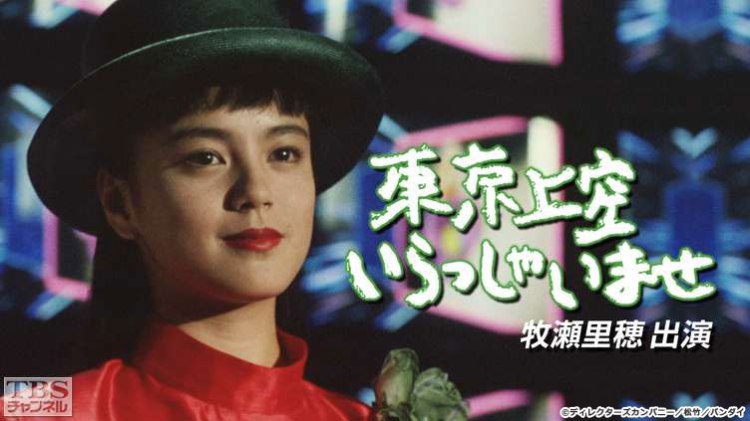
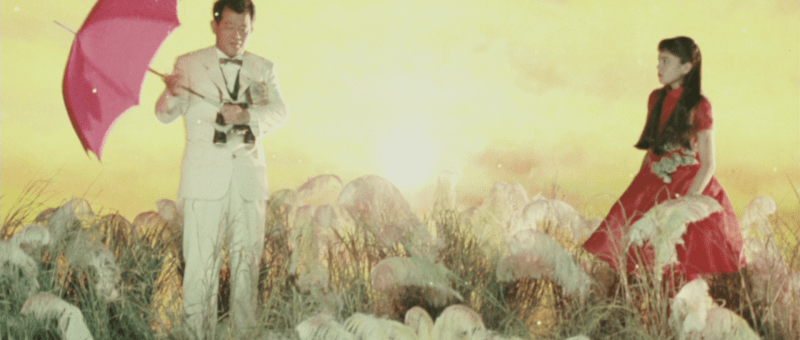
Set in 1990, the film begins with spoilt brat, up-and-coming idol star, and soon to be campaign girl Yu (Riho Makise) at a glitzy launch party. It’s time for 16-year-old Yu to be heading home, but sleazy producer Shirayuki (Tsurube Shofukutei) has other plans and instructs his underlings to set her up with him which they, guiltily, do. However, during the cab ride home Yu eventually escapes his molestations by jumping out into the middle of the road where she’s immediately mown down by an oncoming car. Waking up in a pastoral vision of heaven, Yu meets her guide, “Cricket”, who looks exactly like Shirayuki, the last face she had in her mind before she died. Given the opportunity to return to Earth but not as her old self, Yu tells Cricket to make her the girl on her campaign posters. Waking up in the room of one of the advertising executives working on her account, Fumio (Kiichi Nakai), she discovers resurrection isn’t all it’s cracked up to be.

Taking its queue from A Matter of Life and Death, Tokyo Heaven is first and foremost a fantasy romance (in the broadest sense) though leaning more towards bittersweet comedy than heartrending tragedy or profound human truths. Yu has returned to Earth but is unable to make contact with her family or let her presence be known to anyone other than Fumio. She no longer appears in photographs or mirrors and gradually comes to the realisation that her life really has ended and this small reprieve is only temporary. Many of Somai’s films focus on the emotions of younger people and the irony here is that Yu only grows up once she’s technically dead. Having had the chance to experience a “normal” adolescence with a part-time job at a fast food restaurant and a tentative romance Yu eventually feels ready to move on.

At only 16 years old, Yu was about to become a the face of a large scale advertising campaign. Her image haunts the streets of Tokyo and the loathsome Shirayuki is desperately trying to spin the tragic events into some kind of narrative that will both cover-up his entirely inappropriate behaviour with a school girl in the back of his chauffeur driven car and save some of the hard work already in place on the campaign itself. Hence, no one other than the girl’s parents is being told that Yu is dead and all previous commitments are being cancelled due to “poor health” or “taking a break” etc. Even after death, Yu’s image is being exploited and her soul ignored.

The conflicted trombone player, Fumio, comes to appreciate Yu for who she really is during their brief time together, resents Shirayuki’s treatment of her and wants the campaign to go ahead in an attempt to prolong her “presence” even if in image only. Through his contact with the increasingly vivacious Yu, Fumio who has previously been berated by his brother for not wanting to join their family bathroom fittings business and labeled as someone with an impenetrable shell who prefers his own company by his sometime girlfriend from downstairs, also comes to appreciate the joys of being alive a little more and reconsider some of his previous life choices.

Bearing Somai’s trademark long yet dynamic takes, Tokyo Heaven is a colourful tribute to Tokyo right before the bubble burst. Almost a prescient warning about the dangers of praising image over reality, the film becomes a poignant tale of learning to appreciate the sheer pleasure of being alive. Its slightly strange and perhaps abrupt ending has the potential to be misread, but the general message about the transience of life and the importance of living the way you want to live is one that cannot be overstated.


Screened from film as part of the London Japanese Embassy Filmshow programme on 19th November 2015.

There isn’t even a trailer available for this but if you can understand Japanese there’s a talkshow event with star and comedian Tsurube Shofukutei recorded at the recent Tokyo Filmex Somai retrospective in 2011.

And a musical scene from the film featuring Yosui Inoue’s Kaeranai Futari