
“Taiwan is doomed,” according to a middle-aged man taking the chance to emigrate in Keff’s debut feature Locust (蟲, chóng). A damning indictment of the island nation seemingly mired in economic disparity, political corruption, and generalised despair the film positions its mute hero as one who has been rendered silent but is caught between a life of subjugation and violent rebellion that may also in its way be a kind of conformity with the world around him.
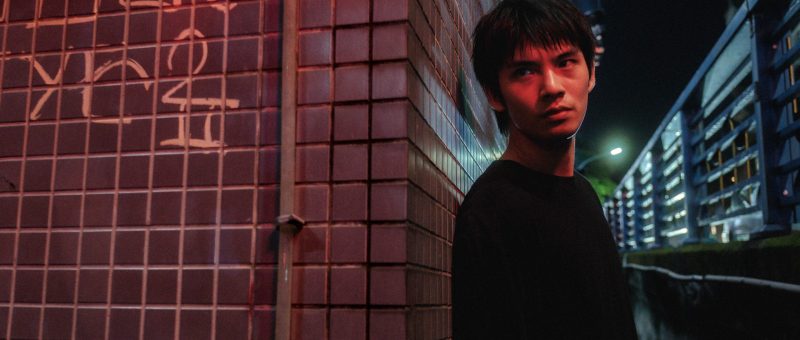
Zhong-han (Liu Wei Chen) is not deaf but was left mute after a childhood injury and now works in a mom and pop noodle cafe which has seen better days. By nights, he supplements his income working as an enforcer for local gangster Boss Wang collecting debts on his behalf. But as his friend Kobe (Devin Pan) says, what’s the point of collecting money from people who don’t have any? Originally proclaiming himself a kind of Robin Hood, Kobe suggests they simply take it off people who do have the cash instead and particularly if they got it (in his view) unjustifiably such as through generational wealth or influencing. Zhong-han can sympathise with these goals, especially as it was a gang of influencers who made fun of his dancing at a local disco, but as time goes on it becomes clear Kobe is intent on a kind of class warfare that’s more about revenge against a classist society than sharing the wealth.
You might think Boss Wang would have a problem with Kobe’s apparent freelancing, but he later rises through the ranks to become his right hand man in a pattern that gets repeated in which those who once opposed those in power acquiesce when they’re given the illusion of sharing it. Something similar happens to bumbling local political candidate Jia-bao who tries to stand up for Rong (Yu An Shun) when his noodle restaurant is threatened but is later seen drinking in a hostess bar with Boss Wang and slimy businessman Bruce.
Bruce’s Western name might immediately mark him as the villain, a globalising entrepreneur who sees a noodle shop like Rong’s as an embarrassment, a symbol of an older, less sophisticated Taiwan that no longer belongs in the current society. It’s to Bruce that Rong’s childhood friend and sometime landlord Wen sells the building in which he lives and works and it doesn’t take a genius to realise he probably hasn’t bought it to maintain old-fashioned local community charm. In the news item playing in the opening scene, the reporters discuss the opening of a new French bakery with a brand new pastry christened the Taiwan Eclair which has become the latest must eat item with the queues around the block symbolising both an aspirant internationalism and the vacuity of consumerist desires. Yet it seems that Zhong-han’s greatest wish is to be able to take his girlfriend out for fancy cake only neither she nor he can afford it as they are each locked out of the cake-eating classes.
Immediately before the item about the French bakery, the news had discussed the protests in Hong Kong which continue to reverberate through Taiwan as it processes its own difficult relationship with Mainland China amid constant fears of military incursion. Wen points to the land he once owned and suggests it won’t be worth anything if they end up going to war. In a slightly awkward way, the film aligns Rong’s struggle with that of the protestors though less towards authoritarian oppression than the tyrrany of amoral capitalism and men like Bruce who wear fancy suits but behave like thugs. The film paints both struggles as futile, though noble, and suggests that there is really no way that Rong can win against a man like Bruce and might have been better to take what he could get when he could get it.
Zhong-han’s situation is equally hopeless. Though he tries to move away from his destructive gangster past, the world won’t let him forget and his options will always be limited by his disability, lack of education, and socio-economic status. Rong tells him that he’d always thought of him as a son and intended to leave the noodle shop to him when the time came, but like so many other things in his life that future seems lost to him now and no other presents itself. The film seems to offer a similar prognosis for Taiwan itself, a land of despair and futility in which “it won’t make any difference” has seemingly become a way of life.
Locust screened as part of this year’s Cannes Film Festival.


 Windows on Worlds