A Girl in My Room (左様なら今晩は, Natsuki Takahashi, 2022)

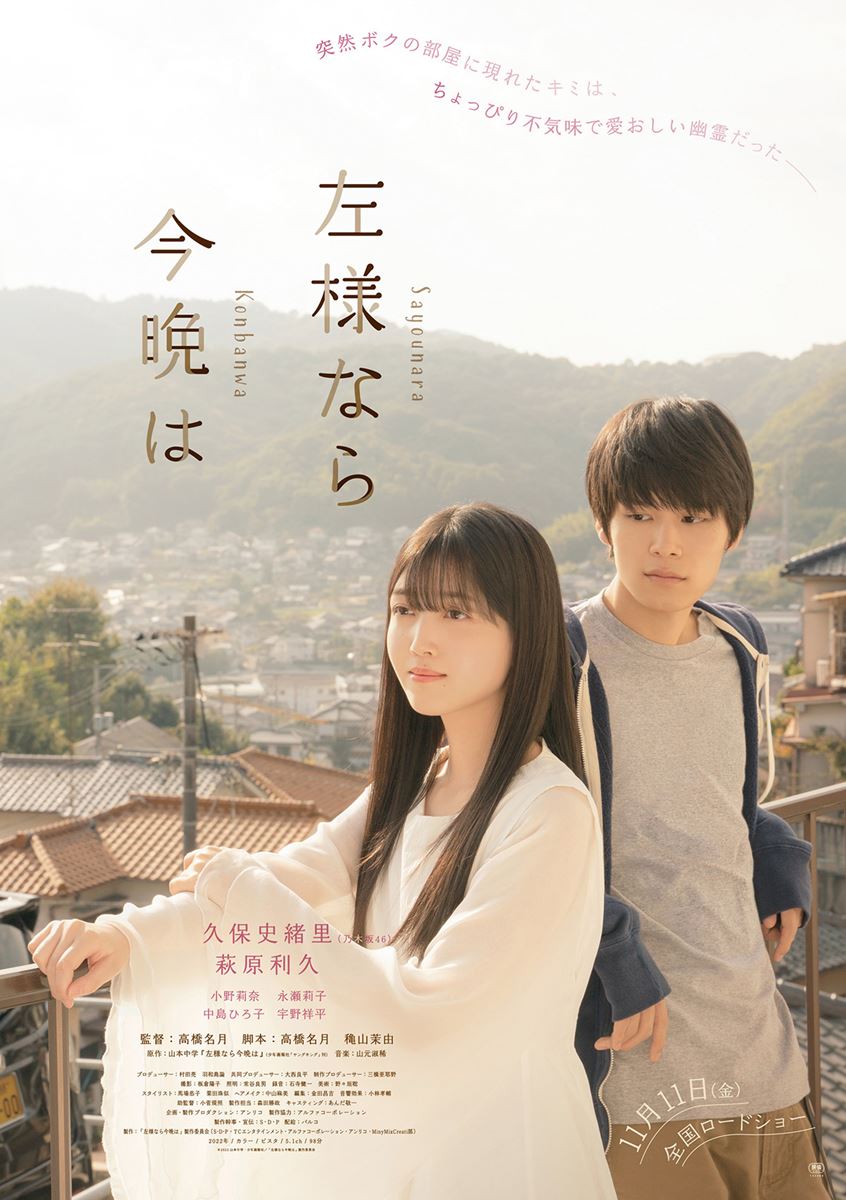
A young man reeling from a breakup is suddenly confronted by the literal ghost of lost love in Natsuki Takahashi’s supernaturally-inflected romantic drama A Girl in My Room (左様なら今晩は, Sayonara Konbanwa). Set in the peaceful town of Onomichi, the film finds its hero wasting away pining while wondering if falling in love with a ghost is all that bad only to later ask himself if any of it was real or just a fantasy of his lovelorn mind. 

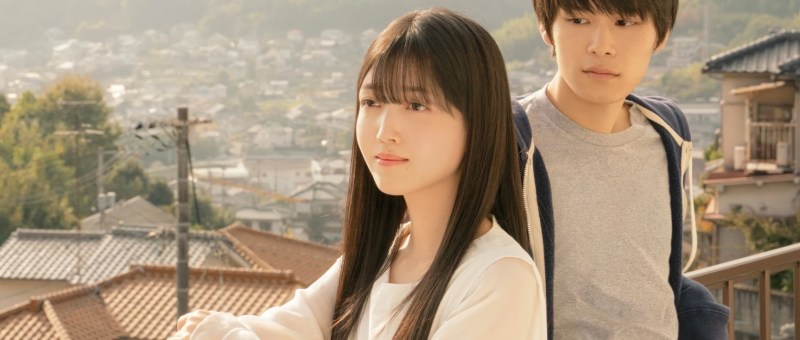
As the film opens, Yohei’s (Riku Hagiwara) girlfriend of two years, Rena (Riko Nagase), moves out of their apartment apparently sick of his superficiality and inconsiderate nature. Soon after, Yohei becomes aware that a ghost has been living in their apartment with them the whole time only should she couldn’t manifest because Rena apparently had unusually strong spiritual energy. Though originally frightened by the new presence, Yohei soon warms to the woman he names “Aisuke” (Shiori Kubo) and becomes determined to find out who she was and how she died only no one will tell him. 

Of course, Aisuke could just be the symbolic ghost of Rena, a spectre of lost love confronting him with his romantic failure, but also seems to have an inner life of her own even if she can’t remember much about who she was when she was alive and how it was she came to die in the apartment. Fleeting memories seem to hint at a life of loneliness marked by romantic longing in which she wanted nothing more than a regular grown-up relationship though sadly it never happened for her. If she has unfinished business, then falling in love may be part of it but then it’s clear that any potential relationship between herself and Yohei is doomed to failure seeing as she is already dead. 

Aisuke chose Yohei because she thought he was a good boyfriend after seeing him with Rena, but even so agrees that though he seems nice on the surface he never really thinks about anything and responds to criticism by smoothing it over with an apology rather than reflecting on his actions or trying to better himself. Work colleague Kanan (Rina Ono), who also has a crush on him, conversely claims that Yohei shows his kindness too easily though also remarking that kindness in itself can also be problematic. In any case, as he bonds with Aisuke, Yohei does seem to engage more with his flaws and reflect on the mistakes he may have made in his relationship with Rena in order to become not just a better boyfriend but a better person. 

In these respects, Aisuke becomes a romantic mirror confronting him with the problematic aspects of his own personality but somehow gaining in corporeality as the relationship progresses as if love were bringing her back to life. But then Kanan also claims that that’s because Aisuke is unwittingly sucking the life out of him which is why he looks tired and gaunt. A picture she took of him on her phone has a dark aura over his face hinting at something malevolent at work that’s taking a toll on his health. But as much as he’s warned, Yohei determines to stay with Aisuke, slowly falling in love with her in the wake of his failed relationship.

Partly a fable about the dangers of remaining trapped by the ghost of lost love rather than resolving to move on, the film is also a poignant love story in which the pair must help each other overcome their mutual unfinished business while becoming aware that their liminal romance cannot continue forever. A side plot involving an estate agent and his endless calls from a confused older gentleman randomly asking him for legal and life advice hints at other kinds of living ghosts and urban loneliness but also at those willing to take care of them as perhaps the estate agent did with Yohei and Aisuke in a bit of supernatural matchmaking helping each of them to begin moving on with their lives on either side of the mortal divide. Charmingly quirky and comforting in its tranquil setting, Takahashi ends on a poignant, bittersweet note but also one of warmth in which the ghost of lost love doesn’t so much haunt as abide, a constant source of comfort in a lonely existence.


Original trailer (English subtitles)
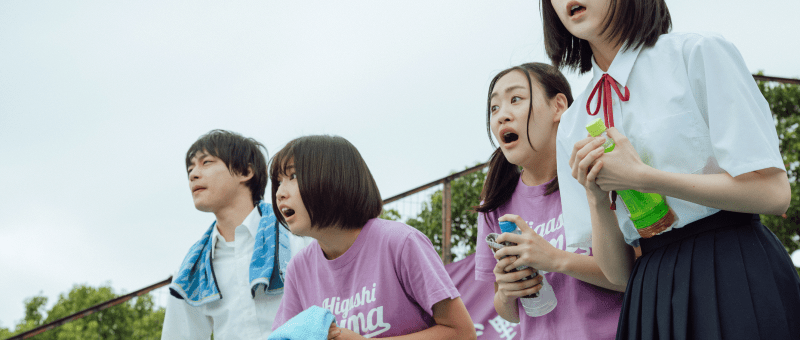
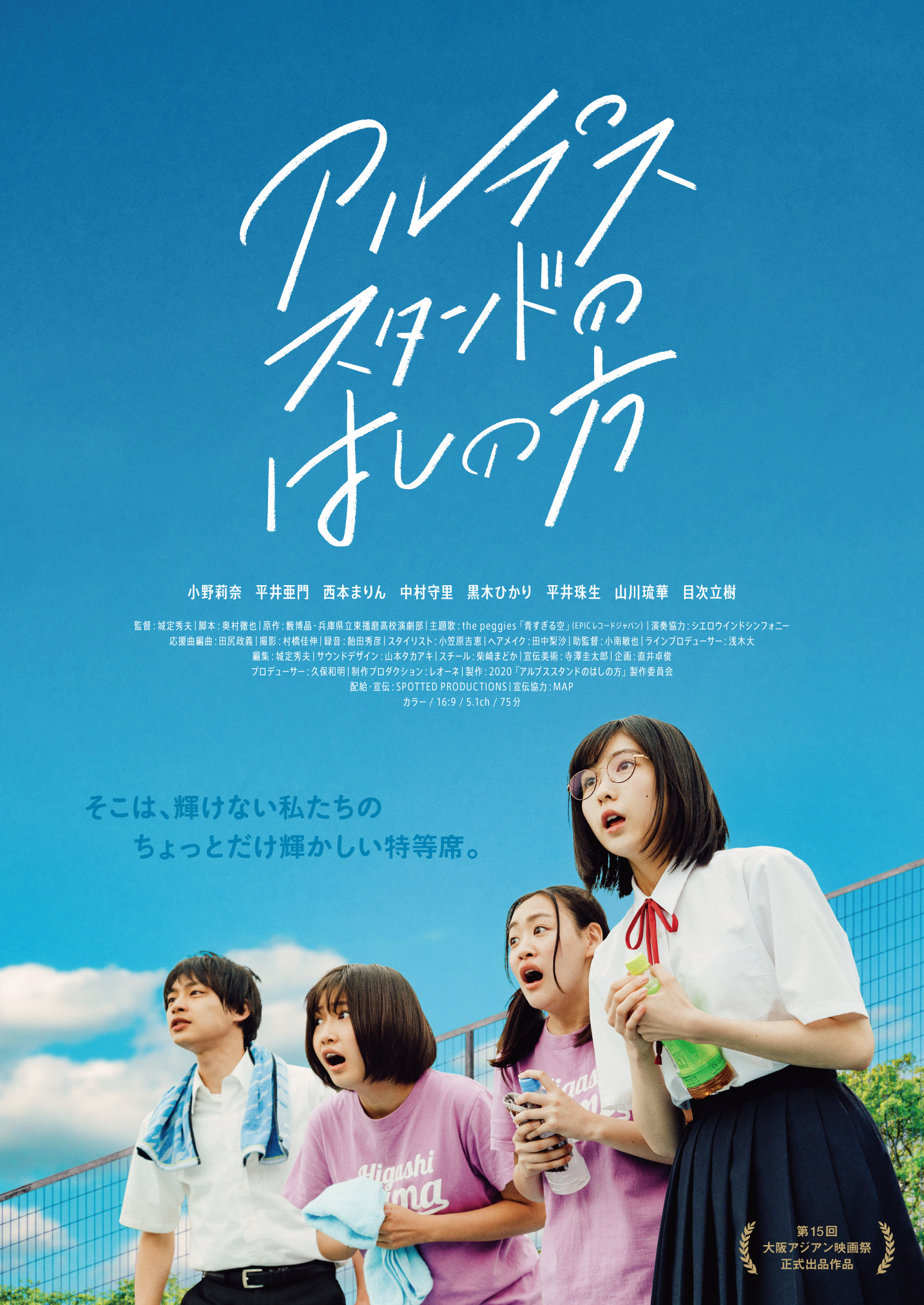
On the Edge of Their Seats (アルプススタンドのはしの方, Hideo Jojo, 2020)

It’s only natural to be a little anxious in the last year of high school but a collection of his school students are in danger of giving up before their lives have even started in Hideo Jojo’s zeitgeisty dramedy On the Edge of their Seats (アルプススタンドのはしの方, alps stand no hashi no kata). Adapted from a stage play written and performed by a high school drama club, the effortlessly witty dialogue has a lived-in quality while pregnant with its own anxieties as the teens each deal with their private disappointments while wondering if there’s any point in trying when all their efforts are doomed to failure. 

Best friends Asuha (Rina Ono) and Hikaru (Marin Nishimoto) for example are still dealing with the fallout from losing their place in a regional drama competition when one of them got sick and couldn’t perform. Fujino (Amon Hirai) quit the baseball team after realising he’d never be as good as the lead pitcher, and the shy Megumi (Shuri Nakamura) struggles with social interaction while unexpectedly having her thunder stolen by popular girl Tomoka (Hikari Kuroki) who not only beat her to first place in the last exams but is also dating her crush, Sonoda who is the star of the baseball team. 

None of them exactly wanted to come and watch their high school baseball team anyway which is why they’re way up in the bleachers. “Is the fabled last summer of high school meant to be so boring?” Asuha sighs, reflecting on the disappointing ordinariness of the end of her youth. It’s just one more thing she claims “can’t be helped” like the cancellation of the play or life’s myriad other disappointments. The ironic thing is that they’ve been bussed all the way into school in the middle of summer to watch their team lose, badly, to one that reached the national finals the year before. Perhaps you can’t blame them for their sense of futility. 

Yet it’s just this kind of defeatism that they end up facing, encouraged by their over-enthusiastic English teacher and the school band to shout their hearts out for their friends on the field. “Life is all about swinging and striking out” their teacher tells them, trying to reassure the teens that it’s worth taking the risk as they continue to meditate on disappointment and inertia. Fujino quit baseball because he thought it was pointless to continue when he’d always lose out to Sonoda, but his teammate Yano, who is objectively bad, stayed on and continued to train intensively despite his low prospects of ever being allowed on the field. He wonders who had the right idea, him or Yano, and whether it’s wiser to switch tracks when something doesn’t work for you or really it was just petulant resentment that led him to give up without putting up much of a fight. 

Though none of them were particularly invested in the game to begin with, when they talk about “baseball” they’re really talking about a lot of other things and gradually begin to rebel against the “can’t be helped” philosophy that led them to give in to disappointment. The shy and secretly lonely Megumi discovers that Tomoka doesn’t have it all that great either, eventually forging a spiritual bond in their shared desire to support Sonoda who after all is not having a great day on the mound. There’s something a little ironic in the choice of Sonoda’s favourite intro song, Train-Train by the Blue Hearts, which neatly reflects the teens’ internal anxiety along with the messages of living in the moment. 

What they learn is in essence that if you’ve done your best and it still doesn’t work out then that’s alright and there’s nothing to be afraid of so you might as well swing for the fences even if you miss. They remain “spectators” in one sense, but in becoming emotionally involved in the baseball game that we never see but only hear about the teens regain the courage and desire to take a more active part while gently bonding in their shared sense of solidarity and renewed hope for the future. Witty and warmhearted, Jojo’s innovatively lensed coming-of-age drama has a poignant quality of youthful nostalgia but also genuine heart in its gentle advocation for the art of perseverance. 


Original trailer (English subtitles)
Train-Train by the Blue Hearts

Twilight Cinema Blues (銀平町シネマブルース, Hideo Jojo, 2023)

Japan’s mini theatres have been in a status of crisis since the pandemic. Already struggling under the weight of changing times the immediate restrictions pushed many over the edge unable to entice older regulars back into screens or find a new audience among the young. This is doubly bad news for the industry as a whole as it’s mini theatres that allow indie films the platform they need to succeed and without them there is little avenue for films produced outside of the mainstream. Like Lim Kah-Wai’s Your Lovely Smile, Hideo Jojo’s Twilight Cinema Blues (銀平町シネマブルース, Ginpeicho Cinema Blues) similarly extols the virtues of the mini theatre which is not just somewhere to watch films but a place to belong that has room for anyone and everyone that wants to be there.

That’s more than true for Takeshi (Keisuke Koide), a struggling man approaching middle age who’s become near destitute and is almost sucked into a welfare scam targeting the homeless by a pair of shady yakuza claiming they run an NPO. At the orientation he runs into Kajiwara (Mitsuru Fukikoshi ), the owner of a mini theatre who declines to join the gangsters’ scheme but offers Takeshi the opportunity to bunk in his storeroom while working part-time little knowing that to Takeshi this particular mini cinema is like a return to source allowing him to rediscover his love of film.

But the mini cinema itself is also struggling. They simply don’t get bums on seats and Kajiawa is behind on paying his staff. Though they have a small collection of regulars, they aren’t enough to keep the lights on on their own. Even the projectionist is thinking he’ll probably retire along with the machine. Unable to afford new films, Kajiawara relies on cheap and easily licensable classics such as old favourite Casablanca but is largely unable to see away out of his situation while feeling guilty over ending what was effectively a family business and local landmark. The building’s 60th anniversary, 60 being a symbolic number in Japanese culture as it represents a full turn of the Chinese zodiac and literal new start, presents an opportunity to both Kajiawara and Takeshi to begin to move forward by renewing their faith in cinema.

The faith of Takeshi’s homeless friend Sato (Shohei Uno) needed no renewing. Though he had nothing, the ability to see a film twice a month made him feel human while the community at the cinema is perhaps the only one that still accepts him. He offers a small prayer after every film, and instructs Takeshi that he should the same. But his openhearted faith is also his undoing, allowing him to fall for the yakuza scam little realising they’ll force him to work for them taking half of the social security payments they helped him sign up for in the process. In the outside world, men like Sato find only exploitation and prejudice with cinema their only refuge.

Then again, filmmaking isn’t easy. A young woman who desperately wanted her debut film to play in her hometown cinema has based her first feature on the life of her father, a failed film director who drank himself to death (in a neat allusion to Oshima’s Cruel Story of Youth, her film’s title literally translates as “cruel story of a director”). Similarly, the suicide of a much loved assistant director has prevented those around him from moving on, preoccupied with the shock his death caused them in its suddenness and lack of obvious cause. They blame themselves sending their lives into a downward spiral that results in crushing financial debts and the end of a marriage. In some ways, the film is an ode to the ADs who keep everything running, including on occasions the director, and are in a sense the custodians of filmmaking.

Still, it’s clear that not everything can seamlessly repaired. Times have moved on even if some have been left behind and you can’t always simply reclaim what you’ve lost, but you can always start again with another spin of the wheel and make the most of what you’ve got. It won’t be the same, but that doesn’t mean it won’t be good. Jojo’s heartwarming tale of cinema has an undercurrent of darkness and despair running beneath, but also suggests that the silver screen can be a beacon hope when the world is at its bleakest and not least for those whose existence largely lies behind it.


Screened as part of this year’s Japan Foundation Touring Film Programme.

Original trailer (English subtitles)
Sayonara, Girls (少女は卒業しない, Shun Nakagawa, 2022)

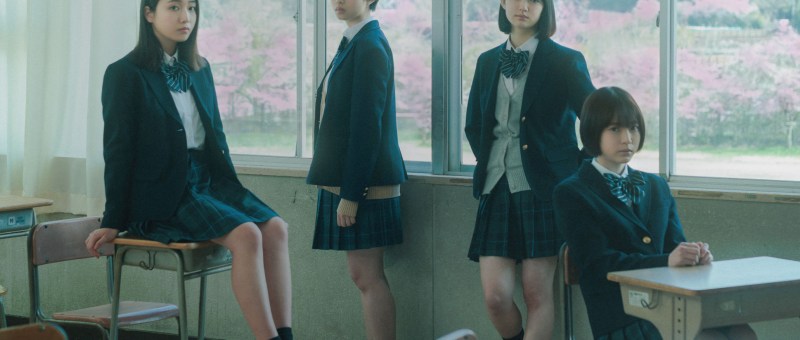
The end of high school takes on an additional poignancy for a collection of teens who realise they will be the last class to graduate before their school is demolished in Shun Nakagawa’s touching coming-of-age drama, Sayonara, Girls (少女は卒業しない, Shojo wa Sotsugyo Shinai). Adapted from a series of short stories by Ryo Asai, the film’s Japanese title is the more cryptic “girls don’t graduate” hinting at the ghost of adolescence that endures long after a literal graduation ceremony even as the teens find themselves attempting to move on into the “new world” of adulthood which necessarily means leaving youth behind. 

Set mainly over the graduation day itself and the day before, the film focusses on four girls who aren’t particularly connected to each other but are each experiencing differing kinds of adolescent anxiety as they approach the end of high school. Kyoko (Rina Komiyama) is perhaps the most typical in that her dilemma relates to the physical distance that will be placed between herself and her past when she leaves her provincial hometown to study in Tokyo. However, it isn’t the thought of leaving a familiar place for an unknown city that bothers her nor uncertainty in her choices, only that her relationship with her high school boyfriend Terada (Takuma Usa) seems as if it will end on a sour note because of the emotional distance between them as they prepare to take different paths in life. She envisages her future in Tokyo working as a psychologist while he plans to stay local and get a job as a primary school teacher. 

There doesn’t seem to be any suggestion that Kyoko would give up her ambitions to stay behind for Terada, and she herself fails to realise that he resents her for choosing Tokyo over him all of which has clouded their final days together despite the inevitability that they will have to end their relationship because the futures they each want for themselves do not align. There is also a slight dividing line between the kids who will not be going on to university at all but plan to look for work, those who plan to attend a local college and remain in their hometown, and those who have won prestigious university places to study in the capital. This is also of course the “graduation ceremony” for the school building itself, which has left Kyoko feeling wistful in realising that she will never be able to revisit this place that in a sense represents her youth. She would rather the building remain and be repurposed while Terada reminds that her romanticism is all very well but as he’ll be staying in the town for the rest of his life he’d rather it be replaced with something more practical like a shopping mall which is really the nexus of the problems in their relationships. 

But on the other hand, for the socially awkward Shiori (Tomo Nakai) the last three years have been nothing but torture, the school building, excluding the library, an unending hell. Yet her regret is that she has been unable to overcome her shyness and with graduation approaching fears that she will never be able to talk to people properly. With the help of her kindly librarian (Kisetsu Fujiwara) even she begins to forge new connections and realise she’s not quite so alone as she thought. Music club president Yuki (Rina Ono), meanwhile, is focussed on making someone else come out of their shell while dealing with discord as other members object to the results of free vote which has elected thrash metal lip synchers Heaven’s Door as the headline act for the graduation concert with the band members, except for one, refusing to play assuming that people only voted for them as a joke. 

Charged with giving the farewell speech at the graduation ceremony Manami (Yuumi Kawai) struggles with a more a literal kind of loss and the stolen futures of those who won’t ever be graduating high school but will be left behind in a kind of eternal youth. As part of her speech she reflects on the “new worlds” each of them will be stepping into and also on the series of encounters and farewells that will occur throughout their lives, but is also well aware of the poignant sense of guilt that comes with moving forward in a way that others never can. As the school will be demolished, in a way so will their youth but only in a less symbolic sense than it is for everyone who must make the difficult transition to adulthood with all the concurrent anxieties that may bring. In a sense the girls do not “graduate” so much as evolve, taking the ghosts of their younger selves with them as they go and leaving behind only a vague shade of their youth that will inevitably fade in time.


Sayonara, Girls screened as part of this year’s Nippon Connection.

International trailer (English subtitles)

POP! (Masashi Komura, 2021)

You’ve heard “turn that frown upside down”, but are you ready for turn that heart into a…well, perhaps that’s a sentence not worth finishing. The heroine of Masashi Komura’s MOOSIC LAB venture Pop! finds herself in a world of existential confusion on realising that what she assumed to be a heart symbolising love was in fact a giant bum intended to moon an indifferent society. Suddenly she doesn’t know up from down, her entire existence rocked as she contemplates life, love, and the pursuit of happiness on the eve of her 20th birthday. 

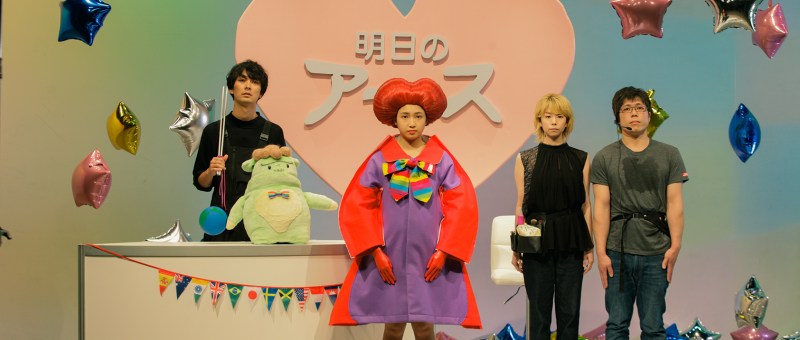
19-year-old Rin (Rina Ono) is currently the presenter/mascot character of local TV charity program “Tomorrow’s Earth Donation” which aims to collect money for the world’s disadvantaged children. Meanwhile, she also has a part-time job as a car park attendant which she takes incredibly seriously even though almost no one ever turns up (including her mysterious co-worker Mr. Numata). In fact, its Rin’s earnestness and youthful naivety which seem to set her apart from her colleagues, makeup artist Maiko later complaining that she makes others uncomfortable with her goody two-shoes act while her bashful present to puppeteer Shoji on his birthday of a framed portrait she’d drawn of him seems to elicit only confusion and mild embarrassment from her bantering co-workers. 

Nevertheless, she’s beginning to wonder about love, in her own way lonely and unfulfilled simultaneously confused and disappointed by the direction of her life. She dreamed of becoming an actress, but is now little more than a front for this strange enterprise in which she, characteristically, believes with her whole heart. Deep down, she just wants everyone to be happy and is sure that if people smiled more the world would be a brighter place. Wearing a giant red wig shaped like a heart, she reads out messages purporting to be from children outlining their dreams for the future even when they’re as banal and materialistic as wanting to become a race car driver. Unfortunately, however, she continually stumbles when asked to read a cue card featuring her own dream, fully scripted for the character she’s supposed to be playing. 

On her first audition, she was shouted out of the room by a director insisting her admittedly over the top improvised death scene was nothing more than attention seeking. The TV news attributes a similar motive to a mysterious bomber currently plaguing the city whom Rin accidentally witnesses one day fleeing the scene of his crime. For some reason struck by his strange presence, and perhaps disillusioned with her brief foray into online dating, Rin develops a fondness for him believing he is just like her because the pattern of his bombings corresponds to the shape of a giant heart enveloping the city. “We must get serious about saving the world!” she announces to her colleagues, “Let’s do it with a bang!” she ironically adds. She may, however, have slightly misunderstood his mission statement especially as when questioned as to his motives he tells her that he does it for the benefit of all because no one else will. 

In any case, she remains hopelessly naive, confused by a strange man who brings his van to the car park presumably for “privacy” and strangely unconcerned by an alarming message on an abandoned car left with its door open which states the driver won’t be needing it anymore. She role-plays direction and agency, but in the end goes nowhere until literally carried away by her “adult” realisation that it’s probably not possible for everyone to smile all the time and it’s not her job to make them. Caught up in the slightly duplicitous world of the cynical program makers who perhaps mean well but are hamstrung by the problems of contemporary Japan, desperate for pictures of smiling children only to realise that none are writing in and hardly any of them know any to ask, she maintains her desire for world peace even while privately conflicted in having lost sight of her own dream. Adopting a little of the bomber’s anarchist swagger, she allows herself to be swept up by a final flight of fancy towards a more cheerful world. Shot with a colourful “pop” aesthetic and a hearty slice of absurdist irony Komura’s strange fairytale is stuffed full of heart and has only infinite sympathy for its earnest heroine’s guileless goodness.


POP! screened as part of the 2021 Osaka Asian Film Festival.

Original trailer (no subtitles)