Belonging (とりつくしま, Kahori Higashi, 2024)

What if you could come back after you died and watch over those close to you while possessing a familiar if inanimate object? Her second film this year, Kahori Higashi’s Belonging (とりつくしま, Toritsukushima) adapts a novel by her mother in which the recently deceased are asked to choose a “belonging” to sink into given that they seemingly still have lingering attachments to this world. Yet simply watching can itself by painful while it might not do to linger too long in a place where everything is moving on except you.

That’s a possibility that comes to mind the second story featuring a little boy who asks to inhabit the blue climbing frame at the park. He wistfully watches other kids he used to play with pass by and later meets a little sister for the first time, but all these other children will grow up while he will not even if other children will their place. The kindly woman (Kyoko Koizumi) sitting in the school room that doubles as Belonging’s office doesn’t mention what happens if the object is destroyed or moved as something like a climbing frame might be though we later discover that depleted objects can no longer hold their charges which are then dragged back to the afterlife. 

Of course, there’s always the possibility that an object that was precious to you was not so precious to others and may end up being sold or given away as one old woman discovers realising the beloved grandson she hoped to spend eternity with has sold the camera she gave him. The heroine of the first sequence, Koharu, installs herself in a coffee cup featuring a design of a triceratops she and her husband bought on a trip to the museum which he continues to fondle and treasure though Koharu watches him being a tentative relationship with another woman who urges him to buy new mugs as a symbolic moving on from his late wife. 

For Wataru, the coffee cup may already in a sense have been possessed by her spirit though he sees her more in a plant he keeps watering unaware that it’s artificial. Objects can have a kind of presence and carry something of their former owners with them even if not literally possessed but being trapped inside an inanimate object is also frustrating and at times painful. They can no longer act or interact but are mere passive observers at the mercy of their loved ones who may be readier to move than they’d assumed or otherwise dispose of or lose the objects the deceased assumed would be precious to them. 

The heroine of the final sequence might have this right when she chooses to possess an item she knows will only give her a limited time, not even minding when she’s denied the full resolutions of her anxieties in seeing her teenage son win a baseball game while he continues to call her number and recite pleasantries like some kind of mantra. She acknowledges that it might not be good for her or her son to stay too long, she just wants to see he’ll be alright before moving on to the afterlife. The woman from Belonging seems to approve of her choice though her own backstory remains unclear, present both in this world and in the other. 

Making brief detours to introduce us to some strange people in the part such as a female banzai double act and a not-quite-couple, the film is at pains capture both everyday life and the poignancy of loss as the various spirits look for new places to belong while the world around them continues to change and evolve in ways they no longer can. In the park, an old man dances comically much to the dismay of his female companion who is trying to read her book, claiming that he’s going to keep living to the very end which at least expresses a vibrant desire for life in some ways free of the lingering attachments that bind the recently deceased to our world but perhaps also trap them here in solitary museums of past love in which their presence may be felt but also unacknowledged. 


Belonging screened as part of this year’s Nippon Connection

Original trailer (English subtitles)
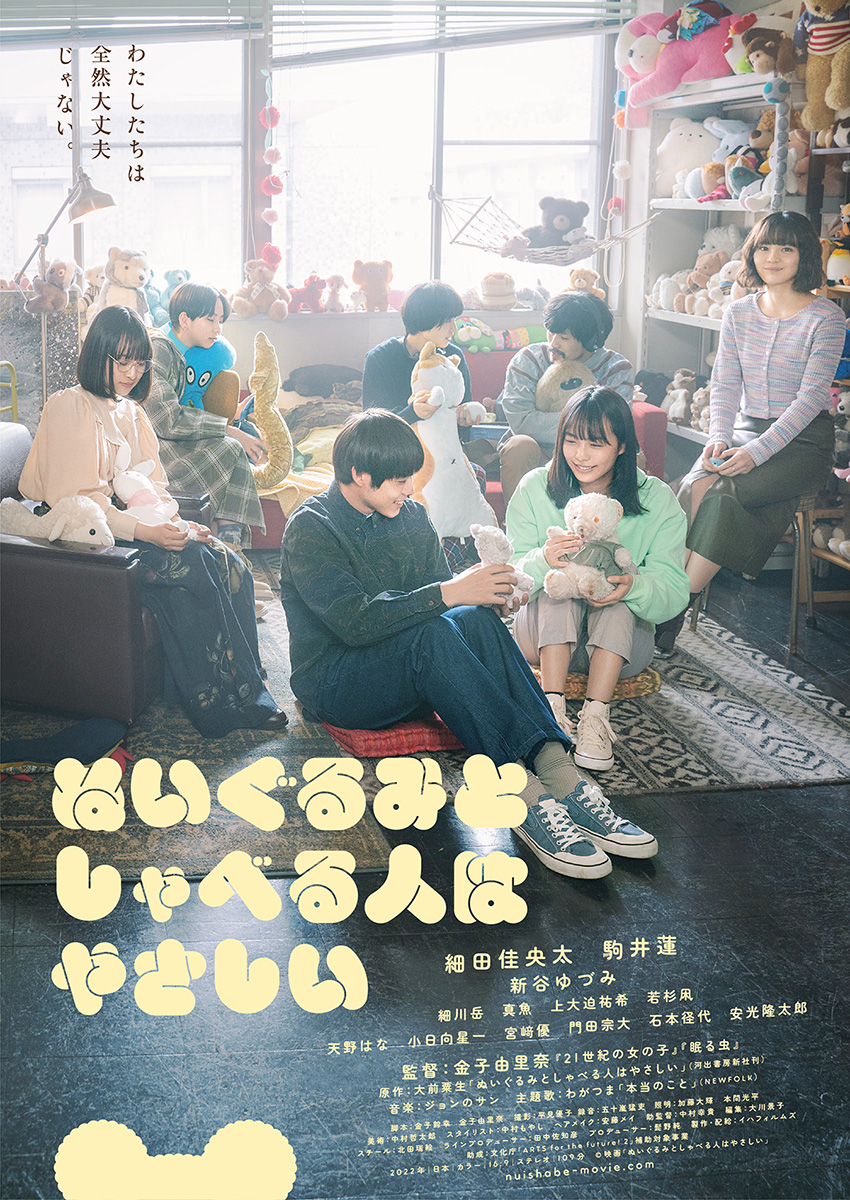
People Who Talk to Plushies Are Kind (ぬいぐるみとしゃべる人はやさしい, Yurina Kaneko, 2023)

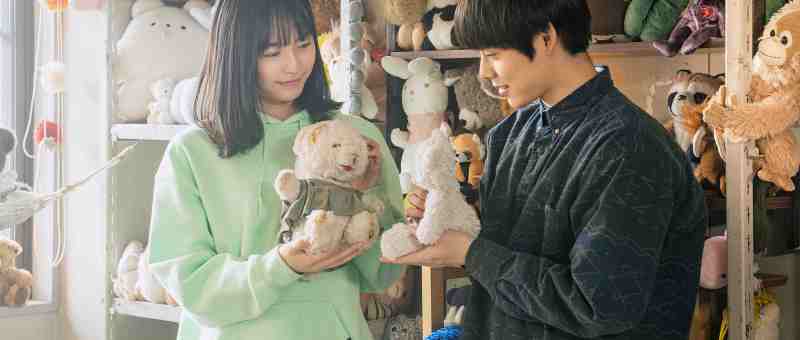
How is it possible to go on living in a society which is often unkind and at times hostile? A collection of sensitive university students find themselves struggling to accept the world around them in Yurina Kaneko’s charmingly empathetic adaptation of the novel by Ao Omae, People who Talk to Plushies are Kind (ぬいぐるみとしゃべる人はやさしい), but discover a kind of solidarity in softness after joining a club where they don headphones and unburden themselves to cuddly toys. 

As they point out, it’s good to talk. But talking to someone else about your worries can end up making them worried too and that’s the last thing any of the members of the Plushie Club want which is why they’ve decided to talk to plushies instead. Yet what’s worrying them isn’t just their worries, but a sense of their powerlessness and complicity in having behaved as if they believed the problems of others were nothing to do with them until they were shown otherwise. The hero, Nanamori (Kanata Hosoda) regrets that he “laughed things away with everyone else” rather than speaking up when he saw something that seemed wrong to him and should change while acknowledging that simply by existing as a man he may make someone feel afraid or uncomfortable without meaning to. 

Nanamori is careful not to hurt others by his own actions, trying to turn down a confession of love from a classmate in high school as kindly as he can but perhaps failing in his awkwardness even as he straightforwardly tells her that he doesn’t understand the concept of romantic desire. He simply doesn’t know what it means to “like” someone, and feels that there must be something wrong with him that he can’t grasp this simple facet of human behaviour. On a trip home uniting with some boys from school, he is immediately put off by their stereotypically masculine banter in which they ask him about girls and crushes and mock him for being a virgin until he finally leaves and tells them not to laugh at him just because he is different. 

Everyone at the Plushie Club is “different” in their own way, but has come to find a place to belong where they are simply allowed to be without needing to offer anything else. As another of the members, Nishimura (Mimori Wakasugi), puts it there’s something between kindness and indifference that is simply gentle, a quiet yet powerful quality of acceptance. When she casually revealed one day that she had a girlfriend, most of her friends were supportive but perhaps superficially. Her revelation had made them uncomfortable and regardless of how they felt about it, their perception of her had changed and she was no longer the person she had been to them before. They began to treat her differently, but at the Plushie Club there was no real difference and everyone carried on reacting to her the same way they always had. 

The Plushie Club is a place where it’s permitted to be soft in a hard world, where the members can allow themselves to feel drained by the process of living and find relief from their sense of powerlessness in acknowledging that they have made a choice to continue being kind rather than become what the world wants them to be. In an effort to understand romantic desire, Nanamori begins dating a fellow member, Shiraki (Yuzumi Shintani), but discovers that she has chosen the opposite path laughing at women who complain about societal misogyny and insisting that it’s pointless to resist because nothing will ever change. She joined the Plushie Club because she was sick of being sexually harassed at other uni gatherings but later decides to deliberately join another club filled with sexist guys because the real world isn’t so nice and the only way to survive it is to become hard yourself. 

Shiraki claims that she finds Nanamori’s “righteousness” “exhausting” and wishes she could free him and a similarly minded classmate, Mugito (Ren Komai), from their “tormenting kindness” which has in its way hurt her though unavoidably so even as she continues to be kind despite herself if rebelling by refusing to talk to plushies. Kaneko sometimes shifts to a blurry plushie vision with shimmering pastel-coloured edges and a kind of glitter snow effect that makes it seem as if the stuffed toys really are watching over their human friends as they silently, or not, agree to shoulder some of the burden of living. “They’re the ones talking to us,” Nanamori points out though in a way perhaps it’s more that the plushies reflect a part of themselves allowing them to exteriorise their internal dialogue and reach an accommodation with their fear and loneliness amid a world which consistently proves immovable and disappointing.


People Who Talk to Plushies Are Kind had its World Premiere as part of this year’s Osaka Asian Film Festival.

Original trailer (no subtitles)

Images: (C) 映画「ぬいぐるみとしゃべる人はやさしい」

Small, Slow But Steady (ケイコ 目を澄ませて, Sho Miyake, 2022)

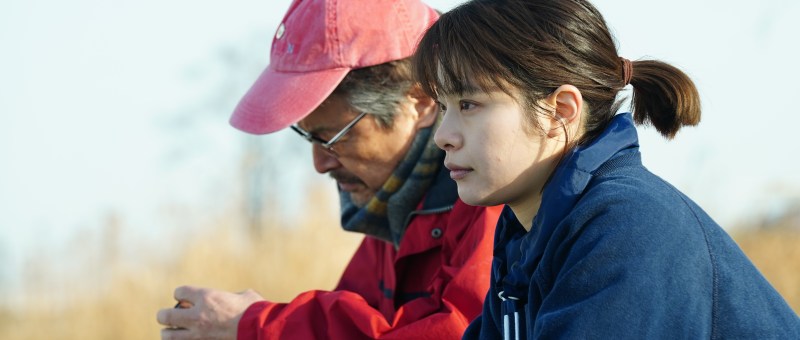
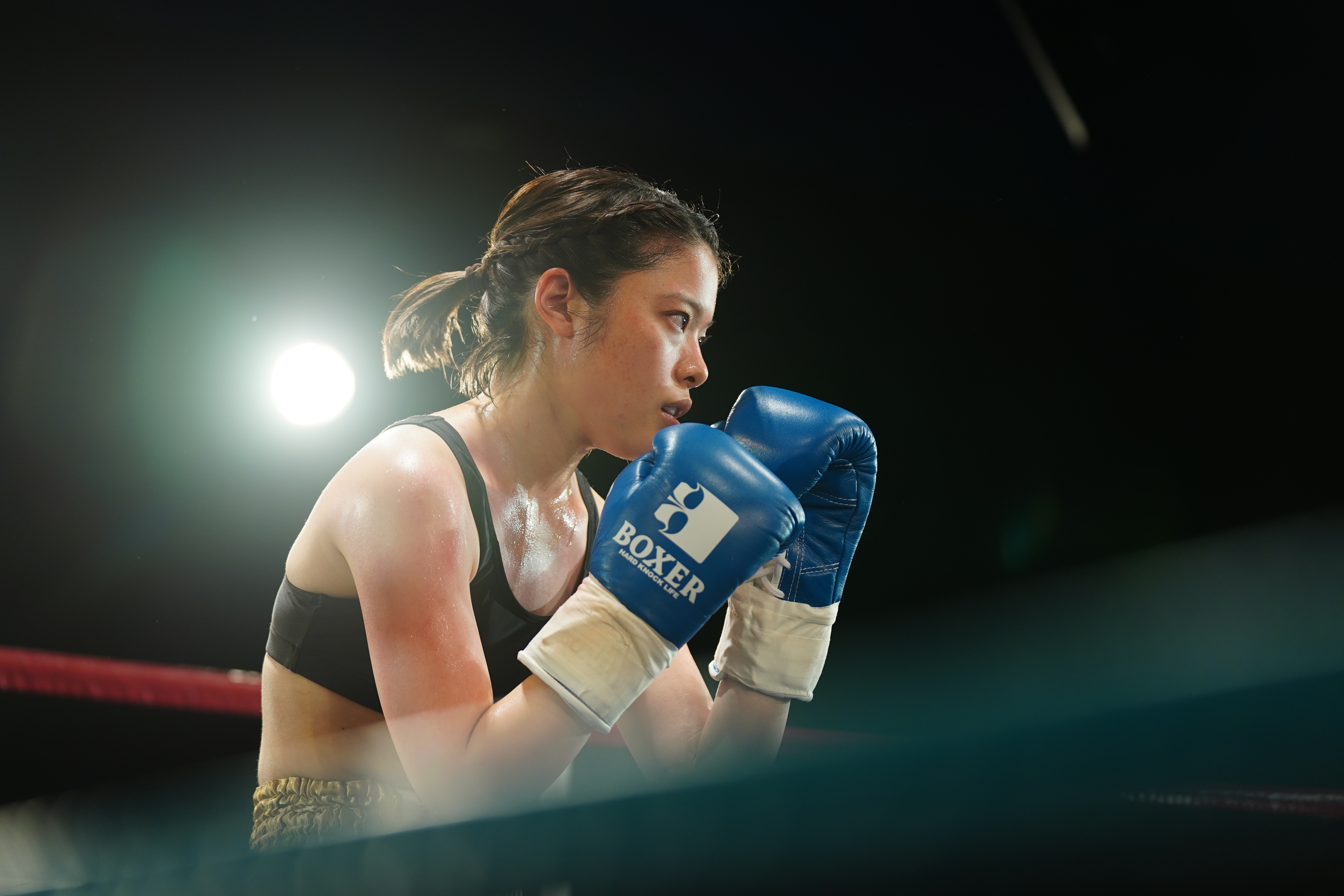
Part way through Sho Miyake’s empathetic character study Small, Slow But Steady (ケイコ 目を澄ませて, Keiko, Me wo Sumasete), an older man visits a doctor and is told that though he may think there is nothing really to worry about at the moment, a tiny drop of water falling steadily can soon make its mark in stone. It’s in one sense the small, slow, but steady stresses of everyday life that have eaten away at the soul of Keiko (Yukino Kishii), an aspiring boxer who is fast losing the will the fight. Yet it is also a small, slow, but steady process that allows her to begin moving again, climbing a new hill towards the next bout no longer so afraid of leaving the safety of the familiar. 

Deaf since birth, Keiko became a professional boxer two years previously and makes ends meet with a part-time job in housekeeping at an upscale hotel. Miyake often positions her as in a way free of the frenetic nature of the noisy city, unaffected by the shouts of rude passersby and unlike the men at her boxing gym never subjected to angry rants from her coaches. Yet it’s also at times as if she feels a kind of loneliness in the minor rejections of an indifferent society which often fails to cater to her difference. Few people are able to sign, even those at her gym haven’t learned, while others are sometimes impatient in her attempts to communicate. The restrictions of the coronavirus pandemic meanwhile only make things worse for her given that constant masking means she can no longer rely on lipreading nor can she hear the public health messages being blasted out in public spaces reminding citizens that there is a state of emergency in place and they should restrict their journeys to the barest of essentials. 

Then again, in the gym, she obviously cannot sign because the gloves her impede her ability to communicate. Nor can she hear the session bell or words of encouragement and advice from her coaches and the crowd. The chairman of the boxing club (Tomokazu Miura) admits in an interview that deafness is potentially fatal for a boxer, but that what Keiko may crave is a kind of internal peace in the surrender to the purely physical which allows her to empty her mind of everyday troubles. She may have taken up boxing as some say after being bullied as a child because of her disability, quite literally fighting back against a conformist society she refuses to beaten by, but has also found something reassuring in its slow and steady rhythms that allows her to reorient herself blow after blow. 

The chairman also says, however, that it’s not a matter of having a preternatural talent so much as a steady work ethic and above all a big a heart, describing her finally as simply “a really nice person”. “Why don’t you have your guard up properly?” another of her coaches asks her, while her brother having noticed there is obviously something bothering her tries to get her to talk, only for her to point out that “talking doesn’t doesn’t make a person any less alone”. With rumours the pandemic, along with the boss’ failing health, will finally take the boxing gym too, Keiko fears losing this final safe space but finds herself unable to stand up and fight for it. Though she had struggled to find a gym who would accommodate her disability, she is ambivalent when a new solution is found in an empathetic female coach (Makiko Watanabe) running a modern training facility who is learning sign language and keen to empower her in her own decision making rather than patronise or railroad her. Afraid of getting hurt, she takes a step back unwilling leave the security of the past for the possibility of the future. 

As Keiko reminds herself in her diary, self-control is the most important thing and the force she struggles with, suddenly losing her concentration in the middle of a match because the thoughtless referee keeps telling her to listen to him when he calls stop. In the end, it’s something quite trivial that sets her back on the path, a kind yet seemingly meaningless moment of acknowledgement from an unexpected source. Shot in a richly textured 16mm, Miyake captures Keiko’s isolated everyday with stunning clarity finding her alone amid the noisy city staring into space and looking for direction. Using intertitles to translate sign language his composition mimics that of a silent movie and lends an almost elegiac quality to the moribund boxing gym as it becomes an accidental victim of its times but ends on a note of quite resilience in the small, slow, but steady rhythms of gentle forward motion. 


Small, Slow But Steady screened as part of this year’s BFI London Film Festival.

Original trailer (no subtitles)