Bear Man (웅남이, Park Sung-kwang, 2023)

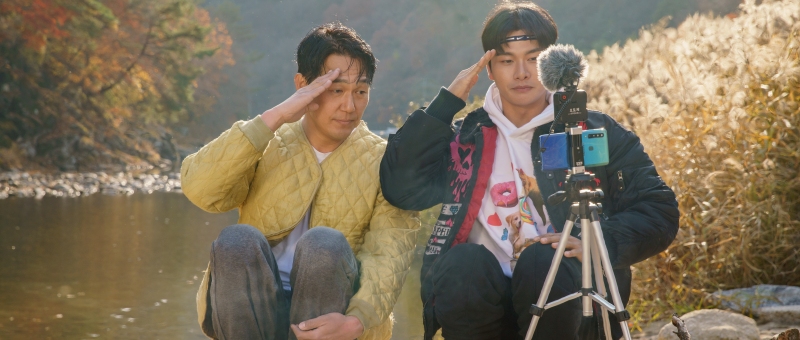
According to an ancient legend, bears who eat garlic and mugwort can become human though it’s not exactly clear why they’d want to. The debut film from Park Sung-kwang, Bear Man (웅남이, Woongnami) as its name suggests follows a pair of bear cubs who decide to give things a go in the human world but with wildly differing results as one is adopted by the researcher who allowed them to escape and the other by a vicious gangster who exploits him for his violent capabilities and shows him little love. 

Love is something Woongnam (Park Sung-woong) got a lot of thanks to his devoted mother and though not exactly the sharpest knife in the drawer had forged a promising career as a local policeman before he was let go after falling into a kind of funk on overhearing his father on the phone suggesting that the life expectancy for a regular bear is only 25 so he might not have much time left. Thanks to his nature as a bear man, Woongnam ages much faster than everyone else and already appears to be middle-aged though he is also blessed with immense strength and agility. After agreeing to bend the law by helping his feckless friend Malbong (Lee Yi-kyung) win in at illegal gambling Woognam comes to the attention of a group of police detectives investigating a shady gangster who notice a man looking just like Woongnam taking out a host of bad guys at the harbour. 

There is something quite poignant in the puppy-like existence of Woongbok (also Park Sung-woong) who keeps looking up to his boss as a father figure with a mixture of fear and longing. He gazes enviously at a family crossing the road in front of him and later visits Woognam’s home where Woongnam’s mother thinks that he’s Woognam and tries to feed him his favourite foods while he just looks on silently without expression. Where Woongnam is basically good, not too bright but heart in the right place, Woongbok has been raised as creature of violence by his intimidating father figure and carries a threatening aura with his slick haircut and tailored suit. 

The police want Woongnam to pose as Woongbok so they can take down the gangsters who have not only been trafficking drugs but also dabble in scientific research into viruses and their cures apparently about to unleash an epidemic in China to profit off the drug sales. It’s not all that clear what the scientists who released the bears were actually researching though there is a kind of parallel in the fact the other pair seemingly settled down, adjusted to their new environment and had a few cubs while Woongnam and Woongbok ended up becoming humans with bear-like abilities. Woongnam has to be prevented from entering hibernation and sleeps flat out like a bear but otherwise keeps his true nature secret even while covertly helping the townspeople out getting rid of beehives and freeing trucks stuck in the mud. 

That would be about the extent of “policing” in this kind of small-town where there’s nothing much to do but catch fish in the river and chat to wild boar. Park builds on the surreality of everyday rural life with mounting absurdities such as the parade of teenagers who troop through the convenience store where Woongnam’s live-streaming friend Malbong works each of whom he is largely able to unmask thanks to his keen sense of smell, and the polytunnel that doubles as a gambling den for down on their luck farmers. Woongnam’s biggest regret is losing his position as a police officer and it’s his desire to get it back to make things up to the people who raised him that encourages him to go along with the detectives’ crazy plan even if means he has to undergo weird martial arts training inspired by Drunken Master and take lessons from a strange movement coach in how to walk like a gangster. Yet in the end it’s Woongbok’s innocent desire for familial love that becomes a source of salvation, turning against his gangster brethren to protect the warmth of Woongnam’s family home. Quirky in the extreme and defiantly absurd, the film nevertheless has genuine heart in otherwise strange tale of wandering sons and bears of men.


Bear Man screened as part of this year’s New York Asian Film Festival

Images: © 2023 KIMCHI PICTURES PRODUCTION. ALL Rights Reserved.
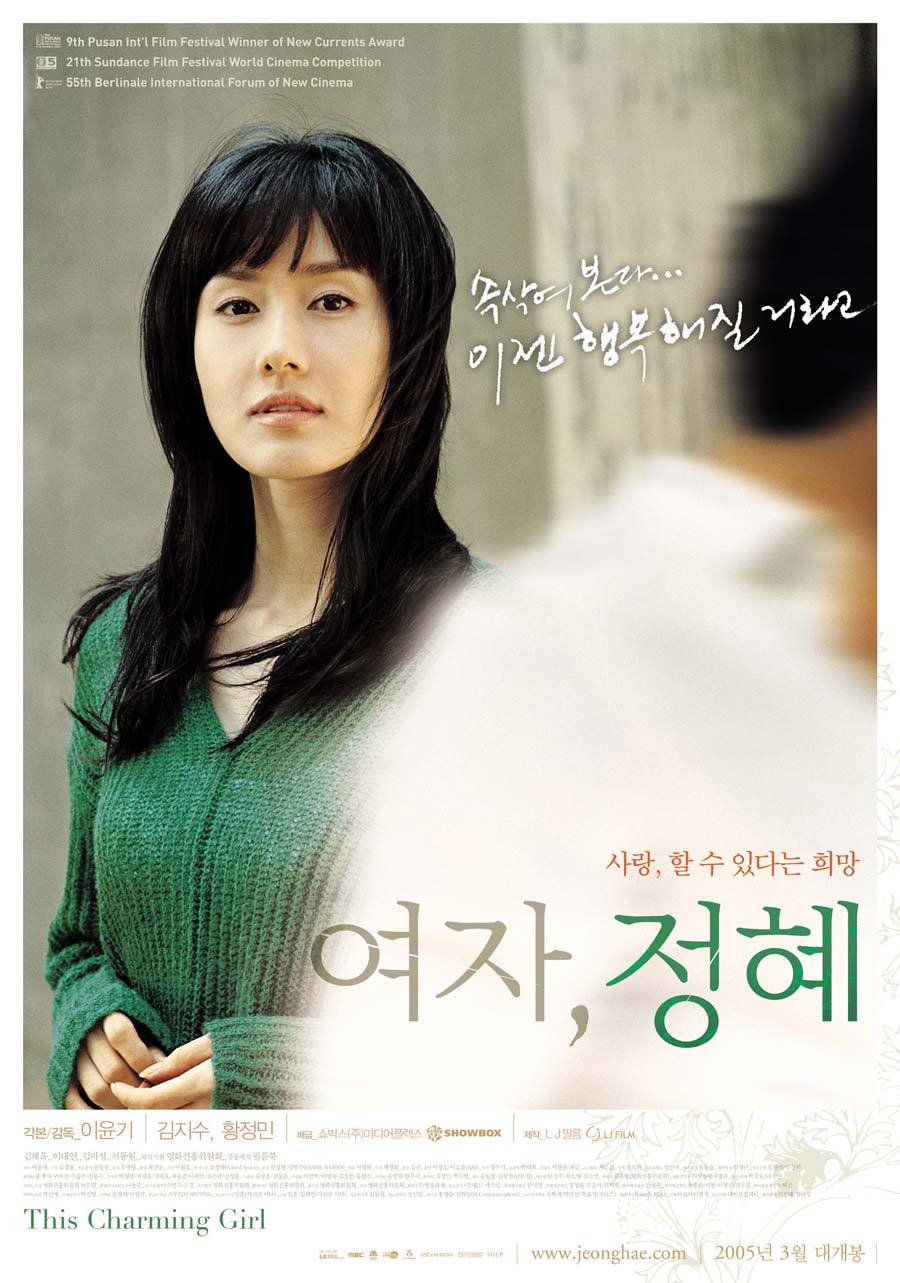
This Charming Girl (여자, 정혜, Lee Yoon-ki, 2004)

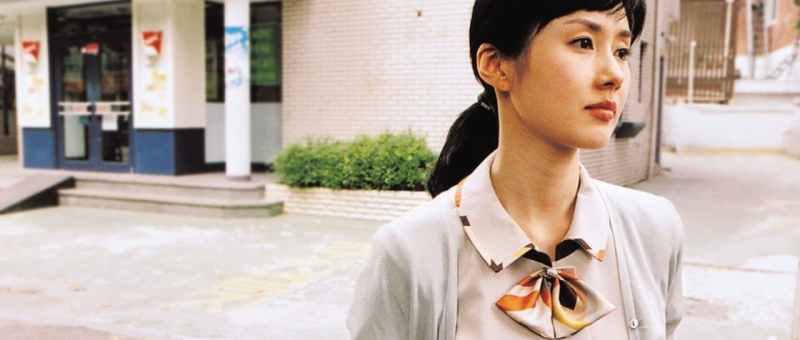
This Charming GirlIt’s strange how, even in this increasingly interconnected world, our relationships with those around us are often wilfully superficial. Trapped within our own self-obsessed perspectives, we often fail to see beneath the surface of social conformity to realise that others are also lonely or troubled, wishing someone would see them but also afraid to make plain the various ways they don’t measure up to a social ideal. The heroine of Lee Yoon-ki’s This Charming Girl (여자, 정혜, Yeoja, Jeong-hye) is just such a woman – “charming” in her perfectly composed exterior, in many ways an embodiment of traditional femininity in her near invisibility as she gets on with her life and work quietly and with efficiency. There are however tiny cracks in the surface of her ordered existence that betray an ongoing, perhaps incurable anxiety.

Jeong-hae (Kim Ji-soo), a young woman in her late twenties, has an ordinary job working on the counter in the local post-office. As we later find out, she was once married but walked out on her new husband on their wedding night and, following the death of her mother, lives alone in the same apartment she has lived in all her life. Despite being well liked at work and taking lunch with the office ladies, Jeong-hae is perhaps not quite part of the group and finds it hard to relate to her noisy colleagues who gossip about her behind her back and when all is said and done probably regard her as a fellow employee rather than friend. Jeong-hae’s days are mostly spent alone, her interactions with others outside of work extend only to awkward telephone conversations with an unkind aunt, and an angry neighbour complaining about her extremely loud alarm clock.

Despite her shyness and self-imposed isolation, Jeong-hae is a kind and caring person with a gentle, nurturing personality. In the absence of human connection, she lovingly tends to her plants but is wary of taking on responsibility for more complex creatures and it’s only after a few mornings of noticing a melancholy, mewling kitten on her way to the bus stop that she decides to pick it up and take it to a vet. Suddenly being a cat owner has a profound impact on Jeong-hae’s way of life even if the skittish creature echoes her own sense of mistrust born of previous trauma in insisting on hiding under the sofa. Bonding with a living creature brings back painful memories of her traumatic past which threaten to impede her new sense of forward motion even as she attempts to outrun them.

The kitten isn’t the only stray Jong-hae picks up, later she takes pity on a sad young man who became involved in a drunken bar fight and alienated all his friends. Generally speaking, for reasons we later come to understand, Jeong-hae is wary of men and of male physicality. A rare visit to a shoe shop provoked by an unpleasant meeting with her ex-husband who has only got back in touch to express how much she hurt him by walking out without explanation, makes plain her distress even with perhaps “ordinary” everyday interactions. Though she does her best to endure it, Jeong-hae’s discomfort with the salesman’s hard sell tactics as he uses overfamiliar language and roughly manhandles her feet into a pair of sandals (which do not really suit her) eventually results in an extremely rare instance of self-assertion as she tells the assistant off, politely, before stopping to advise the woman behind the counter that perhaps men should not be selling women’s shoes or at any rate they should treat their customers as “people” rather than sales targets. Nevertheless, something about the drunken young man tells her that he is not a threat, only another person who seems to be in a dark place and probably in need of a stranger’s ear.

It’s perhaps this same sense of “recognition” that prompts her into making an extremely forward and uncharacteristically bold overture towards a shy young writer (Hwang Jung-min) who comes to the post office regularly to send off his manuscripts. If we get the sense that Jeong-hae is a mostly invisible person, then the writer is much the same. We catch sight of him often in the background, shopping in convenience stores, sitting at outdoor tables, waiting to cross the road. He’s the kind of person that perhaps only someone like Jeong-hae, equally invisible, a supernumerary even within her own world, might recognise. The tragedy is that Jeong-hae has a lot of love to give but has been robbed of the knowledge of how to give it safely thanks a traumatic incident in her past in which her innocence and naivety were abused by a person of trust who left her with no one to turn to for protection and a deeply internalised sense of shame and rage.

Her traumatic memories surround her like living beings, occupying the same space, occasionally poking their heads into her everyday life to remind her of an unpleasant association she couldn’t forget if she tried. Jeong-hae no longer sleeps, she naps fitfully on the sofa or wanders around all night at markets and cafes; she craves connection, but cannot access it. Thanks to the cat, the ex, the writer, even the overbearing shoe shop assistant and drunk man, she begins to find a way forward even if it pushes her towards an equally dangerous conclusion, and suddenly perhaps it’s not quite all so hopeless as it seemed.


This Charming Girl was screened as part of the 2018 London Korean Film Festival.

Original trailer (no subtitles)

https://www.youtube.com/watch?v=R1XYC50A15o