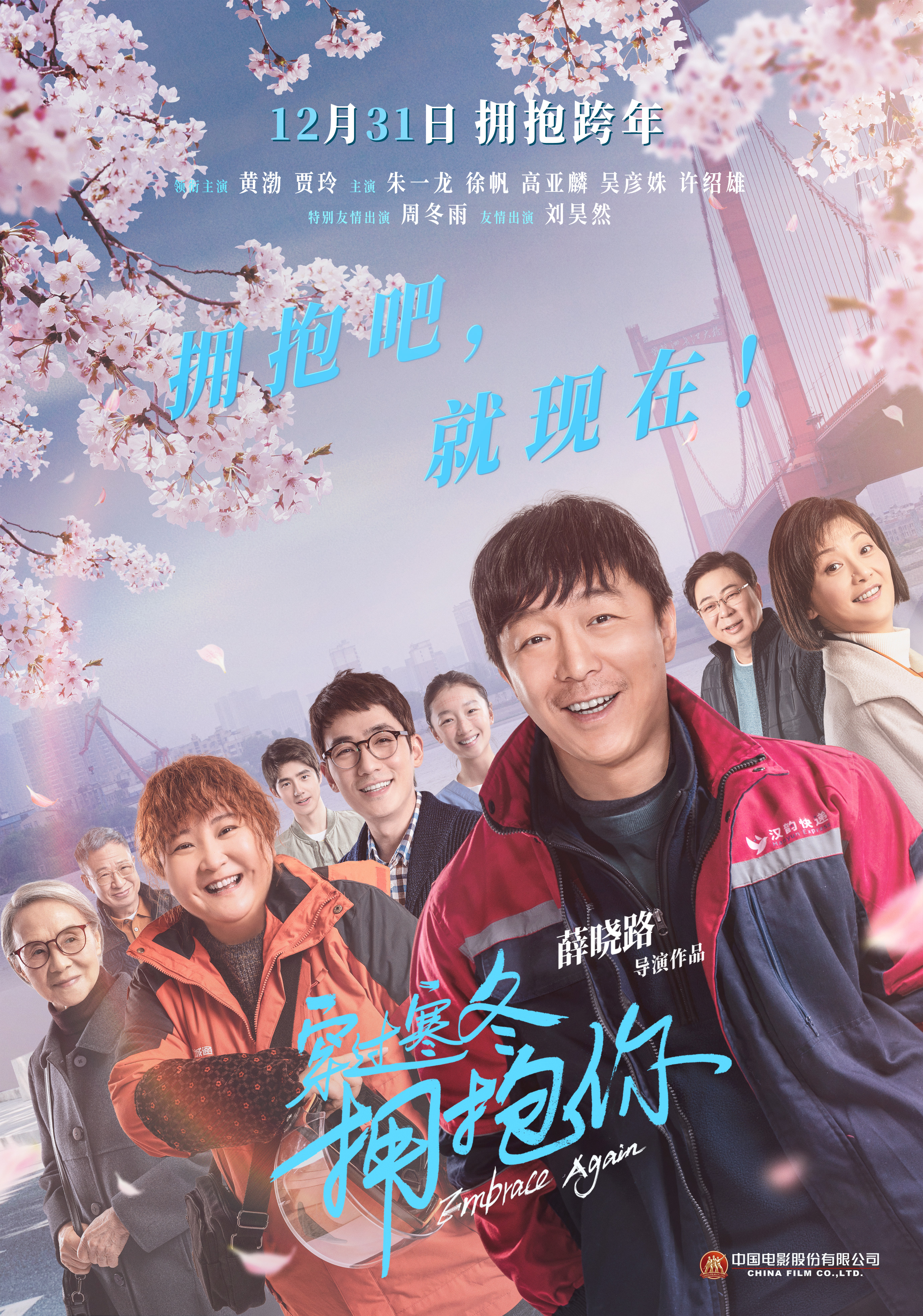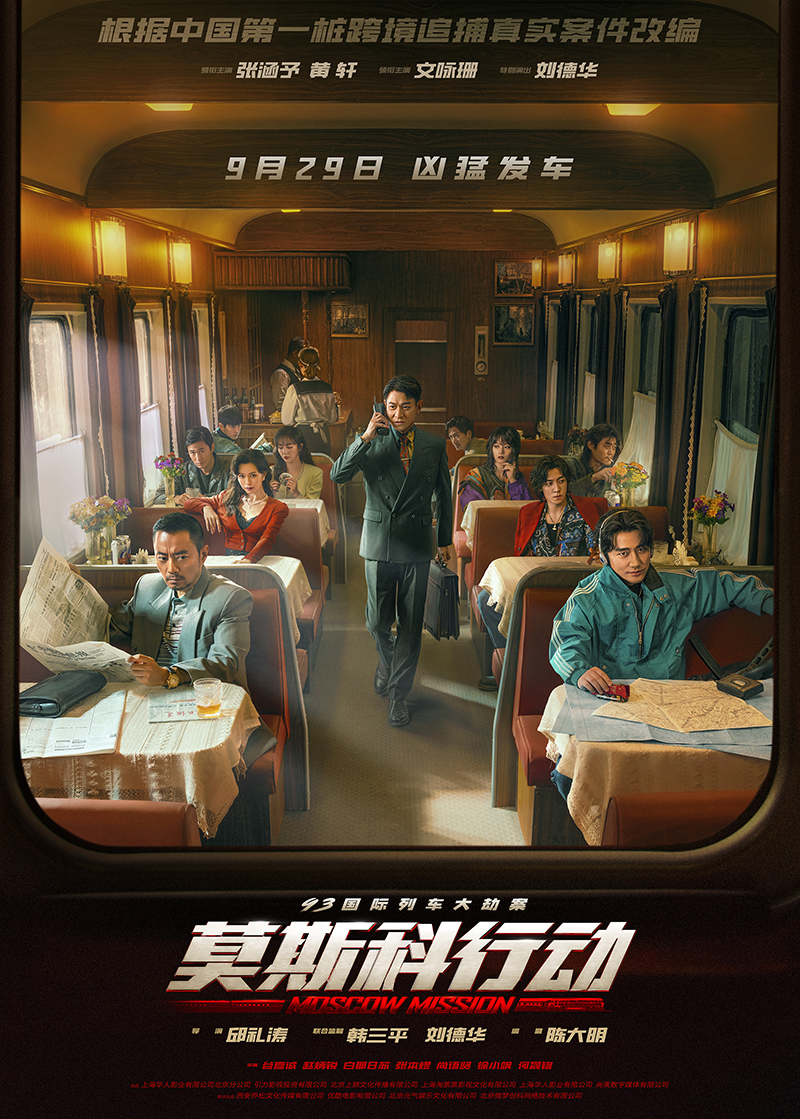
Moscow Mission (93国际列车大劫案:莫斯科行动, Herman Yau, 2023)

In the early 1990s, China and Russia were each struggling to accommodate new political and economic realities. This is at least one reason offered in explanation for the nexus of crime that overtook the long distance train connecting the two capitals in Herman Yau’s action drama Moscow Mission (93国际列车大劫案:莫斯科行动, guójì lièchē dà jié àn Mòsīkē xíngdòng). Inspired by a real life train heist in 1993, the film suggests that China was pulling ahead free of the labour protests which appear frequently in Moscow amid the collapsing Russian economy but equally insists that the bandits must be stopped because they not only endanger China’s international reputation but its trading relations with the former Soviet Union.

In truth there’s no real reason given for the mysterious D’s (Huang Xuan) heinous crime spree save a later allusion to a troubled childhood and the sudden death of his sensitive musician father when he was only 13 (which would put it shortly before the end of the Cultural Revolution). In any case, those around him have more complex motivations such as those of Zhenzhen (Janice Man Wing-San), a former sex worker employed by the gang to identify wealthy passengers and inform the rest of the crew by note, who needs the money for a sick relative. In any case, nearly everyone on this train is concealing vast amounts of hard cash, mostly in their underwear. Not content with the money, D also stops to rape a woman who had resisted but was found with a large amount of money stuffed in her bra. 

In short, there’s nothing noble about D’s gang or any implication they’re rebellious outlaws just thuggish crooks taking advantage of a geopolitical vulnerability. Local fixer Vasily (Andy Lau Tak-Wah), however, is otherwise depicted as a victim of circumstance cruelly separated from a then newborn daughter for whom he is continually searching. He made his money digging a tunnel from Shenzhen to Hong Kong and using it to smuggle luxury goods in much the same way many now use the train as is evident by the scenes at Russian station when passengers suddenly start leaning out windows flogging pairs of jeans. Vasily’s in on that trade too, as well attempting to broker a deal for a wealthy man to buy a former Soviet fighter jet, but seems unhappy with his life of petty crime selling fake passports to dodgy people and also has an ongoing non-romance with Zhenzhen who is trapped in an abusive relationship with D’s brother-in-arms Zhiwen (Jason Gu Jiacheng). 

Intense police captain Cui (Zhang Hanyu) is dispatched to catch the train robbers and avenge China’s international reputation by bringing order to the train but also stumbles on another crime in progress in the Russian capital. He has an opposite number in Sergey (Andrey Lazarev), a former KGB now FSB officer who hints at a new world order if also at a society very much in flux. In some ways the film suggests Cui’s inevitable victory is aided D’s hubristic overreach and the cooperation of the Russians rather than his own powers as a Chinese policeman, but also that China will clean up after itself taking down a Chinese gang while technically on foreign soil and making sure they return to China for justice. 

Yau opens strong with the high impact sequence of the original heist as the camera first pans along the inside of the train before finding Zhenzhen and then rest of the gang, while otherwise continuing to escalate the action with a climax at an abandoned rocket base and then a final shootout at the train depot where the carriages must quite literally change the gauge to shift from the old Soviet railways to the modern China. The gang members may implicitly be among those who’ve lost out in the face of new economic realities, though aside from D’s possibly duplicitous musing on the life he might have led if his father had not died leaves them little justification for the cruelty of their crimes. Meanwhile, Cui’s justice is not implacable, taking pity on both Zhenzhen and Vasily and promising to treat them fairly in acknowledgement of their cooperation as opposed to D who had problematic gang members bumped off by the possibly the worst hitman in Moscow and has been using Vasily’s daughter to manipulate him for last few years with no certainly that he actually knows where she is. Making a minor point about empty consumerism in the constant references to stolen watches, Yau goes big on spectacle but also homes in on the smaller stories of trauma and displacement that eventually provoke it.


International trailer (Simplified Chinese / English subtitles)
Embrace Again (穿过寒冬拥抱你, Xue Xiaolu, 2021)

Another in the recent line of “Main Melody” features celebrating ordinary heroism during the extraordinary period of the pandemic, Embrace Again (穿过寒冬拥抱你, chuānguò hándōng yōngbào nǐ) is dedicated to the volunteers who risked their own safety to support frontline workers in the early days of the Wuhan lockdown. Though sometimes bittersweet, the film is noticeably lighter in tone and somewhat rosy in comparison to other similarly themed dramas such as Ode to the Spring but it is in its own way prepared to concede that the initial response was not handled perfectly and that fear, chaos and panic were the defining features of New Year 2020 even if it does so to throw the heroism of those who stepped up to help in stark relief. 

Like other pandemic films, Embrace Again is comprised of a series of interlocking stories connected by the volunteer effort helmed by A-Yong (Huang Bo) who has something of a hero complex and is caught in a mini war with his feisty wife who is quite understandably upset with him seeing as he’s left her all alone with their son during these difficult times while he runs around helping other people having decided to stay elsewhere so as not to expose them to further risk of disease. As he ferries people around, it becomes clear that there were not so many people like him in the beginning with most preferring to keep to themselves out of fear leaving the medical staff who were risking their own lives to protect those suffering from the virus with nowhere to turn for support.

A-Yong’s heroism is contrasted with the indifference of wealthy businessman Li (Gao Yalin) who rudely tells him where to go when A-Yong rings up trying to organise food donations for hospitals. Li is at odds with his wife (Xu Fan) whose successful tourist business has been all but destroyed by the virus, unable to understand her decision to keep her staff on payroll with full salaries and resentful of her insistence on calling in a longstanding loan from an old friend of his. Yet like so many his attitude is gradually changed by witnessing responses to the pandemic, allowing him to regain his social conscience becoming a volunteer himself and agreeing to donate a significant proportion of his stock to frontline workers while rediscovering his love for his wife who started her own business not for the money but for her dignity after being called a “stupid housewife” by their daughter now soon to be a mother herself and trapped overseas in New Zealand by the lockdown. 

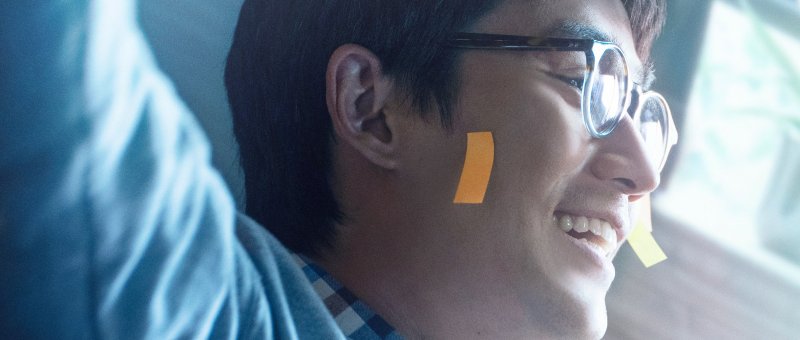
Nicknamed Brother Wu (Jia Ling) because of her forthright character and robust frame, a female delivery driver associate of A-yong’s experiences something similar as she firstly befriends a cheerful young nurse, Xiaoxiao (Zhou Dongyu), working at the hospital and engages in a tentative romance with a sensitive divorcee, Mr. Ye (Zhu Yilong), she picks up prescriptions for. In a pleasantly progressive plot strand, Wu is forever telling people she’s trying to lose weight but both Xiaoxiao and Mr. Ye make a point of telling her that she’s fine as she is and has no need to. When Xiaoxiao gifts her lipstick, it’s not a suggestion that she is unfeminine but the reverse allowing her a means to reclaim her femininity for herself and believe that she is both beautiful and desirable exactly as she is. 

Similarly, an elderly woman (Wu Yanshu) living with her widowed son-in-law and grandson is given permission to begin moving on with her life when when she’s called out of retirement to return to the hospital as a midwife. While telling her son-in-law that he shouldn’t feel guilty about seeking new happiness, she too finds love with a Cantonese chef (Hui Shiu-hung) who ends up becoming a volunteer solely so he can deliver her lovingly prepared meals direct to the hospital. Each of these tales are essentially about people finding love in unexpected places while rediscovering their ties to the community, setting greed and self-interest to one side as they risk their own safety to preserve that of others. Wuhan is cut off from the rest of the world, but receives support in the form of external supplies celebrated by A-Yong and the small core of volunteers pitching in to keep the city running. Ending on a bittersweet note acknowledging a sense of loss but also that of a new beginning, the film closes with touching scenes of community in action before giving way to the now familiar stock footage of the real volunteers celebrating Wuhan’s reopening with a sense of joy and relief that might in retrospect seem premature but is also a perfect encapsulation of the view from April 2020.


Embrace Again screens in Chicago on Sept. 10 as part of the 15th season of Asian Pop-Up Cinema.

International trailer (English subtitles)

Detective Chinatown 3 (唐人街探案3, Chen Sicheng, 2021)

Cerebral sleuth Qin Feng (Liu Haoran) and his larger than life uncle Tang Ren (Wang Baoqiang) are back on the case in the third instalment in the Detective Chinatown franchise (唐人街探案3, Tángrénjiē tàn àn 3) picking up as promised in Tokyo as the duo take on another locked room mystery on the invitation of dandyish local investigator Hiroshi Noda (Satoshi Tsumabuki). This time around, the mystery is only tangentially connected to a Chinatown though the solution in itself does indeed lead back towards the Mainland and the complicated relations between China and Japan, while Qin in particular finds himself confronting the idea that oligarchy is in fact the “perfect crime”. 

Hired by a yakuza boss, Watanabe (Tomokazu Miura), accused of offing a Thai rival, Su Chaiwit, following a dispute over development rights in the local Chinatown, Qin and Tang Ren quickly find themselves hamstrung by their own discovery of evidence which further implicates their client and brings them to the attention of top cop Tanaka (Tadanobu Asano) who wastes no time telling them to mind their own business. Meanwhile they are also being pursued by muscly Thai detective Jaa (Tony Jaa) working for the other side. In a new high tech motif, the guys are each handed a simultaneous translation earbud which allows the Japanese and Chinese guys to converse with each other in their own languages though Hiroshi often chooses to speak directly in Mandarin instead while the Thai contingent exclusively use English. Unlike previous instalments the duo do not venture into the local Chinese community and Chinatown itself is merely territory contested by Japanese yakuza and South East Asian gangsters. 

Even so Qin and Tang Ren find themselves at a nexus of cross-cultural conflict caught between the cops, yakuza, and Thai gangsters each looking not so much for the truth but some kind of advantage for their side all of which culminates in a hilarious series of mixups at a morgue. Once again, Tang Ren falls in love with a local woman, in this case Su Chaiwit’s secretary Anna Kobayashi (Masami Nagasawa) who is certain Watanabe is guilty and later apparently kidnapped by a crazed serial killer (Shota Sometani) just by coincidence. Of course, all this cycles back towards the franchise’s growing mythology, Qin pursued and manipulated by the mysterious entity known only as “Q” which, as we learn, is as obsessed with the idea of the perfect crime as Qin largely in that they think they’ve perfected it in the stranglehold placed over civilisation by a shady elite. 

In this, the film may be taking aim at hidden oligarchy and the immorality of growing social inequality, but in its Japanese setting Chen is also freer to take potshots at contemporary Chinese society such as in Tang Ren’s confusion that they can’t simply bribe the police to get Qin out of jail when he is wrongfully arrested. “Justice and equality require sacrifices” Qin explains after solving a grim riddle only to be asked some difficult questions about the nature of justice and his own role within it by a manipulative villain, but in a classically censor-friendly move ends the movie with a brief monologue declaring that “justice always prevails and light overcomes darkness”, he and his team recommitting themselves to fighting “vices”, and presumably the shady elitism fostered by Q, wherever they arise. 

Like Detective Chinatown 2’s New York setting, the vision of Japan on display is deliberately stereotypical from an Akihabara cosplay carnival to tasks involving masked kendo fighters and a sumo wrestler, not to mention bumbling comedy yakuza forever threatening to cut off their fingers, the Shibuya Scramble set piece, or a playful homage to Phoenix Wright: Ace Attorney. Meanwhile, Chen continues his taste for huge ensemble action such as the complex slapstick routine that opens the film and now traditional end credits sequence featuring the cast dancing to theme tune “Welcome to Tokyo” dressed in the classic green detective mac worn by Qin. Truth be told, the solution to the central mystery is heavily signposted and slightly unsatisfying though Chen’s visualisations of Qin’s deductions are expertly rendered even as the hero’s growing confidence as a crimefighter unbalances his relationship with the increasingly silly if goodhearted Tang Ren. Boasting a host of A-list Japanese acting talent, the film also makes space for an unexpected cameo from one of the most recognisable faces in Sinophone cinema before teasing a further instalment to take place in London, home to the greatest consulting detective of them all. 


Detective Chinatown 3 is available to stream in the UK via iTunes, Google Play, Amazon Prime, Microsoft, Sky, and Virgin Media courtesy of Cine Asia.

Original trailer (English / Simplified Chinese subtitles)