
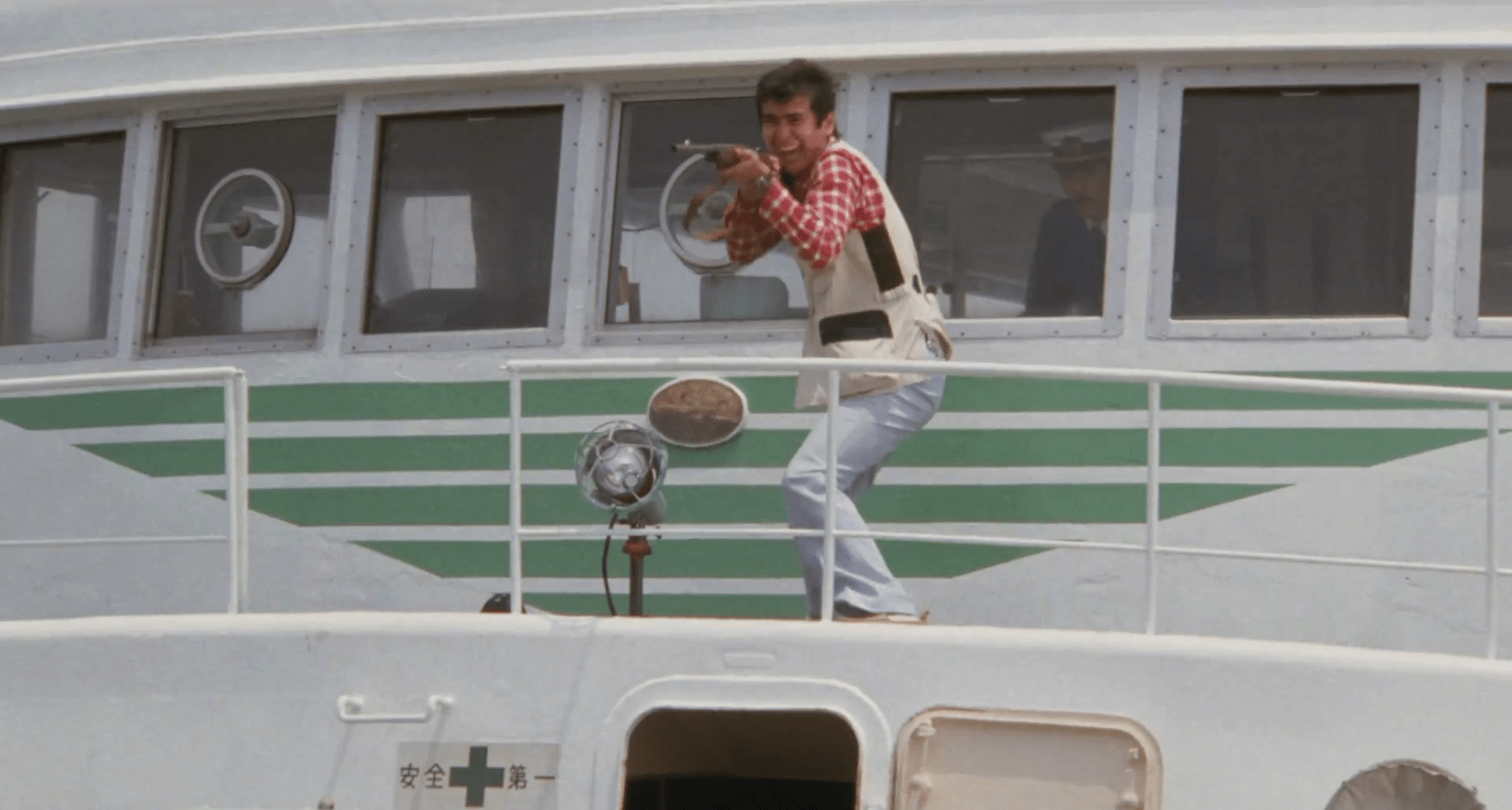
The seishun eiga or youth films of the 1960s often had an ambivalent attitude to rebellious youngsters who for various reasons were not able to accommodate themselves to the times in which they lived, but few were prepared to ask real questions about society’s responsibility towards young people in difficult situations who had often been let down by the same state institutions which only sought to demonise them. Based on a story by Hiroshi Fukuda which was inspired by a real life ferry hijack which outraged the nation when the police opted to shoot the teenage hijacker dead, Toru Murakawa’s The Shootout (凶弾, Kyodan) stars the nephew of 60s youth movie king Yujiro Ishihara and places the blame firmly at the door of the police and other public services whose gradual and needless escalation of events leads only to tragedy.
Teenagers Hideo (Yoshizumi Ishihara), Numa (Masato Furuoya), and Soichi (Tatsuo Yamada) met in reform school and have become something like brothers. All of them either never knew their parents or lost them young and have developed a healthy distrust of authority thanks to their experiences. As the film opens, the boys run cheerfully through the streets of a small rural town headed to the mountains where they play with a shotgun Hideo inherited from his late father. While driving back the boys pick up a distressed young woman, Hiromi (Mio Takaki), running barefoot through the pouring rain, but soon come to the attention of a pair of bored policemen the older of whom has a definite problem with the “unreliable” youth of the day and all their “sissy” music. They pull car over for speeding which is a problem not only because Soichi has been drinking, but because it is also not his car. He took the neighbour’s when his was taken away and it’s been reported stolen.
While the younger policeman processes Soichi, the older one decides to kick off after finding the shotgun, banging Hideo’s head against the side of the car and then attacking Numa with a police truncheon when he asks him politely to stop before punching him in the face and kneeing him in the stomach though at this point neither of the boys has made any attempt to resist. Continuing to kick him on the ground, the policeman tells Numa that he should have more respect for his parents which is something of a sore spot because Numa was a foundling raised in the care system. Snapping, Numa hits the policeman over the head with the shotgun leaving him crawling on the muddy ground in danger of drowning while having suffered a serious head injury.
This is first of many needless escalations that the boys encounter. The policeman was not really interested in serving the law, only in validating his authority and in reality little better than a thug himself. If he had not needlessly inflicted violence on the two young men, which is in itself an act of extreme entitlement given his age and fitness level compared to that of two physically fit teenage boys, none of the succeeding action would have taken place. The boys feel that they are unfairly victimised and are understandably mistrustful of the police because as they say even when they are doing their best to adhere to the rules of mainstream society they are written off as reform school boys not least by the police who have already decided that they are innately bad and must be guilty of whatever it is they are accused.
The boys find the same thing when they decide to turn themselves in after a few days on the run and go to their social worker for help. The social worker lives in a temple and first seems as if he’s going to help when they explain and ask him to mediate for them with the police who they fear will not listen to the real story, but it soon becomes clear that he only wants to help Hideo who is the grandson of a diplomat and a promising student while foundling Numa is according to him unsalvageable. If only the social worker had been prepared to listen to them, the hijacking would never have happened. All the boys ever ask for is that someone pay attention to their side of things, honestly without prejudice, but all they’re ever told is that the word of a reform school boy is worthless which really begs the question of what the reform school is for in the first place.
Then again there are a handful of sympathetic officers including one in charge of the original incident who makes it clear to his men that they should not be judging the suspects on their backgrounds while another (Kunie Tanaka) who was responsible for arresting Hideo when he killed his sister’s no good violent boyfriend during a fight reflects that he had beautiful eyes for a murderer and has come to question the nature of contemporary policing feeling perhaps that boys like these deserve help rather than punishment. The only person who does make an effort to listen is the fatherly captain of the ferry which Hideo ends up hijacking (Tomisaburo Wakayama) who seems to be getting through to him only to have his progress undermined by the police who again only want to preserve their own authority.
Comparing the ferryjacking to the 1972 Munich terrorist attack, which seems rather hyperbolic even though the situation is obviously dangerous given the hostage taker is an emotionally volatile teenage boy with at this point two powerful firearms, the police and Coast Guard determine that killing him is likely the only solution. Obviously never having studied much about hostage negotiation, they surround the boat when it stops to refuel pushing Hideo further into a corner and increasing the likelihood that he may end up feeling out of options and decide to take everyone else with him when he goes. From the police’s point of view, perhaps that adds an extra justification to their clear determination to kill when the implication is that to them boys like Hideo are just a threat to be neutralised, another powder keg reform school boy who would have caused trouble eventually.
That the public do not agree with the police’s actions perhaps says something about contemporary social attitudes, that in general people do not want to live under such rigid authoritarianism and could see that Hideo was merely a frightened boy who could have been talked down if again someone, other than the captain who did his best to save him, had been prepared to listen rather than once again needlessly escalating the situation to preserve the image of police authority. On the flip side, we’re also shown that the shooting has an adverse effect on the remorseful police sniper who is also at a moment of emotional strain caring for a wife dying of a brain tumour at only 25. Reminiscent of Rebel Without a Cause, The Shootout like its heroes has a healthy distrust of authority figures but also a small faith in the wider public while asking serious questions about the way society treats those who are often the most in need of care and protection.
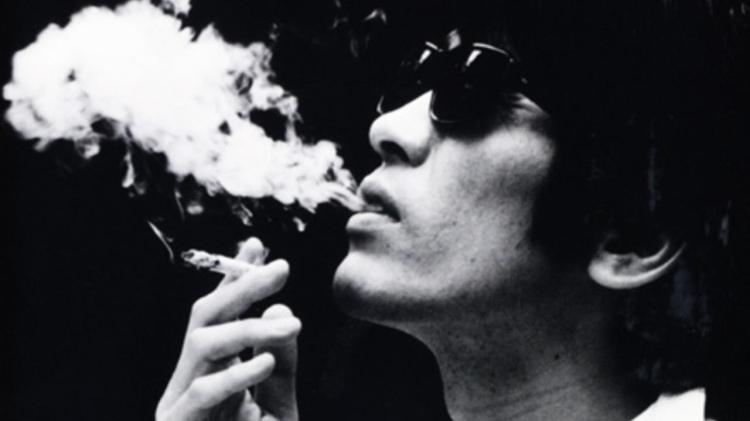 When you learn someone has died, suddenly everything they have ever done becomes tragic. No matter how old they were, this fact remains. Ryuji is a film which is always going to be overshadowed by the fact that its leading actor and screenwriter sadly passed away at the extremely young age of 33 from a terminal illness only days after the film’s release. Well, in actuality, the film was only “released” in a very limited sense, perhaps no one really had the heart to go on with it. However, it left its mark on all who saw it and eventually became a cult hit and influential classic on VHS. On paper, its tale is conventional – an existential yakuza drama about a man torn between conflicting desires and his own nature but on film, it’s something else.
 Windows on Worlds