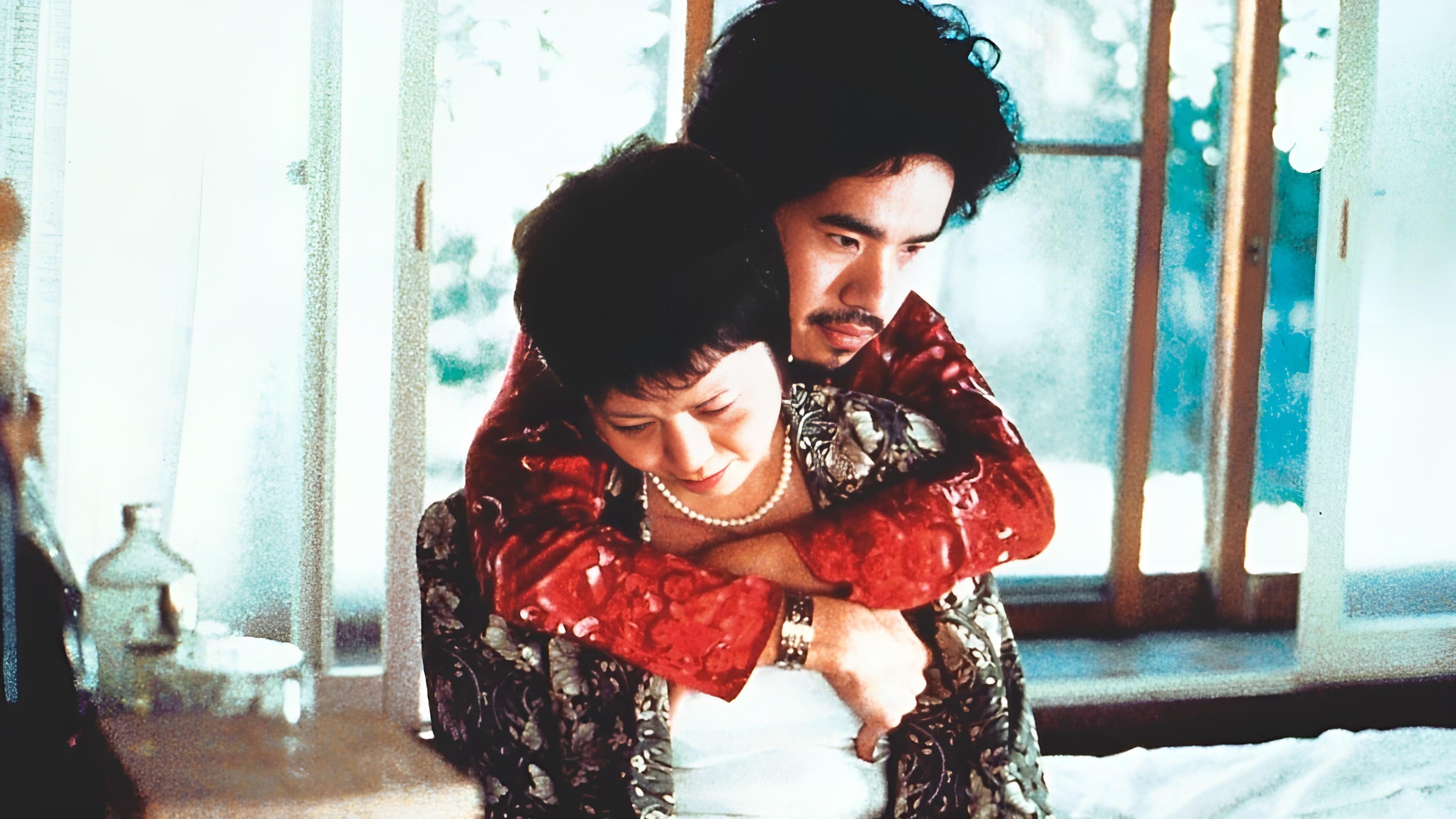
Visitor Q (ビジターQ, Takashi Miike, 2001)

As Japan emerged from post-war privation into bubble-era comfort, the family underwent something of a reassessment. Remoulding Teorema, Yoshimitsu Morita’s The Family Game had punched a hole through the concept of the family in sending in a mysterious teacher who slowly proved to them all they were merely involved in a prolonged act of performance unpinned by social convention rather than genuine feeling. Sogo Ishii’s The Crazy Family did something much the same but ultimately opted to save the family unit by allowing them to find peace literally “outside” of the contemporary rat race. And then there comes Takashi Miike who, ever the ironist, runs the whole thing in reverse as Visitor Q (ビジターQ) comes to put the family back together again by giving them permission to bond through satisfying their previously unanswered emotional needs.

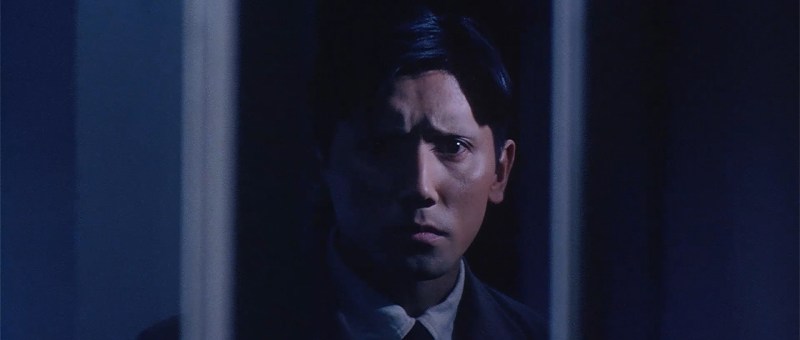
As the film opens, however, patriarch Kiyoshi (Kenichi Endo) is in a hotel room interviewing a young woman as part of a documentary investigating the youth of today. She replies only that what the youth can tell him about the future of Japan is that it’s hopeless, before getting back to business and elaborating on her price list for a menu of sex acts. Though originally unwilling, Kiyoshi ends up having apparently very exciting sex with her, but comes to his senses after climaxing too early. The girl, we later learn, is his runaway daughter, Miki (Fujiko), who has been living a life of casual sex work in the city. Kiyoshi determines to pay her in full, but explains that that he’ll give the rest of the money to her mother and she must keep everything that happened between them in that room a secret (a minor problem being Kiyoshi left the camera on and ended up documenting the whole thing, something that he will repeat later but quite deliberately). 

Stunned by his transgressive encounter, Kiyoshi looks on at a happy family with a degree of confusion while a strange young man leans through the window of the train station waiting room and whacks him on the head with a rock. Before he finally arrives home, the man hits him again just to be sure, but eventually follows him for dinner where he is introduced as an “acquaintance” who will be staying with him for an unspecified amount of time. 

Kiyoshi’s household is already falling apart, and quite literally seeing as the shoji are full of holes, partly because of the attacks of the “big bullies” who torment his teenage son Takuya (Jun Muto) by launching fireworks into his bedroom, but also because the boy takes his humiliated frustration out on his mother Keiko (Shungiku Uchida) who is covered in scars from previous beatings and has taken to using heroin to escape the misery of her family and doing part-time sex work to pay for it. 

Like the intruder of The Family Game, Visitor Q gradually infiltrates the family by usurping a place within it but begins to reawaken and reinvigorate each of the members as he goes. The first thing he takes hold of is Kiyoshi’s camera, literally observing the family and helping to document the Japan of today through the eyes of this very strange yet “ordinary” family. A man of the post-bubble era, he’s another failed provider whose career continues to flounder while his home spirals out of control, shorn of paternal authority. He feels insecure in his manhood, humiliated by his tendency towards premature ejaculation, and is raped with his own microphone by the “youth of today” while trying to interview them, which leaves him, according to his boss and former lover, looking like a fool. 

Kiyoshi is convinced he can get his mojo back through career success in making himself the subject of his own documentary, or more accurately his observation of his son’s bullying which he later reveals perversely turns him on. When his boss shuts his idea down, he rapes her, feeling humiliated again in complaining that she dumped him because of the premature ejaculation and vowing to prove himself but accidentally strangling her. Meanwhile, Visitor Q is back home getting busy with the under appreciated Keiko who describes herself as neither special nor pathetic but an ordinary woman, longing to be loved and wanted. Even one of her clients, exclaiming surprise to discover that a “nice woman” like her does stuff like this, appears to have a disability fetish remarking that is feels different with someone who has a limp. Visitor Q gets her juices running again, literally, reactivating her maternity and perhaps allowing her to reclaim her position within the household. 

“I’ve never seen her so competent since we married,” Kiyoshi exclaims after she employs some top housewife logic to help him deal with his dead body problem, after which they take a rather more active stance against Takuya’s snotty bullies, pulling together to protect him in a way they never have before. Takuya may remain outside of the family hive, but he’s drenched in mother’s milk and perhaps the only one to truly recognise Visitor Q for who he is. Nevertheless, the Yamazakis are an “ordinary” family, just taken to extremes. Dad’s an emasculated salaryman broken in spirit by economic failure, mum’s an unhappy housewife lonely in repressed desire, son is an angry young man like his dad humiliated by the big boys, and daughter is a melancholy runaway who has tried to seize agency through using her body as a weapon but still feels that the future is hopeless and that her gesture may be one of self harm. Nevertheless, through the exposure of their myriad transgressions, they begin to bond in shared perversity. Thanks to Visitor Q, the family is “restored”, not “cured” but reaching its natural state of being as a collection of individuals assume their complete selves and in mutual acceptance rediscover a home.


Trailer (English subtitles)

Scorpion: Double Venom (サソリ・女囚701号, Ryoji Niimura, 1998)

Scripted by Sasori in USA’s Daisuke Goto, Scorpion: Double Venom (サソリ・女囚701号, Sasori: Joshuu 701-go) brings Nami back to Japan but with an all new backstory and motivation for revenge. In the films up to this point, Nami is betrayed by a man she loves and thereafter seeks a revenge that becomes progressively less personal, striking out against entrenched patriarchy and societal misogyny. This time, however, she’s to avenge the death of a girl she couldn’t save, her sister, Yumi, who was kidnapped and murdered as a child.

Like that of Sasori in the USA, this Nami (Chiharu Komatsu) is a highly educated woman, in fact a doctor. Immediately recognising a patient as the man responsible for abducting her sister all those years ago she is left with a dilemma. She confronts him and he laughs at her. As it turns out, the statute of limitations on his crime ran out the day before, so Nami’s plan to turn him in to the police is rendered a no go. As he continues to taunt her and makes suggestive comments about the little girl inexplicably in the next bed sharing a ward with an adult man, Nami ends up stabbing him to death with her scalpel but just before he dies, he tells her that he didn’t kill her sister after all. It was his accomplice, a one-armed man!

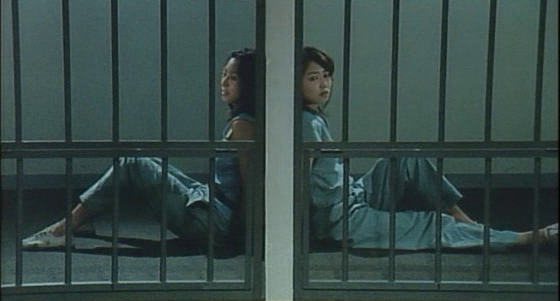
Nevertheless, Nami’s revenge will be delayed because she’s quickly carted off to prison for 10 years of hard labour. Unlike those in the other films, this prison is mainly run by women but the warden is a predatory lesbian who extracts sexual favours from the inmates with the vague promise of early parole and claims that this place is like heaven if you play by the rules. After getting sent to solitary for fighting, Nami befriends another woman, Sayuri (Miho Kiuchi), who reminds her of her younger sister, and discovers that she is shortly to be executed at the gallows hidden in the deepest recesses of the prison. Sayuri is apparently not guilty of the crime for which she is serving her sentence but was talked into taking the fall for a sleazy politician who murdered her friend so that her older sister’s medical bills would be covered. Her death sentence is for accidentally killing a guard during a previous escape attempt. All her subsequent attempts to escape have been so that she could see her sister one last time before she dies.

The theme this time is then sisterhood as the two women fill in the missing half for the other and bond in their shared misuse at the hands of the justice system. Nami becomes determined to save Sayuri in the way she couldn’t save Yumi, but her struggle eventually takes on a larger dimension in keeping with those of the previous films as she tries to get revenge for Sayuri too after discovering that her death sentence was partly handed down by the murderous politician trying to tidy up loose ends as he plans career advancement with the aid of his entire amoral aide, Naruse (Tomorowo Taguchi). Escaping from the prison, she literally and symbolically frees all of the women who then take their own revenge on the sadistic warden.

For all of its seriousness, the film does have its faintly ridiculous qualities such as Nami’s use of electrical wiring as a defibrillator that allows her to resuscitate Sayuri after she’s hanged by the warden at the politician’s instigation. She later uses these same wires ripped from the wall to electrocute the warden’s bruiser male guard though it’s Sayuri who hot wires the prison van so they can escape. Eventually, she’s hunted down by a man with a crossbow and in a nod to the original trilogy, stabs him in the eye. Still, with her own revenge still in progress, Nami effectively avenges all her sisters while fighting for justice. Tracking down the videotape Sayuri had hidden proving the politician’s guilt, she eventually exposes him along with all his corruption bringing down the complex network that had extended out into the prison and trapped so many other women. Now a fugitive, Nami chases the one-armed man and has once again become an avenger of women bringing justice to those failed by an inherently corrupt and misogynistic justice system.


Fly Me To The Saitama -FROM BIWA LAKE WITH LOVE- (翔んで埼玉 ~琵琶湖より愛をこめて~, Hideki Takeuchi, 2023)

The Saitamafication of Japan continues in the long-awaited sequel to the hit 2019 comedy Fly Me to the Saitama. Though the visa system has been abolished and the citizens of Saitama are new free to enter the capital, that does not mean to say everyone is on the same page and the prefecture still faces internal divisions and increasing factionalism. Revolutionary Rei (Gackt) proposes a solution which involves connecting the series of train lines to make it easier to get around and building a beach resort to lesson their sense of inferiority over having no access to the sea.

Once again it has to be said that humour is very local and largely built around regional stereotypes, though it is perhaps curious that the ordinary citizens are often seen in clothing reminiscent of the 1930s something which is also echoed in scenes of trains arriving at stations greeted by crowds of well-wishers seeing soldiers off to war. This may in a sense echo the film’s central theme in the encroachment of Osaka imperialism in which Japan’s second city has launched a not so secret campaign to Osakify the rest of the nation, if not the world, using white powder manifesting as sand from Koshien Baseball Stadium which is a holy place to many as it is where the high school baseball championship takes place. 

They have a visa system in Osaka too, or more strictly the Kansai area, with Kyoto and Kobe apparently in on the plot and intent on looking down on suburban areas such as Wakayama and Shiga which is where Rei was planning on getting his sand. Shiga is set up as a the Saitama of the south west, a pleasant if dull sort of place with a lake its only claim to fame. Like Saitama it has a liberation front, led by Kikyo (Anne Watanabe) who known as the Oscar of Shiga because she went to France to study revolutions and is is dressed like Oscar from the Rose of Versailles. 

The citizens of Kyoto come in for a bit of a kicking for their stereotypically snobbish attitude, the natural politeness of the local dialect undone by a social gadget that reveals what they’re “really” thinking which is that their definition of Kyoite is very narrow. The stereotypical view of Osaka, as voiced towards the end of the film, is that the people are cheerful and warmhearted. The city is associated with comedy and particularly manzai double acts like the one which appears during the opening credits, which perhaps adds to the sense of despair and confusion that the normally nice Osakans could suddenly be hellbent on world domination aided by the already strong love for takoyaki throughout the nation.

As before, we also have a “real world” subplot in which members of a family listen to the radio broadcast outing the urban legend of Rei and his BL love story with Momomi, the Tokyo-raised governor of Saitama. These regional rivalries are tearing up the real world too with a tug of war match that threats to go incredibly wrong if the two areas with an existing beef are allowed to face each other in the final. In contrast, the fantasy world is a riot of zany 18th-century influenced design that sees Rei set off on a pirate ship to get his sand for the fake beach though the mayor of Kobe turns up dressed like Audrey Hepburn in Breakfast at Tiffany’s, and the Kyoto-ite has Taisho-esque straw hat. When the gang are caught by the fascisitic Osakans they’re relegated to a dungeon under Koshien Stadium and enslaved because of Saitama’s low ranking amid the other prefectures of Japan.

It’s all very silly, and somewhat impenetrable to non-Japanese speakers who can’t pick up on the dialect switching or zany wordplay while a certain degree of familiarity with regional stereotypes is certainly helpful. In any case, while the Osakafication of Japan undoubtedly sounded quite bad, the same cannot be said for its Saitamaification and Rei’s desire to create a land without discrimination free of the oppression and inequality born of pointless regional snobbery where everyone is free to go wherever they please without let or hinderance. 


Fly Me To The Saitama -FROM BIWA LAKE WITH LOVE- screened as part of this year’s Nippon Connection

Original trailer (English subtitles)

Gemini (双生児 GEMINI, Shinya Tsukamoto, 1999)

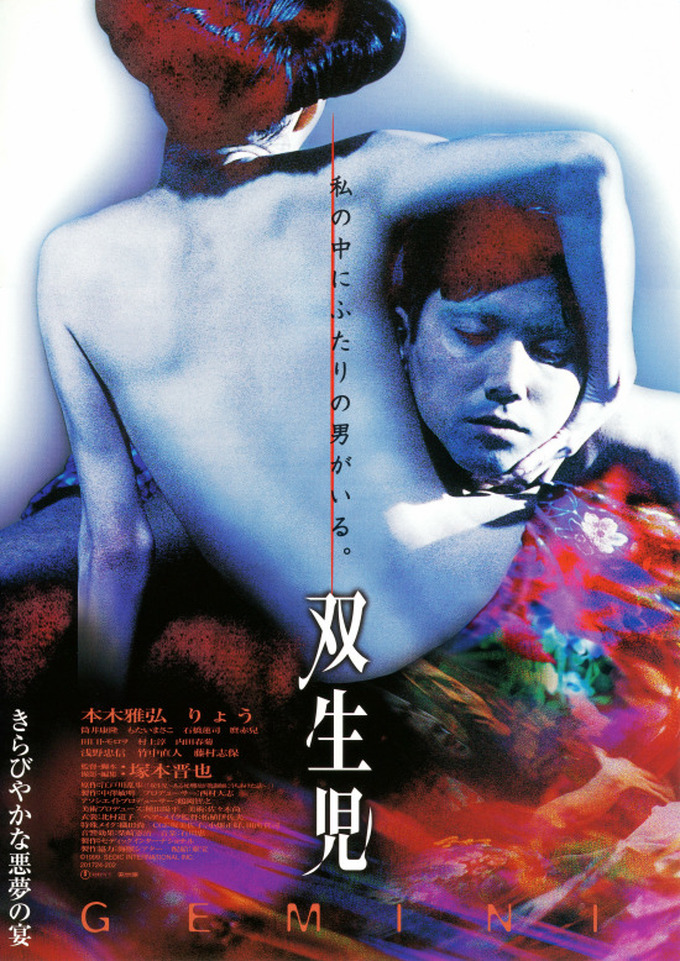
Shinya Tsukamoto made his name as a punk provocateur with a series of visually arresting, experimental indie films set to a pounding industrial score and imbued with Bubble-era urban anxiety. Inspired by an Edogawa Rampo short story, 1999’s Gemini (双生児 GEMINI, Soseiji Gemini) is something of a stylistic departure from the frenetic cyberpunk energy of his earlier career, marked as much by stillness as by movement in its strikingly beautiful classical composition and intense color play. Like much of his work, however, Gemini is very much a tale of societal corruption and a man who struggles against himself, unable to resist the social codes which were handed down to him while simultaneously knowing that they are morally wrong and offend his sense of humanity. 

Yukio (Masahiro Motoki) is a war hero, decorated for his service as a battlefield medic saving the life of a prominent general during the first Sino-Japanese War. He’s since come home and taken over the family business where his fame seems to have half the well-to-do residents of the area inventing spurious excuses to visit his practice, at least according to one little boy whose mum has brought him in with a bump on the head after being beset by kids from the slums. “They’re just like that from birth” Yukio later tells his wife echoing his authoritarian father, “the whole place should be burned to the ground”. A literal plague is spreading, but for Yukio the slums are a source of deadly societal corruption that presents an existential threat to his way of life, primed to infect with crime and inequity. His home, which houses his practice, is hermetically sealed from those sorts of people but lately he’s begun to feel uneasy in it. There’s a nostalgia, a sadness, a shadowy presence, not to mention a fetid stench of decay which indicates an infection has already taken place, the perimeter has been penetrated. 

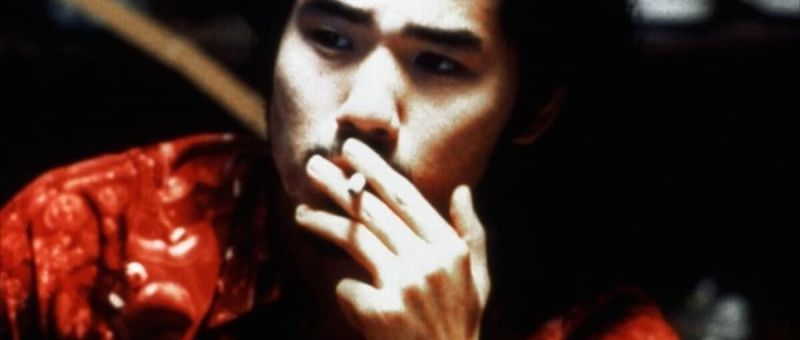
The shadowy presence turns out to belong to his double, Sutekichi whose name literally means “abandoned fortune”, a twin exposed at birth as unworthy of the family name owing to his imperfection in the form of a snake-like birthmark on his leg and raised by a travelling player in the slums. Having become aware of his lineage, Sutekichi has returned to make war on the old order in the form of the parents who so callously condemned him to death, engineering their demise and then pushing Yukio into a disused well with the intention of stealing his identity which comes with the added bonus that Yukio’s wife, Rin (Ryo), was once his. 

Rin’s presence had already presented a point of conflict in the household, viewed with contempt and suspicion by Yukio’s mother because of her supposed amnesia brought on by a fire which destroyed her home and family. Yukio had reassured her that “you can judge a person by their clothes”, insisting that Rin is one of them, a member of the entrenched upper-middle class which finds itself in a perilous position in the society of late Meiji in which the samurai have fallen but the new order has not quite arrived. In Rin modernity has already entered the house, a slum dweller among them bringing with her not crime and disease but a freeing from traditional austerity. In opposing his parents’ will and convincing them to permit his marriage, Yukio has already signalled his motion towards the new but struggles to free himself from the oppressive thought of his father. He confesses that as a battlefield physician he doubted himself, wondering if it might not have been kinder to simply ease the suffering of those who could not be saved while his father reminds him that the German medical philosophy in which he has been trained insists that you must continue treatment to the very last. 

This is the internal struggle Yukio continues to face between human compassion and the obligation to obey the accepted order which includes his father’s feelings on the inherent corruption of the slum dwellers which leads him to deny them his medical knowledge which he perhaps thinks should belong to all. The dilemma is brought home to him one night when a young woman is found violently pounding on his door wanting help for her sickly baby, but just as he makes up his mind to admit her, putting on his plague suit, a messenger arrives exclaiming that the mayor has impaled himself on something after having too much to drink. Yukio treats the mayor and tells his nurses to shoo the woman away, an action which brings him into conflict with the more compassionate Rin who cannot believe he could be so cynical or heartless. 

Where Yukio is repressed kindness, a gentle soul struggling against himself, Sutekichi is passion and rage. Having taken over Yukio’s life, he takes to bed with Rin who laughs and asks him why it is he’s suddenly so amorous. She sees or thinks she sees through him, recognising Sutekichi for whose return she had been longing but also lamenting the absent Yukio who was at least soft with her in ways Sutekichi never was. “It’s a terrible world because people like you exist” Sutekichi is told by a man whose fiancée he robbed and killed. Yukio by contrast is unable to understand why this is happening to him, believing that he’s only ever tried to make people happy and has not done anything to merit being thrown in a well, failing to realise that his very position of privilege is itself oppressive, that he bears his parents’ sin in continuing to subscribe to their philosophy in insisting on their innate superiority to the slum dwellers who must be kept in their place so that they can continue to occupy theirs. 

Apart, both men are opposing destructive forces in excess austerity and violent passion, only through reintegration of the self can there be a viable future. Tsukamoto casts the austerity of the medical practice in a melancholy blue, contrasting with the fiery red of the post-apocalyptic slums, eventually finding a happy medium with the house bathed in sunshine and the family seemingly repaired as a doctor in a white suit prepares to minister to the poor. Having healed himself, he begins to heal his society, treating the plague of human indifference in resistance to the prevalent anxiety of the late Meiji society. 


Gemini is released on blu-ray in the UK on 2nd November courtesy of Third Window Films in a set which also includes a commentary by Tom Mes, making of featurette directed by Takashi Miike, behind the scenes, make up demonstration featurette, Venice Film Festival featurette, and original trailer.

Original trailer (English subtitles)