
Hope (望み, Yukihiko Tsutsumi, 2020)

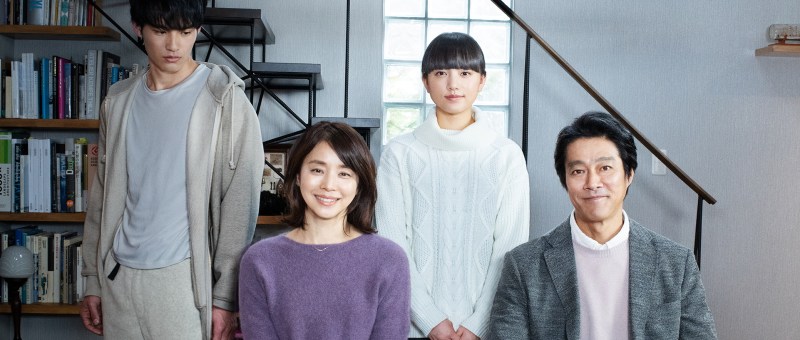
What would you prefer, that your son is alive but a murderer, or that he’s dead but blameless? That’s the dilemma faced by the family at the centre of Yukihiro Tsutsumi’s Hope (望み, Nozomi) who find themselves wondering if they really knew their son at all or had been deluded by an image of familial harmony that was only ever superficial. Meanwhile, they’re also at the centre of a media storm, on the receiving harassment from the press and neighbours, along with the potential financial strain of lost business and fracturing relationships in the local community.

Teenage daughter Miyabi (Kaya Kiyohara) tells her father that she’s read online some families have to move after a relative becomes involved with a crime, that they lose their jobs and place in the community. She’s been studying hard to get into a top high school and is worried that they may not now accept her even if she passed the exam because of something her brother may or may not have done. Some might say that a being a part of the family means that you live or die together, but there is a persistent sense of unfairness felt by all they are being made to suffer because of something over which they had and have no control.

Tadashi (Koshi Mizukami) never explained of this to them and it’s true that he had been behaving differently, was sullen, stayed out all night coming home with bruises, and had in fact recently purchased a knife but it’s difficult for them to believe that he could really have gone on the run after murdering a classmate. At the beginning of the film, architect Kazuto (Shinichi Tsutsumi) had shown off their warm family home to some prospective clients remarking that they wanted to ensure close relationships with the their children and that the design is a good opportunity to plan ahead for the next 10 or 20 years but perhaps there’s something a little hubristic in that statement. Kazuto is trying to sell an image of familial bliss that his house design can bring, but when he knocks on Tadashi’s door the boy is rude and resents the intrusion. Typical teen behaviour, the clients might think, but still it’s a minor crack in the edifice of the image of a perfect family.

But for all that it’s Kazuto who most strongly resists the idea that Tadashi may really have killed his friend and clings fast to the hope that he may be a victim too even though, as mother Kiyomi (Yuriko Ishida) points out, that might mean that he’s already dead and was killed alongside him. For Kiyomi, she just wants Tadashi, whose name means “correctness”, to be alive even if that means he really did do it. If that were the case, the family would also face constant harassment for the rest of their lives, Tadashi would be in prison for the next 15 years, and they would likely have to compensate the other family financially for the boy’s lost future and 50+ years’ worth of lost earning potential. None of that matters to her so long as Tadashi is alive, but to Kazuto it seems more important that Tadashi not be guilty and he reclaim the image he had of his son as a good and honest young man rather than a delinquent killer and bully.

Investigations among the teens turn up contradictory reports, some saying that Tadashi was aloof and arrogant while a group of girls insist on his innocence and even contemplate going to the police to help clear his name. What’s clear is that everyone seems to have taken football far too seriously and a situation among hotheaded young men went way out of control. As a policeman later says, problems often occur at this age because children who are mature enough to think for themselves start wanting to solve their own problems without worrying the adults around them but don’t always know the best way to do it and end up making everything worse. The irony may be that in the end Tadashi may indeed restore a sense of hope for his family that they can turn things around and regain a more genuine sense of familial harmony no matter what the outcome may be.


Hope screens as part of this year’s Japan Foundation Touring Film Programme.

Trailer (English subtitles)
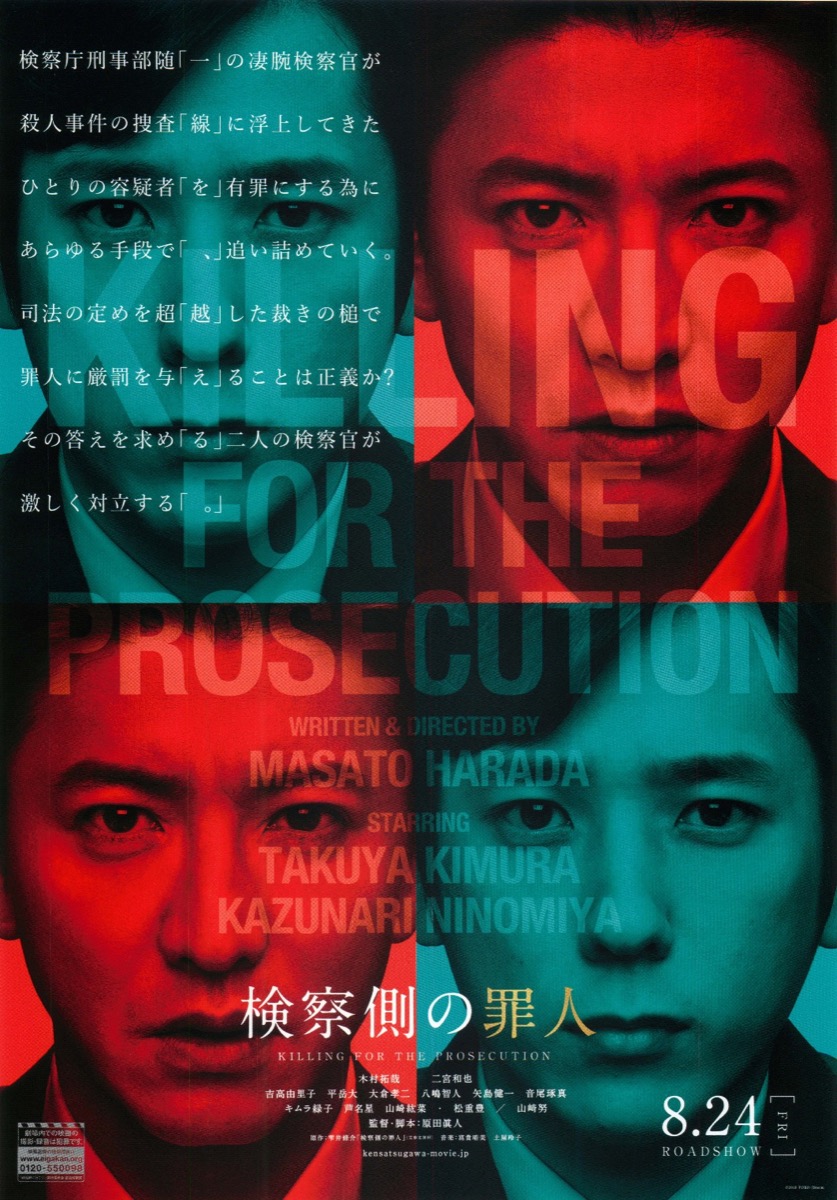
Killing for the Prosecution (検察側の罪人, Masato Harada, 2018)

Killing for the Prosecution posterThe vagaries of the Japanese legal system have become a persistent preoccupation for anxious filmmakers keen to interrogate the continuing rightward shift of the contemporary society. Stretching right back into the post-war world, filmmakers from Yoji Yamada and Yoshitaro Nomura to the more contemporary Masayuki Suo and Gen Takahashi all had their questions to ask about the courts system before Hirokazu Koreeda pushed the dialogue in a slightly different direction with the probing The Third Murder. Killing for the Prosecution (検察側の罪人, Kensatsugawa no Zainin) picks up Koreeda’s baton and brings with it all the baggage of the aforementioned films in asking similar questions about the nature of justice and most particularly within the context of Japan under the conservative government of Shinzo Abe.

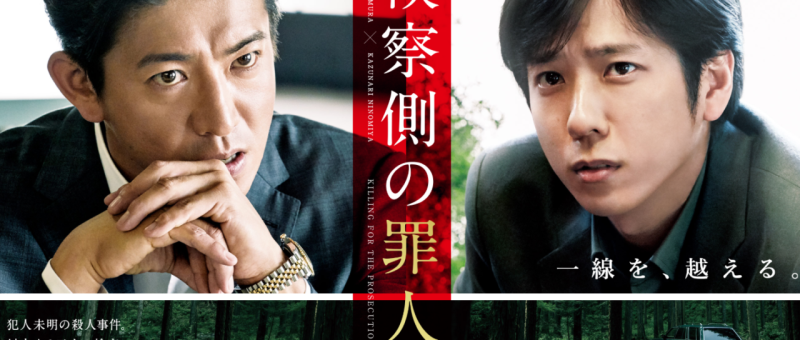
In the contemporary era, rookie prosector Okino (Kazunari Ninomiya) gets a prime Tokyo job working for his mentor Mogami (Takuya Kimura) which begins with investigating a bloody double murder of an elderly couple who were apparently running an illicit side business in usurious loans. The suspect list includes a series of shady characters, but one catches Mogami’s eye – Matsukura (Yoshi Sako), a man arrested and subsequently released in relation to a brutal murder of a school girl Mogami had known and liked while he was a student. Unable to let the case rest, Mogami finds himself fixated on the idea of nailing Matsukura for the pensioner murder in order to get justice for the previous killing which has now passed the statute of limitations.

Meanwhile, Mogami himself is also embroiled in a conspiracy surrounding an old friend, Tanno (Takehiro Hira), now a senator accused of corruption. Harada opens with a brief prologue set during Okino’s final pre-graduation briefing in which Mogami offers a somewhat cynical lecture on the role of the prosecution and the nature of justice. Like the lawyers at the centre of The Third Murder, he is keen to emphasise that the truth is rarely relevant in the face of the law and that justice is a game won by constructing impenetrable narrative. He insists that “there is no such thing as rain which washes away guilt”. Yet his love of justice is so fierce that he collects and displays gavels – a complicated symbol seeing as Japan doesn’t use them but like many other countries has internalised an association with them thanks to American movies.

America, in itself, becomes a complicated facet of Mogami’s judicial confusion as he finds himself pulled between left and right. In his meetings with Tanno, we originally find him complicit with the regime, presumably acting to protect his friend and thereby enabling his corruption but we later come to realise that the opposite is true – that the pair of them are complicit in the system in order to undermine it. Tanno, apparently disillusioned with right wing politics and committed to pacifist ideals, attempted to blow the whistle on systemic political corruption and has been hung out to dry. Lamenting that there is no press freedom in Japan, he has been unsuccessful in his attempts to frustrate a persistent shift towards remilitarisation (apparently hastened by his own wife who has embarrassingly enough been photographed at a neo-nazi rally) but coldly cuts off Mogami’s offer of further assistance by reminding him that he too is “part of the system”.

Mogami goes rogue, but he does so more for reasons of personal vengeance than pursuit of justice. Desperate to nail Matsukura he begins to bend his narrative while his earnest rookie underling, Okino, remains conflicted about his boss’ increasingly suspicious behaviour. Yet the possibility remains, if Matsukura didn’t do it someone else did. If Mogami has Matsukura pay for this crime rather than another one, perhaps a kind of justice is served but a dangerous man would still be out there. In the end, Mogami transgresses in pursuit of his own kind of justice becoming the kind of “criminal” prosecutor he cautioned Okino against becoming in his already cynical opening speech.

That aside, Mogami ties his crimes to a long history of injustice and oppression in allusion to his grandfather’s accidental survival of the battle of Imphal thanks to a kind of purgatorial space known as “Hotel Tanang” to which he returns in an oddly surreal dream sequence which places himself and Tanno as descendants of men who refused to die for oppressive imperialistic concerns. The “Skeleton Road” buys him an uneasy alliance with a genial yakuza (Yutaka Matsushige) who provides another source of temptation to turn to the dark side, but the question he seems to be left with is whether it’s acceptable to pursue one’s own kind of justice in the knowledge that the justice system is inherently corrupt.

Okino, who might ordinarily be our hero, seems to say no but lacks the courage to resist – unlike his steadfast assistant, Saho (Yuriko Yoshitaka), who is combating injustice in her own though perhaps no more ethical (and still less than altruistic) ways. “People die, things break, all the same”, Matsukura rambles as if to lay bare the film’s nihilistic leanings as it points out a litany of seemingly irreparable social ills. Mogami breaks cover for an instant when meeting with a police officer after overhearing a woman trying to press a rape charge and being rebuffed, stopping briefly on his way out to encourage her to keep pressing her case in solidarity with her solitary quest against a seemingly impenetrable wall of indifference, while the mild foreshadowing of a contemporary preoccupation about what to do with the problem of elderly drivers in an ageing society becomes an odd kind of punchline in a bleak existential joke. Dark and cynical, Killing for the Prosecution sees little cause for hope in the increasing murkiness of its constantly declining moral universe, finding release only in its final, frustrated scream.


Original trailer (no subtitles)