Stateless Things (줄탁동시, Kim Kyung-Mook, 2011)

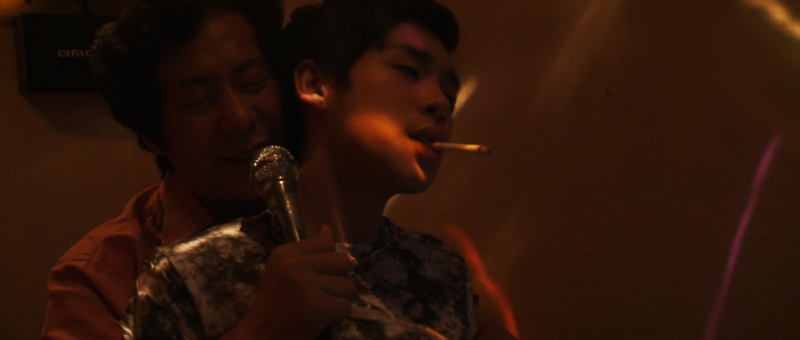
“We looked everywhere for a place for us to stay, but we could not find it anywhere” one of the twin heroes of Kim Kyung-mook’s indie drama Stateless Things (줄탁동시, Jooltak Dongshi) confesses. As the title suggests, Kim’s eventually surrealist drama follows those who no longer have a home and are instead condemned to wander the margins of an unforgiving city. Finding only loneliness and exploitation they long for an escape and perhaps find one if only in a moment of eclipse. 

Shooting in a more naturalistic, documentary style, Kim first focusses on the figure of Jun (Paul Lee), a young North Korean refugee who lost his mother in the crossing and his father to another woman in Busan. He works in a petrol station but is treated with disdain by his boss who has his eye on his female colleague, Soon-hee (Kim Sae-Byuk), who is a member of the Korean minority in China where most of her family reside. Though originally hostile towards each other, each wary of their mutual isolation and concurrent vulnerability, the pair later bond in a shared resentment of their boss who exploits Jun physically for his labour and seeks to exploit Soon-hee sexually. After each saving the other from the nefarious boss, the pair have no choice but to go on the run taking in a series of tourist spots while looking for another place to settle. 

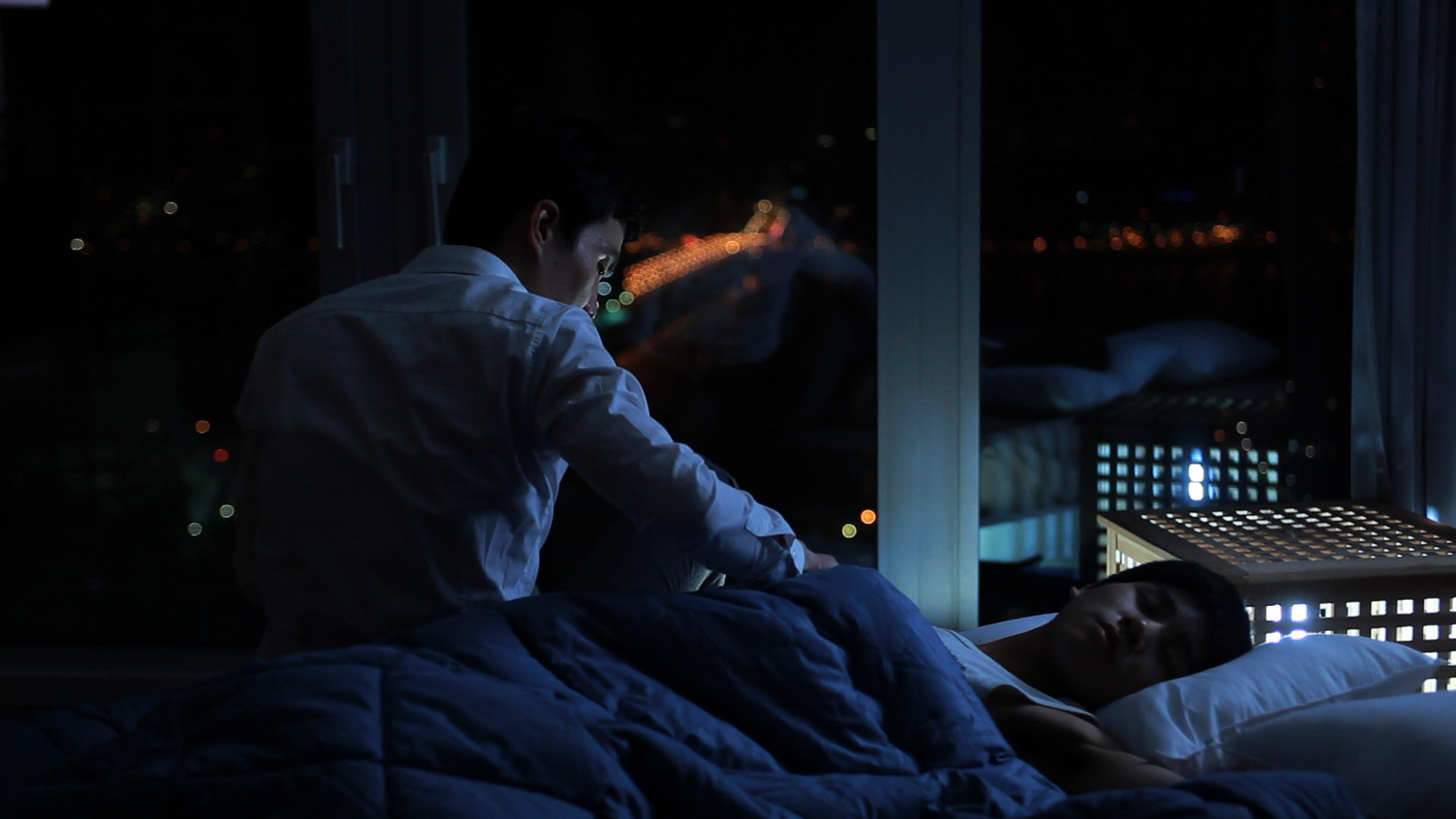
Meanwhile, across town, a young gay man, Hyun (Yeom Hyun-Joon), is a virtual prisoner in the home of his wealthy, married and closeted lover. He looks out across the midnight city and dances sadly alone in a luxury apartment in the sky while occasionally venturing out to meet other men, mostly older, who similarly only intend to exploit his body. “You have nowhere to go.” the exasperated Sung-woo/Sung-hoon (Lim Hyung-Guk) insists, thrown into jealous anxiety on visiting the flat and finding Hyun absent, yet he cannot really offer him a “home” and is all too aware of the transactional nature of their relationship. Though Hyun is also in a sense “stateless”, he has a power over Sung-woo and is able to wield his youth and beauty like a weapon if one he may not fully be able to control. In any case, he too is excluded from the mainstream society by virtue of his sexuality and socio-economic background. 

When Soon-hee and Jun visit a temple, he remarks on the incongruity of seeing a painting that features both a sun and a moon. She explains a folktale to him in which sun and moon are embodiments of siblings who climbed a rope into the sky to escape a hungry tiger. In his diary, Hyun also envisages a pair of twins one opening a door with his right hand as the other closes it with his left. In the surrealist sequence which closes the film, after a title card that appears 90 minutes in, the two men blur into one another as if they shared the same soul in an almost literal eclipse of the self. Kim nevertheless characterises them as sun and moon who cannot ordinarily share the same space. Jun occupies a world of street level sunniness until the light finally begins to dim leaving him alone in a dusky, rain-soaked city. Hyun meanwhile lives by night in his high rise apartment, a prisoner of luxury who flirts with danger for a sense of escape. 

Then again we might ask if Jun and Hyun are two sides of one whole, a sun and moon protecting the king who finds himself an exile. Kim shifts to scenes of emptiness, rooms without presence and streets without life as if the two men were ghosts of themselves hovering above a rootless Seoul, the sense of eeriness only deepened by Kim’s lengthy takes as he follows Jun walking a lonely path towards nowhere in particular because in the end he too has nowhere to go. Departing from the realism with which the film opened, the final sequence gives way to a kind of rebirth if only one of wandering that leaves its heroes at the mercy of a society continually unwilling to recognise their personhood. 


Stateless Things screened as part of this year’s Queer East .

Trailer (English subtitles)

Tazza: The Hidden Card (타짜-신의 손, Kang Hyung-Chul, 2014)

tazza posterYou gotta know how to hold ‘em, know when to fold ‘em, know when to walk away and know when to run. Apparently these rules of the table are just as important in the cutthroat world of the Korean card game Hwatu as they are in the rootinest tootinest saloon bar. Like most card games, having the winning hand is less important than the ability to play your opponent and so it’s more a question of who can cheat the best (without actually breaking the rules, or at least being caught doing so) than it is of skill or luck. A second generation sequel to 2006’s Tazza: The High Rollers, The Hidden Card (타짜-신의 손, Tajja: Shinui Son) is a slick, if overlong, journey into the dark, underground world of gambling addicted card players which turns out to be much more shady than the shiny suits and cheesy grins would suggest.
Wisecracking kid Dae-gil (T.O.P) comes into contact with the first film’s fast talking hustler Go (Yu Hae-Jin) and realises he has a talent for trickery. As a young man he gets himself into trouble trying to save a family member from a gangster whom he winds up stabbing meaning he has to go on the run and leave the girl he’s fallen head over heels for, Mina (Shin Se-Kyung), far behind him with only the promise to come back for her when he’s made something of himself. With nothing to fall back on Dae-gil ends up working for cardsharping gangsters in what is really a series of high level con operations. His first problem occurs when he temporarily forsakes the memory of Mina for the attentions of the alluring Mrs. Woo (Lee Honey) who becomes both his secret girlfriend and the gang’s latest mark.

Things do not go to plan and Dae-gil is left carrying the can for the gang’s heavy losses. Getting into trouble with another mark who turns out to be a high level gangster himself, Dae-gil finds out Mina has been sold into prostitution as payment for a family debt but also winds up losing a kidney as recompense for his mounting gambling debts. Now Dae-gil is out for revenge against pretty much everyone, hoping to rescue Mina and win her heart in the process but his adversaries are old hands at this sort of thing and it’s going to take more than a rigged deck to beat them at their own game.

Taking over from the first film’s Choi Dong-hoon, Kang Hyung-chul opts for a slick and charming Oceans 11 inspired aesthetic full of quirky humour and tricky slight of hand photography. With retro musical choices from a smooth cover of Spooky to the ‘80s synth pop kicking in for an exciting car chase, Kang piles on the nostalgia as Dae-gil rides high as a wisecracking conflicted member of this underhanded outfit. Taking inspiration from its manwha roots, The Hidden Card maintains its breezy tone even whilst the atmosphere darkens as Dae-gil taps out with this gangster credit, beaten up, drugged and waking up in a filthy room with a bandaged hand and a crude scar across his abdomen where his kidney used to be. Apparently making a quick recovery from serious surgery, Dae-gil’s discovery of Mina’s fate is likewise another addition to his quest narrative rather than more evidence of the savagery of this trick or be tricked world.

The Hidden Card’s biggest problem is an unavoidable one given its genre – the sheer structural repetitiveness of moving from one card game to another. Lack of familiarity with Hwatu itself is not exactly a problem even if mildly frustrating, but the nature of the way the game is played means that a great deal of screen time is occupied with watching people watching each other, moodily, only to be left unsure of what’s going on or who’s won at the end of it. This is all the more true of the film’s final showdown which brings back a major player from the first instalment in which the stakes have been raised supposedly to “prevent” cheating, but only really aim to make it more “challenging”. Still, away from the gaming table there are enough high octane fist fights and a lengthy car chase to break up the more cerebral thrills.

Undeniably slick and filled with a host of likeable characters offering snappy dialogue and silly humour, Tazza: The Hidden Card is far too long at two and a half hours. Uneven pacing does not help the feeling of scale and a similarly unbalanced plot structure produces a misleading sense of progression. Still, keeping one step ahead of the card sharks is fun in itself and even if the action drags here and there, there is enough character driven drama and ironic comedy to keep things moving right up until the consciously cool finale.


International trailer (English subtitles)

Twenty (스물, Lee Byeong-heon, 2015)

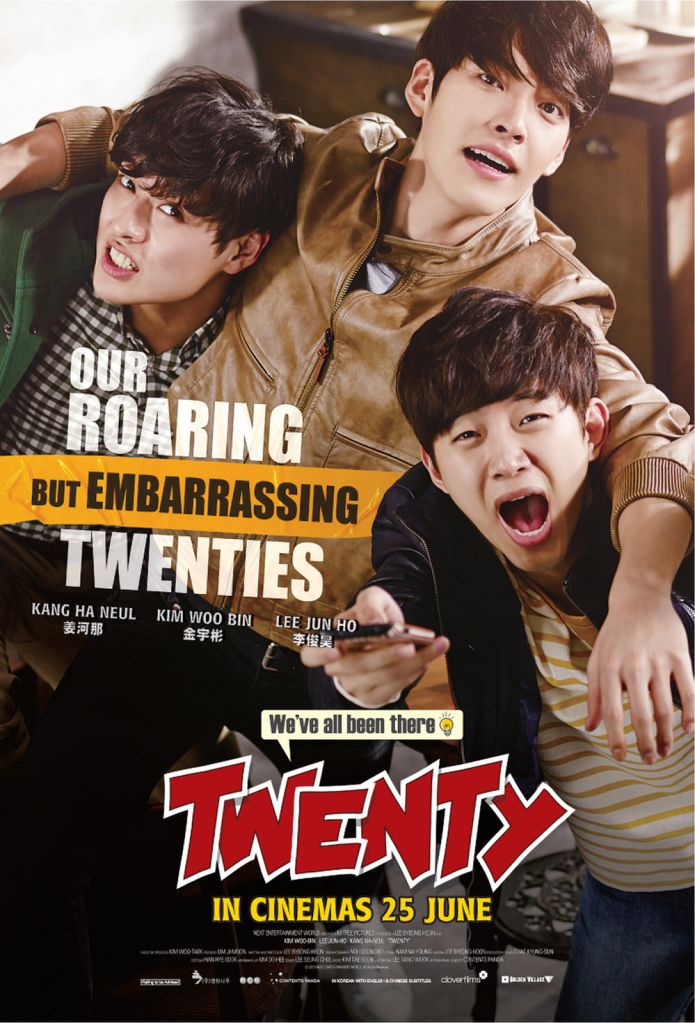
Twenty Movie PosterReview of Lee Byeong-heon’s Twenty (스물, Seumool) up at UK Anime Network. I really felt so old watching this film.


The age at which you become “an adult” varies according to your culture but in Korea, as in Japan, at 20 you become fully grown up with all the rights and responsibilities that carries. The three guys at the centre of the Korean film Twenty are just walking through this magic doorway which marks the end of their childhoods and the beginning of their adult lives. The road has forked for them and they have to decide which path to take. However, they’ll have to take their minds off the opposite sex long enough to make a decision.

To state the obvious, Twenty is aimed at a very specific audience and is likely to please a certain group of people very well whilst leaving others a little lost and bemused. It stars a collection of popular and very good looking younger Korean actors and actresses and is largely about what it’s like to be on the cusp of adulthood in contemporary Korea. What it’s not is a hard hitting drama. The target audience for this movie is people who are in their teens or early twenties, so they know what it is to be young, now. They just want to laugh along or sympathise with others in a similar position.

We meet the three guys, Chi-ho (popular rich kid), Dong-woo (put upon poor boy), and Gyung-Jae (doing OK middle class guy) towards the end of their high school years. The boys became friends after falling for the same girl who eventually picked Chi-ho but being boys they had a fist fight about it and are now bonded for their rest of their lives. In many ways they’re quite different, Chi-ho is rich, good looking and only interested in girls whereas Dong-woo comes from quite an impoverished background which means he’ll find it difficult to pursue his studies past high school because he needs to be supporting his mother and siblings. Gyung-Jae is almost the protagonist and is a typical middle class boy who’ll go to college and probably do alright for himself. He’s also a typical “nice guy” with a selection of fairly ordinary romantic issues (bar one interesting aspect which is raised but never followed up on) but being pretty level headed he’ll almost certainly get over it.

At twenty they have the whole of their lives ahead of them – or they kind of do given the fairly restrictive nature of Korean society. Chi-ho just thinks about sex. His parents are rich so he just lives in a perpetual adolescence where he hasn’t applied for university but hasn’t decided on a job either. He watches lots of movies and mopes but honestly he’s just a bit lost and afraid to admit it. Dong-woo wants to be a manga artist and decides to repeat the last year of high school whilst continuing to work all the other hours to support his family all the while feeling guilty about trying to pursue his dream rather than accepting the offer of a steady office job at his uncle’s company. Gyung-Jae actually has it pretty easy as his problems are just the normal sort of romantic growing pains everybody goes through and realising that makes them a little easier for him.

The film is not really a serious examination of the problems young people face. Even the eventual looming of military service is treated in quite a matter of fact way. Twenty is more of a celebration of being young and that it’s OK to be a bit lost and stupid when you’ve just left school. It gets surprisingly crude given that it’s aimed at a comparatively conservative Korean audience but generally gets away with it thanks to its cheeky tone. Undoubtedly hilarious in places (the “fist fight” finale in a Chinese restaurant being a late highlight) Twenty is a film that will play best to those around the same age as its protagonists in real terms and truthfully doesn’t offer so much for those who are already little older but it is nevertheless very funny and likely to entertain Korean idol fans of any age.


Reviewed at the London Korean Film Festival 2015.