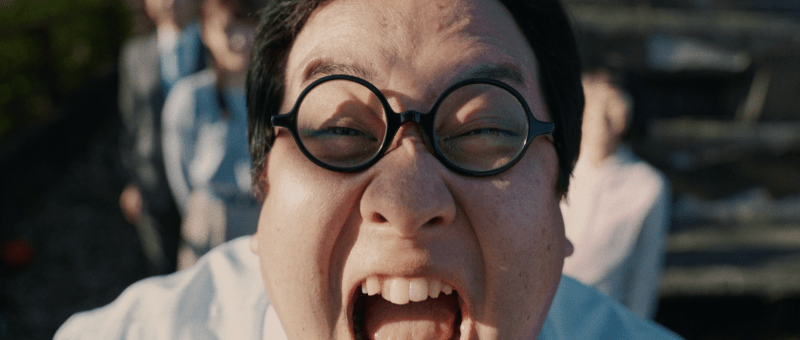
Kaiju Guy! (怪獣ヤロウ!, Junichiro Yagi, 2025)

“This is my grand revenge against the world,” a frustrated civil servant insists while watching a giant avatar of himself destroying the town. Yamada (Gumpy) always wanted to make Kaiju movies, but now approaching middle age he’s given up most of his dreams and aspirations and lives a dull life working in the tourism division of the local council. An opportunity presents itself when he’s put in charge of a PR video for the town at the behest of its ultra-conservative mayor.

Junichiro Yagi’s Kaiju Guy! (怪獣ヤロウ!Kaiju Yaro!) has a meta quality given that it’s about a film designed to promote the local area, but there are many other parallels in play. The first would be Yamada’s unsatisfying life standing in for that of a corporate drone, while the mayor (Michiko Shimizu) is later cast as the villain precisely because of her reverence for “tradition” and is under the impression that changing anything would be a betrayal of her ancestors in a nod to the rigidity of local government. Yamada’s teacher had told him to smash through the constraints, though that’s something he’s only just beginning to find the strength to do. 

Though Yamada immediately suggests making a kaiju movie, he’s quickly shot down and reminded the mayor wants a conventional puff piece they can use to promote the town. Back in middle school, everyone had laughed at him for his DIY kaiju movie except his teacher who told him not to worry about what other people think and that those who challenge the status quo will always come in for attack or ridicule. Back then, the town of Seki had been the monster, though this time it’s supposed to be the victim that will eventually be saved. The mayor’s script had ironically been for a particular brand of hometown movie that’s become common in Japanese cinema in recent years in which a young person has their dreams crushed in Tokyo and rediscovers the charms of the place where they grew up after returning home in defeat. But there is something quite sad about the juxtaposition of Yamada thinking through the themes of the movie while riding his moped along empty streets which are flanked by rows closed shops.

The economic possibilities of the town becoming a tourist hotspot if the movie does its job might be one reason why many of the local businesses immediately pitch in to help besides a desire to display their hometown pride. Of course, most of them pull out when Yamada reimagines it as a kaiju movie even if he has a few supporters who think a kaiju movie might be fun and interesting way to sell the positives of Seki. In the course of making his movie, with the help of a grumpy, retired kaiju movie master by the name of Honda (Akaji Maro), Yamada discovers a way to use various local assets, such as filming sparks at the factory to create the fire-breathing effect and capturing the strange sound of a local bird for its roar. The heroes of the film become the local businesses supporting it who appear as a mini squad teaming up to fight the monster, while Yamada himself plays the marauding beast and “saviour” of the town going after the mayor and city hall to challenge their conservative insistence on tradition. 

What he eventually discovers is that even the mayor herself is oppressed by “tradition supremacy” and once had to give up her own hopes and dreams to conform to her family’s insistence on the way things should be done. Her abrupt decision to make the film may have been a reflection of her latent desire for change, both for herself and for Seki even as she constantly harps on about cormorant fishing and sword making which are apparently the two biggest draws. Ironically, the film completely fulfils its role as a PR movie for Seki capturing the small-town charms of the area along with its warm community spirit. Smashing through barriers with his kaiju movie, Yamada’s dull and grey existence is suddenly brightened through accessing his creativity and having his artistic desires validated by those around him. Not only are kaiju movies not naff or nerdy, but a source of fun that can bring the community together as well encourage visitors from outside if only to explore the kind of place that could have produced something so wonderfully unconventional.


Kaiju Guy! screens 30th May as part of this year’s Nippon Connection.

Trailer (English subtitles)

Images: © 2024 Team KAIJU GUY!
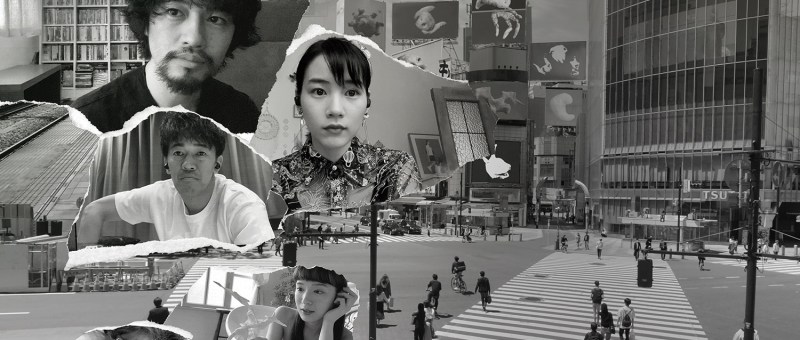
The 12 Day Tale of the Monster that Died in 8 (8日で死んだ怪獣の12日の物語, Shunji Iwai, 2020) [Fantasia 2021]

“We, all of us, can be heroes! Let’s support each other to beat this monster.” the hero of Shunji Iwai’s pandemic dramedy, The 12 Day Tale of the Monster that Died in 8 (8日で死んだ怪獣の12日の物語, Yoka de Shinda Kaiju no Juninichi no Monogatari) affirms. Inspired by Shinji Higuchi’s Kaiju Defeat Covid project and originally streamed as a web series, Iwai’s surreal screen drama is replete with the atmosphere of the pandemic’s early days, a mix of boredom and intense anxiety coupled with a determination to protect and support each other through this difficult time. Yet it’s also a tale of uncanny irony taking place in world in which Ultraseven is a documentary while the Earth has apparently been subject to waves of monster aggression, alien visitors, and even apparently an epidemic of ghosts. 

All of this the hero, Takumi Sato (Takumi Saitoh playing a version of himself) finds out from director Shinji Higuchi after contacting him on Zoom for advice about how to raise the “Capsule Kaiju” he bought on the internet in order to do something to help battle corona virus. Sato’s single “egg” soon becomes three, later back down to one again causing him to worry if the other two managed to escape or perhaps were eaten by the sole remaining monster. In any case, while they are three he names each of them after various Covid-fighting drugs and is informed by Higuchi that they currently resemble three kaiju from classic tokusatsu series Ultraseven. 

Nevertheless, Takumi is continually confused and disappointed by the slow progress of his project, confessing to one of his friends online that they were rated only one star on the store he bought them from but he’s sure that’s just because they’re a new product. His friend Non, (also playing a version of herself), meanwhile, has invested in an alien though the alien is, conveniently enough, entirely invisible and inaudible via camera. Non’s alien seems to be making much better progress to the extent that it eventually becomes disillusioned with selfish, apathetic human society and decides to return to outer space. Challenged, Takumi has to admit he hasn’t really done anything to make the world a better place except for raising his capsule kaiju and even that hasn’t gone particularly well. 

Then again, perhaps just getting through is enough to be going along with in the middle of a global pandemic. Takumi’s friend So (So Takei) is separated from his family in Bangkok and is struggling to find work as a chef while all the restaurants are closed only to later confess that he actually has a second family he, understandably, had not mentioned before in Japan that he also needs to support financially. Even so, Takumi is bemused watching the YouTube channel of a young woman (Moeka Hoshi) who broadcasts from her bathtub dressed in a nightgown and has managed to raise a recognisably dragon-like kaiju while his keep shapeshifting without progressing into a final form. He starts to worry, what if his kaiju are actually evil and intend to destroy the world rather than save it? The fact that it eventually takes on the form of a giant coronavirus might suggest he has a point, but kaiju work in mysterious ways and perhaps they are trying to help in their own small ways even if it might not seem like it in the beginning. 

In many ways that might be the primary lesson of the pandemic, everyone is doing their best even if they’re only doing something small like staying at home and wearing their mask. Shot entirely in black and white and mostly as direct to camera YouTube-style monologues or split-screen Zoom calls complete with occasional lag and echoing, Iwai adds in eerie pillow shots from a camera positioned high above the streets of a strangely quiet but not entirely empty Tokyo along with fragmentary dance sequences of young women dressed in black with CGI kaiju heads. A whimsical slice of pandemic life, 12 Day Tale ends as it began, with Takumi once again reminding us that we are all heroes and should support each other to beat the “virus monster” but adds a much needed note of hope as he assures his audience that the the day we beat the virus will certainly come, “let’s do our best together”. 


The 12 Day Tale of the Monster that Died in 8 streams in Canada until Aug. 25 as part of this year’s Fantasia International Film Festival.

Original trailer (English subtitles)