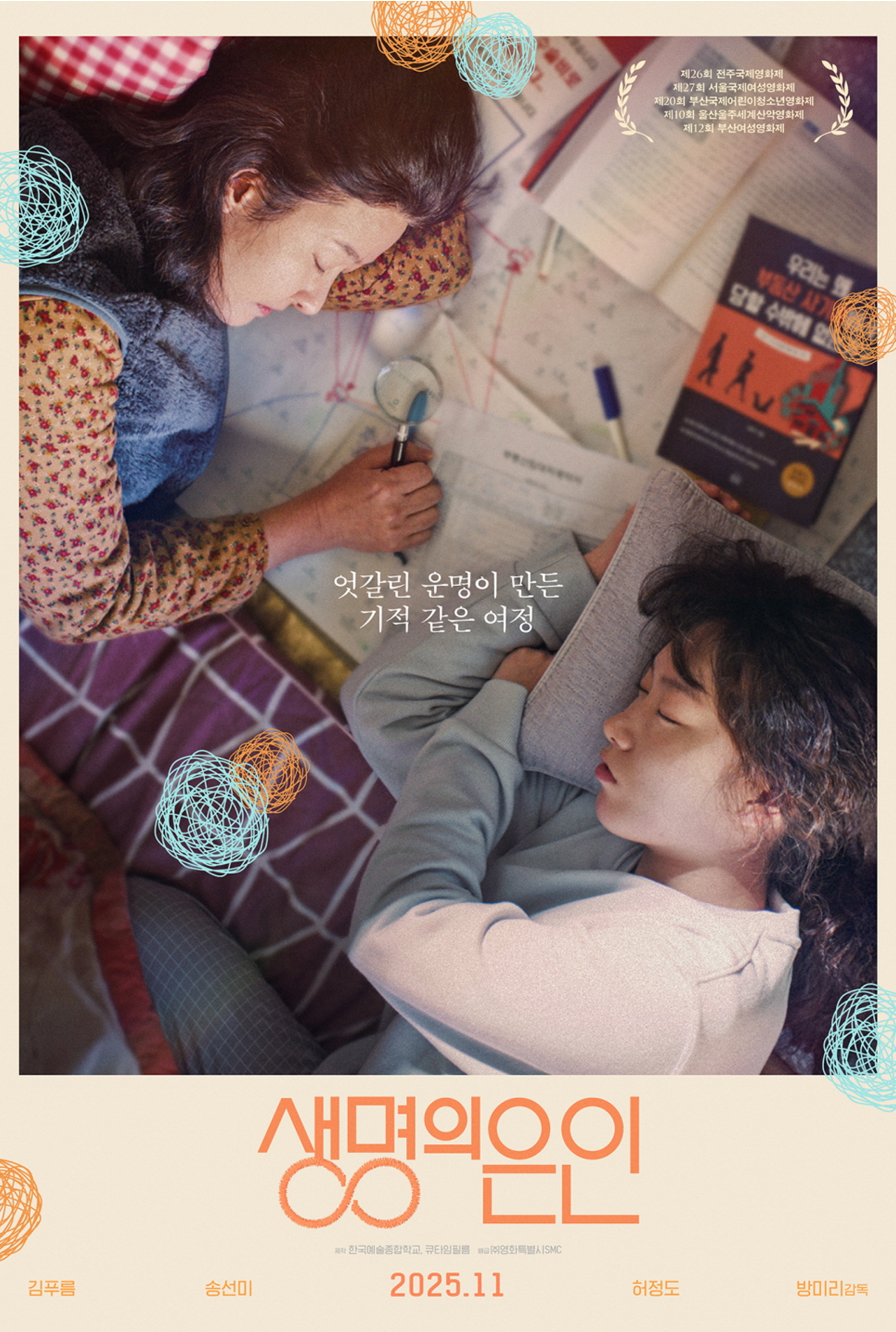
There’s an old adage that if you save someone’s life, you become responsible for it, but equally perhaps some have come to expect reciprocity and the act of being saved places you into a debt you can never hope to repay. There are definitely different kinds of salvation on offer in Bang Mi-ri’s empathetic maternal drama Save (생명의 은인, Saengmyeong-ui eunin), but each of them comes with a cost both literal and spiritual in trying to draw lines in the complex interplay of guilt and gratitude.
As the film opens, Se-jeong (Kim Pureum) is being interviewed for a television programme about young people leaving care. The interview is being film at the hair salon where she has been working for the last few months in the run-up to graduating high school to prepare for “self-reliance”, but it’s obvious that one of her colleagues resents the intrusion and does not want to appear on camera with her. The young woman later rolls her eyes, claiming that she understands her circumstances but that’s she’s causing too much inconvenience, while her boss is unsympathetic when she’s distracted by the difficulties she’s facing and burns herself on a pair of curling tongs that she subsequently drops to the floor.
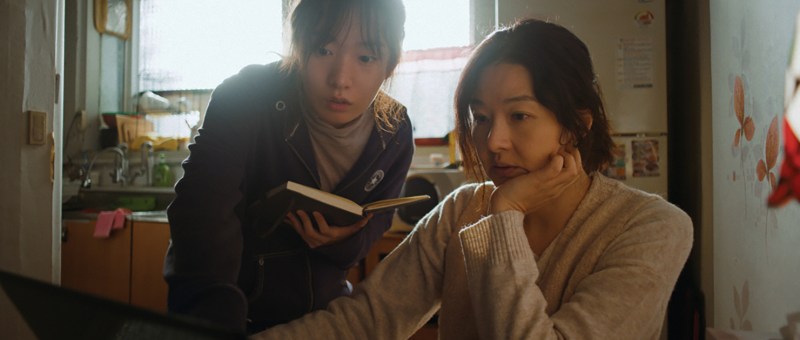
Se-jeong’s friend from the children’s home gives up on studying at a university in Seoul because of the cost and goes to one locally instead, using the settlement money they’re given on leaving to buy designer clothes and telling her new classmates that she’s from a wealthy family to avoid the stigma of having no parents. Se-jeong has no such recourse, but it’s obvious that she’s bright and conscientious. She often has a notebook with her to jot down advice and instructions and is very thorough when searching for an apartment that’s within her means but ticks all of her boxes. Nevertheless, she is naive and has no one to help her, so it’s no wonder that she gets scammed out of her money by accepting an offer that’s too good to be true and falling for a landlord’s false reassurances that it’s fine to rent privately rather than through an estate agent because scammers only go for high value apartments. All of that does, however, leave Se-jeong even more isolated with no money or place to stay forcing her to rely on a woman who approaches her claiming to be the person who saved her from a fire at a home for single mothers in which her birth mother died.
Se-jeong wants to believe her, even if her friend advises her not to. Eun-sook (Song Sun-mi) too is after her settlement money, she claims for an operation to treat her lung cancer. “Can’t you save me this time?” She manipulatively asks, as if she meant for this debt to be repaid in kind. But Se-jeong has to wonder if she’s really telling the truth or is also trying to con her. Isn’t it a little too convenient how her “saviour” resurfaced in her life at just this moment? Eun-sook can also be quite scary and knows a suspicious amount about how to manipulate social media and root out someone who values their reputation in the eyes of others and is on some level ashamed of making their money by deceiving people. In any case, Eun-sook offers the source of maternal warmth that Se-jeong has been craving while dropping hints about her birth mother and early life that further add to her credibility.
But on one level at least, Eun-sook doesn’t really want “saving” and isn’t looking for the same kind of salvation as Se-jeong who is looking for a new home while otherwise presented only with “self-reliance” and no other way to anchor herself in a society which is hostile to people like her and offers very little in the way of support. When she graduates high school, Se-jeong and her friend look on as the other girls take photos of their families with no one there to celebrate with them, except for Eun-sook who unexpectedly arrives to fill this vacant space. What she may be trying to do is save herself spiritually in saving Se-jeong, repaying an old debt and giving her the roots she needs to establish herself in adulthood. Her constant coughing is a symbolic reflection of her trauma from the fire that suggests she never really escaped it. Yet what she tells Se-jeong is that there’s no need for her to feel guilty. Her survival, just like their meeting, is just something that happened like fate or destiny, and she has a right to live her life to its fullest. Poignant in its implications of maternal sacrifice and intergenerational healing, Bang’s moving drama is infinitely forgiving of its flawed antagonist and suggests that, in the end, salvation is found only in saving others.
SAVE screened as part of this year’s London Korean Film Festival.


 Windows on Worlds