
 “Your moves are so old”, complains the director of a filmset towards the beginning of Richard V. Somes’ We Will Not Die Tonight, “it’s like the ‘80s”. An homage to The Warriors among other punk infused action classics of the 70s and beyond, We Will Not Die Tonight is as gritty and as grimy as they come following a pack of cornered desperados who unexpectedly find themselves to be the good guys when confronted by an evil unthinkable even on the streets of Duterte’s Philippines. Each in need of fast dough, a desperate gang of martial artists determines on the job to end all jobs, but it’s no surprise that they get a lot more than they bargained for just trying to survive in an unforgiving world.
Our heroine, Kray (Erich Gonzales), is a principled young woman who prides herself on her sense of justice, her good heart, and her ability to survive. Each of these qualities will stand her in good stead in the chaos that’s about to engulf her but for the moment they’re all that sustains her in her frustrating life as a stunt double for low budget movies. Berated by a director (Lehner Mendoza) who seems like he just wants to shout at someone while the “real” actress (Dani Baretto) blithely insists the stunt woman is an unnecessary waste of money, Kray can do little more than grin and bear it, unable even to make much of a fuss when she realises she’s only getting half pay on account of the director’s bad mood. She needs the money because her father (Baldo Marro) is ill and needs medical treatment, though he urges her to give up the stunt work which is dangerous and leaves her feeling humiliated to take a low paid but steady job working for a friend’s catering company.
Kray isn’t suspicious when a couple of her old friends turn up out of the blue, but quickly catches on when her ex, Ramil (Alex Medina), fetches up too. He wants to get the gang back together for one last hurrah. Having let them all down before, Ramil’s suggestion is not universally popular but as everyone is so desperate for money they eventually agree. Unfortunately, Ramil’s plan is once again a bust as it turns out the contacts he’s made are not into drug trafficking (itself a dangerous prospect given the current regime) but something far darker – snatching kids off the street for illegal organ trafficking. Now, our guys aren’t saints but they didn’t sign up for murdering children and even the slimy Ramil manages to suddenly develop enough of a backbone to firmly refuse and walk away. You can’t walk away from this sort of thing, however, and all hell breaks loose as they find themselves on the run with a little girl they save from the bad guys while they try to get to relative safety.
Unlike many similar genre examples, Kray and her friends aren’t hardened street gangsters or young punks, they’re way out of their depth in the murky Philippine underworld where drugs have become too much hassle while disappearing street children might even be viewed as a public service by the current regime. A bunch of martial arts experts with broken dreams and ruined hearts, all they want is to survive. Kray wants to help her dad, Cheche (Max Eigenmann) wants to move back to the country and open a shop, Jonesky (Thou Reyes) is just sick of being poor, and Reneboy (Nico Dans) is looking for a family seeing as his own has moved to Germany without him. Ramil, the slick pretty boy leader just wants to lead with a mild ulterior motive of using his friends to get rich and perhaps winning back the respect of old flame Kray. This world, however, is not going to let them have any of that – they are going to have to fight not only for their lives but also for what’s right if they want to survive.
Somes backgrounds an authoritarian regime as the enabler of such a dark and amoral world as it thinks nothing of gunning down “drug dealers” in the streets while turning a blind eye to other kinds of violence and horror which, in a strange way, perhaps play into its continuous propaganda machine. Yet as much as our heroes are essentially trying to fight their way out of inescapable poverty, Somes’ grime fuelled action picture is pure B-movie, filled with gritty street violence enacted with makeshift weapons and fierce ingenuity. The fighting is ugly, and real (not to mention bloody), but our heroes are fighting for more than just their lives, they’re fighting for the soul of the society in which they live. Desperate to survive, they would rather die fighting than give in to the darkness but the night is long and the battle only just beginning.
We Will Not Die Tonight was screened at the New York Asian Film Festival 2018.
Original trailer (dialogue free, English captions)

 When you feel you’ve discharged all your social obligations, you might feel as if you’ve a right to live by your own desires. Whether the dreams you abandoned in youth will still be there waiting for you is, however, something of which you can be far less certain. Following the death of her husband, one Filipina grandma decides to find out, taking to the road with her best friend who is, incidentally, wanted for murder and carrying around the severed head of her late spouse in a Louis Vuitton handbag belonging to her vacuous step-daughter, in search of the one that got away.


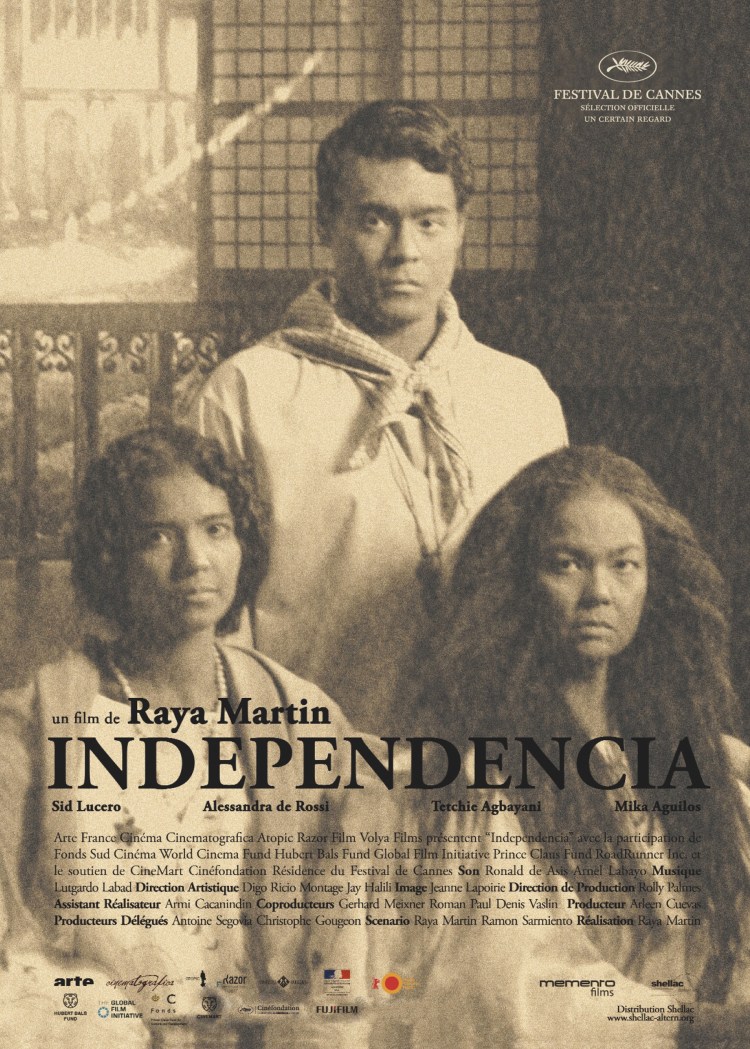
 Lav Diaz’s auteurist break through, Batang West Side is among his more accessible efforts despite its daunting (if “concise” by later standards) five hour running time. Ostensibly moving away from the director’s beloved Philippines, this noir inflected tale apes a police procedural as New Jersey based Filipino cop Mijares (Joel Torre) investigates the murder of a young countryman but is forced to face his own darkness in the process. Diaspora, homeland and nationhood fight it out among those who’ve sought brighter futures overseas but for this collection of young Filipinos abroad all they’ve found is more of home, pursued by ghosts which can never be outrun. These young people muse on ways to save the Philippines even as they’ve seemingly abandoned it but for the central pair of lost souls at its centre, a young one and an old one, abandonment is the wound which can never be healed.
 If
If 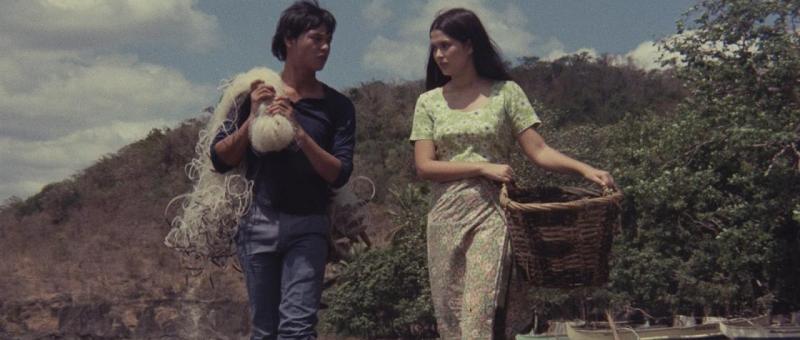
 About half way through Lino Brocka’s masterpiece of Philippine cinema Manila in the Claws of Light (Maynila, sa mga Kuko ng Liwanag), the hero, Julio (Bembol Roco), sits watching the window where he thinks the woman he loves may be being held prisoner as a trio of guitar players strums out The Impossible Dream, unwittingly narrating his entire story. Julio is no Don Quixote but he has his own Dulcinea and, as the song says, without question or pause he is ready to march into hell for the heavenly cause of rescuing her from clutches of this cruel city. Not quite content to love pure and chaste from afar, Julio plays Orpheus descending into the underworld, plunged into a strange odyssey through a harsh and indifferent world driven by mutual exploitation and the expectation of violence.
 Lav Diaz is many things but he’s not especially known for his brevity. Elegy to the Visitor From the Revolution (Elehiya Sa Dumalaw Mula Sa Himagsikan) is something of a departure in that regard as it runs a scant eighty minutes but is, nevertheless, imbued with the director’s constant themes of loss, melancholy and despair conveyed across a tripartite structure peopled by three very different yet interconnected sets of characters. To say “only” eighty minutes long, yet Elegy to the Visitor From the Revolution first began as a one minute short, intended to form a part of Nikalexis.MOV – an omnibus dedicated to the memory of film critics Alexis Tioseco and Nika Bohinc tragically killed during a home invasion. Diaz’ film, however, outgrew its origins to become a stand alone feature in its own right.
 “Why is there so much madness and too much sorrow in the world? Is happiness just a concept? Is living just a process to measure man’s pain?” asks a key character towards the end of this eight hour film, but he might as well be speaking for the film itself as its director, Lav Diaz, delivers another long form state of the nation address. This is a ruined land peopled by ghosts, unable to come to terms with their grief and robbing themselves of their identities in an effort to circumvent their pain. Raw yet lyrical, Diaz’s lament seems wider than just for his damaged homeland as each of its sorrowful, disillusioned warriors attempts to reacquaint themselves with world devoid of hope.
 Lav Diaz has never been accused of directness, but even so his 8.5hr epic, Heremias (Book 1: The Legend of the Lizard Princess) (Unang aklat: Ang alamat ng prinsesang bayawak) is a curiously symbolic piece, casting its titular hero in the role of the prophet Jeremiah, adrift in an odyssey of faith. With long sections playing out in near real time, extreme long distance shots often static in nature, and black and white photography captured on low res digital video which makes it almost impossible to detect emotional subtlety in the performances of its cast, Heremias is a challenging prospect yet an oddly hypnotic, ultimately moving one.
 Windows on Worlds