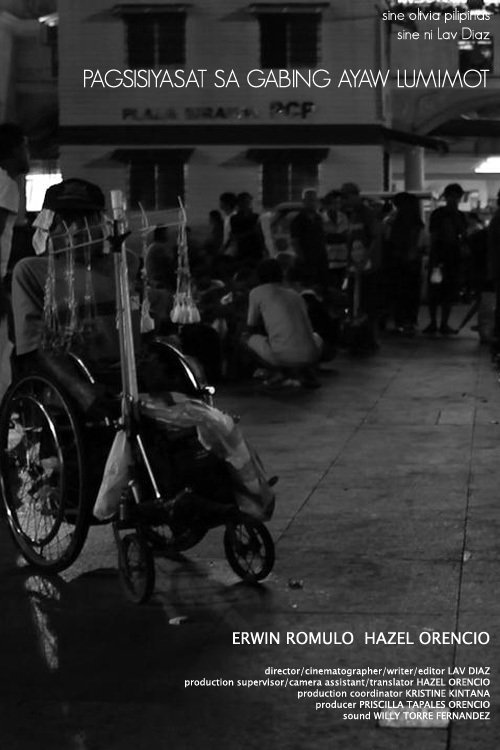
 If Elegy to the Visitor from the Revolution was a poetic attempt to tackle the outpouring of grief which followed the murders of film critics Alexis Tioseco and Nika Bohinc, An Investigation On the Night That Won’t Forget (Pagsisiyasat Sa Gabing Ayaw Lumimot) is its mirror image – the somber and naturalistic testimony of one who was left behind, searching for resolution but finding only more questions and ongoing suffering as circumstances conspire to prolong the agony. As usual, Diaz uses the events to comment more widely on the often melancholy history of his country but also on the nature of narrative, time and memory in their necessity for the attempt to create order from a series of otherwise incomprehensible events.
Preceded by a title card reading Part 1: The Cradle of Memory, the central 55 minutes of the film consists of one unbroken static camera shot of a man talking to camera, recounting an incident which he is unable to forget yet cannot remember clearly. The man is Erwin Romulo, editor and best friend of Alexis Tioseco, occupying a chair next to a desk in his own office surrounded by books and papers, records and ephemera of everyday life. Romulo begins to tell the story that night and of its continuing wake alternating between English and Tagalog, gesticulating and fidgeting as his story becomes painful to tell.
At one point Romulo says that he’s glad they’re recording this because it’s already becoming so difficult to remember. Though he speaks uninterrupted for almost an hour (save for a brief moment in which he leaves the chair in search of water), Romulo occasionally goes off on tangents or pauses to explain something else, allowing the events to unfold as he remembers them. The camera becomes a cradle for his memory, a safe place of deposit where his own recollections can rest without fear of change for all eternity. Perfect and incorruptible, cinema stands witness to a time and a place to which it affords a kind of immortality in ever extending moments.
Romulo’s testimony concludes with a lament for the continuing absence of his friend, for the unlived future so cruelly severed by a violent, selfish act. This leads us into the second segment, preceded by a title card reading Part 2: Cradle of the Night. Beginning with a series of ordinary street scenes, the soundscape is soon broken by the reading of a long poem entitled Lullaby of Memory. Culminating with the line “Recollection is the final destination of justice,” the poem emphasises the essential melancholy which colours each of Diaz’s films in its sorrowful fatalism. The images are eventually accompanied by a great river of light as some kind of procession takes place, candles lighting the way as large numbers of people snake onward through the narrow streets. If the lights imply hope the poem seems to reject them as the procession represents a “failure of life” and the poet remarks that she “did not know how this life would fail me”. The lights go out, only to return, their meaning seeming lost and hollow.
Shooting again in low grade black and white, Diaz erases himself from the frame in refusing interaction or reaction to his subject even if there is clearly another human presence to whom Romulo is communicating his tale other than the cold eyes of the camera. Memory is a painful thing but necessary. The camera cannot ease the burden, but it can add to the experience, solidify a narrative which both buries and exposes its essential truths. The night is unending and unforgiving, the investigation may never be concluded. Those who take part in the procession carry a light in front of them but it seems to offer little illumination, the path is endless and leads only to suffering and loneliness.
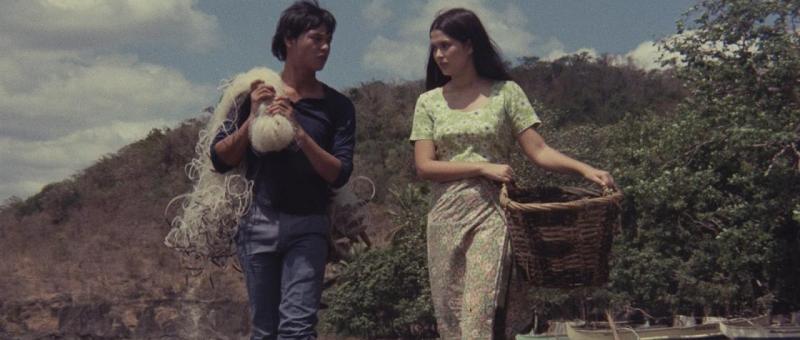
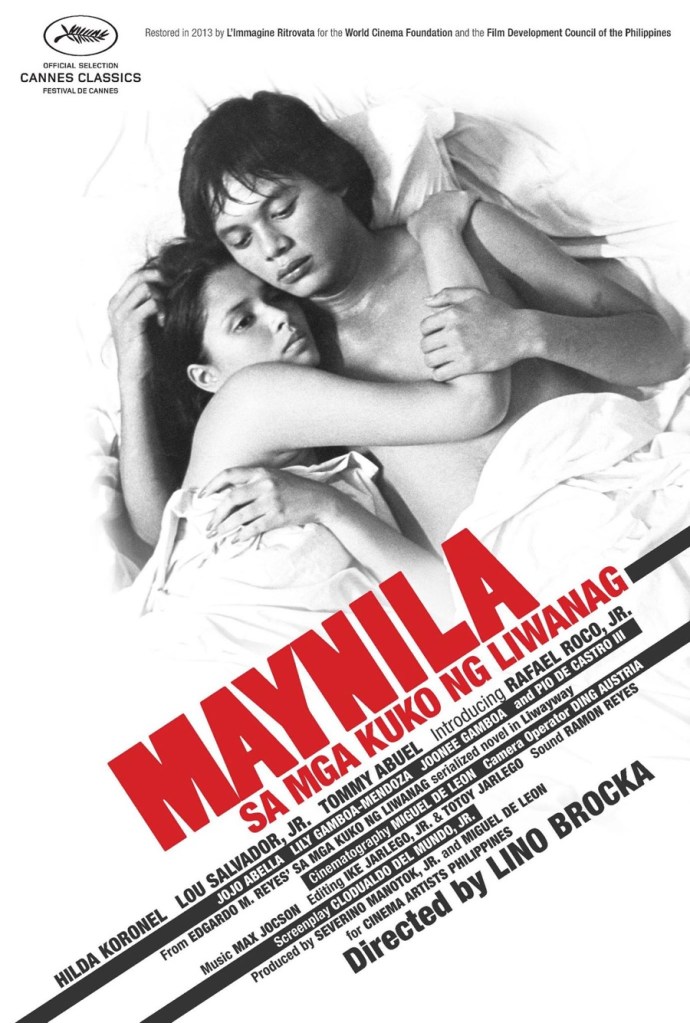 About half way through Lino Brocka’s masterpiece of Philippine cinema Manila in the Claws of Light (Maynila, sa mga Kuko ng Liwanag), the hero, Julio (Bembol Roco), sits watching the window where he thinks the woman he loves may be being held prisoner as a trio of guitar players strums out The Impossible Dream, unwittingly narrating his entire story. Julio is no Don Quixote but he has his own Dulcinea and, as the song says, without question or pause he is ready to march into hell for the heavenly cause of rescuing her from clutches of this cruel city. Not quite content to love pure and chaste from afar, Julio plays Orpheus descending into the underworld, plunged into a strange odyssey through a harsh and indifferent world driven by mutual exploitation and the expectation of violence.
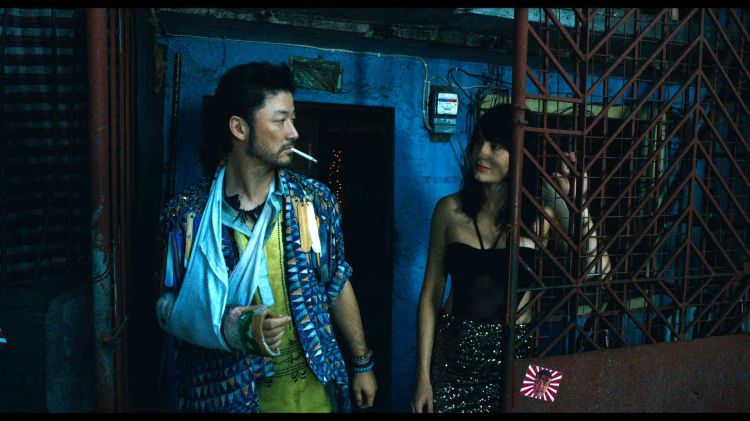
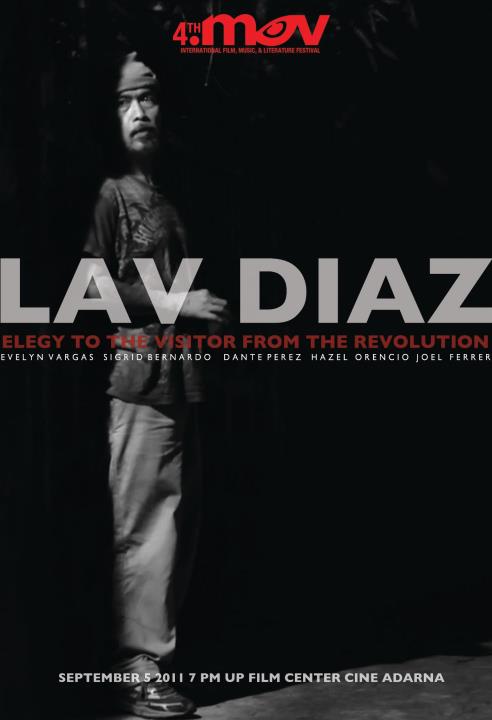 Lav Diaz is many things but he’s not especially known for his brevity. Elegy to the Visitor From the Revolution (Elehiya Sa Dumalaw Mula Sa Himagsikan) is something of a departure in that regard as it runs a scant eighty minutes but is, nevertheless, imbued with the director’s constant themes of loss, melancholy and despair conveyed across a tripartite structure peopled by three very different yet interconnected sets of characters. To say “only” eighty minutes long, yet Elegy to the Visitor From the Revolution first began as a one minute short, intended to form a part of Nikalexis.MOV – an omnibus dedicated to the memory of film critics Alexis Tioseco and Nika Bohinc tragically killed during a home invasion. Diaz’ film, however, outgrew its origins to become a stand alone feature in its own right.
 “Why is there so much madness and too much sorrow in the world? Is happiness just a concept? Is living just a process to measure man’s pain?” asks a key character towards the end of this eight hour film, but he might as well be speaking for the film itself as its director, Lav Diaz, delivers another long form state of the nation address. This is a ruined land peopled by ghosts, unable to come to terms with their grief and robbing themselves of their identities in an effort to circumvent their pain. Raw yet lyrical, Diaz’s lament seems wider than just for his damaged homeland as each of its sorrowful, disillusioned warriors attempts to reacquaint themselves with world devoid of hope.
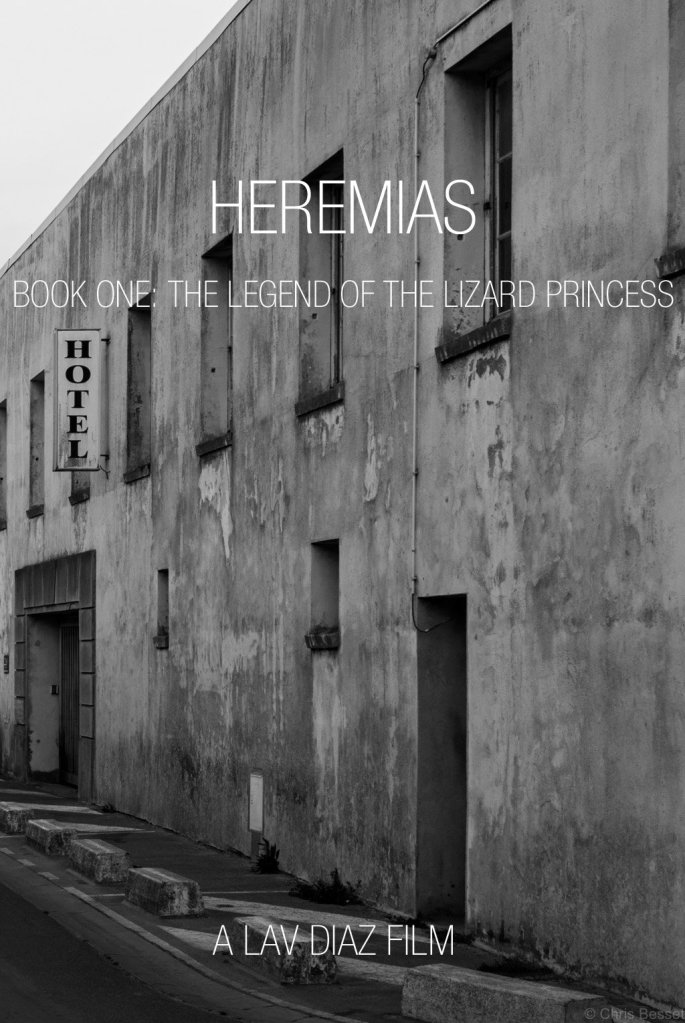 Lav Diaz has never been accused of directness, but even so his 8.5hr epic, Heremias (Book 1: The Legend of the Lizard Princess) (Unang aklat: Ang alamat ng prinsesang bayawak) is a curiously symbolic piece, casting its titular hero in the role of the prophet Jeremiah, adrift in an odyssey of faith. With long sections playing out in near real time, extreme long distance shots often static in nature, and black and white photography captured on low res digital video which makes it almost impossible to detect emotional subtlety in the performances of its cast, Heremias is a challenging prospect yet an oddly hypnotic, ultimately moving one.
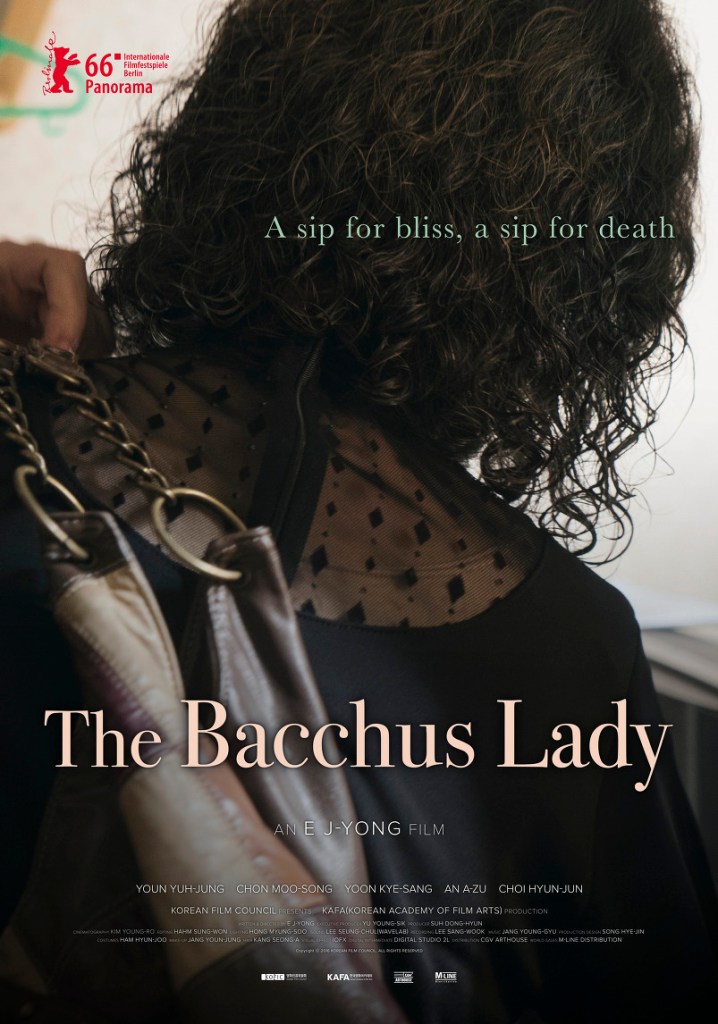 Rather than a Maenad in a divine frenzy driven by drunkenness, lust, and hedonistic fury, a “Bacchus Lady” is a humorous nickname used for the older women who solicit men in Korean parks by euphemistically offering to sell them a bottle of Bacchus energy drink. E J-yong reteams with veteran Korean actress Youn Yuh-jung to tell the tragic story of Youn So-young, hooker with a heart of gold and now a member of the older generation permitted to slip through the cracks in the absence of familial connections.