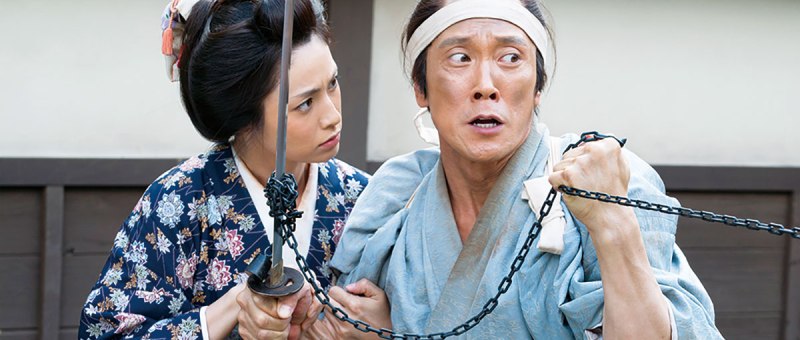
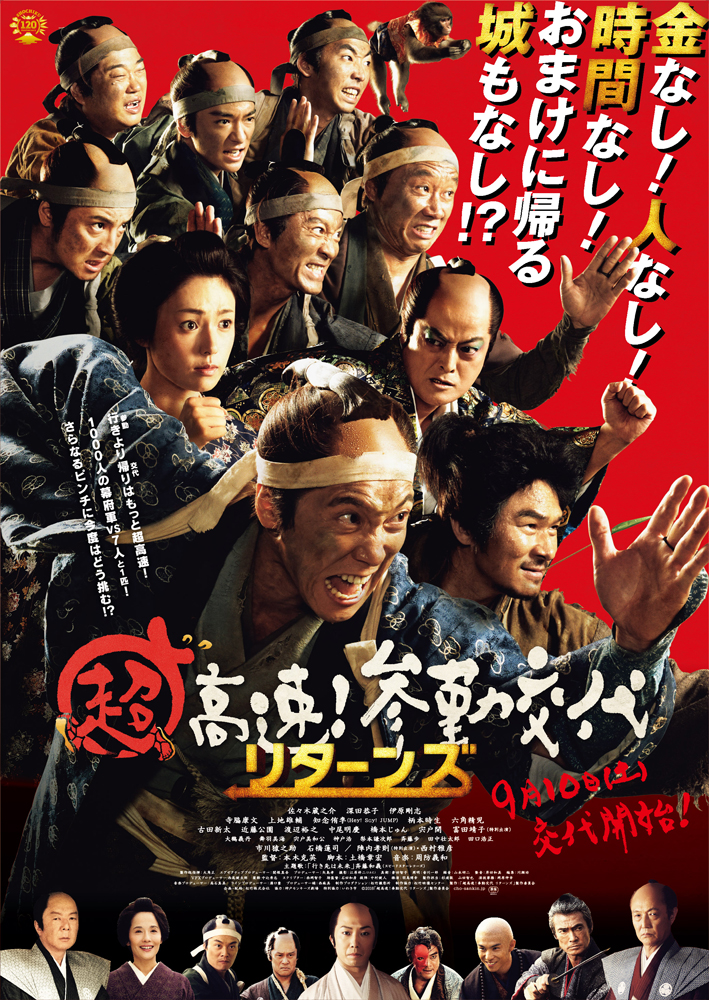
Samurai Hustle Returns (超高速!参勤交代 リターンズ, Katsuhide Motoki, 2016)

At the conclusion of 2014’s Samurai Hustle, it seemed that samurai corruption had been beaten back. Corrupt lord Nobutoki had got his comeuppance and the sympathetic “backwoods samurai” Naito was on his way home having found love along the way. Of course, nothing had really changed when it comes to the samurai order, but Naito was at least carving out a little corner of egalitarianism for himself in his rural domain. 

The aptly named Samurai Hustle Returns (超高速!参勤交代 リターンズ, Cho kosoku! Sankin kotai returns) picks up a month later with Naito (Kuranosuke Sasaki) taking a rather leisurely journey home in preparation for his marriage to Osaki (Kyoko Fukada) only to receive news that there has been a “rebellion” in Yunagaya. Predictably, this turns out to have been orchestrated by none other than Nobutoki who has been released early from his house arrest thanks to his close connections with the shogun but has been humiliated at court and is otherwise out for revenge with a slice of treasonous ambition tacked on for good measure. Just as in the first film, but in reverse, Naito and his retainers must try to rush home to get there before the imperial inspector arrives or else risk their clan being disbanded. 

Meanwhile, the shogun is absent at the wheel after having decided to resurrect an old tradition abandoned because of its expense and inconvenience to make a pilgrimage to Nikko. In an interesting parallel, the farmers are uncharacteristically upset with Naito, blaming him for the destruction of their fields because he wasn’t there to protect them. Naito also feels an additional burden of guilt given that, having run flat out all the way to Edo, he took his time coming back leaving his lands vulnerable to attack while he now risks losing the castle. Nobutoki wastes no time at all looking for various schemes to undermine him while secretly plotting to overthrow the shogun and usurp his position for himself. 

As in the first film, the battle is between samurai entitlement and the genial egalitarianism of Naito’s philosophy. “The real lords of Yunagaya are people like you who are one with the soil,” he tells the farmers, while Nobutoki sneers that “lineage rules supreme in this world, inherited wealth breeds more”. It doesn’t take a genius to read Nobutoki’s machinations as a reflection of his insecurity, that he invests so much in his rights of birth because he has no confidence in his individual talents. Naito counters that it’s the people around him that matter most, “people are priceless. Friends are priceless,” but Nobutoki rather sadly replies that people will always betray you in the end. Even the shogun eventually agrees that “anger brings enemies, forbearance brings lasting peace” but treats Nobutoki with a degree of compassion that may only embolden him in his schemes.

“Nepotism has endangered the shogunate,” the shogun ironically sighs apparently lacking in self-awareness even if beginning to see the problems inherent in the samurai society but presumably intending to do little about them. “No government should torment its people,” Naito had insisted on boldly deciding to retake his castle but even if this particular shogun is not all that bad, it’s difficult to deny that his rule is torment if perhaps more for petty lords like Naito than for ordinary people or higher-ranking samurai. Naito struggles to convince Osaki that she is worthy of his world and only finally succeeds in showing her that she has nothing prove and love knows nothing of class. The people of Yunagaya are impoverished but happy, satisfied with the simple charms of pickled daikon unlike the greedy Nobutoki whose internalised sense of inadequacy has turned dark and self-destructive. 

Then again, Naito is still a lord. He obeys the system out of love for his clan and a genuine desire to protect those around him but otherwise has little desire to change it actively even if his quiet acts of transgression in his closeness with the villagers and professions of egalitarianism are in their own way a kind of revolution in a minor rejection of the shogun’s authority to the extent that the time allows. Nevertheless, with his return journey he once again proves the ingenuity of a backwoods samurai getting by on his wits as he and his men race home to save their small haven of freedom from samurai oppression from the embodiment of societal corruption.


Trailer (no subtitles)
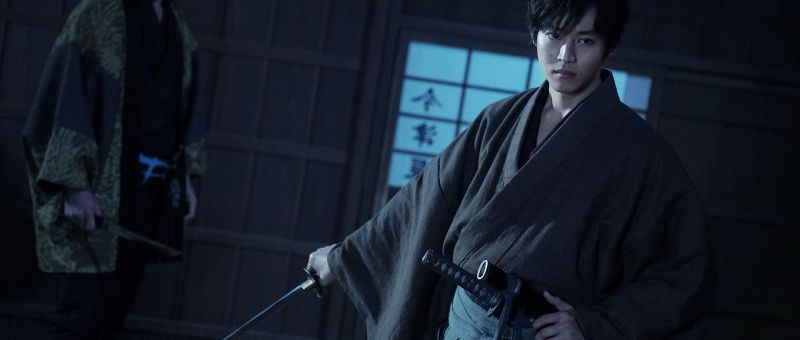
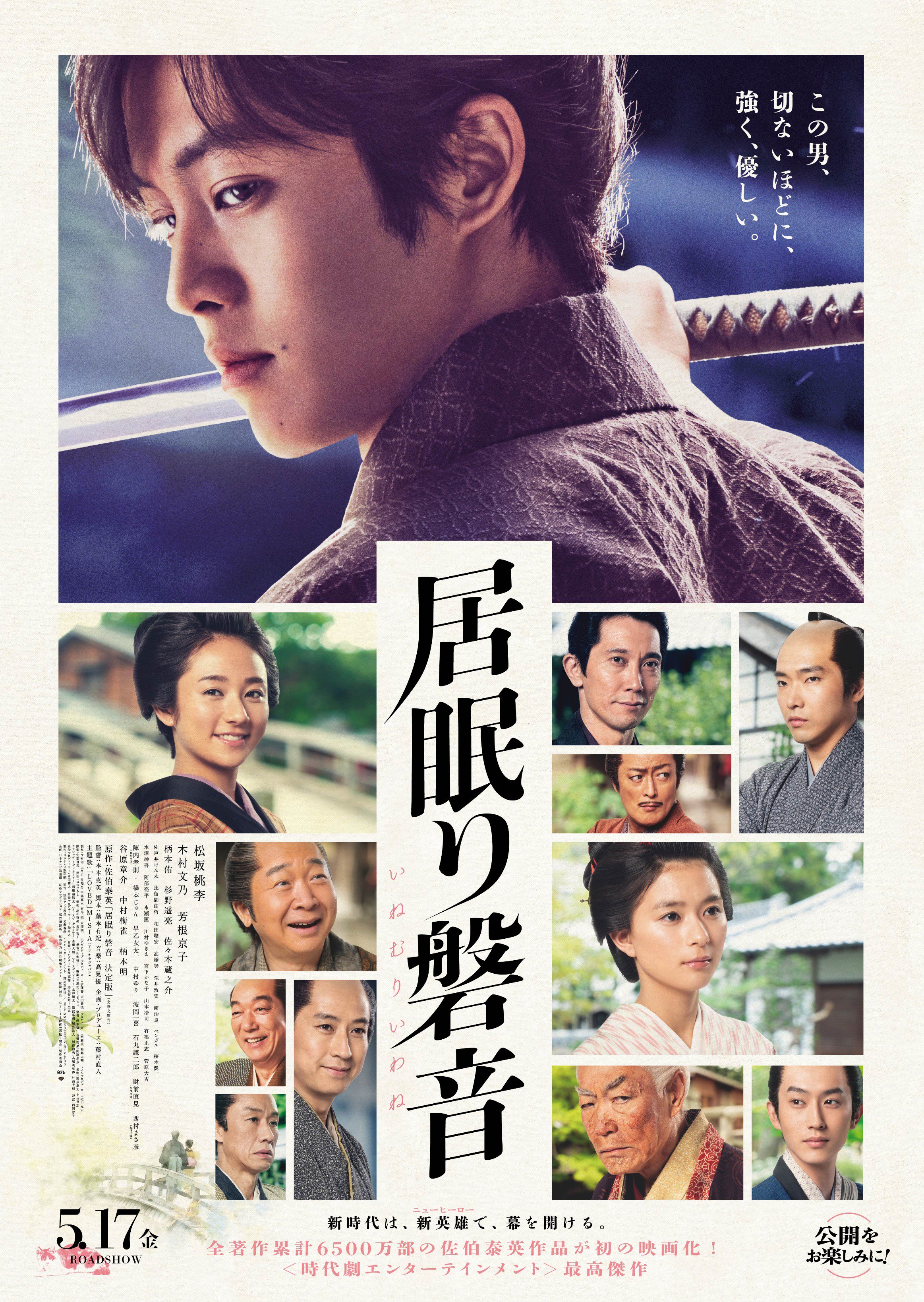
Iwane: Sword of Serenity (居眠り磐音, Katsuhide Motoki, 2019)

The contradictions of the samurai code conspire against one noble-hearted young man in Katsuhide Motoki’s adaptation of the long running series of historical novels by Saeki Yasuhide, Iwane: Sword of Serenity (居眠り磐音, Inemuri Iwane). Yet this truly serene samurai is a stoical sort, learning to bear his pain with fortitude while standing up for justice in an increasingly corrupt Edo where money rules all while an ascendent merchant class continues to challenge the fiercely hierarchical social order. 

Beginning in 1772 which turned out to be a disastrous year, the tale opens as hero Iwane (Tori Matsuzaka) prepares to return home after completing his three year rotation in Edo in the company of childhood friends Kinpei (Tasuku Emoto) and Shinnosuke (Yosuke Sugino). Shinnosuke is in fact married to Kinpei’s sister Mai, while Iwane will himself be married to Kinpei’s other sister Nao immediately on his return so close are they. As Iwane’s father tells him, there are great hopes for these young men that they can “turn our outdated clan around”, but events will conspire against them. Spoiling the happy homecoming, Shinnosuke is accosted by a drunken uncle who convinces him Mai has been unfaithful in his absence with the consequence that he kills her immediately on his return home. Unable to understand this turn of events, Kinpei confronts his friend but eventually kills him, while Iwane is then forced to kill Kinpei after he goes on murderous rampage in revenge for the wrong done to his sister. 

In trying to mediate the case, the argument is put forward that Shinnosuke acted rashly and should have brought his suspicion to the authorities rather than opting for summary execution. The lord however disagrees, condoning Shinnosuke’s actions under the rationale that to do so would have been considered “weak minded” while as Shinnosuke himself had claimed he acted in accordance with the samurai code in which female adultery is illegal and punishable by death. By contrast, he finds Kinpei’s rashness offensive, insisting that he also should have recognised the legitimacy of his sister’s murder and simply left quietly with her body. Having learned the truth in which his childhood friends became victims of clan intrigue, romantic jealousy, and tragic misunderstandings in this Othello-like plot, Shinnosuke and childhood sweetheart Nao are also consumed by the rashness of samurai law each exiled from their clan and cast adrift in Edo-era society. 

Edo-era society is however also itself corrupt. Some months later, Iwane has returned to Edo as a lowly ronin lodging with a kindly old man, Kinbei, who helps him find a job firstly gutting eel then as a bodyguard at a money exchange which has been receiving anonymous threats they assume are from rival broker Awaya who has hatched a nefarious plan to manipulate the currency market to stop the current Shogun introducing a new unit which can be used in both Edo and Kyoto which would understandably cut into his already corrupt business model. Luckily, Imazuya is an honourable man who backs the new currency plan and wants to do the right thing which makes him a perfect fit for Iwane’s innate sense of justice. “You don’t know the way of the merchant” Awaya snaps at him, suggesting both that the samurai are already on their way down as the merchants rise and that his unwillingness to play dirty will be his downfall. Nevertheless, Iwane is the type to adapt quickly, instantly coming up with a way to play Awaya at his own game and kick his destructive amoral capitalism to the curb. 

Meanwhile, he continues to pine for Nao while drawing closer to Kinbei’s earnest daughter Okon (Fumino Kimura). As we discover Nao is also a victim of an intensely patriarchal social order but through the tragedy that befalls them also finds strength and agency making a life changing decision that allows her to become independent while looking after her family if in the knowledge that the childhood romance she shared with Iwane is a thing of the past. Iwane too agrees that he is trapped in a living hell of guilt and grief, yet choosing to go on living anyway as calm and cheerful as he’d ever been while standing up to Edo-era corruption though uncomfortably enough this time against the destabilising influence of the rising merchant class and therefore in contrast to most jidaigeki reinforcing the legitimacy of the samurai order which has paradoxically also ruined his life with its rigid and implacable social codes. In any case, Motoki’s classic chanbara melodrama has a serenity of its own as the cheerfully laidback hero resolves to live his life by a code of his own free of samurai constraint. 


Trailer (no subtitles)

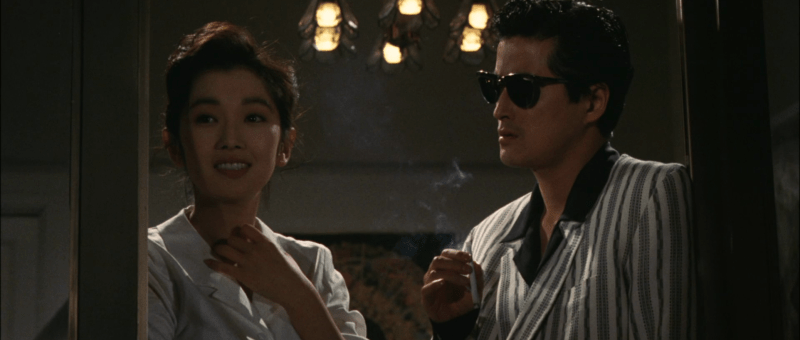
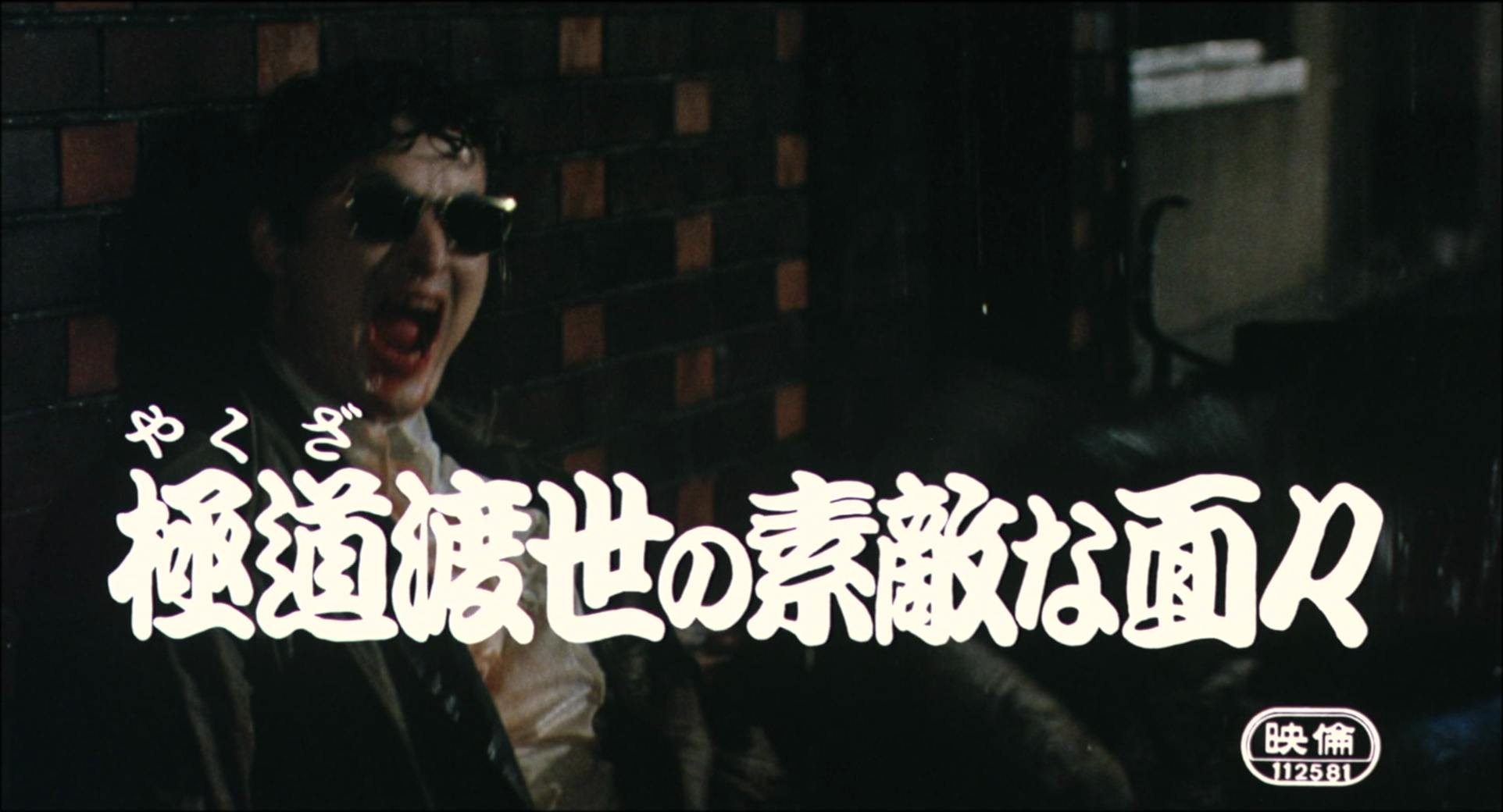
Those Swell Yakuza (極道渡世の素敵な面々, Seiji Izumi, 1988)

The yakuza movies of the post-war era had largely depicted the gangster world as being one of internecine desperation and even if the hero was a pure-hearted defender of a traditional honour code those around him were anything but honourable. By the late 1980s, however, the yakuza were increasingly seen as an outdated institution amid the high rise office blocks of a prosperous Bubble-era Japan in which the street thug had given way to more corporatised kinds of organised crime. 

This might help to explain the ironic title of Seiji Izumi’s 1988 comedy Those Swell Yakuza (極道渡世の素敵な面々, Yakuza Tosei no Sutekina Menmen) which simultaneously presents a nostalgic view of gangster cool and a way of life which is more rooted in the everyday existence of a contemporary petty outlaw. The hero, 24-year-old Ryo (Takanori Jinnai), is a former banker who evidently rejected the heavily corporatised nature of the Bubble-era society and left his stable job to open a record store which subsequently went bankrupt leaving him with huge debts to yakuza loansharks. It’s these debts he’s trying to escape by wandering into a mahjong parlour and getting carried away with his early success despite the advice of steady hand Nakagawa (Takeshi Kusaka) who eventually covers his losses when it turns out that Ryo started playing without any stake money. A ageing yakuza, Nakagawa takes him outside to teach him a lesson explaining that the parlour is run by Taiwanese gangsters and he’s lucky to be leaving with his life. Nevertheless, Nakagawa is impressed by his hutzpah and leaves his business card in case Ryo has the desire to get in touch. 

Ryo’s decision to become a yakuza reflects both a sense of emptiness in the Bubble-era society and a nostalgic longing for post-war gangsterism and the theoretical “freedom” is represents to a man like Ryo though of course there’s not so much autonomy to be had in the life of a petty footsoldier who is always beholden to the whims of his boss. Nakagawa becomes to him a kind of father figure, though he’s also someone who has largely lost out in having achieved little in the realms of gangsterdom while his friend and contemporary Kanzaki (Hideo Murota) has successfully climbed the ladder to become a high ranking officer. Kanzaki takes him to task for visiting the mahjong parlour in part because the Taiwanese gang has gained a reputation for dealing with drugs of which their organisation does not approve and it would present a problem if his connections to them were to come out during any potential anti-drug action by the police. By the film’s conclusion, Nakagawa has become something of a tragic figure more or less excluded from the yakuza world while his body is ravaged by alcoholism and his finances by gambling addiction. 

Ryo, meanwhile, seems to live the yakuza dream. He gets stabbed while defending a bar hostess from a yakuza from a different gang and then meets the love of his life, Keiko (Yumi Aso), who similarly rejects the constraints of the contemporary society by refusing the marriage arranged by her father for his own benefit to spend three years waiting for Ryo who goes to prison after shooting Kanzaki in the arm to avenge a slight against Nakagawa who also cuts off his finger to fulfil the codes of yakuza honour. Wandering around in sunshades and flashy suits, Ryo soon attracts a fiercely loyal band of followers of his own and despite the tragedy of losing one of his men to an assassin proves adept in navigating the yakuza world to present an idealised image of masculine cool perfectly tailored to the Bubble era.

Despite the shooting that landed him in prison and the mission of revenge he leaves his own wedding (after the ceremony) to complete in the film’s conclusion, Ryo’s yakuza existence is otherwise fairly non-violent and based in a kind of trickery that makes him seem clever rather than exploitative given that as Nakagawa had suggested the way forward for the modern yakuza is scams not drugs. As one of his prison buddies puts it, there are old school gangsters like Ryo ready to die for the clan, and then there are those like himself intent on filling their boots. Largely, most of these guys are old school yakuza who do obey the code and have some kind of scruples about how they make their money which adds to their aspirational allure as Ryo seems to lead a fairly charmed life of idealised masculinity with a pretty wife and fancy apartment seemingly free of the petty oppressions faced by workaday salarymen. Izumi makes frequent reference to classic Toei gangster pictures from a decade previously with appearance from from genre stalwarts such as Hideo Murota, Nobuo Ando, and Mikio Narita, but lends the action a contemporary spin in the ironic sense of cool even if the implications of ambiguous ending may be far less upbeat.


Alivehoon (アライブフーン, Ten Shimoyama, 2022)

How far can skills learned in simulation be transferred to the “real” world? Ten Shimoyama’s Alivehoon (アライブフーン) sees a top gamer take to the track for real to compete for drift racing glory while battling both his own lack of confidence and that of those around him. What he discovers is that there may not be so much difference as might be assumed, but offline racing is not a solo sport and succeeding means learning to trust in others as well as oneself. 

Koichi’s (Shuhei Nomura) immediate problem is that he doesn’t fit in at his job as a mechanic and is resented by the other employees for failing to pull his weight. All he wants to do is play games and after a lifetime of practice he’s become a champion in the world of e-sports drift racing but secretly harbours the desire to become a “real” race driver. He finally gets the chance to prove himself when his exasperated boss gets him an opportunity to try out for a real team in need of a rookie driver to ensure its survival. Diffident as he is, Koichi agrees and after brief moment of confusion on the track, proves he has what it takes to take his virtual skills to the real world as an aspiring drift racer. 

The main opposition Koichi faces is from those who dismiss him on the grounds that in-game experience is useless in the real world, which in some cases it may be but luckily Koichi does at least know how to drive and after a moment to play things through knows how to translate his skills from the online world to a real life track which of course has much more proximity to mortal danger than he has ever experienced before. That might be one reason that veteran driver Muto (Takanori Jinnai) who retired after a catastrophic crash in the opening sequence does not take him very seriously on witnessing him being physically sick after being driven round the course by a champion racer while his daughter Natsumi (Ai Yoshikawa) is very invested in the idea that it might be possible to turn an e-sports champ into a top rank driver and save the team in the process. 

Team Alive is positioned as the nice guy underdog, trying to win through hard work and fairness in contrast to arrogant hotshot Shibasaki (Shodai Fukuyama) who turns down the chance to join Alive to go with a more lucrative offer from a haughty middle-aged woman (Anna Tsuchiya) who plays only to win. Shibasaki drives dirty with the racing equivalent of kicking dust in Koichi’s eyes but eventually pays a heavy price for his lack of sportsmanship only to be humbled and come to see the merit in the honest and down to earth approach of team Alive. Koichi meanwhile fights an internal battle trying to rediscover a sense of confidence while beginning to find it in the mutual support of his teammates acknowledging that he may be in the driving seat but he’s not alone and the victory does not belong entirely to him. 

The film’s race scenes are supervised by “drift king” Keiichi Tsuchiya and feature real life drivers such as Naoki Nakamura, Daigo Saito and Masato Kawabata driving real courses for added authenticity all shot in camera without the use of CGI or special effects. The neon blue/red lighting and synth score contribute to the retro aesthetic but it has to be said that Koichi seems to take to real life drift racing a little too easily and experiences surprisingly few setbacks before making a fairly perplexing decision in the film’s final moments despite having discovered the value of teamwork along with a new family in team Alive who each value him for who he is as he brings the best in virtual racing to the real world game. Natsumi too earns the respect of her father as he comes to trust and believe in Koichi but is never quite given the chance to prove herself in her own right. In any case there is something heartwarming in the film’s conviction that there are no pointless skills and that working hard to become good at something is its own reward whether you become a champion or not.


Alivehoon screens in Chicago on Sept. 17 as part of the 15th season of Asian Pop-Up Cinema.

Original trailer (English subtitles)

Last Quarter (下弦の月 ラスト・クォーター, Ken Nikai, 2004)

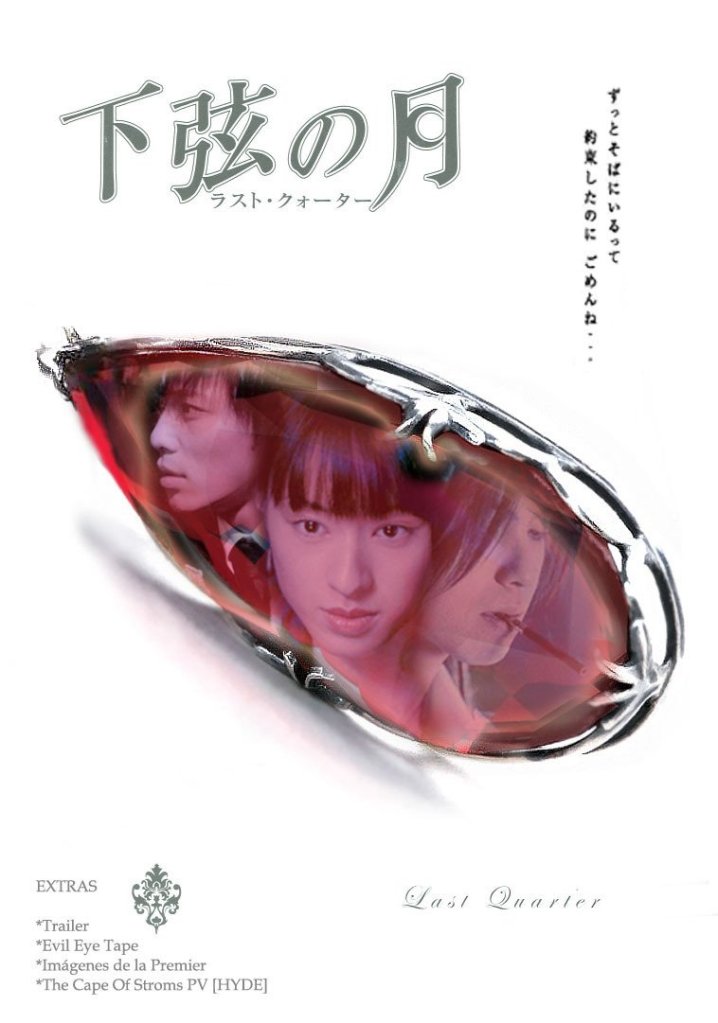
Last Quarter posterTo begin on a cynical note, Last Quarter (下弦の月 ラスト・クォーター, Kagen no tsuki Last Quarter) is a film with a wide variety of marketing hooks. The first being that it’s an adaptation of a much loved short manga series by the well respected mangaka Ai Yazawa (Paradise Kiss) so it has its shoujo pedigree firmly in place. Secondly, pop star HYDE of L’Arc-en-Ciel is central to the production as he both stars in the movie as the ghostly love interest/deathly spirit and repeatedly sings his own songs throughout the film including over the end credits. Thirdly, it also stars actress Chiaki Kuriyama well known to overseas audiences thanks to Kill Bill and Battle Royale. You’d think with all these high quality ingredients first time director Ken Nikai would be able to cook up quite a feast though he does somewhat over egg the pudding.

After a brief dream sequence, the action kicks off at the 19th birthday party of British rock obsessed Mizuki (Chiaki Kuriyama) which takes place in a Mod inspired bar. Unfortunately, her best friend gets very drunk indeed and takes this opportunity to show Mizuki a photo of herself and Mizuki’s boyfriend in a compromising position. Mizuki throws a shoe at the no good philanderer and walks out on her own party ending up at a mysterious Western style mansion occupied by a sad man playing a guitar. She hits it off with “Adam” and decides to jack in her unhappy family life with her father and step-mother to leave for England with him. Sadly, she gets hit by a car on her way home only to wake up trapped inside the house and having lost all memory of who she formerly was. Soon enough, another girl, Hotaru (Tomoka Kurokawa), turns up and, assuming she’s a ghost, decides to help her “cross over” , but it’s all a little more complicated than Hotaru and her team had bargained for.

Last Quarter takes on an oddly imbalanced feel as it veers into star vehicle territory putting HYDE and his title song centerstage at the expense of Mizuki who ought to be the protagonist of the story. Understandably, as she’s fallen under the curse of the house, Mizuki is a mostly passive force throughout the film, entirely reliant on the efforts of the gang of three who are trying to help her by figuring out what’s really going on. The mystery element itself is quite an intriguing one but is often frustrated by the importance placed on the supernatural romance. Stretching plausibility to the limit, the events in question span 30 years and two continents to spin a yarn of pure love enduring beyond the grave. Pure love and grudge movies aren’t usually allowed to mix and they don’t quite here although Last Quarter certainly has elements of both.

Last Quarter’s biggest failing is in its production values which are generally on the low side. Nikai aims for an urban gothic aesthetic and achieves something close to sense of European decadence but opts to avoid the darkness inherent in the genre for a fairytale atmosphere. The effects are very highly stylised and old fashioned but Last Quarter doesn’t even attempt to make that work in its favour so much as offering it at face value.

In essence, Last Quarter often feels like an overblown music video for its rock star actor even if he actually has a relatively small role. Director Nikai has often worked with the band before and (apparently) there is a degree of recurring symbolism here that long time fans will instantly pick up on but will leave the casual viewer a little confused. Very firmly aimed at a younger teen female audience, Last Quarter will play best to fans of non-threatening supernatural romance but even then they’d be best advised to avoid thinking any of this through and simply enjoy the ghostly shenanigans for the ridiculous rag tag narrative they are. An interesting mix of ‘60s mod rocker cool with its parkas and vespas, and full on gothic with byronic heroes sitting in decaying mansions in the middle of creepy forests singing about their broken hearts, Last Quarter is incoherent to say the least but fans of its rockstar leading man will likely find their perseverance rewarded.


Last Quarter is available with English subtitles on R1 DVD in the US courtesy of Geneon.

Unsubtitled trailer: